
Loan Origination and Servicing Automation: Full Lifecycle, One Platform
Loan origination and servicing automation uses AI agents to handle the full lending process, from document intake and credit scoring through borrower monitoring, collections, and regulatory reporting. Rather than automating isolated tasks, platforms like AgentFlow by Multimodal orchestrate the entire loan lifecycle as connected workflows.
The result: financial institutions that adopt intelligent automation across loan processing report reduced origination costs by up to 14% and shortened production cycles by 5 days, according to Freddie Mac's 2025 Cost to Originate Study.
For lending operations leaders at credit unions, banks, and financial services industry organizations, the pressure is clear. The average cost to originate a mortgage loan was approximately $11,800 per loan in Q2 2025, according to Freddie Mac and MBA data. Manual processes in loan origination, document verification, and loan servicing continue to drive increasing operational costs while borrower expectations for speed and transparency keep rising.
This page explains how agentic AI automates both loan origination and loan servicing as a single, connected operation, what changes at each stage of the lending process, and how AgentFlow Playbooks help lenders move from deployment to production in 6 to 12 weeks.
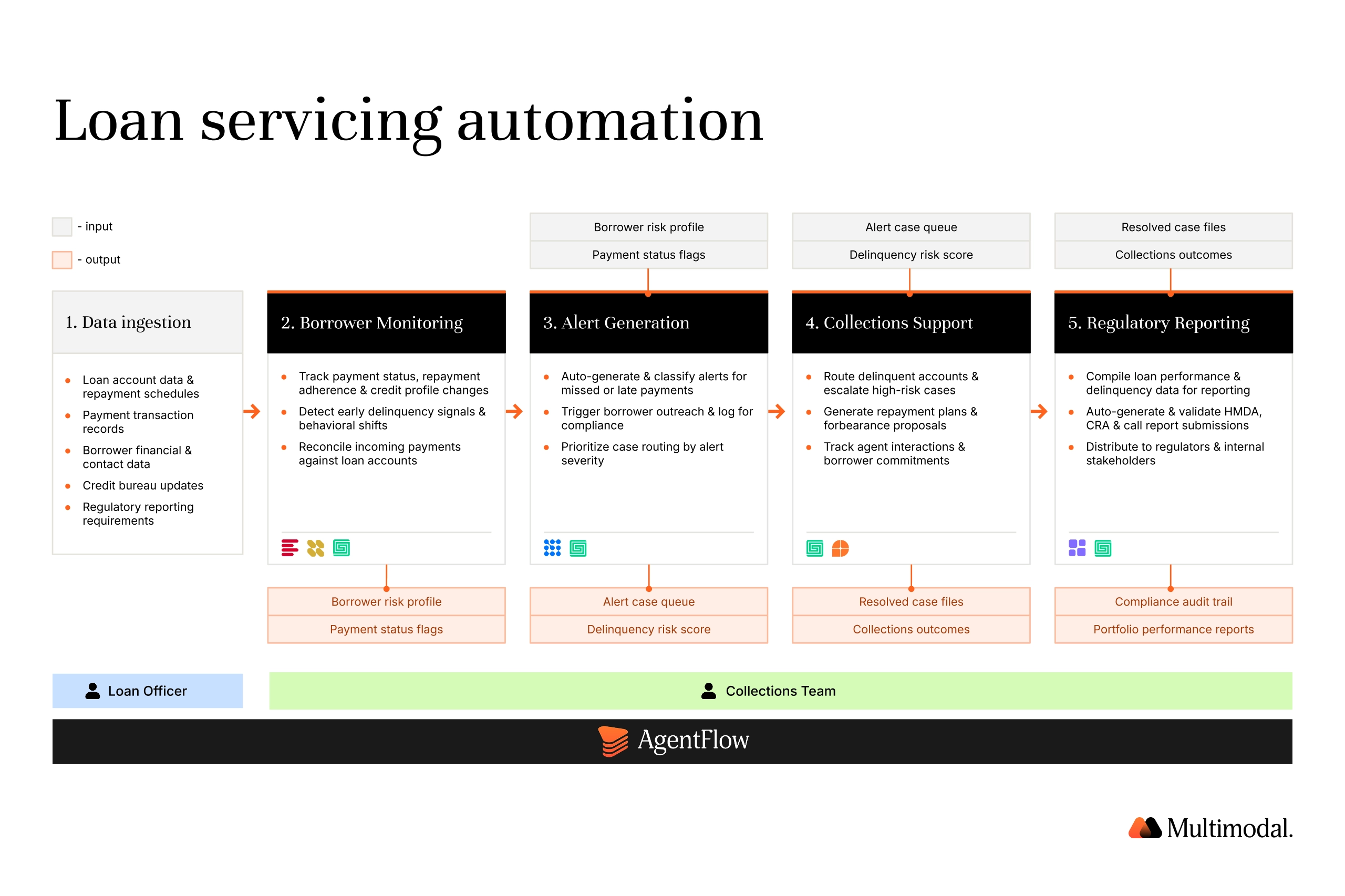
What the Full Loan Lifecycle Looks Like With AI
The lending process has two connected halves. Loan origination covers everything from the moment a borrower submits a loan application through the approval or denial decision. Loan servicing begins after funding and manages borrower relationships, payment monitoring, collections, and compliance reporting throughout the life of the loan.
Most lending automation tools handle one side or the other. An automated loan processing system might accelerate document verification during origination but leave servicing entirely manual. Or a customer service automation tool might improve borrower communications post-funding but have no connection to the origination workflow that preceded it.
This fragmentation creates problems. When loan applications move from origination into servicing, data gets re-entered. Borrower data collected during the loan application process is stored in one system, while the servicing platform maintains a separate record. Manual data entry between systems introduces human errors, delays, and gaps in audit trails.
AgentFlow takes a different approach. It automates both halves of the loan-lending process through connected Playbooks, so data, decisions, and compliance trails flow throughout the process without manual handoffs. The same customer data collected at application intake carries over into servicing, creating reliable and consistent data across the loan portfolio.
Most lending automation tools handle origination or servicing. AgentFlow covers both as connected Playbooks, so data, decisions, and audit trails flow across the full loan lifecycle without manual handoffs.
Loan Origination Automation: From Application to Approved Decision
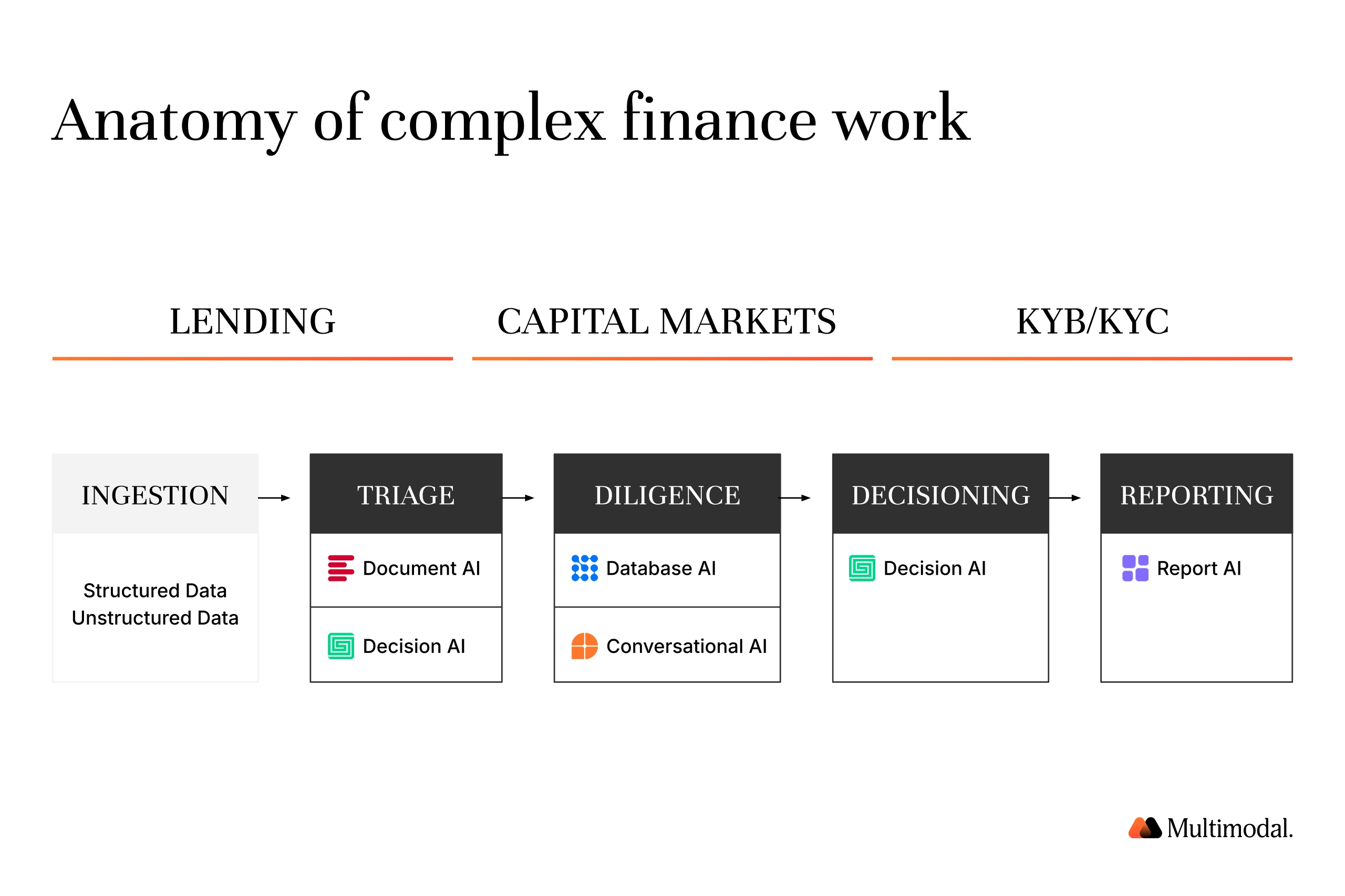
The loan origination process begins when a borrower submits an application and ends when a credit decision is issued. For most financial institutions, this process involves document collection, data extraction, employment and income verification, fraud detection, credit scoring, policy evaluation, and compliance documentation. Each step traditionally requires manual work, and the entire lending process, from application to closing, can take 45 days or more for mortgage loans.
Loan origination automation replaces the sequential, human-dependent steps with AI agents that work in parallel. Here is how AgentFlow handles each stage of the origination automation workflow.
Application Intake and Triage
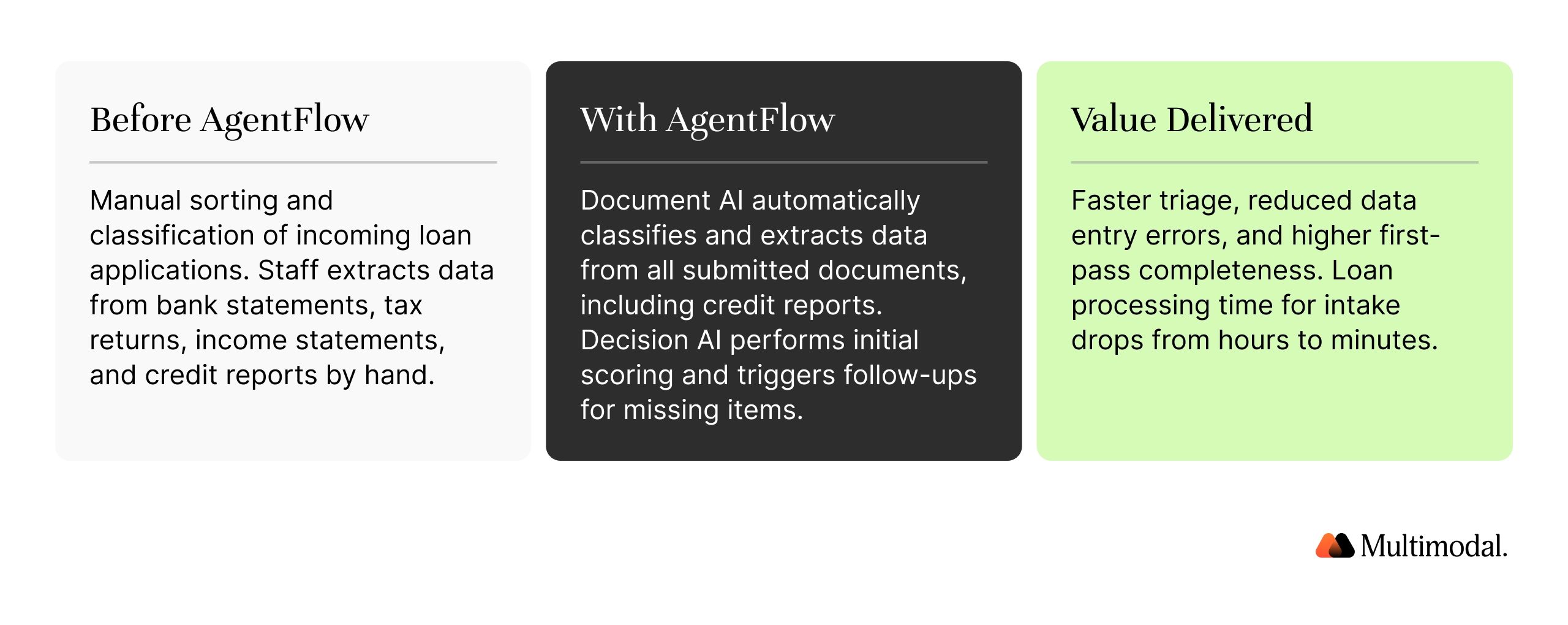
During intake, the automated loan origination process handles document management across multiple file types and formats. Whether a borrower submits bank statements as PDFs, photographs of tax returns, or digital income statements, Document AI normalizes and extracts the relevant financial data into structured fields.
Due Diligence and Risk Assessment
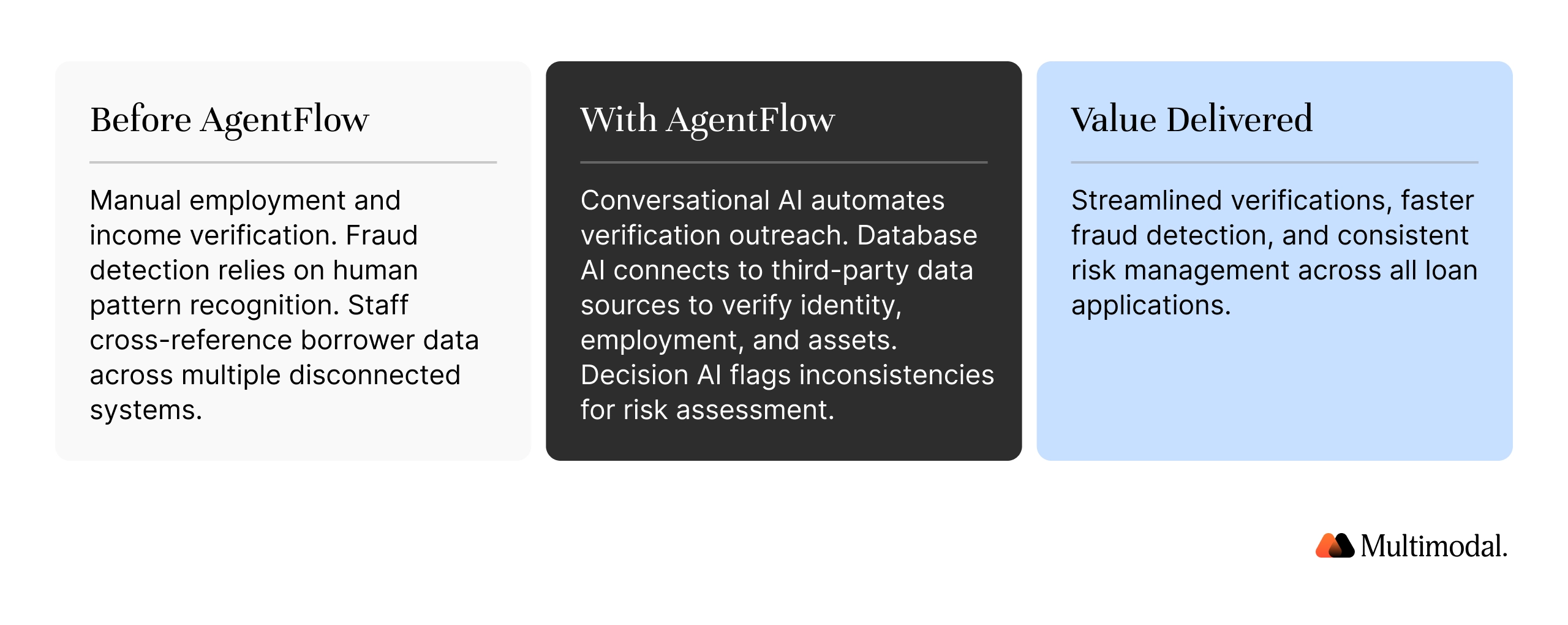
Due diligence is where manual loan processing creates the most bottlenecks. Verifying a single borrower's employment, income, and identity can require outreach to multiple employers, review of credit reports, and cross-referencing of customer information across databases. With automated loan workflows, AI agents handle this data collection in parallel rather than sequentially, reducing days of manual work to hours.
Machine learning models trained on historical lending data improve fraud detection accuracy over time. Unlike rule-based systems that catch known patterns, AI-powered fraud detection identifies anomalies in borrower data that human reviewers might miss, analyzing thousands of data points per application.
Credit Decision and Underwriting
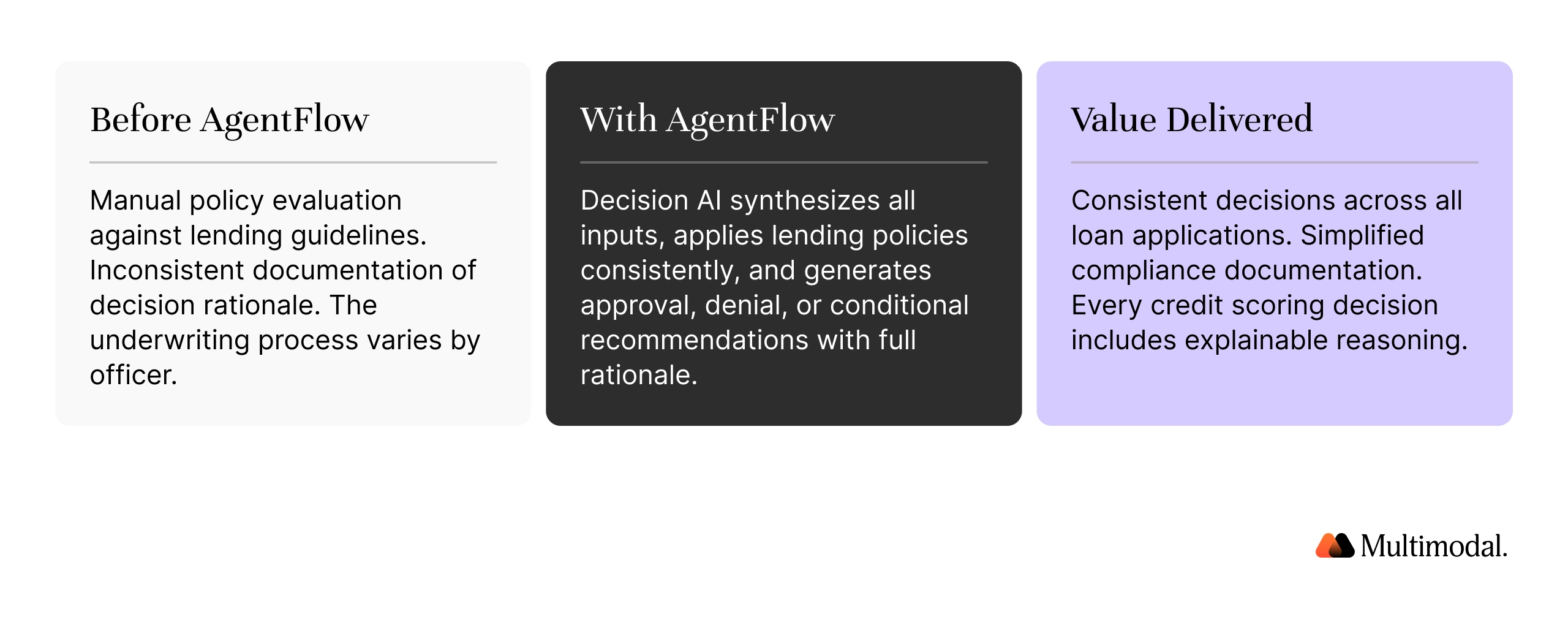
The credit decision stage is where loan approval happens. In a manual lending process, underwriters evaluate each application against institutional policies, regulatory requirements, and risk thresholds. This evaluation often varies by officer, creating inconsistency in how similar loan applications are handled.
With AgentFlow, Decision AI applies the same credit scoring criteria to every application. Each recommendation includes the confidence score, decision path, and source data used, creating a detailed auditing trail that compliance officers can reference during regulatory examinations. This level of documentation supports both internal audit trails and external regulatory compliance requirements.
Compliance Reporting During Origination
Freddie Mac's 2025 analysis found that lenders that maximize digital automation tools originate loans that cost approximately $1,700 less per loan on average and shorten production timelines by five days. For a mid-size lender processing thousands of loan applications annually, those cost savings and cycle-time reductions translate directly into lower operational costs and faster borrower closings.
Loan Servicing Automation: Managing Borrowers After Funding
Loan servicing begins once a loan is funded and continues through the life of the loan. Servicing operations include payment processing, escrow administration, borrower communications, delinquency monitoring, collections, loss mitigation, and regulatory reporting. According to the MBA's 2025 Servicing Operations Study, fully loaded servicing costs averaged $176 per performing loan in 2024, while non-performing loans cost $1,573 per loan to service.
For financial institutions managing large loan portfolios, these costs compound quickly. Proactive monitoring and early intervention can prevent performing loans from becoming non-performing, avoiding the roughly 9x cost increase that comes with delinquency.
Monitoring Borrower Behavior
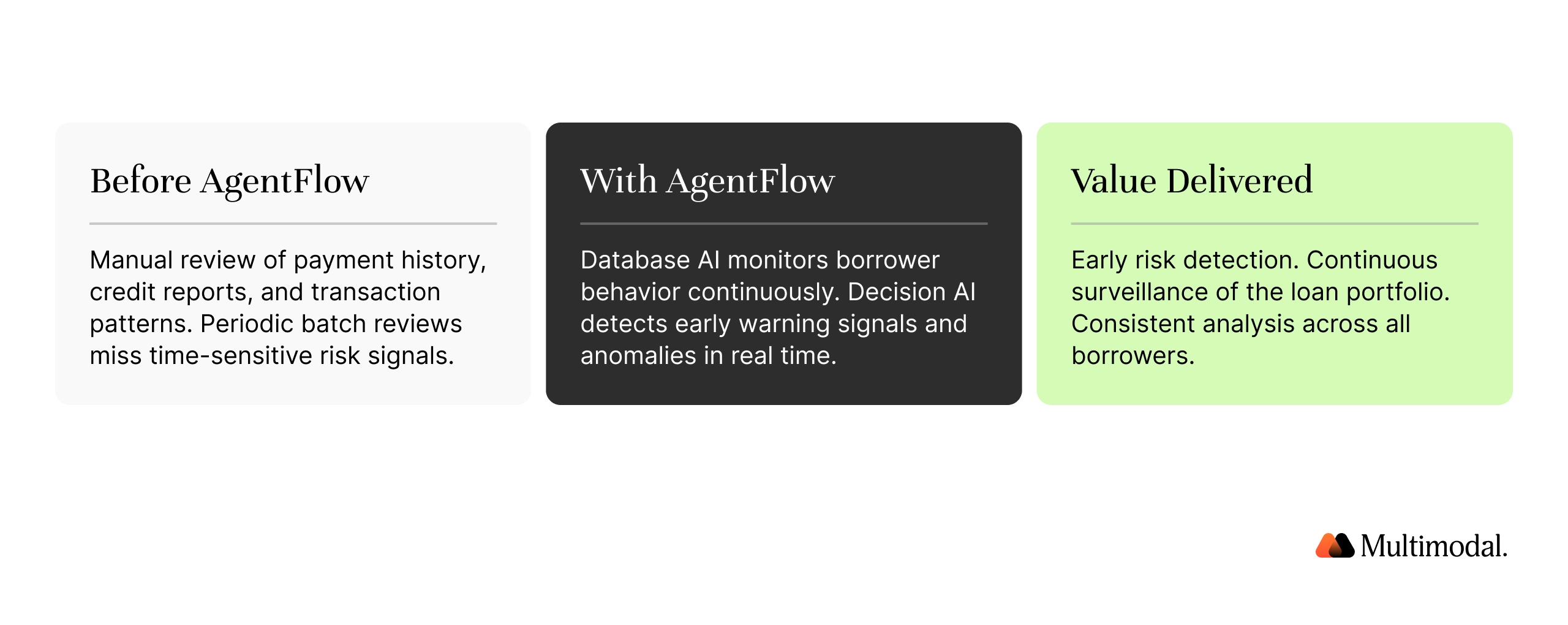
Continuous monitoring replaces the periodic batch reviews that characterize manual loan processing. Instead of reviewing borrower data monthly or quarterly, AI agents analyze payment patterns, credit report changes, and behavioral signals in real time. When a borrower's risk profile shifts, the system triggers an alert before a missed payment occurs.
Generating Alerts and Borrower Communications
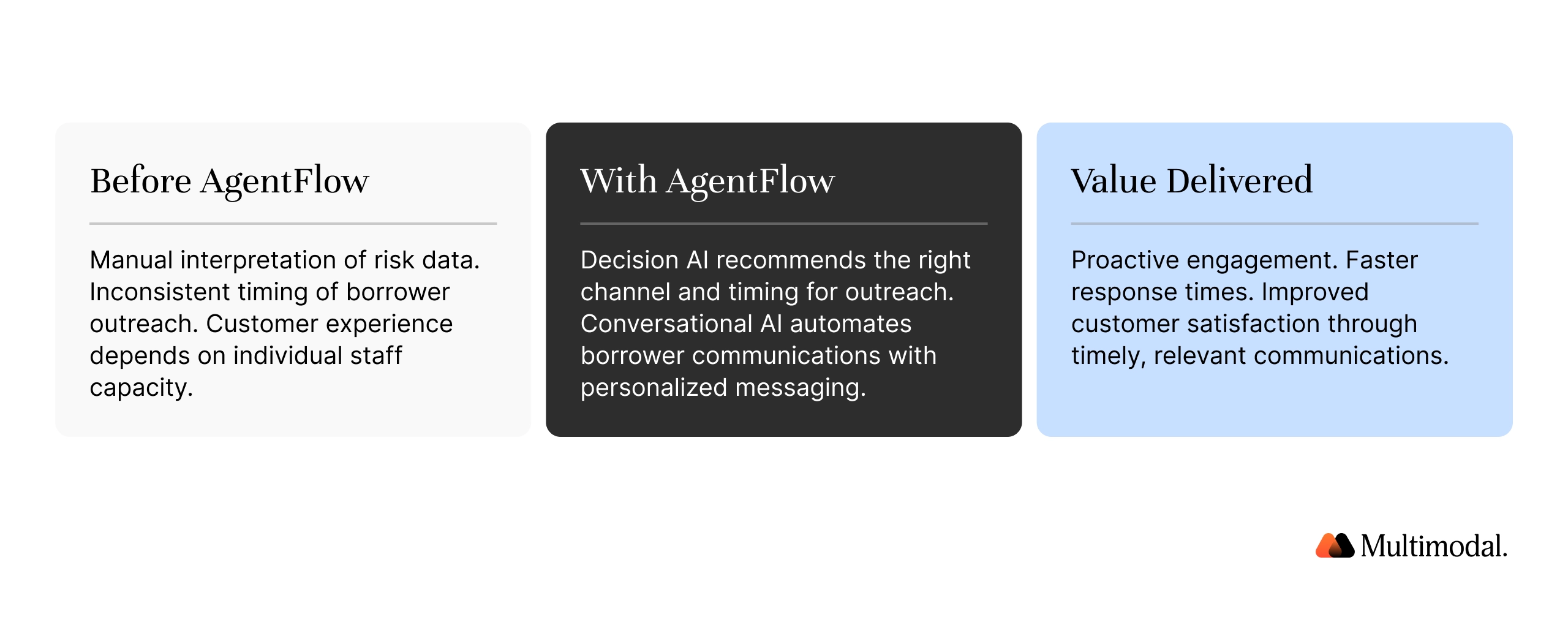
Automated borrower communications enhance customer experience while reducing manual work for servicing teams. Whether the communication is a payment reminder, a modification offer, or a regulatory notice, AI agents ensure timely delivery through the appropriate channel based on borrower preferences and existing customer data.
Collections Decision Support
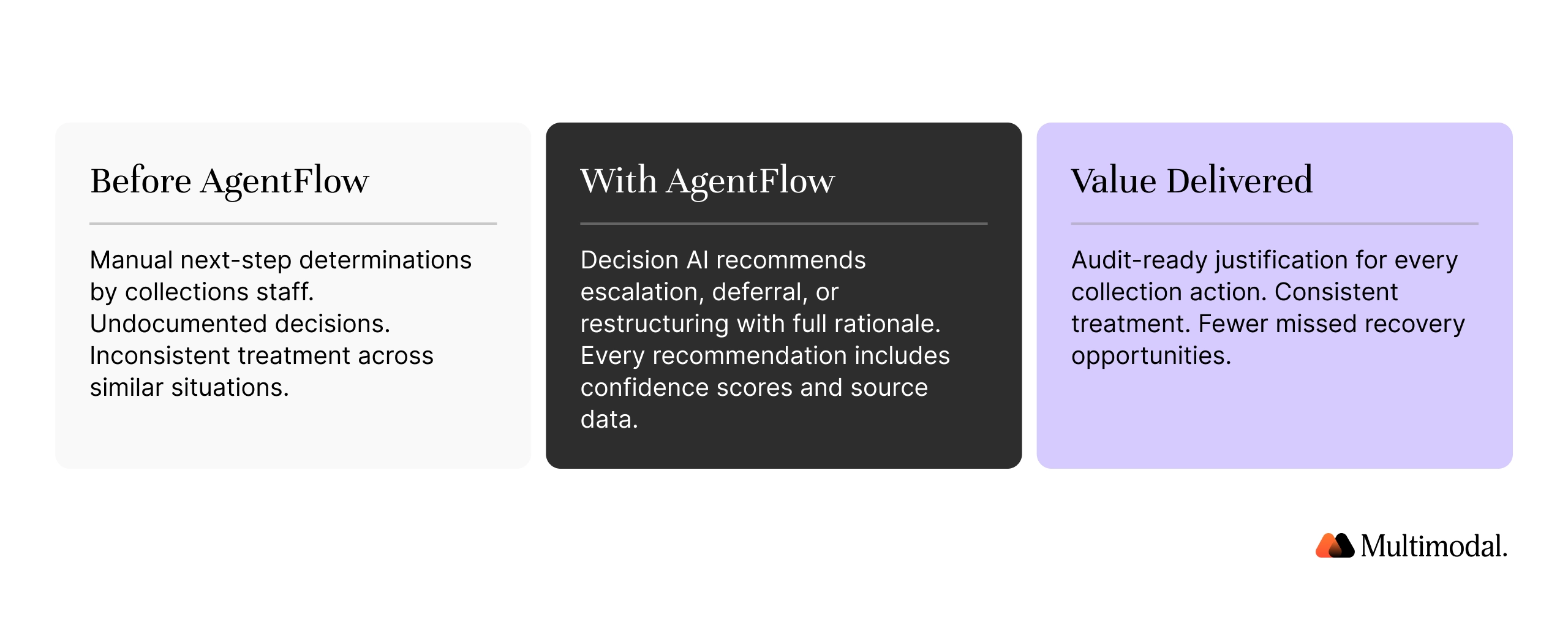
Collections is one of the most sensitive areas in loan servicing. Decisions about forbearance, modification, or escalation carry regulatory implications and direct financial impact. AgentFlow's Decision AI provides recommendations grounded in policy, borrower history, and portfolio-level risk management, while maintaining detailed auditing trails for each action.
Regulatory Reporting and Analysis
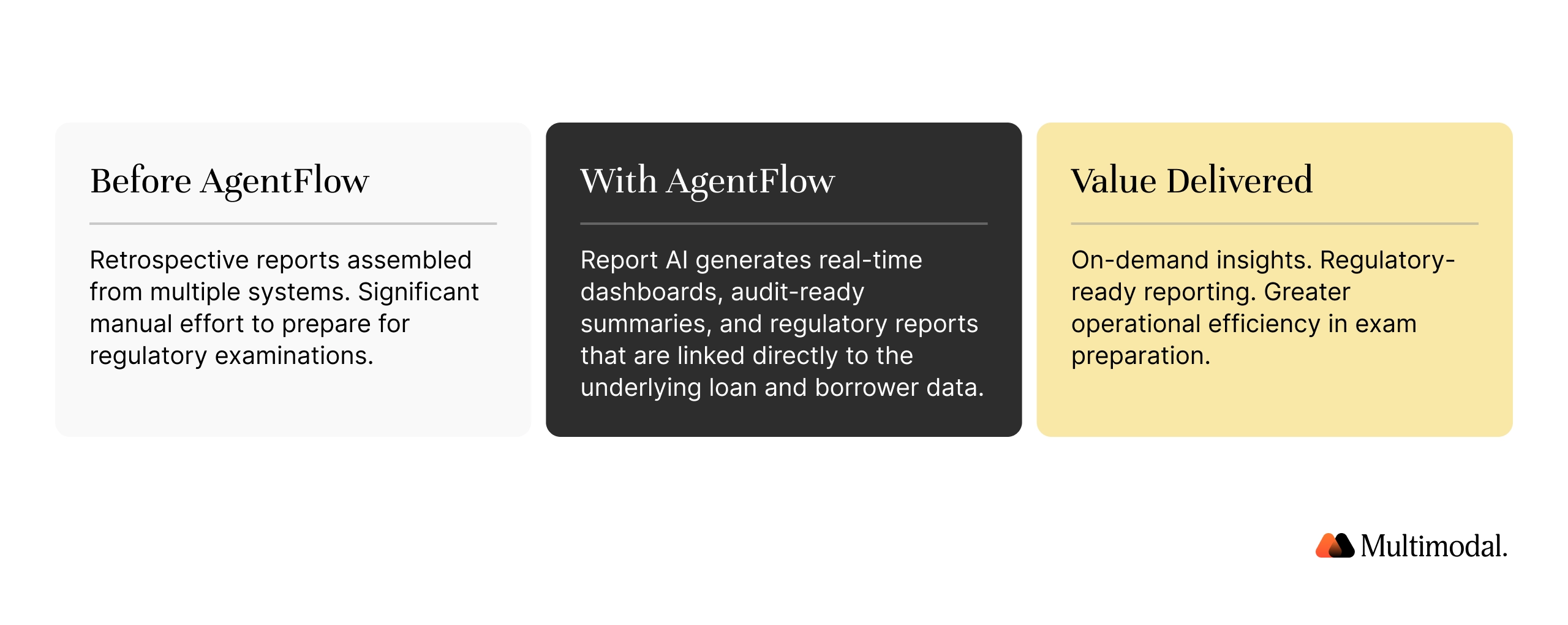
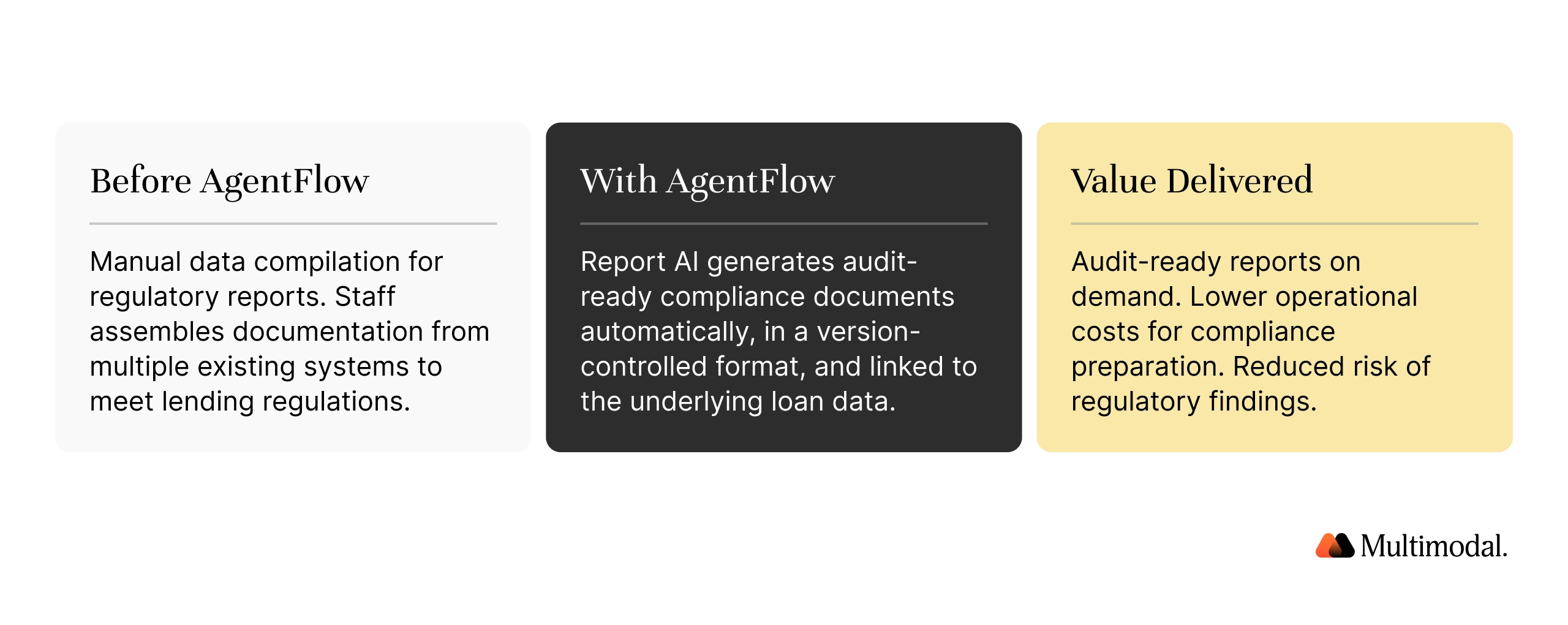
For compliance officers and risk management teams, automated regulatory reporting transforms exam preparation from a multi-week scramble into a routine process. Reports pull directly from the same data used in day-to-day servicing operations, ensuring data integrity and eliminating the reconciliation issues that arise when reports are compiled from disparate existing systems.
How AgentFlow Playbooks Work
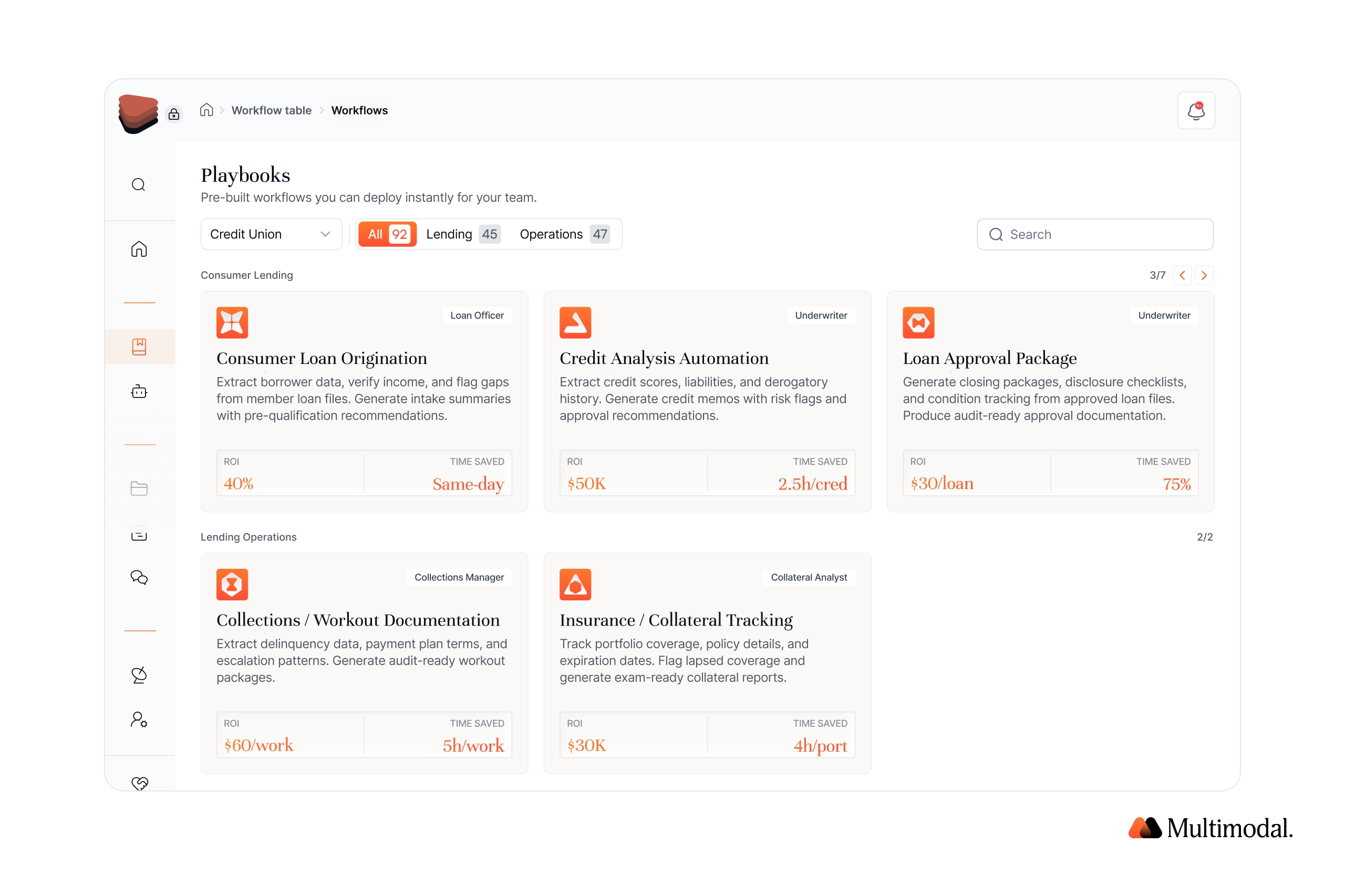
A Playbook is a deployment-ready workflow template that encodes the real operating logic of a lending process. Playbooks are not just a tool for configuration. They contain the decision rules, system integrations, escalation thresholds, and compliance checks that define how a lending operation actually runs. This is what makes AgentFlow more than just a tool for task automation.
Automated loan workflows powered by Playbooks follow a straightforward process:
- Select the Right Playbook. Playbooks are tailored by lending product (personal loans, mortgages, commercial loans, auto loans) and workflow stage (origination vs. servicing). Each Playbook reflects the specific lending regulations, document requirements, and decision logic for that product type.
- Clone It. Pre-configured Playbooks based on real lending workflows clone instantly into your workspace. No months-long configuration or custom software development required.
- Customize (Optional). Adjust decision thresholds, credit scoring parameters, integration endpoints, and escalation rules to match your institution's policies. Customization happens within the Playbook framework, not from scratch.
- Save and Run. Once saved, the Playbook is live and ready to execute on real loan applications and borrower records.
- Ingest Work. Execution begins by ingesting real data: incoming loan applications for origination, or active borrower records from your loan portfolio for servicing.
- Track Execution. Every loan and borrower moves through execution states with full visibility. Lending officers see status, exceptions, and audit trails in real time through AgentFlow's Progress Tracker.
Most teams go from Playbook selection to live execution in 6 to 12 weeks. That speed to production matters: McKinsey's 2025 global banking report notes that institutions driving end-to-end transformation of business domains with AI at the center capture material gains, while those deploying narrow point solutions often plateau after initial experiments.
Built for Regulated Lending
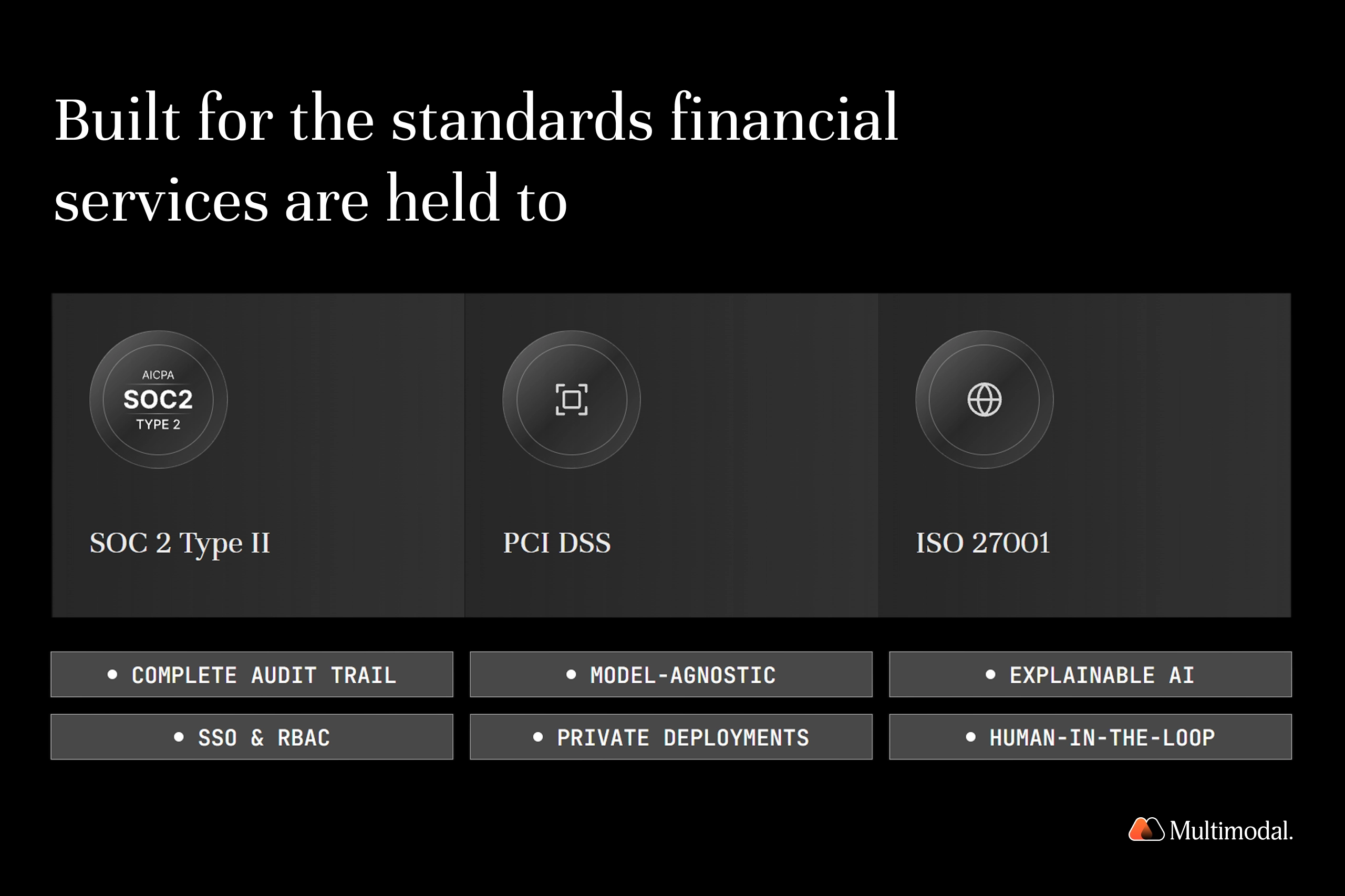
Financial institutions operate under strict lending regulations from agencies including the CFPB, NCUA, OCC, and state regulators. Any process automation platform handling loan origination or loan servicing must meet the security, explainability, and audit requirements that regulated lending demands.
AgentFlow addresses these requirements at the platform level:
- Deployment options: Runs in customer environments including VPC, on-premises, and single-tenant SaaS. Sensitive borrower data never leaves your infrastructure.
- Certifications: SOC 2 Type II certified, with ISO 27001 alignment. Encryption uses AES-256 at rest and TLS 1.3 in transit.
- Audit trails: Every AI decision is logged with confidence scores, decision paths, and source data. Compliance officers can trace any credit decision or servicing action back to its inputs.
- Human escalation: Decision thresholds route uncertain or high-risk cases to human reviewers automatically. This human-in-the-loop design ensures that automated systems support rather than replace human judgment on complex decisions.
- Explainability: Every recommendation includes a full rationale, which is critical for CFPB fair lending examinations, NCUA supervisory reviews, and state-level regulatory compliance.
- Model governance: Regular retraining aligned with evolving lending regulations and institutional policy changes.
For origination-specific compliance, AgentFlow supports AML/KYC verification workflows, fair lending documentation, and credit decision explainability. For servicing, the platform handles CFPB exam readiness, collections regulatory compliance, and loan modification documentation with consistent audit trails throughout.
AgentFlow is SOC 2 Type II certified and runs in your infrastructure. Every credit decision and servicing action includes an audit trail with confidence scores and source data, so your compliance team can justify outcomes to regulators on demand.
Simplify Your Lending Tech Stack
One of the most common concerns from IT leaders evaluating loan automation is integration complexity. Most financial institutions already run loan origination systems (LOS) like nCino, Encompass, FIS, or LoanPro, along with core banking platforms, CRM tools, and reporting software solutions.
AgentFlow does not replace your existing systems. It works as an orchestration and intelligence layer that connects your current technology stack into automated loan workflows. Through secure APIs, AgentFlow integrates with your LOS, core banking system, third-party data providers, notification tools, and reporting platforms.
This approach eliminates the fragile automation chains and manual handoffs that often characterize legacy lending operations. Instead of staff manually moving data between disconnected software solutions, AgentFlow's AI agents coordinate across systems automatically, maintaining data integrity throughout the entire process.
The result is a simplified technology stack where automation tools work together rather than in silos and where existing systems gain intelligence without requiring replacement. For financial institutions investing in digital onboarding and process automation, this integration-first approach delivers a competitive advantage: faster loan processing, lower operational costs, and a foundation for sustained business growth.
.svg)
Customize Your Playbook or Get Expert Help
Teams can customize Playbooks independently, adjusting decision thresholds, credit scoring parameters, integration endpoints, and escalation rules to match institutional policies. For complex deployments involving multiple lending products, regulatory jurisdictions, or legacy system integrations, Multimodal provides forward-deployed engineering support.
Forward-deployed engineers work alongside your IT, compliance, and business development teams during implementation. They handle the technical configuration, validation, and testing that ensures Playbooks perform correctly in your specific environment. This support model bridges the gap between a pre-built Playbook and a fully customized production deployment.
Most implementations reach production in 6 to 12 weeks, including integration testing, compliance validation, and user training. That timeline reflects the advantage of starting from a tested Playbook rather than building custom automation from scratch.
.svg)


FAQs
Yes. AgentFlow automates both through connected Playbooks. Data collected during origination carries into servicing automatically, eliminating the manual data entry and system reconciliation that typically occurs when loans move from origination to servicing. This connected approach maintains consistent data and audit trails across the entire loan lifecycle.
Yes. AgentFlow integrates with major LOS platforms including nCino, Encompass, FIS, and LoanPro through secure APIs. It functions as an orchestration layer that enhances your existing systems rather than replacing them.
AgentFlow offers VPC, on-premises, and single-tenant SaaS deployment options. Data is encrypted with AES-256 at rest and TLS 1.3 in transit. The platform is SOC 2 Type II certified and supports role-based access controls, audit logging, and data residency requirements.
Yes. Every credit decision includes the confidence score, decision path, source data, and policy criteria applied. This explainability is critical for CFPB fair lending requirements, NCUA examinations, and state regulatory reviews.
Most implementations reach production in 6 to 12 weeks, including Playbook customization, integration testing, compliance validation, and user training. Forward-deployed engineering support is available for complex deployments.
Yes. Playbooks are tailored by lending product and workflow stage. Personal loan, mortgage, commercial lending, and auto loans each have purpose-built Playbooks reflecting their specific document requirements, regulatory frameworks, and decision criteria.
No. AgentFlow works as an orchestration and intelligence layer on top of your existing LOS, core banking platform, and other software solutions. It connects these systems into automated workflows through secure APIs.
Track loan processing time from application to decision, cost per loan originated, first-pass document completeness rates, decision consistency across officers, audit preparation time, delinquency intervention speed, and customer satisfaction scores. AgentFlow's Progress Tracker provides real-time visibility into these key metrics and advanced analytics.
See Loan Automation in Action
.svg)
.svg)