
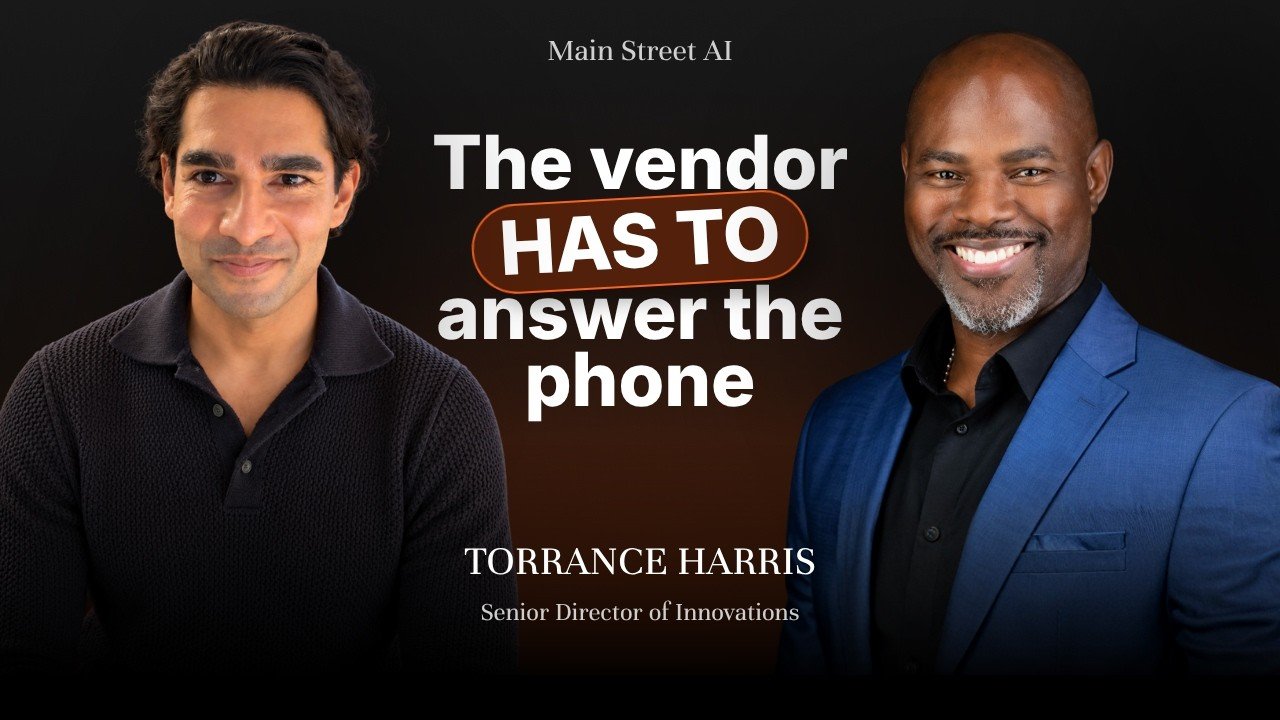


This is a summary of an episode of Main Street AI, an educational podcast on AI led by our founder. Join 3,700+ business leaders and AI enthusiasts and be the first to know when new episodes go live. Subscribe to our newsletter here.
TL;DR:
- Small credit unions understand AI, fraud tools and analytics. Affordability is what holds them back
- Torrance estimates 60 to 65% of Louisiana's roughly 137 credit unions are at $100M in assets or below
- Luminate's answer is group pricing: one price for ten $50M credit unions instead of ten separate deals
- Before a vendor gets introduced, it has to show it will still be engaged 12 months after signing
- Credit unions rarely call asking for AI. They call about fraud, lending decisions and overwhelmed staff
- His message on mergers: small credit unions don't have to merge to keep up on technology
Before we dive into the key takeaways from this episode, be sure to catch the full episode here:
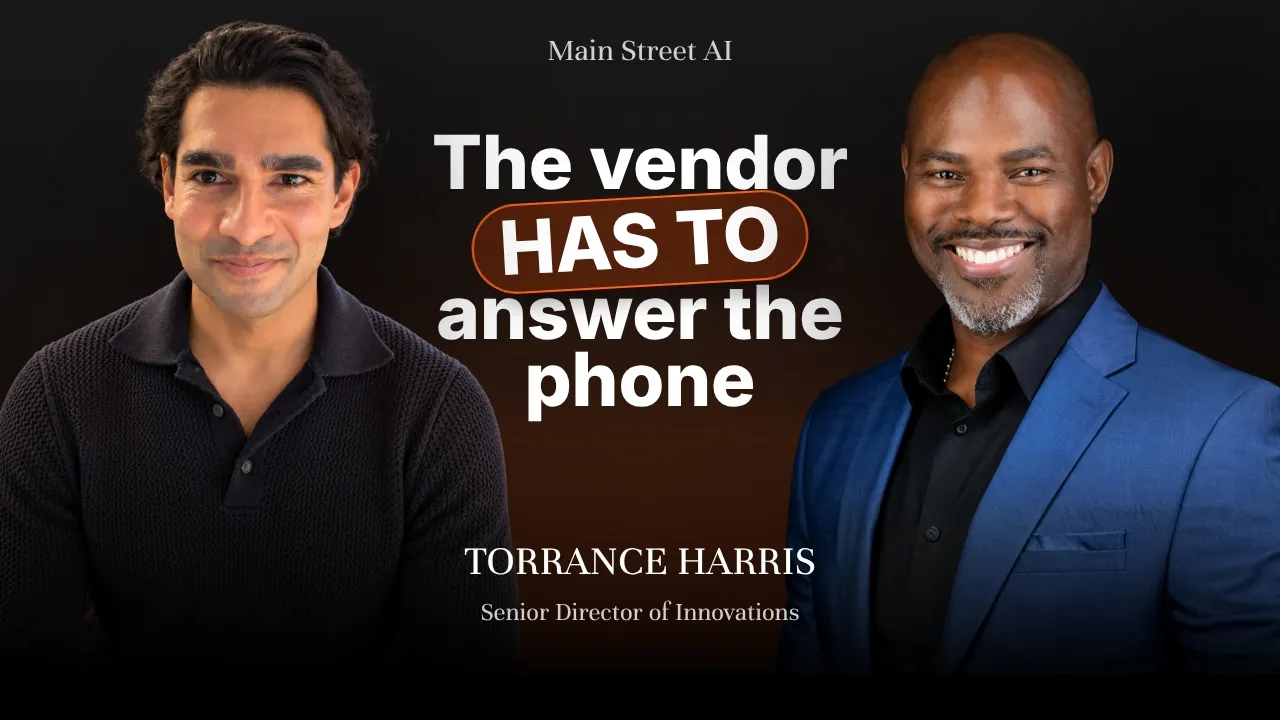
Why Don't Small Credit Unions Adopt AI?
Vendors often assume small credit unions lack the talent or the appetite to innovate. Torrance hears something different from Louisiana's credit unions: they know what they need and they want it. The price is where it falls apart.
“Many of the smaller credit unions, they know exactly what they need. They understand AI, they understand fraud solutions, analytics and so forth. And they want those services. But the math is just not mathing for them.”
Torrance Harris
Small institutions also run with fewer people, so a tool that needs heavy setup costs them twice. That changes what they're paying for.
“Smaller credit unions aren't buying technology, they're buying outcomes.”
Torrance Harris
How Can Small Credit Unions Afford AI?
Luminate's approach is group purchasing. Instead of ten small credit unions each negotiating alone, the league asks a vendor for one price if it brings in ten credit unions at $50 million each. The vendor gets scale, and the credit unions get a price built for their size.
Louisiana shows why this matters. By Torrance's estimate, 60 to 65% of the state's roughly 137 credit unions are at $100 million or below, and only about 5% reach $1 billion. Nationally, 2,438 of 4,214 federally insured credit unions had less than $100 million in assets in the second quarter of 2026, according to the NCUA.
“Bring the technology but also make it affordable.”
Torrance Harris
What Should a League Ask Before Introducing a Vendor?
As a credit union executive, Torrance saw vendor promises turn into his staff's workload. Now he screens vendors before they reach Luminate's members.
“The easiest thing in the world is to introduce a vendor. The hardest responsibility is protecting the trust.”
Torrance Harris
His questions: Can you support a small institution? Will you answer the phone? Do you understand how a credit union works? Will you disengage 12 months after the contract is signed? Will you act as an extension of the team? He says the last one covers everything, because the real test comes when implementation goes badly and someone has to pick up.
“If a solution doesn't generally move an institution forward, it's not a fit regardless of the revenue opportunity for us.”
Torrance Harris
What Do Credit Unions Actually Ask For?
Very few credit unions call Luminate asking for AI. They describe problems: fraud, slow lending decisions, first payment defaults, staff stretched too thin. Fraud prevention and lending are the two use cases he hears about most, and membership growth, loan growth and fraud come up every year.
Part of his job is separating a real business need from fear of missing out on the latest technology.
“The better question isn't, do we need AI? The better question is what business problem are we trying to solve?”
Torrance Harris
Do Small Credit Unions Have to Merge?
Many small credit unions talk about merging for economies of scale. Luminate tells them they don't have to. For the smallest Louisiana credit unions to thrive, Torrance says three things have to be true: cybersecurity, fraud tools, data analytics and AI become accessible to everyone; leagues build buying power and shared services; and vendors offer pricing and support models designed for smaller institutions.
“The future isn't all about whether a small credit union can survive. The question is whether we can collectively build an environment where they can compete.”
Torrance Harris
How This Works in Practice
For a $50 million credit union, the vendor that matters is the one that stays through adoption.
“If a vendor drops software off and walks away, that's not helpful.”
Torrance Harris
That's the gap AgentFlow is built for. It runs AI agents for lending, fraud review and back-office work with staff reviewing exceptions, and Decision AI supports faster, consistent lending decisions. See how it works for credit unions.
Want more? Read why the CUES COO expects 60% of credit unions to stand alone in 10 years, and how to pick a credit union AI vendor.
Frequently Asked Questions
Why don't small credit unions adopt AI?
Price is the main barrier. Torrance Harris of Luminate says small credit unions understand AI and want it, but tools priced for billion-dollar institutions don't work for a $50 million one with a small staff.
How can small credit unions afford AI?
Through group purchasing negotiated by a credit union league. Luminate asks vendors for one price across a group of small credit unions, which gives the vendor scale and the credit unions a workable price.
What should a credit union ask an AI vendor before signing?
Ask whether the vendor can support a small institution, will answer the phone, understands credit unions and will stay engaged after the first 12 months. Torrance says the most important question is whether it will act as an extension of your team.
What are the biggest AI use cases for small credit unions?
Fraud prevention and lending. Credit unions usually describe problems such as first payment defaults, slow decisions or overwhelmed staff, and AI is one possible fix.
Do small credit unions have to merge to survive?
Luminate's position is no. Torrance says small credit unions can stay independent if core technology becomes accessible, leagues build shared buying power and vendors price for smaller institutions.
How many credit unions in Louisiana are small?
Most of them. Torrance estimates 60 to 65% of Louisiana's roughly 137 credit unions have $100 million or less in assets.
 Continue exploring