Exploring the Top 8 AI Trends in Fintech in 2026



Table of contents

Key Takeaways:
- Decision Intelligence combines AI and real-time data to improve risk assessments, fraud detection, and compliance.
- Conversational AI provides 24/7 support, personalized responses, and reduces operational costs.
- Predictive analytics enables more intelligent investment decisions by analyzing market trends and optimizing portfolios.
- AI automates compliance tasks such as identity verification and fraud detection, enabling faster regulatory compliance.
- AI detects fraudulent transactions in real-time, improving security and reducing false positives.
Get 1% smarter about AI in financial services every week.
Receive weekly micro lessons on agentic AI, our company updates, and tips from our team right in your inbox. Unsubscribe anytime.

The financial industry is being reshaped by rapid AI adoption across fintech companies and financial institutions. In 2026, AI trends in fintech are redefining how organizations manage risk management, drive customer engagement, and improve operational efficiency, powered by advances in generative AI, AI systems, and real-time analytics.
As regulatory scrutiny intensifies and global regulators introduce frameworks such as the EU AI Act, financial institutions are increasingly adopting AI to strengthen regulatory compliance, improve fraud detection, and modernize core financial infrastructure. The impact is most visible in high-risk, high-scale areas such as risk analytics, identity verification, fraud prevention, and real-time payments, where AI enables faster decisions with reduced human intervention.
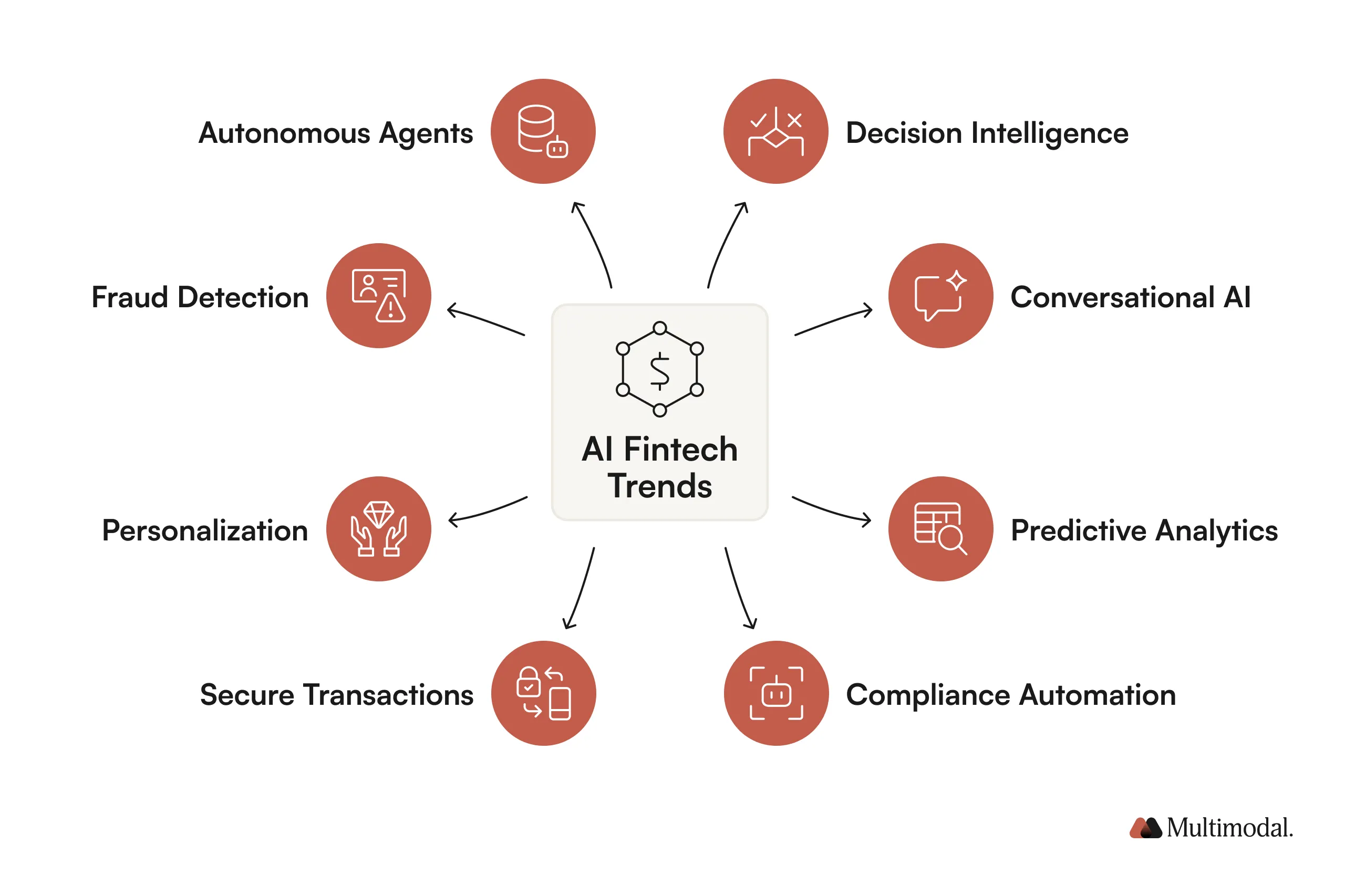
Beyond process optimization, AI is unlocking new business models and revenue models across financial services, from embedded finance and personalized products to autonomous AI agents operating across financial platforms. This blog explores eight key fintech trends shaping financial services in 2026 and how leading institutions are using AI to gain a lasting competitive advantage.
8 Latest AI Trends in Fintech
1. Decision Intelligence for Risk Management
Decision Intelligence (DI) is a leading AI trend in fintech for 2026, reshaping how financial institutions assess and manage risk. By combining AI systems with decision-making frameworks, DI enables faster, more accurate, data-driven decisions across risk, fraud, and compliance.
Unlike traditional risk models, DI leverages real-time data, machine learning, and advanced algorithms to evaluate risk scores, detect fraud patterns, and respond to market signals dynamically. By processing data from customer profiles, transaction histories, and external sources, DI delivers scalable, real-time risk analytics that improve both accuracy and speed.
Key Benefits:
- Improves risk assessment accuracy using real-time, AI-driven insights
- Automates decisions, reducing manual effort and operational costs
- Scales risk analysis across high transaction volumes
- Supports continuous regulatory compliance through automated checks
2. Conversational AI for Seamless Customer Experience
Conversational AI is a key AI trend in fintech, driving customer engagement as financial institutions modernize digital channels and banking apps. Using natural language processing and machine learning, AI-powered assistants embedded in apps and websites provide instant support across everyday financial tasks.
These systems analyze customer data to deliver personalized, context-aware responses, handling everything from balance checks and transfers to loan applications and identity verification. As conversational AI continues to evolve, it reduces service costs while improving customer satisfaction and consistency.
Key Benefits:
- Delivers 24/7 customer support and engagement
- Automates routine queries, reducing operational costs
- Personalizes responses using customer data
- Integrates seamlessly with banking and fintech platforms
3. AI-Driven Predictive Analytics for Investment Strategies
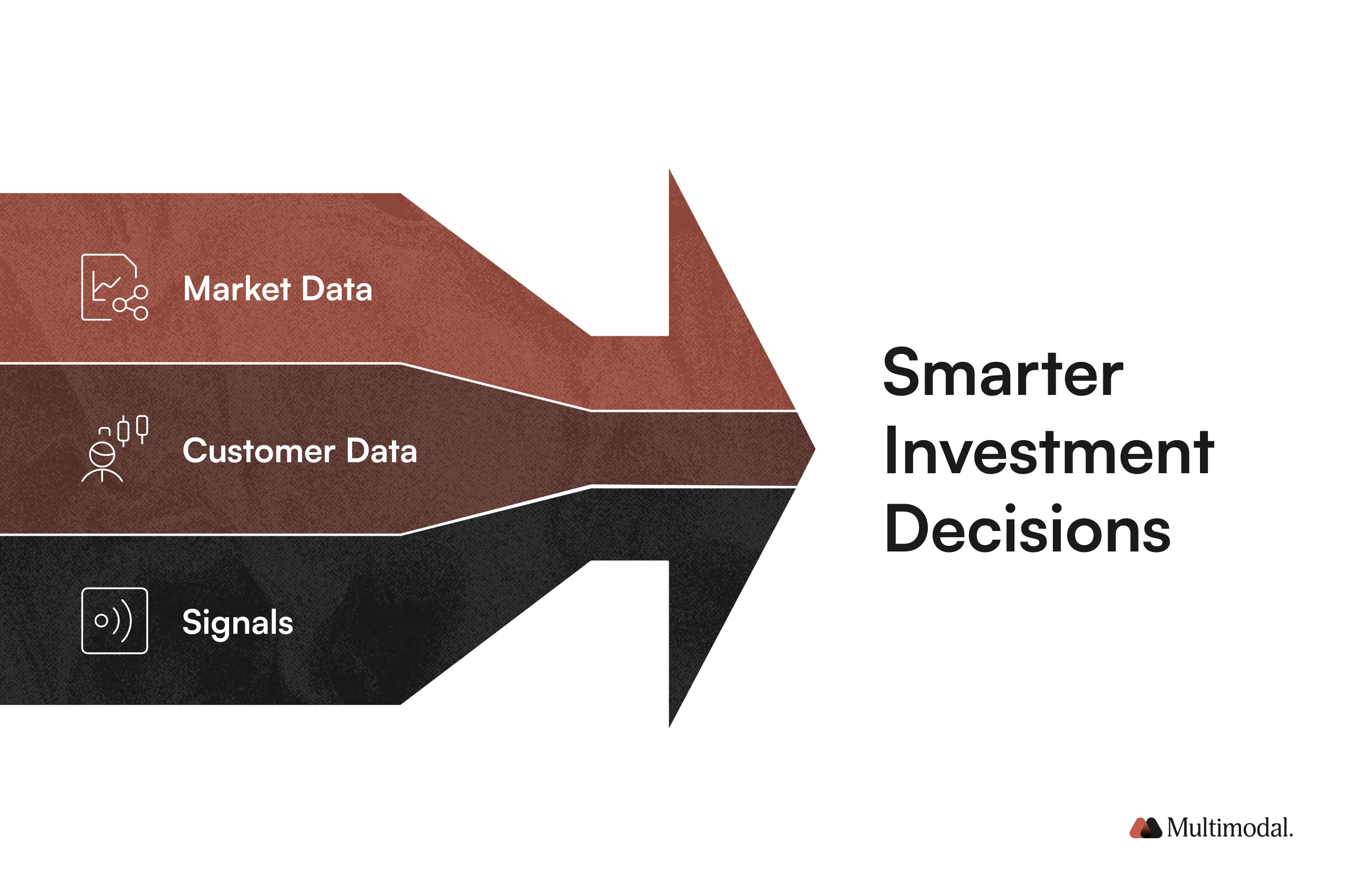
AI-driven predictive analytics is becoming essential for fintech firms to optimize investment and portfolio strategies. By processing real-time and historical data, ranging from market trends to economic indicators, AI systems help institutions anticipate market movements and identify opportunities faster.
These models continuously learn and adapt, enabling firms to assess risk, optimize asset allocation, and align investment decisions with emerging revenue models. The result is faster, more informed decision-making in increasingly volatile markets.
Key Benefits:
- Enhances portfolio management with AI-powered risk analytics
- Predicts market trends to improve investment outcomes
- Accelerates decision-making using real-time data
- Identifies opportunities while minimizing downside risk
4. AI in Compliance Automation
As regulatory scrutiny intensifies, AI is playing a critical role in automating compliance across financial institutions. Fintech companies are increasingly using AI tools to manage regulatory requirements, reduce compliance risk, and adapt to evolving standards such as the EU AI Act and data governance frameworks.
AI systems automate KYC, AML, identity verification, and transaction monitoring by analyzing customer data and activity in real time. This allows institutions to detect compliance risks early, reduce manual workloads, and ensure faster regulatory reporting.
Key Benefits:
- Automates identity verification and fraud-related compliance checks
- Continuously monitors transactions to reduce non-compliance risk
- Lowers compliance costs through automation
- Enables faster, more reliable regulatory reporting
These compliance and fraud prevention capabilities are especially important for businesses handling remote technical services and digital support transactions. Providers offering merchant account services for IT support can help businesses manage higher fraud exposure, recurring billing challenges, and payment verification requirements while maintaining smoother transaction processing. As AI-driven compliance tools become more advanced, specialized payment infrastructure is becoming increasingly valuable for IT and tech-support companies operating at scale.
5. AI-Powered Blockchain for Secure Transactions
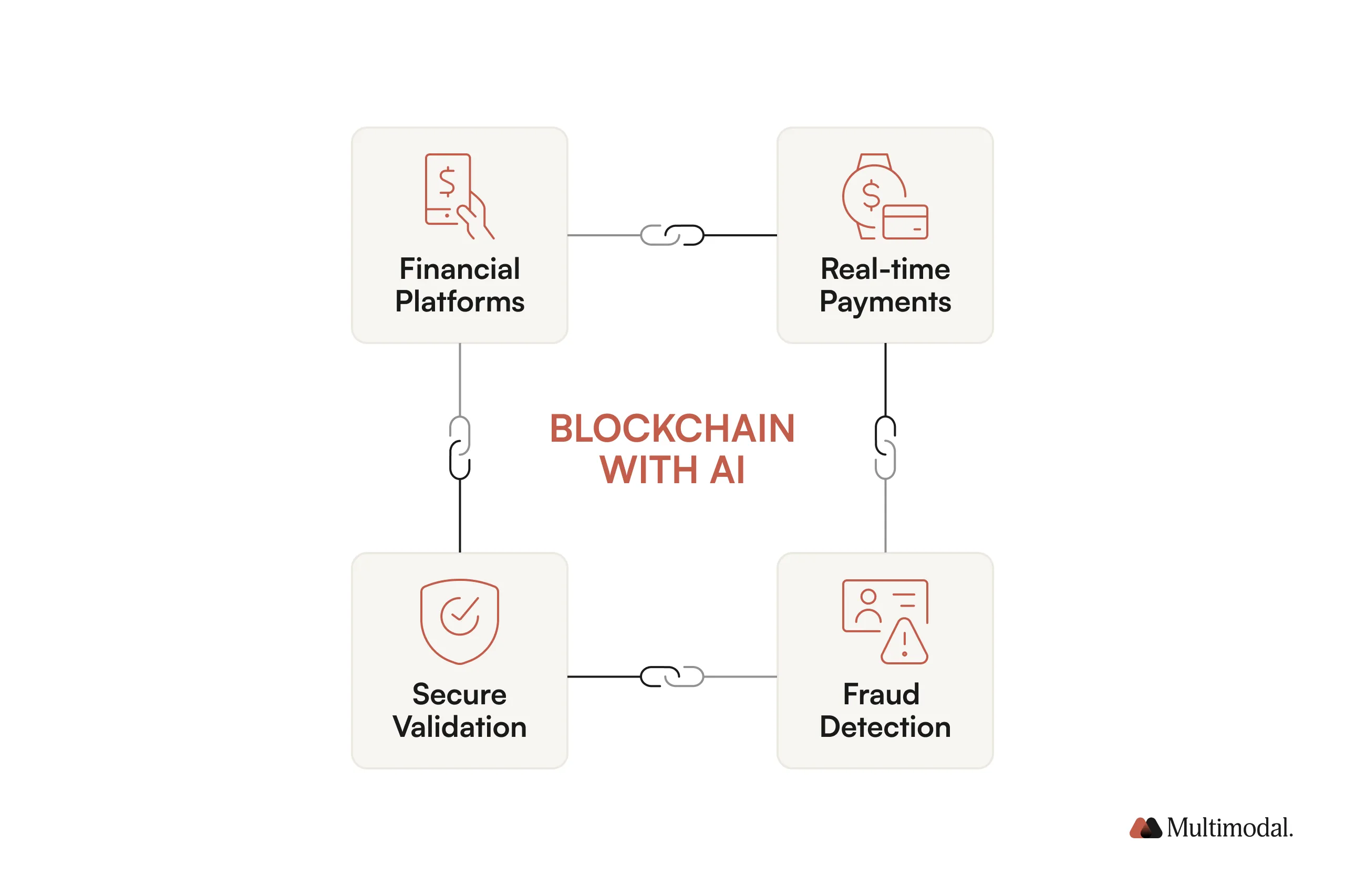
AI is increasingly enhancing blockchain networks by improving security, scalability, and transaction efficiency. While blockchain ensures transparency and immutability, AI strengthens fraud detection by analyzing transaction patterns and identifying anomalies in real time.
AI systems monitor blockchain activity across multiple data sources to detect irregular behavior, accelerate transaction validation, and reduce fraud risks. This integration is especially valuable for real-time payments and decentralized financial platforms.
Key Benefits:
- Detects blockchain fraud in real time
- Speeds up transaction verification and settlement
- Improves scalability for financial platforms
- Enhances security through intelligent monitoring
6. AI for Personalization in Financial Products
AI-driven personalization is becoming a competitive differentiator for fintech companies aiming to increase customer loyalty and engagement. By analyzing data such as spending behavior, credit history, and savings patterns, AI systems tailor financial products to individual users.
Embedded AI agents personalize the customer journey, from product recommendations to pricing and timing, resulting in more relevant offerings, stronger relationships, and higher retention rates.
Key Benefits:
- Delivers personalized financial products at scale
- Improves customer retention and engagement
- Increases conversion rates through targeted recommendations
- Identifies upsell and cross-sell opportunities
Build AI Your Industry Can Trust
Deploy custom multimodal agents that automate decisions, interpret documents, and reduce operational waste.
7. AI in Fraud Detection and Prevention
AI is transforming fraud detection by enabling real-time analysis of transaction data across financial platforms. These systems identify unusual patterns, flag suspicious behavior, and block fraudulent transactions before losses occur.
By continuously learning from historical and real-time data, AI reduces false positives while improving detection accuracy, particularly in high-risk areas such as instant and cross-border payments.
Key Benefits:
- Detects and blocks fraud in real time
- Continuously adapts to evolving fraud patterns
- Reduces false positives and manual reviews
- Strengthens regulatory compliance through automated alerts
8. Autonomous Agents for Back-End Operations
Autonomous AI agents are streamlining back-office operations by automating repetitive, rules-based tasks across financial institutions. These agents handle workflows such as document processing, data extraction, identity verification, and reporting with minimal human involvement.
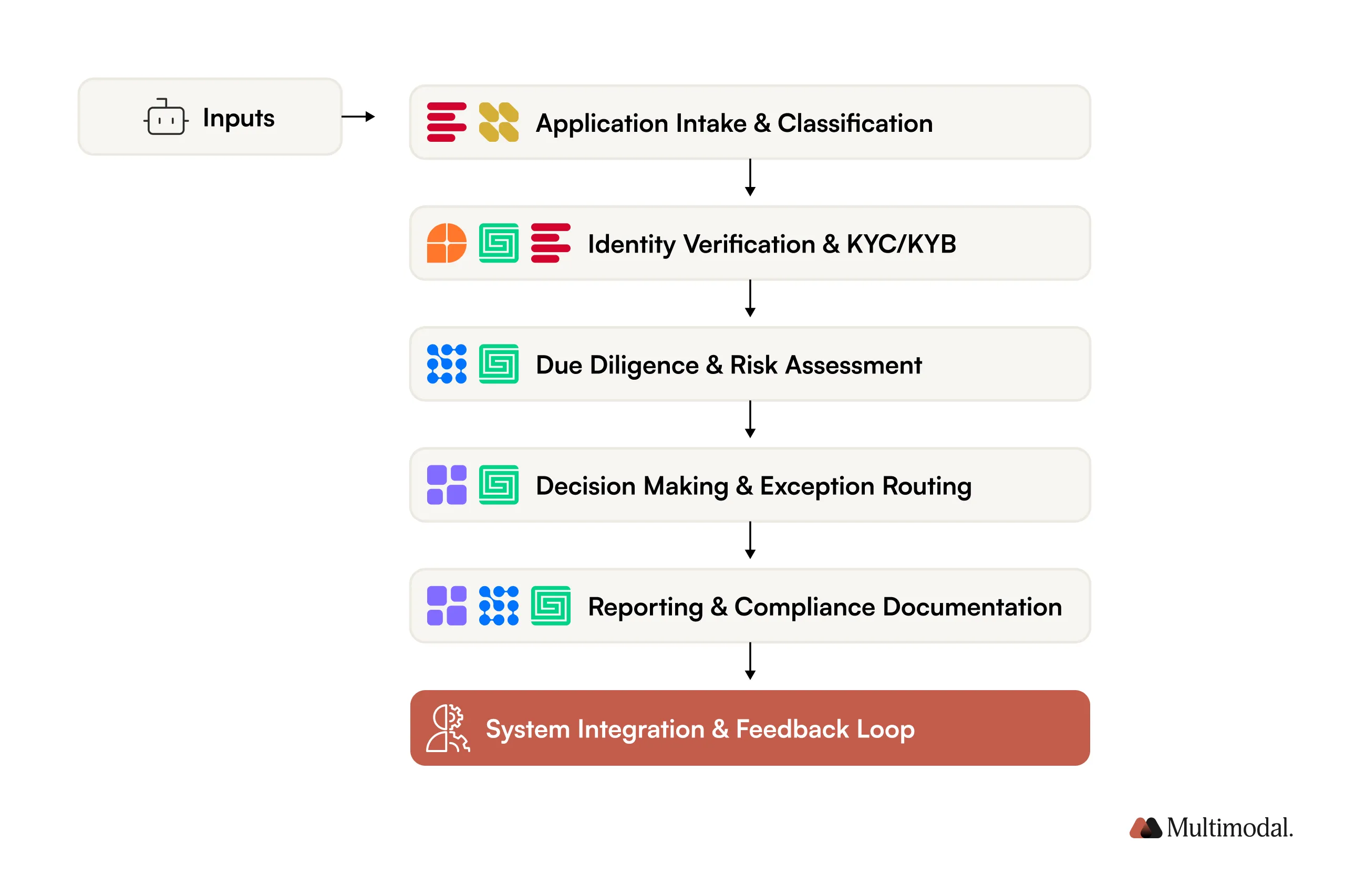
By learning and adapting over time, autonomous agents improve operational efficiency, reduce errors, and support scalable growth, while ensuring compliance and data governance.
Key Benefits:
- Automates back-office workflows to improve efficiency
- Reduces human error in operational processes
- Frees teams to focus on higher-value work
- Scales operations without increasing overhead
Transform Your Business With Finance AI
We’re witnessing AI transform the fintech industry at an unprecedented pace. Leading institutions are already adopting AI agents to improve risk management, fraud prevention, and regulatory compliance.
Improved security, personalized banking services, enhanced customer experience, and automated advisors are just some examples of how AI is already deeply integrated in this sector.
If you’d like to take advantage of the same benefits, please schedule a 30-minute call with our experts. You can discuss the best use cases for your business, see how our AI Agents work live, and get answers to any AI-related questions you may have.