AgentFlow enables seamless AI-driven compliance monitoring across onboarding, reporting, and transaction oversight.
Each workflow combines document parsing, decision-making, and escalation into audit-ready, traceable steps.
Banks can automate critical processes like AML checks, regulatory reporting, and internal controls monitoring with domain-specific, complaint AI agents.
The platform supports proactive compliance through real-time alerts, regulatory change tracking, and continuous monitoring.
Get 1% smarter about AI in financial services every week.
Receive weekly micro lessons on agentic AI, our company updates, and tips from our team right in your inbox. Unsubscribe anytime.
Thank you! Your submission has been received!
Oops! Something went wrong while submitting the form.
Agentic AI for Compliance in the Financial Industry
AgentFlow empowers financial institutions to deploy secure, traceable AI systems for regulatory compliance without disrupting existing infrastructure. It integrates seamlessly with your current environment through APIs, supporting zero-disruption connections across core banking systems, case management tools, and data sources.
As regulatory complexity and compliance costs continue to rise, financial institutions face mounting pressure to improve compliance efficiency while protecting sensitive data.
Manual processes create compliance gaps, delay reporting, and increase human error. AgentFlow solves this by automating key compliance workflows with governed, explainable artificial intelligence.
This post explores five high-impact AI compliance workflows for banks, showing how to automate onboarding, reporting, transaction oversight, and policy enforcement using AI agents.
The platform supports AI-driven compliance monitoring and regulatory reporting by:
automating data processing
risk assessment
audit preparation
Trained AI models parse unstructured data, execute decisions aligned with regulatory frameworks, assist compliance officers during reviews, and generate documentation that satisfies even the strictest audit requirements.
Each step is logged, auditable, and tunable to your institution's regulatory obligations.
1. Customer Onboarding & Identity Verification
Customer onboarding is often the first point where compliance processes intersect with customer experience. Delays, errors, or inconsistencies in identity verification can introduce regulatory risk and degrade trust.
With AgentFlow, banks automate this process end-to-end using specialized AI agents trained on financial compliance data.
Step #1
The onboarding workflow typically starts with Document AI agents that parse uploaded ID proofs, utility bills, or business registration forms. These agents extract and structure key customer data for downstream validation.
Step #2
Then, a decisioning agent performs biometric verification, using facial recognition and liveness detection models to confirm identity.
Step #3
Next, a sanctions screening step checks customer information against global and internal watchlists, such as OFAC and PEP.
Step #4
For deeper validation, Conversational AI supports compliance analysts by answering internal queries, such as whether a related entity has previously triggered alerts.
Step #5
If any anomalies or confidence issues arise, the profile is escalated for manual review. The decisioning agent bundles a risk assessment narrative, supporting documents, and data provenance logs for review by a compliance officer.
Key Benefits:
Eliminates human error in document reviews and identity checks.
Ensures consistent application of KYC and AML requirements.
Helps identify ultimate beneficial owners across jurisdictions.
Reduces false positives through structured data validation.
Speeds up onboarding while enhancing compliance monitoring.
2. Regulatory Reporting & Audit Preparation
Generating accurate, audit-ready reports on time remains a high-stakes challenge for compliance teams. Errors in financial disclosures or missed deadlines can trigger penalties and damage reputation.
AgentFlow streamlines these processes using intelligent automation, ensuring compliance with reporting obligations under Basel IV, SOX, MiFID II, and similar frameworks.
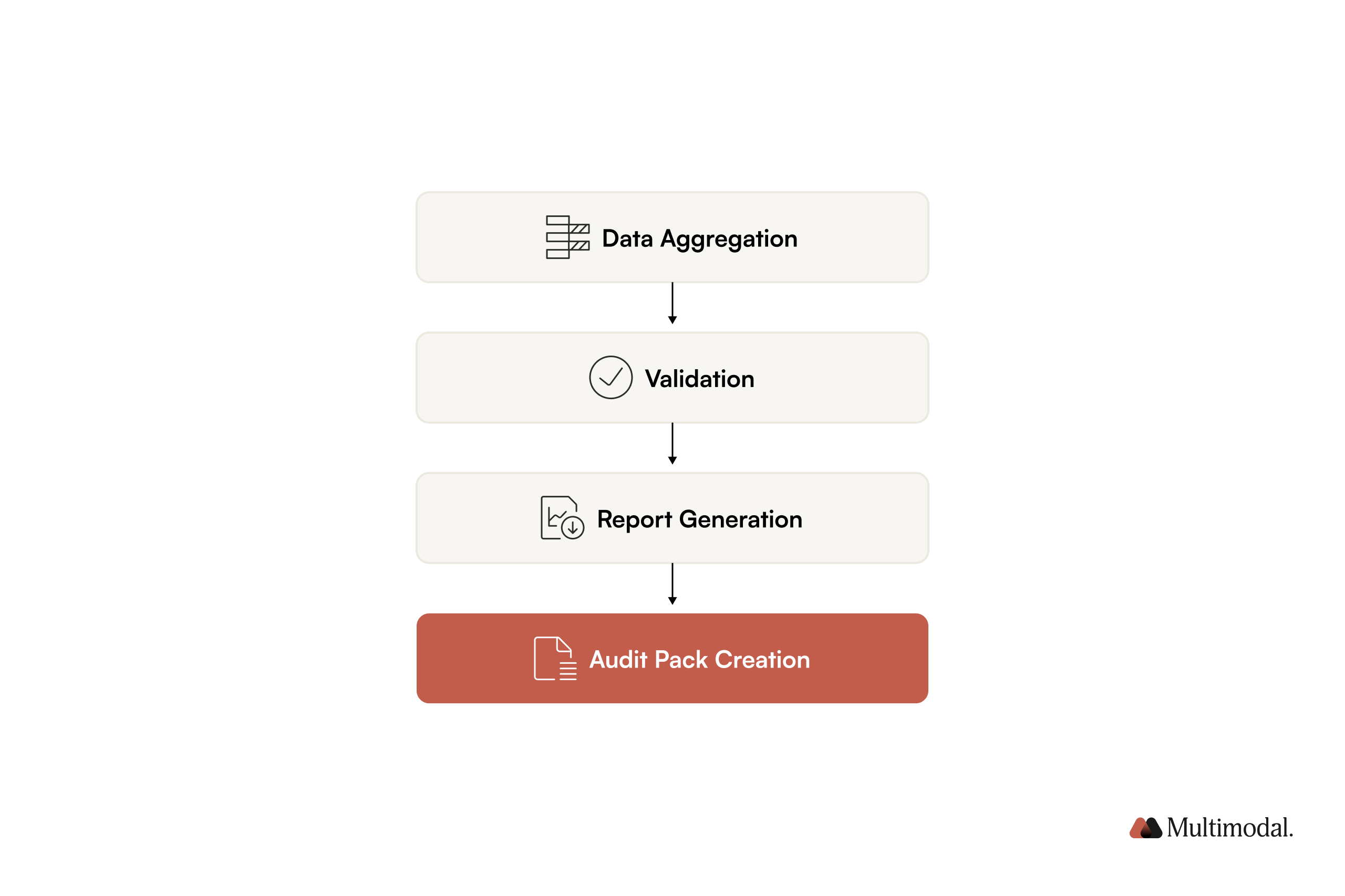
Step #1
AI agents start by aggregating structured and unstructured compliance data across internal systems, databases, third-party services, and archived records. This ensures nothing is missed and improves reporting coverage.
Step #2
Validation agents apply formatting rules, detect data quality issues, and flag inconsistencies that could impact accuracy or audit readiness. This helps resolve problems before submission.
Step #3
Report AI then drafts regulatory filings, automatically populating sections with validated data and embedding necessary audit trails, footnotes, and version references.
Step #4
Finally, AgentFlow creates audit packs with JSON-formatted logs, mapping each entry to confidence scores, agent decisions, overrides, and source data. These packs are accessible via API and ready for compliance review.
Key Benefits:
Supports continuous audit readiness with traceable documentation.
Improves data integrity and regulatory compliance.
Reduces human error and speeds up the reporting cycle.
Ensures complete oversight via version control and lineage mapping.
Frees compliance analysts from repetitive report generation tasks.
3. Real-Time Transaction Monitoring (AML & KYC)
As fraud patterns evolve and regulations tighten, banks need more than periodic reviews — they need continuous oversight.
AgentFlow enables real-time transaction monitoring with a multi-agent system built to detect anomalies, enforce AML policies, and reduce false positives that burden compliance teams.
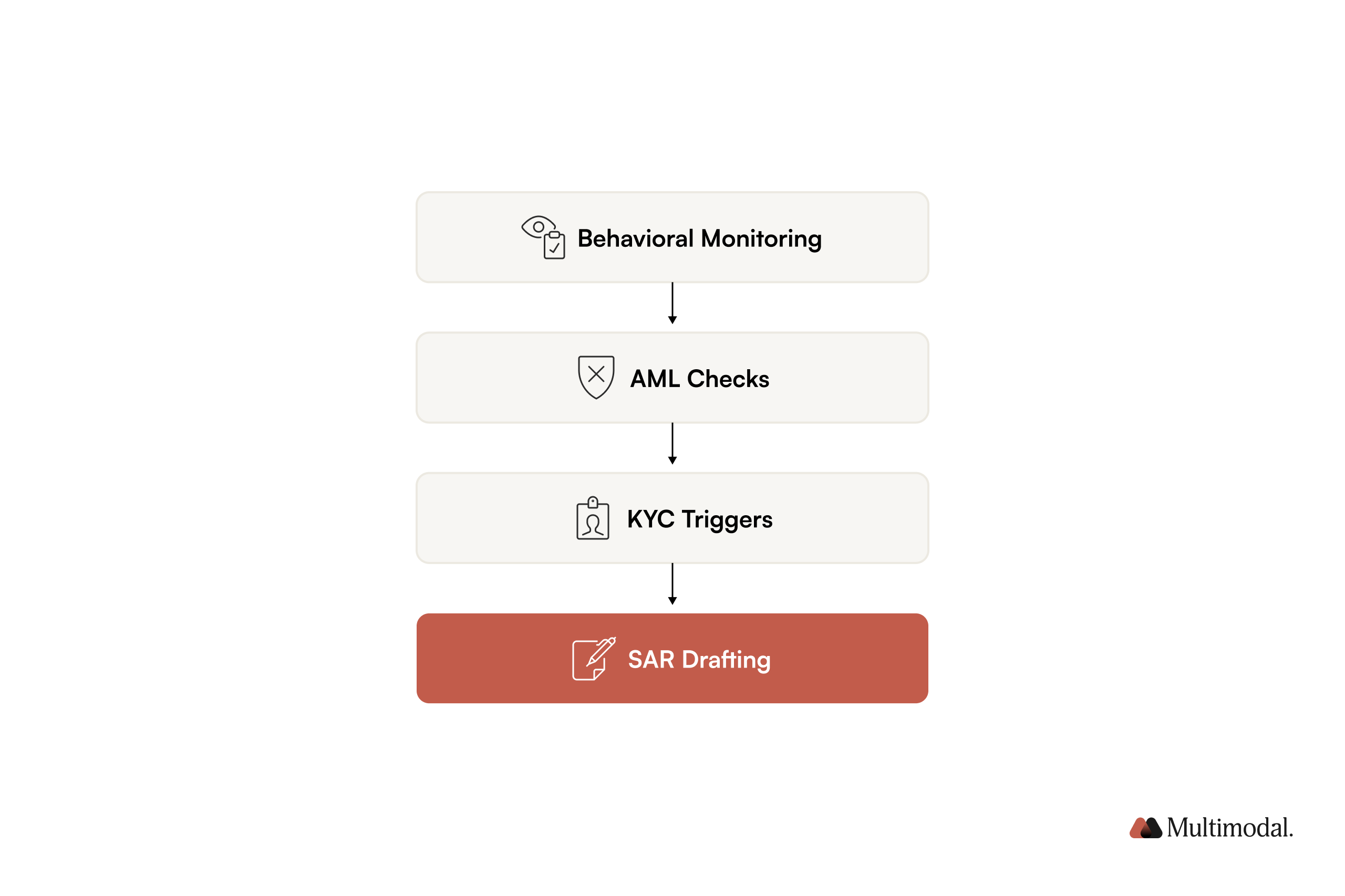
Step #1
Transactions are continuously monitored using predictive analytics. Behavioral baselines are established, and deviations are flagged by AI agents.
Step #2
Decision AI compares transactions against known fraud scenarios and anti-money laundering thresholds, reducing the burden of manual rule maintenance.
Step #3
Agentic AI identifies risk triggers in customer behavior, such as sudden changes in transaction volume, geographies, or counterparties, and updates customer risk profiles.
Step #4
When risks exceed configured thresholds, Report AI generates Suspicious Activity Reports (SARs) that include flagged transactions, risk management, and relevant compliance data.
Key Benefits:
Enables proactive fraud detection and continuous monitoring.
Detects fraud early while reducing false positives.
Frees up compliance analysts from low-risk reviews.
Keeps workflows adaptive as regulatory requirements and fraud tactics shift.
4. Regulatory Change Management
Staying compliant with evolving regulations requires more than merely reading legal bulletins. AgentFlow automates the monitoring, interpretation, and execution of regulatory changes so compliance teams can focus on implementation, not manual triage.
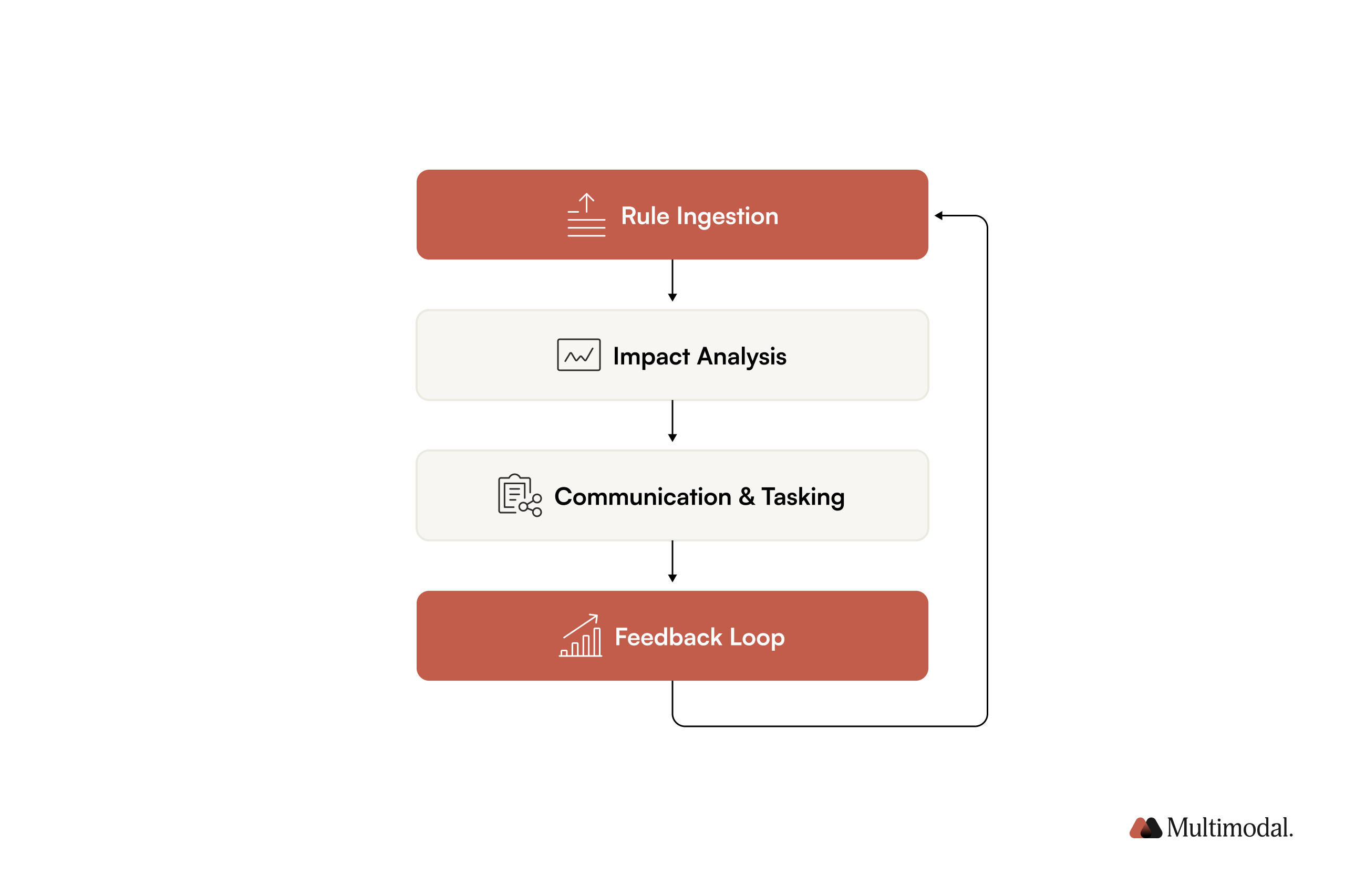
Step #1
New laws, rules, and regulatory updates are automatically parsed using natural language processing. AI agents extract obligations and contextual data.
Step #2
Decision AI evaluates the impact of changes against current internal policies and procedures. Gaps and violations are flagged for remediation.
Step #3
Database AI distributes updated rules, procedures, and tasks across relevant departments, ensuring each team receives only what’s relevant to them.
Step #4
Conversational AI enables compliance officers to provide feedback or request clarification. It flags issues that might delay or derail implementation.
Key Benefits:
Reduces risk of compliance breaches due to missed updates.
Speeds up adaptation to evolving regulations.
Centralizes regulatory intelligence for operational clarity.
Promotes consistent rule interpretation across departments.
Policy enforcement and internal controls are foundational to banking compliance, but they are often the most fragmented.
AgentFlow provides continuous monitoring and intelligent automation that aligns with internal policies and regulatory frameworks.
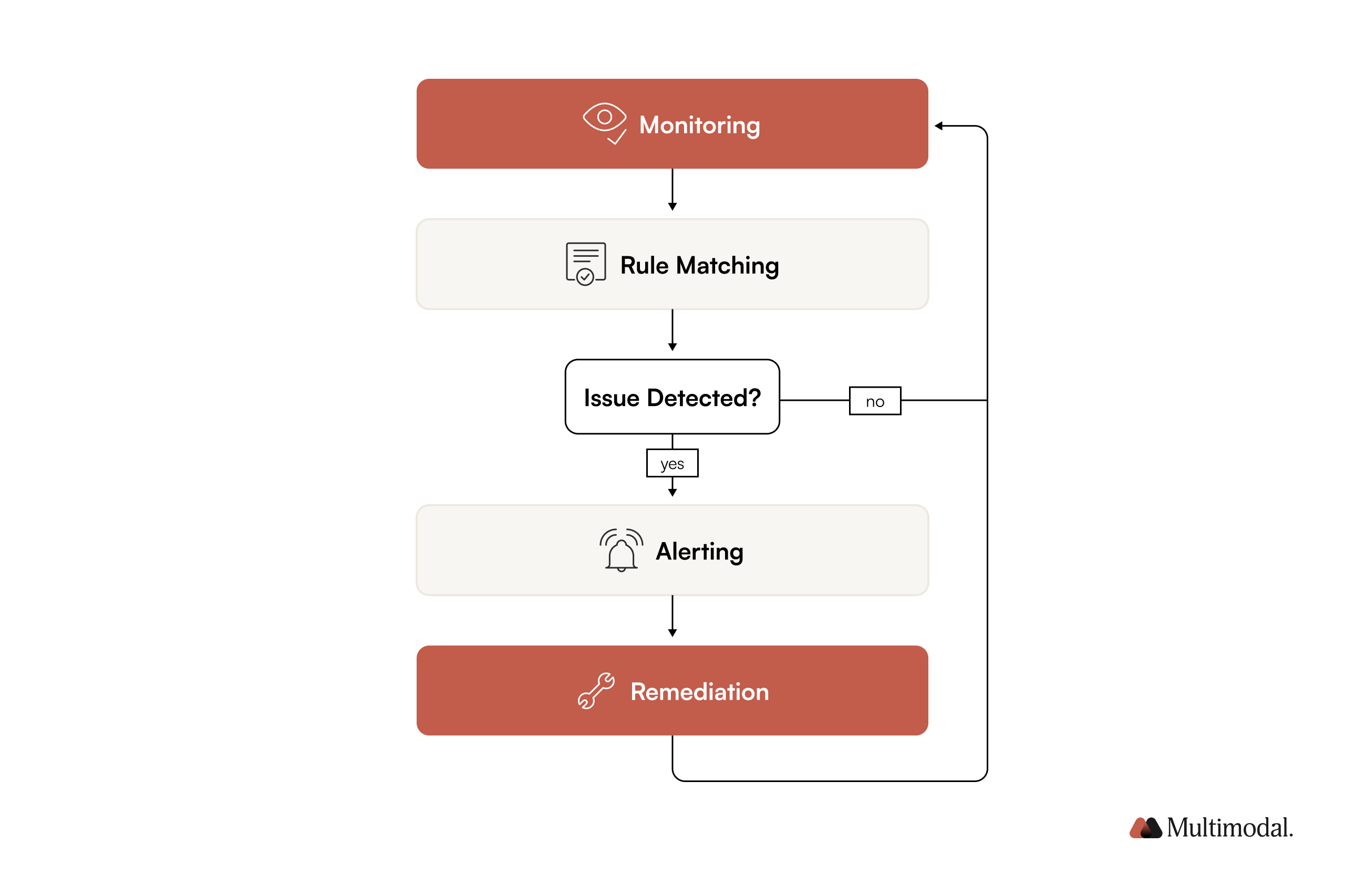
Step #1
AI agents monitor activity across systems, including file transfers, system access, employee communication logs, and sensitive data movements.
Step #2
Machine learning models continuously assess this activity for compliance with internal policies, such as segregation of duties or unauthorized access.
Step #3
Alerts are generated based on risk thresholds. High-confidence breaches trigger automatic escalations to compliance officers.
Step #4
AgentFlow initiates automated remediation steps, including incident documentation, containment, and tasking for corrective actions.
Key Benefits:
Flags internal compliance violations in real time.
Reduces operational risk and improves data protection.
Supports continuous audits with full activity logs.
Reinforces strong internal controls without manual overhead.
Other Compliance Workflows Worthy of Mentioning
According to a recent RegEd survey, financial institutions are also exploring AI for:
Advertising Review: Automatically detecting compliance risks in public-facing marketing content.
E-Communication Surveillance: Monitoring emails, chat, and internal communications to flag rule violations.
Both are supported by AgentFlow’s AI agents, offering compliance teams the tools to automate manual processes while maintaining data privacy and audit readiness.
Transform Compliance into a Strategic Asset
AgentFlow is not just a toolkit of AI tools. It's a unified system of intelligent automation purpose-built for banking compliance. Each AI agent performs a task that previously required hours of manual labor, freeing up compliance officers to focus on strategy, not busywork.
Don’t chase demos but rather deploy workflows that ship results.Book a demo and start strengthening compliance with workflows you can trust.

.svg)
.svg)

.avif)
.png)


.png)