Conversational AI is now a workflow execution layer, not a chatbot.
Banks use it to reduce costs, standardize decisions, and ensure compliance.
Value is maximized when AI is embedded in core banking workflows.
Compliance depends on strong controls and human oversight.
Platform choice hinges on integration, actionability, and auditability.
Get 1% smarter about AI in financial services every week.
Receive weekly micro lessons on agentic AI, our company updates, and tips from our team right in your inbox. Unsubscribe anytime.
Thank you! Your submission has been received!
Oops! Something went wrong while submitting the form.
In 2026, conversational AI in banking is no longer about chat widgets or answering FAQs. It has become the connective tissue between financial institutions, internal systems, and high-stakes decisions. The focus has shifted from novelty to necessity, from simple user interfaces to AI systems that reason, act, and document.
Banks are deploying conversational AI solutions to reduce operational costs, standardize complex decisions, and respond to escalating compliance demands. This post clarifies what conversational AI really means in the banking industry today, where it creates value, and how to deploy it safely.
Let’s Look at the Numbers
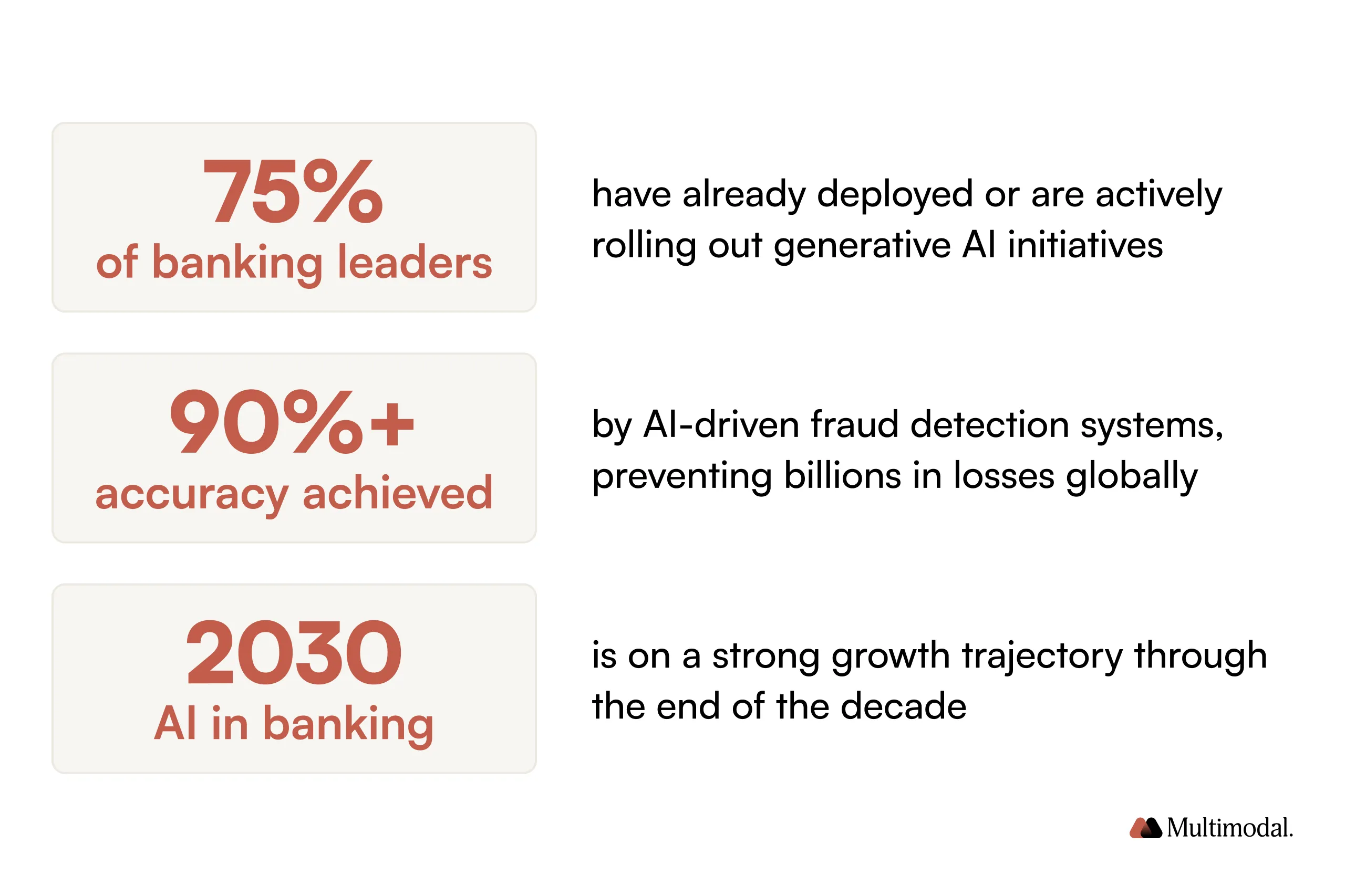
Around 75% of banking leaders have already deployed or are actively rolling out generative AI initiatives, signaling a clear shift from experimentation to executive-backed, production-grade adoption across core banking functions.
AI-powered chat systems are now embedded across most North American banks, including nearly 90% of Tier-1 U.S. institutions, reflecting widespread adoption of conversational interfaces as a standard customer service layer.
AI-driven fraud detection systems regularly achieve over 90% accuracy. They are projected to save global banks billions in operational losses by 2026, making fraud one of the most mature and high-ROI AI use cases in banking.
The global AI in banking market is set for sustained growth through 2030, driven by rising operational costs, regulatory scrutiny, and the need to modernize fragmented banking systems with AI-enabled workflows.
What Is Conversational AI in Banking (2026 Terms)?
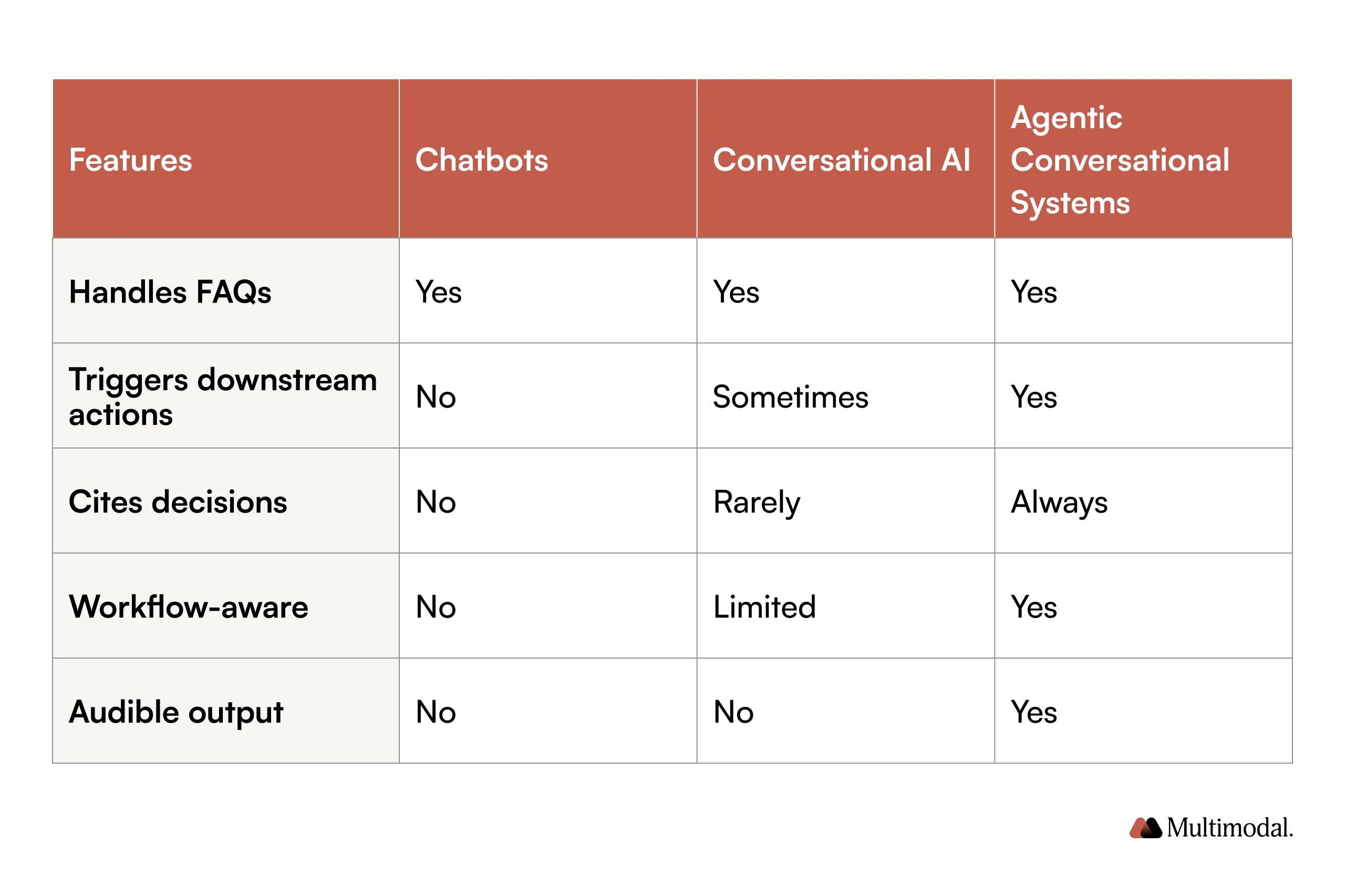
Historically, conversational AI referred to chatbots powered by natural language processing (NLP) to deflect customer inquiries. But in 2026, this definition is obsolete.
Modern conversational AI serves as an interaction layer over core workflows, not just a front-end chatbot. These systems:
Generate contextually relevant responses with citations.
Log decisions with traceability and confidence score.s
Why Banks Are Re-Architecting Conversational AI
The motivation isn’t "customer engagement." It’s workflow compression, decision traceability, and cost control. The pressure comes from:
Rising operational costs and leaner teams
Customer demand for real-time answers on preferred channels
Regulatory scrutiny on automated decisions
System fragmentation (CRM, LOS, CMS, etc.)
Conversational AI ensures standardized, explainable, and logged decisions across teams. It becomes a compliance interface, not a risk exposure.
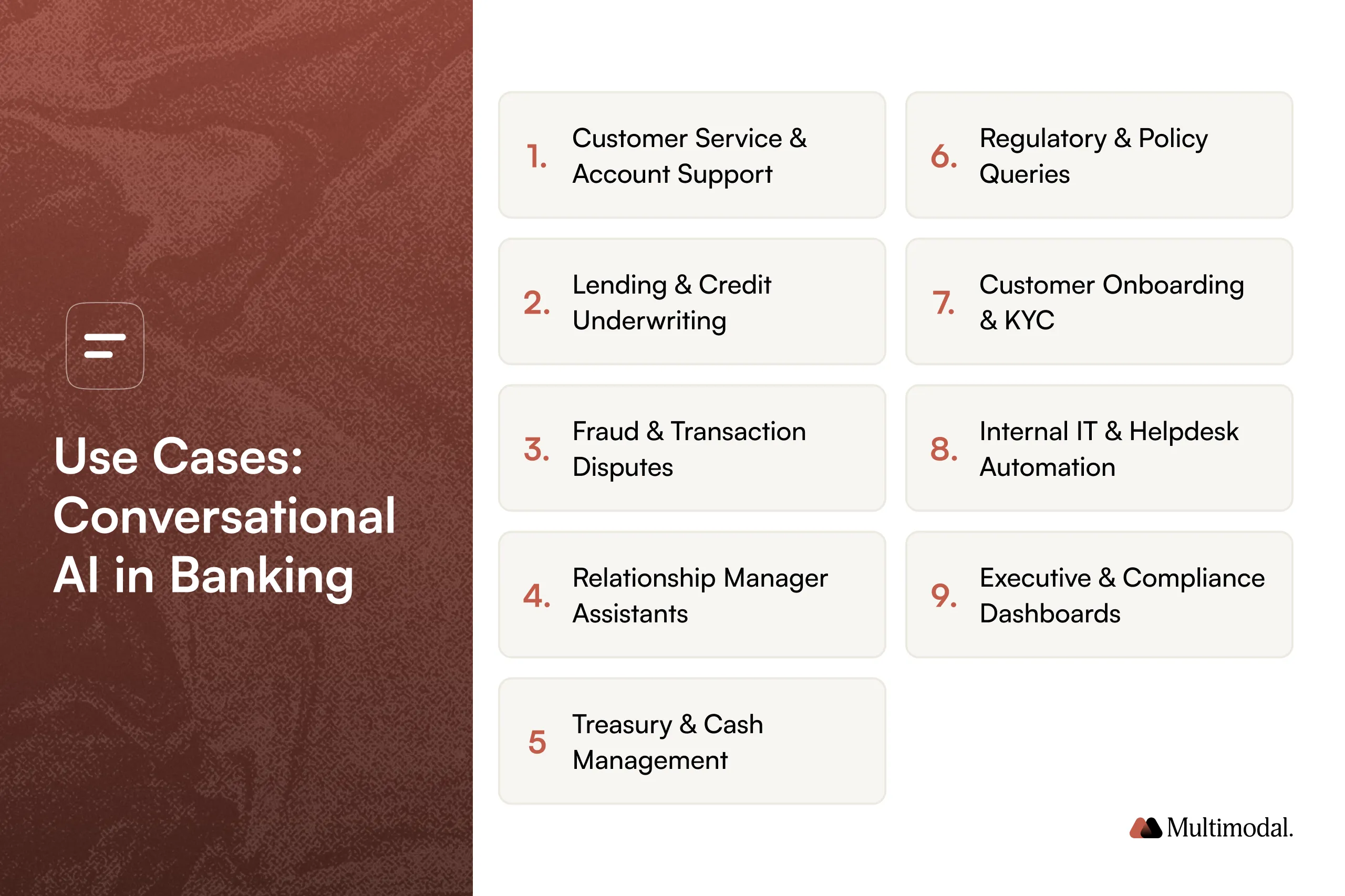
Core Use Cases for Conversational AI in Banking
Customer Service & Account Support
Conversational AI now handles authenticated, high-context customer queries, such as balance inquiries, transaction status, and payment issues. It escalates intelligently when needed and logs every interaction for auditability and compliance.
Lending & Credit Underwriting
Conversational AI guides applicants through loan workflows by answering policy-based questions, explaining delays, and identifying missing documents. This reduces back-and-forth, speeds up decisions, and improves transparency.
Fraud & Transaction Disputes
Customers can initiate disputes, track investigations, and review flagged transactions through natural-language interactions. Internally, AI summarizes timelines, surfaces anomalies, and escalates high-risk cases in accordance with predefined rules.
Relationship Manager Assistants
Conversational assistants help RMs quickly access client history, risk changes, and recent interactions across systems. They also produce briefings and summaries, allowing RMs to focus on advisory work rather than navigating the system.
Treasury & Cash Management
Enterprise clients use conversational AI to check cash positions and payment statuses, and to initiate routine transfers within policy limits. All actions are secured, logged, and governed for high-value, multi-currency operations.
Regulatory & Policy Queries
Employees can query internal policies and regulations in plain language and receive document-backed, cited answers. This reduces regulatory risk while ensuring consistent policy interpretation across teams.
See how our AI Agents expedited the application approval process by 20% for Direct Mortgage Corp. Read the full customer story.
Customer Onboarding & KYC
Conversational AI streamlines onboarding by collecting data, validating documents, and guiding users through KYC steps in real time. Exceptions are flagged automatically, improving activation speed and compliance tracking.
Risk & Credit Policy Training
AI acts as an always-on policy assistant, answering staff questions with up-to-date, sourced guidance. This supports consistent decision-making and reduces reliance on informal knowledge sharing.
Internal IT & Helpdesk Automation
Conversational AI resolves common IT requests such as password resets, access issues, and MFA setup. More complex matters are routed intelligently, reducing IT workload and response times.
Executive & Compliance Dashboards
Executives can query operational and risk metrics conversationally instead of reviewing static reports. AI summarizes trends, flags anomalies, and provides decision-ready insights with full audit trails.
What Makes Conversational AI Safe for Financial Institutions
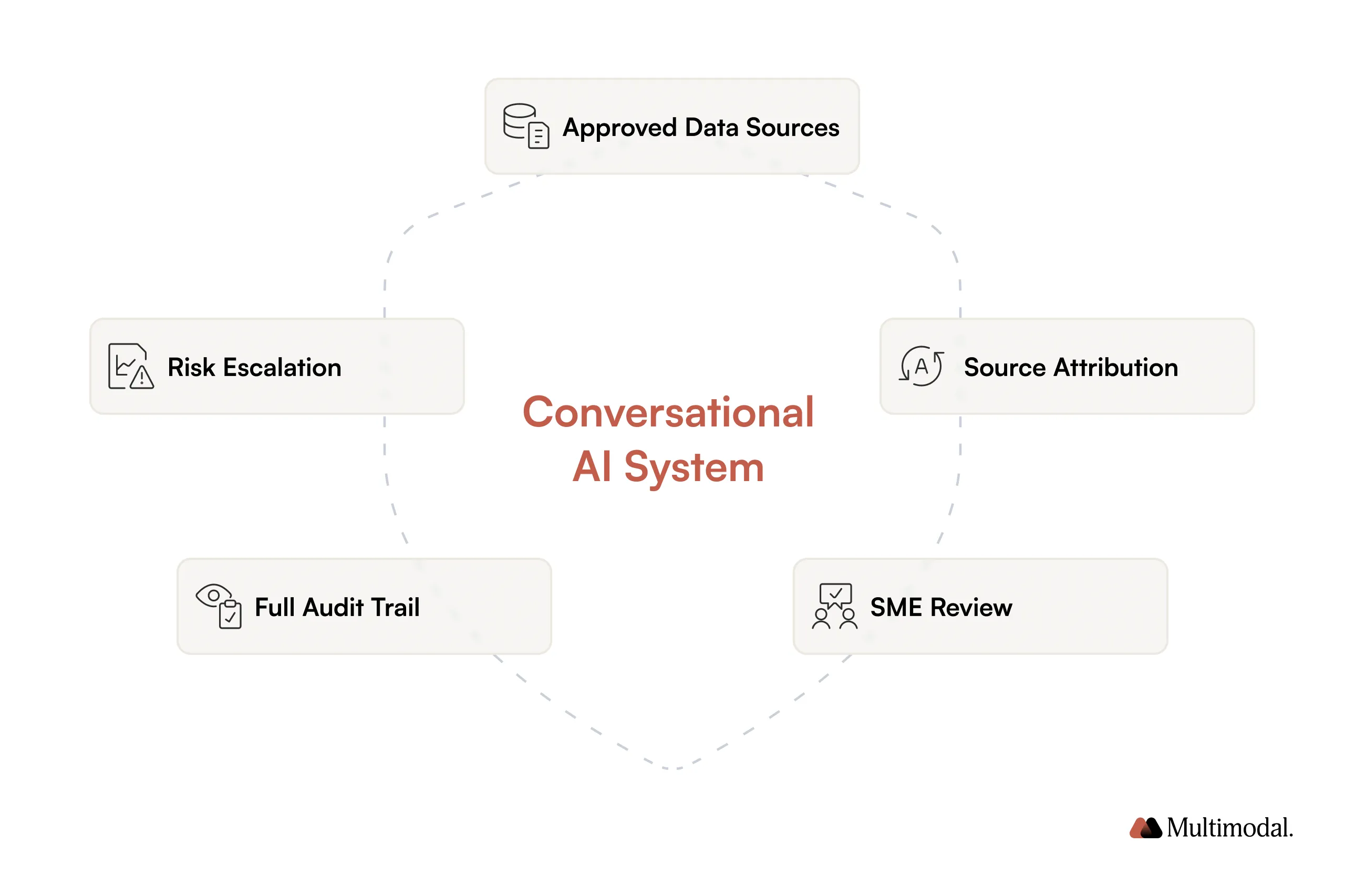
In regulated environments like banking, deploying conversational AI without control layers is a non-starter. Safety isn’t just about encryption; it’s about oversight, transparency, and enforceable boundaries. Here’s how banks ensure these systems meet internal and external standards:
Data Boundaries: All responses are restricted to institution-approved data sources, no use of public internet or unverified documents.
Traceability: Every output is linked to its source, whether a policy document, a customer record, or a rules engine.
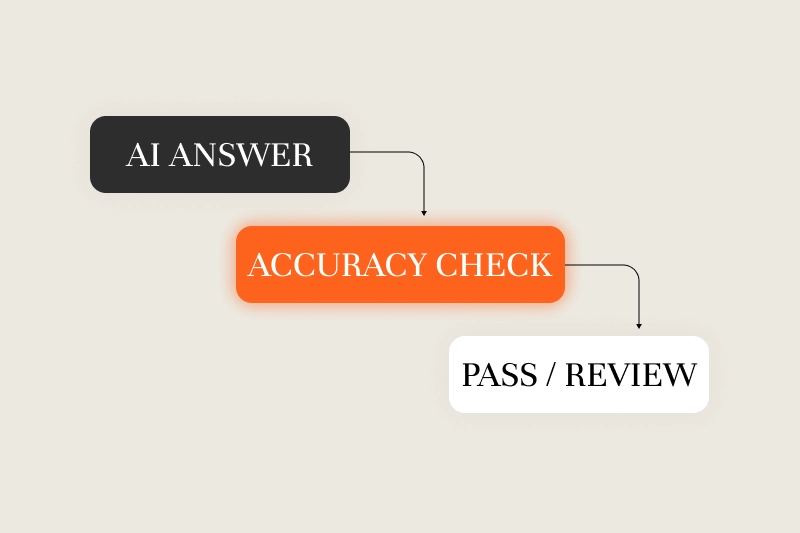
Human-in-the-Loop Controls: Sensitive decisions require SME approval. AI responses below confidence thresholds are automatically routed for review.
Audit Logging: Every interaction is tracked, including who asked what, what sources were used, and what actions were triggered.
Escalation Protocols: Predefined workflows ensure high-risk cases are flagged and documented appropriately.
These guardrails turn conversational AI from a risk factor into a compliance ally. Institutions don’t just get speed; they get decision clarity, auditability, and regulatory defensibility.
Common Mistakes in Conversational AI Deployments
Banks rushing to deploy conversational AI often fall into predictable traps. These mistakes not only limit value but also increase operational and compliance risk. Here are the common pitfalls:
Oversimplifying AI as a glorified FAQ engine rather than a policy-aware, decision-support system.
Failing to connect AI responses to backend systems and actions, leaving interactions incomplete.
Skipping traceability, logging, and SME oversight until regulators start asking questions.
Letting AI resolve high-risk scenarios without human review or policy alignment.
Launching without subject matter experts who understand edge cases, compliance, and policy nuance.
Each of these errors can derail trust, performance, and compliance readiness. Successful deployments start small with real workflows, clear policies, and tight feedback loops.
See AgentFlow Live
Book a demo to see how AgentFlow streamlines real-world finance workflows in real time.
Choosing a conversational AI platform for banking isn’t about features; it’s about capabilities that map to regulatory, technical, and operational realities. Here’s what to validate:
Can the platform run in your VPC, on-premises, or in a hybrid cloud while meeting your data residency and security needs?
Does it plug into your LOS, CRM, document management, and core systems without middleware bloat?
Are answers backed by document citations, policies, or decision logic with complete visibility for reviewers?
Can subject matter experts define decision logic, set confidence thresholds, and review output pre-launch?
Does the platform support contextual back-and-forth and trigger actions—not just chat back?
The best platforms don’t just respond, they participate in workflows, understand business logic, and meet regulatory standards from day one.
Book a Demo
AgentFlow enables financial services teams to deploy conversational AI tools across lending, compliance, and operations, with full audit trails, SME oversight, and VPC deployment options.
Ready to move from chatbot demos to agentic workflows? Book a demo to see conversational banking in action.

.svg)
.svg)

.avif)
.png)

.png)