Automated Credit Memos for Community Banks: From Tax Returns to Committee


Table of contents
Key Takeaways:
- A credit memo draws on tax returns, statements, and rent rolls before any judgment begins.
- Ratios such as DSCR and FCCR should be calculated in code from spread figures.
- AI drafts the narrative from verified numbers, and the analyst edits and signs.
- The memo prepares the committee decision for the analyst and never makes the decision.
- Annual reviews and covenant checks reuse the same spread, so the work compounds.
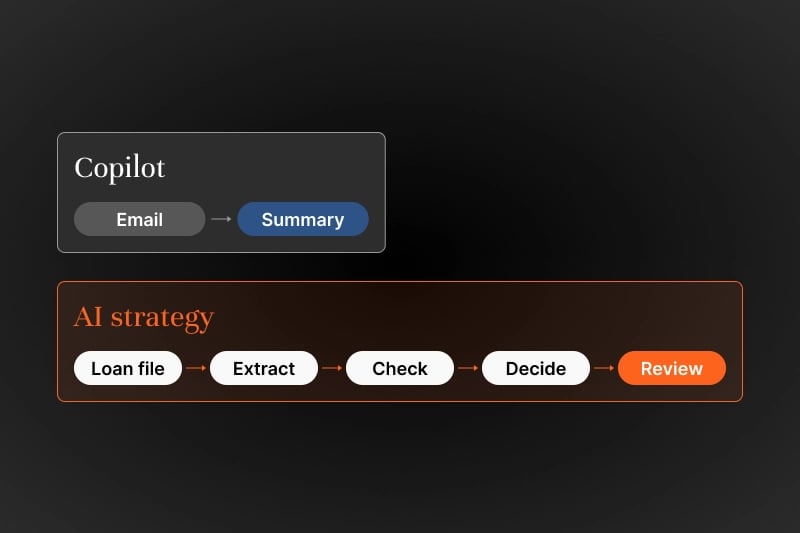
Automated credit memos for community banks work like this: the bank extracts figures from tax returns and financial statements, spreads them, calculates ratios such as the debt service coverage ratio in code, and drafts the narrative from those verified numbers. The short version: the analyst reviews the memo, the committee decides, and the automation never approves the credit.
What is a commercial credit memo, and who reads it?
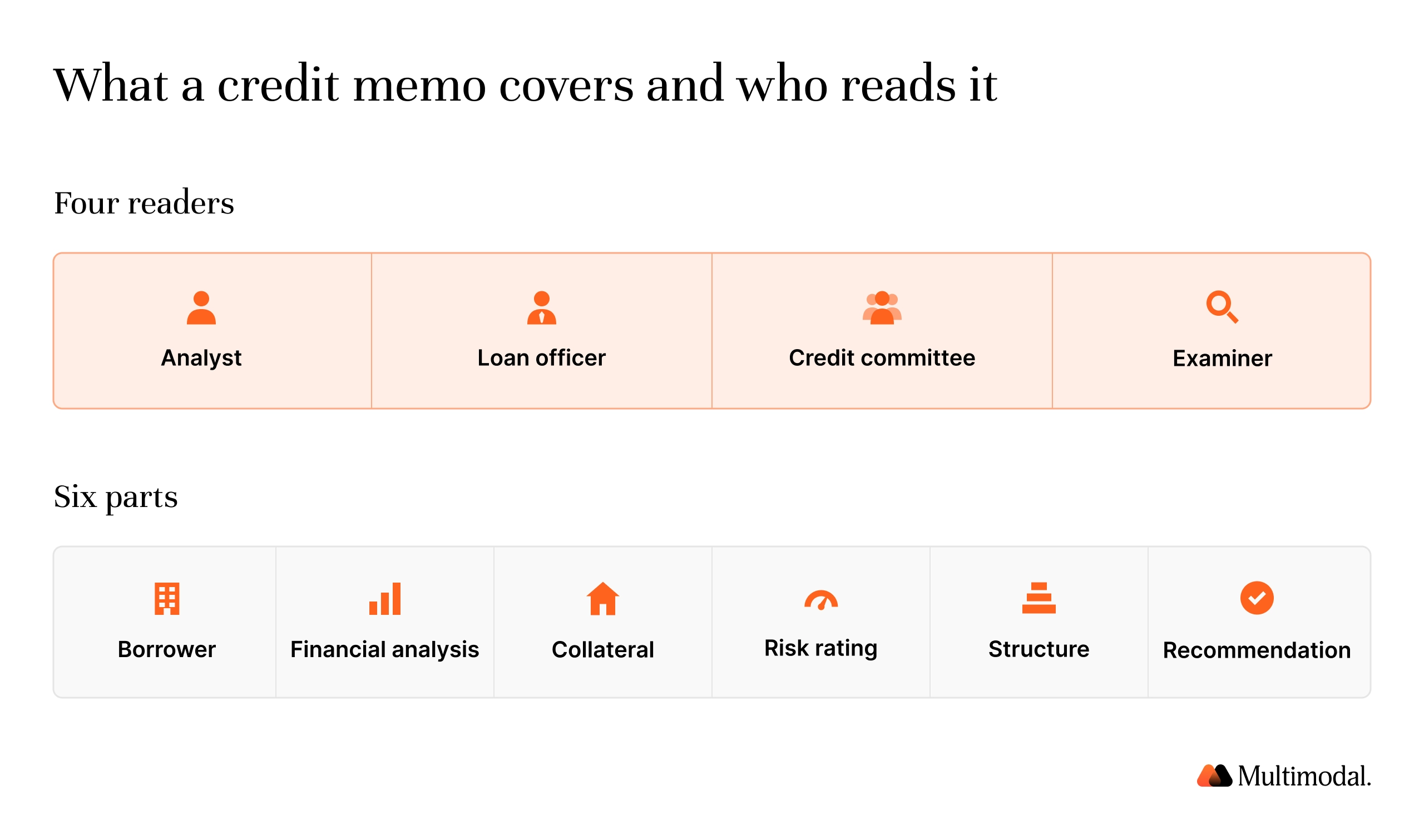
A credit memo is the written case for a loan. The analyst, loan officer, credit committee, and, later, the examiner all read it. A complete memo covers the borrower, financial analysis, collateral, risk rating, structure, and the recommendation.
The memo rests on credit analysis of the borrower's tax returns and accounting statements. The FDIC examination manual states that adequate comparative financial statements, income statements, cash flow statements, and other pertinent statistical support should be available in the credit file.
How does a community bank automate a credit memo from tax returns to committee?
The work splits into seven steps, and the log shows which ran as code, which as AI, and which belong to a person.
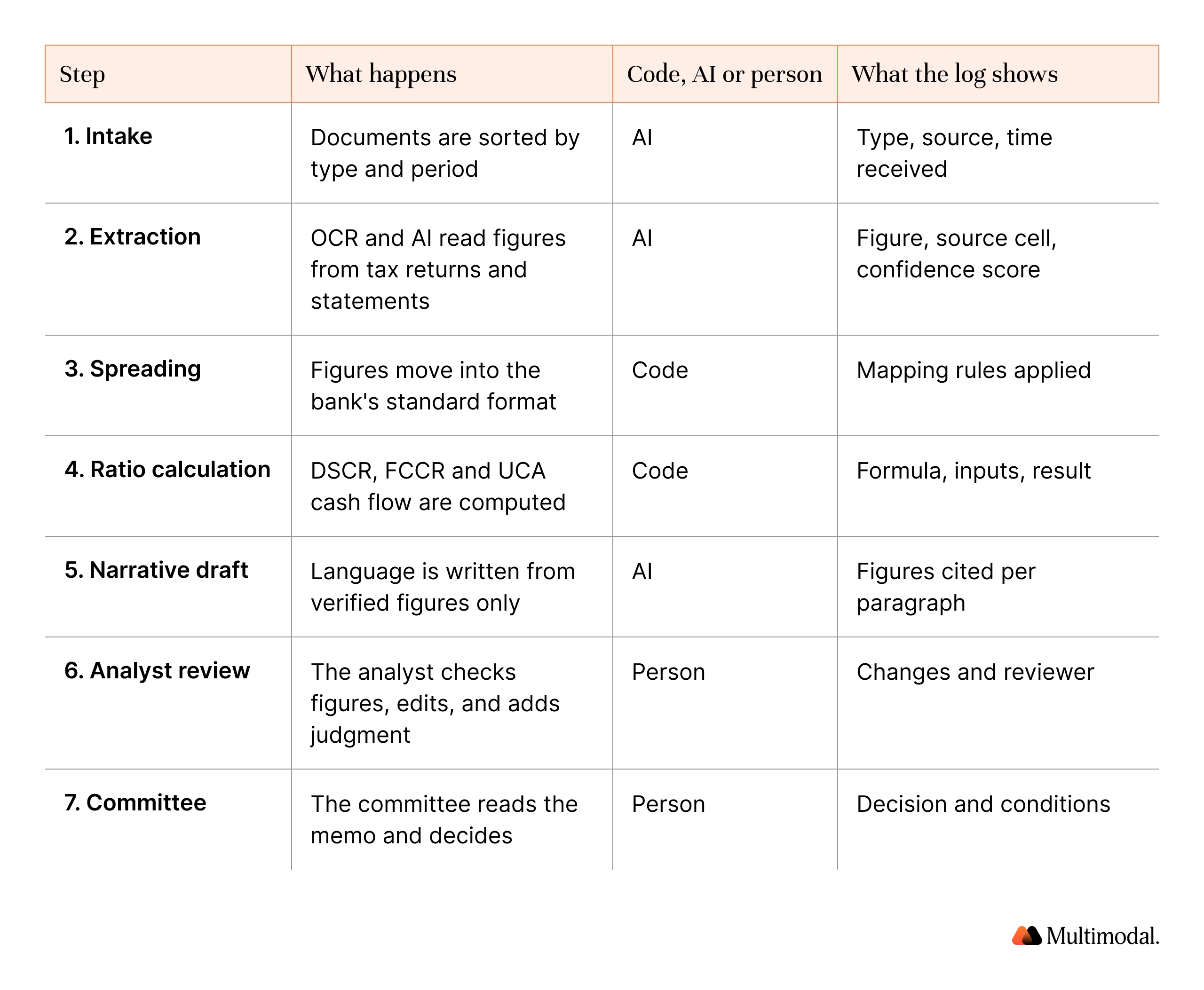
In real life, files arrive messy. Every file follows the same standard format, so analysts start from the same place and review across the portfolio consistently. Complex deals can leave the template when the analyst overrides a step and records why.
What is financial spreading, and how do FCCR, DSCR, and UCA cash flow fit in?
Financial spreading moves figures from tax returns and statements into the bank's standard format, one row per line item. Financial spreading software for community banks runs this step first, because every ratio and any financial modeling depends on it. Three measures then sit side by side.
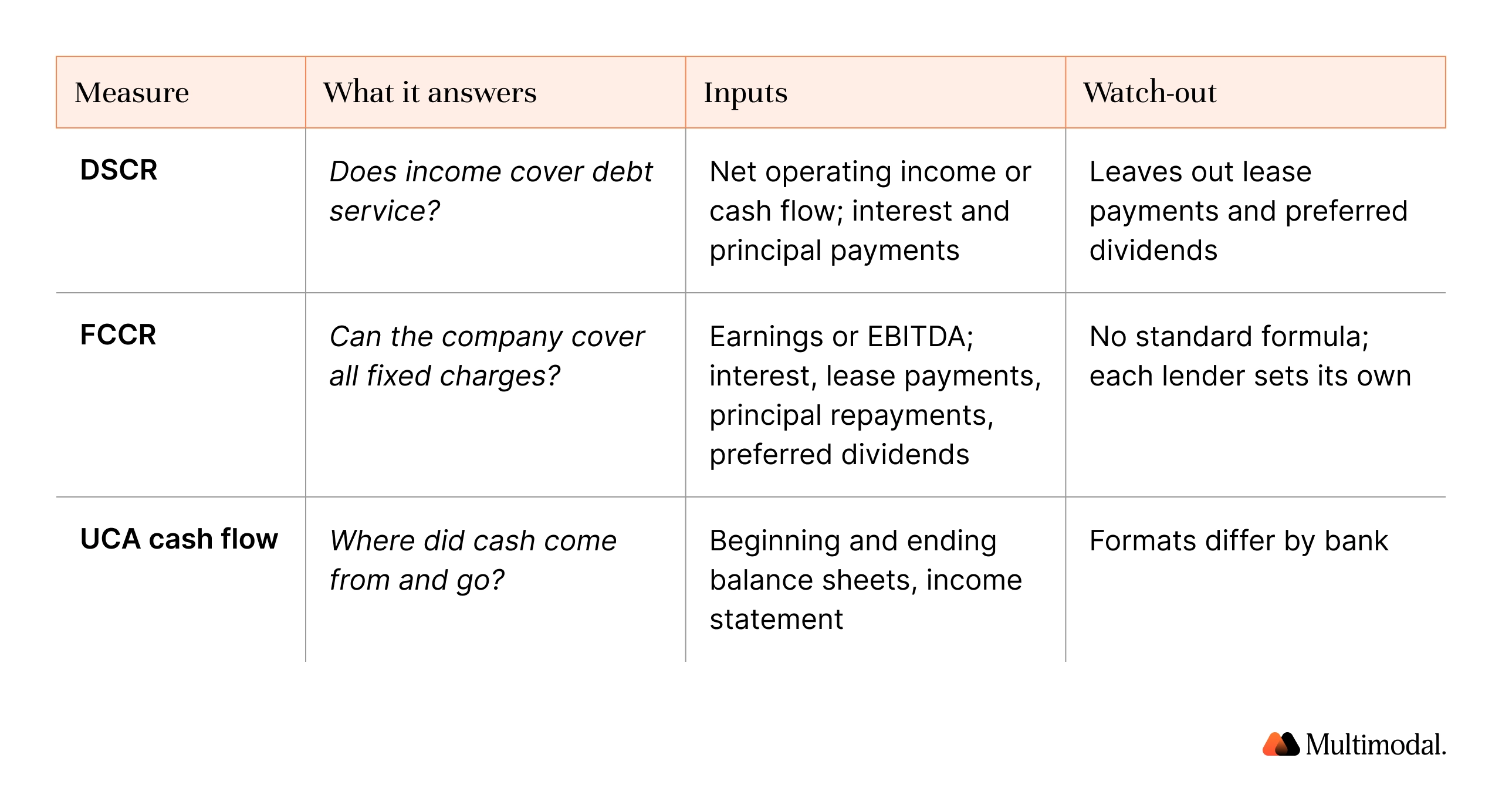
The OCC's commercial real estate lending handbook defines the DSCR as net operating income divided by annual debt service, a measure of the borrower's ability to service debt. Real estate investors meet it on rental properties; a bank builds it from the credit file. Many commercial lenders want a DSCR of at least 1.25x, a convention that Corporate Finance Institute describes and no regulation sets.
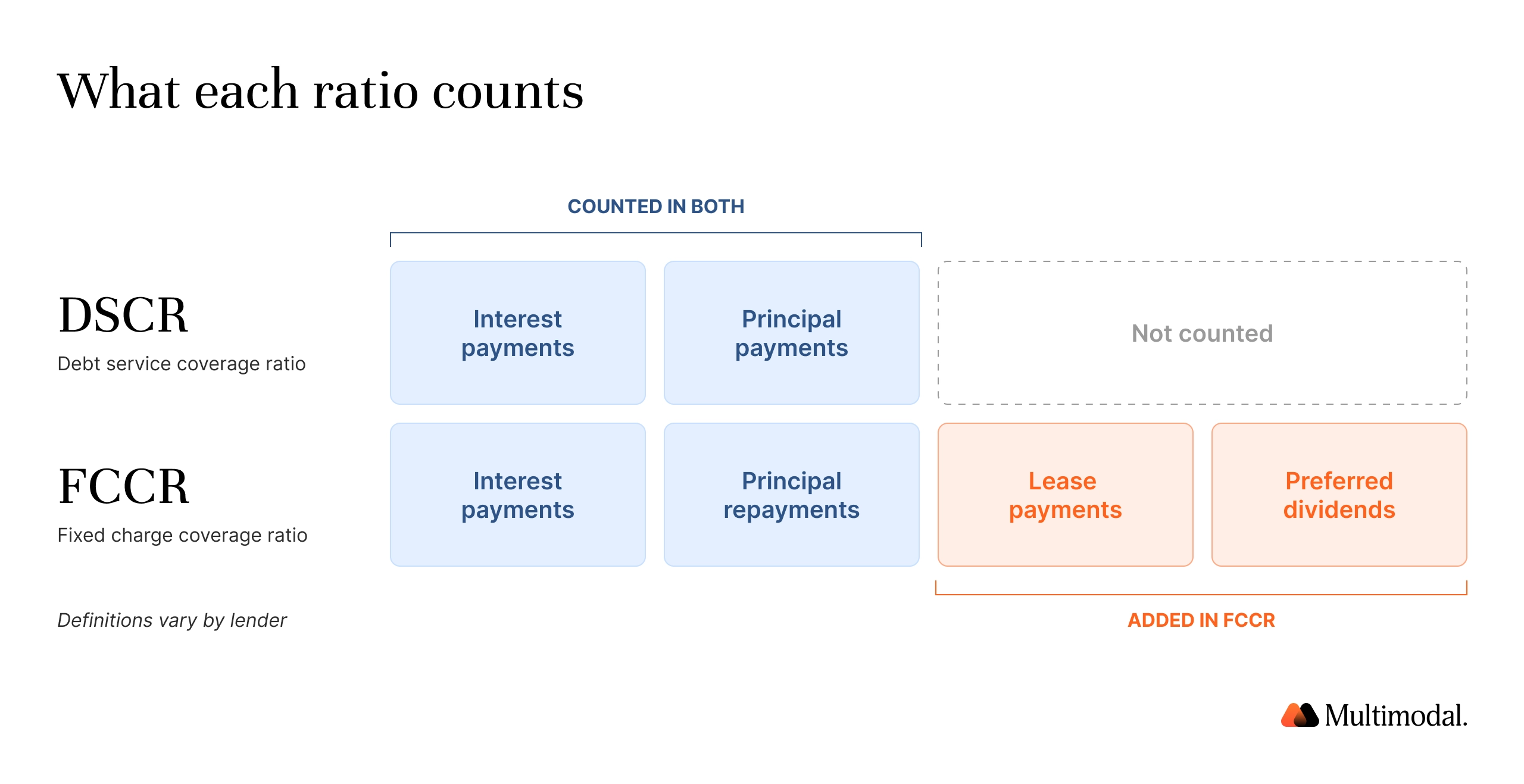
The fixed charge coverage ratio (FCCR) tests the company's ability to cover total fixed charges from its earnings: interest expense, lease expenses, and other fixed costs, as well as debt repayment through principal repayments and preferred dividends. The Federal Reserve's holding company supervision manual writes the FCCR calculation as after-tax cash income plus interest expense plus lease and rental expense, divided by those charges plus long-term debt retired and preferred stock dividends.
Other lenders start from EBITDA and deduct capital expenditures and cash taxes, and Corporate Finance Institute notes that no single formula applies. The FDIC manual describes the test as a check that the company's cash flow exceeds its interest payments and other fixed obligations, with EBITDA, which adds back non-cash items, as the usual proxy.
A higher FCCR points to stronger financial health and supports the company's creditworthiness. Lenders read it beside the interest coverage ratio (EBIT divided by interest expense, also called the TIE ratio) and other leverage and coverage ratios and credit metrics before they judge loan eligibility.
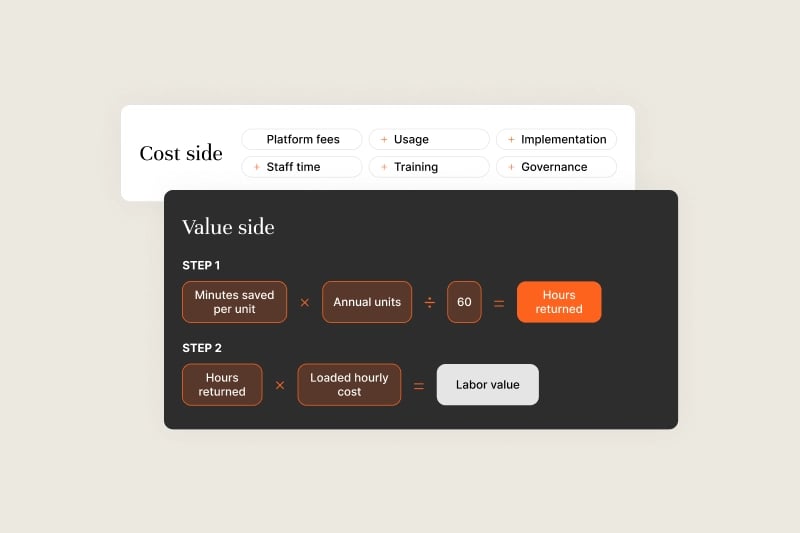
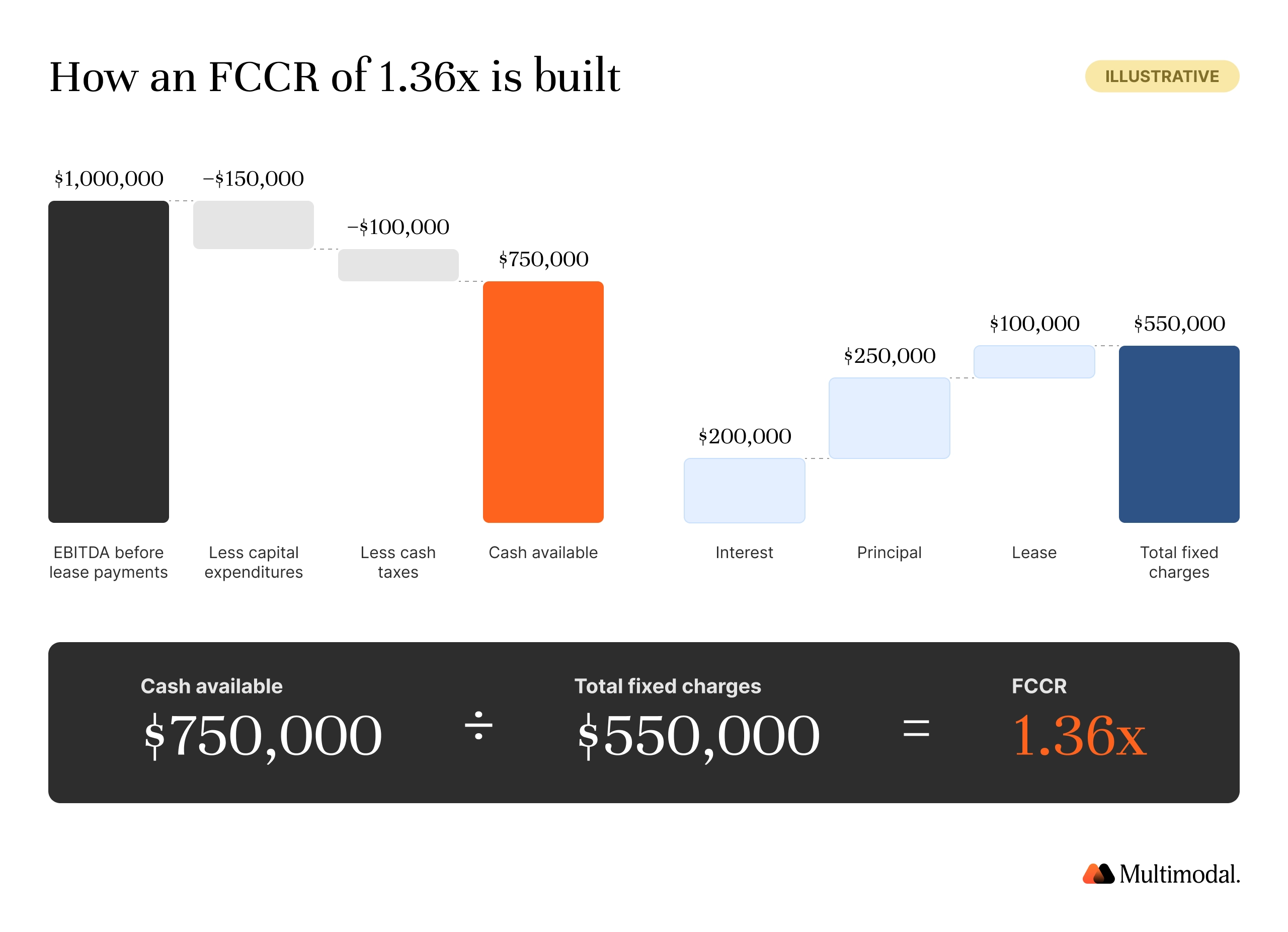
An illustrative operating company, with invented numbers: EBITDA before lease payments is $1,000,000. After $150,000 in capital expenditures and $100,000 in cash taxes, $750,000 in cash flow remains. Annual fixed charges are interest of $200,000, principal repayments of $250,000, and lease payments of $100,000, a total of $550,000. The FCCR is 1.36x.
UCA cash flow reads the balance sheets and income statement to show how a business uses cash, from cash from trading through cash after debt amortization, as the University of Minnesota's FINPACK team lists it.
How do you get from CRE NOI to DSCR?
Start with the rent roll and operating statements. Net operating income (NOI) is income less operating expenses, before debt payments. The OCC handbook asks for a stabilized estimate of income and expenses, divided by annual debt service.
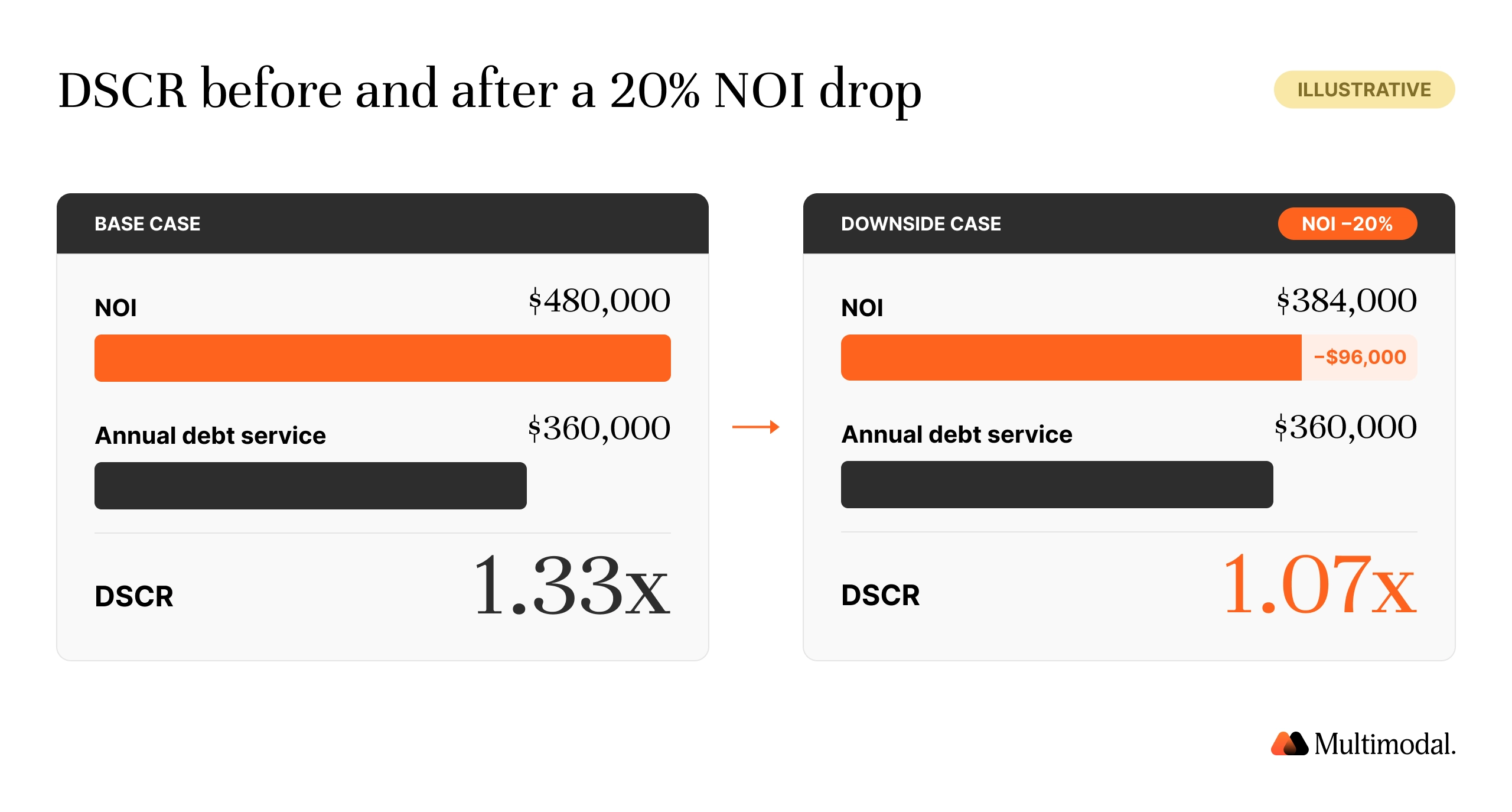
An illustrative loan, again with invented numbers: NOI is $480,000 and annual debt service, interest plus principal, is $360,000. The DSCR is 1.33x. If vacancy cuts NOI by 20 percent to $384,000, the DSCR falls to 1.07x. In such a scenario, the analyst first sees the thin cushion.
Three traps catch most files: one-time income, owner-occupied space, and reserves treatment. Tax returns add a fourth: the OCC notes that some capital expenditures used to calculate NOI may not appear as an expense on a tax return, so deducting capex takes care. A covenant DSCR can also differ from the one used for underwriting.
Why is the math code and only the narrative AI?
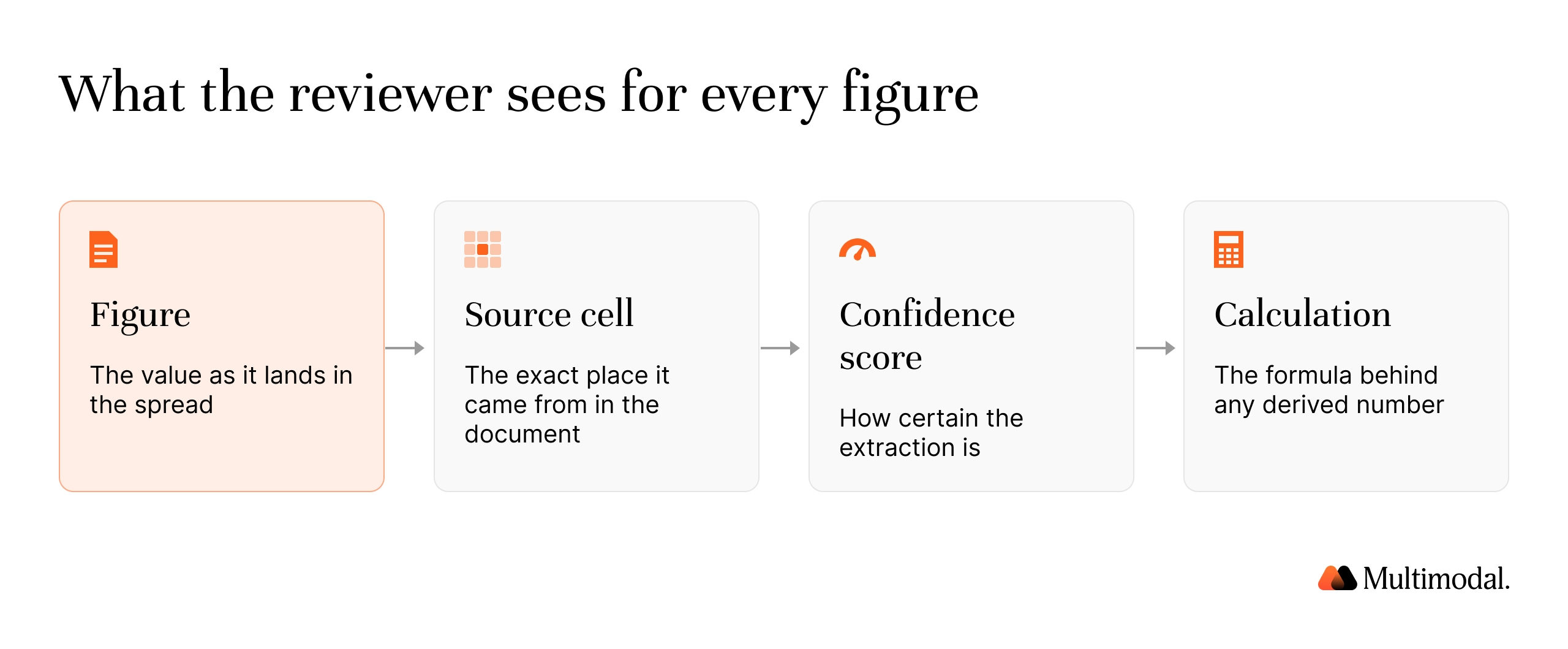
Ratios are arithmetic, so they run as deterministic code. Extraction carries a confidence score and a source cell for every figure, so doubtful figures go to a person, which helps because borrowers' tax returns arrive in many formats. The language model writes narrative only from those verified figures, citing them. The reviewer sees the figure, its source, and the calculation.
The OCC's April 2026 model risk bulletin excludes simple arithmetic, such as spreadsheet calculations, and deterministic, rule-based software from its definition of a model. It says generative and agentic AI models are not within its scope and that it is most relevant above $30 billion in assets. A community bank therefore sets its own policy for the drafting step, which is why a person edits and signs. The FFIEC IT Handbook lists an audit trail and strict version control among change management practices, and a memo should keep versions and approvals the same way.
What about annual reviews and covenant checks?
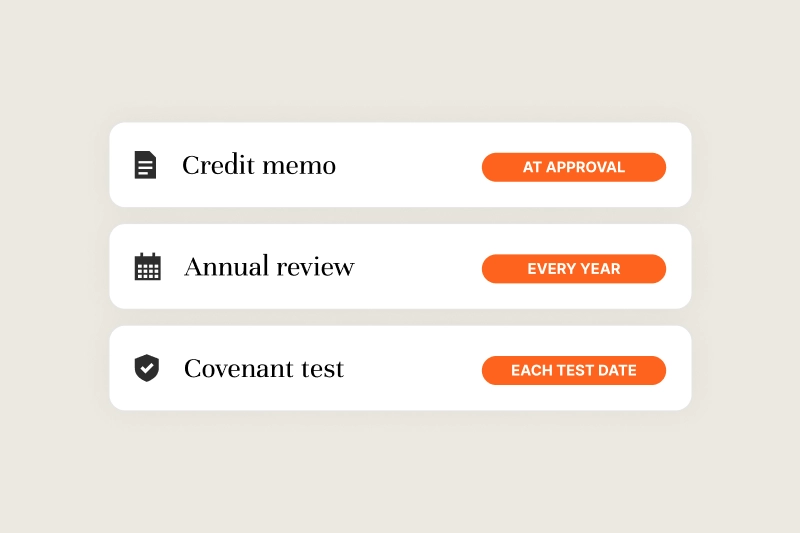
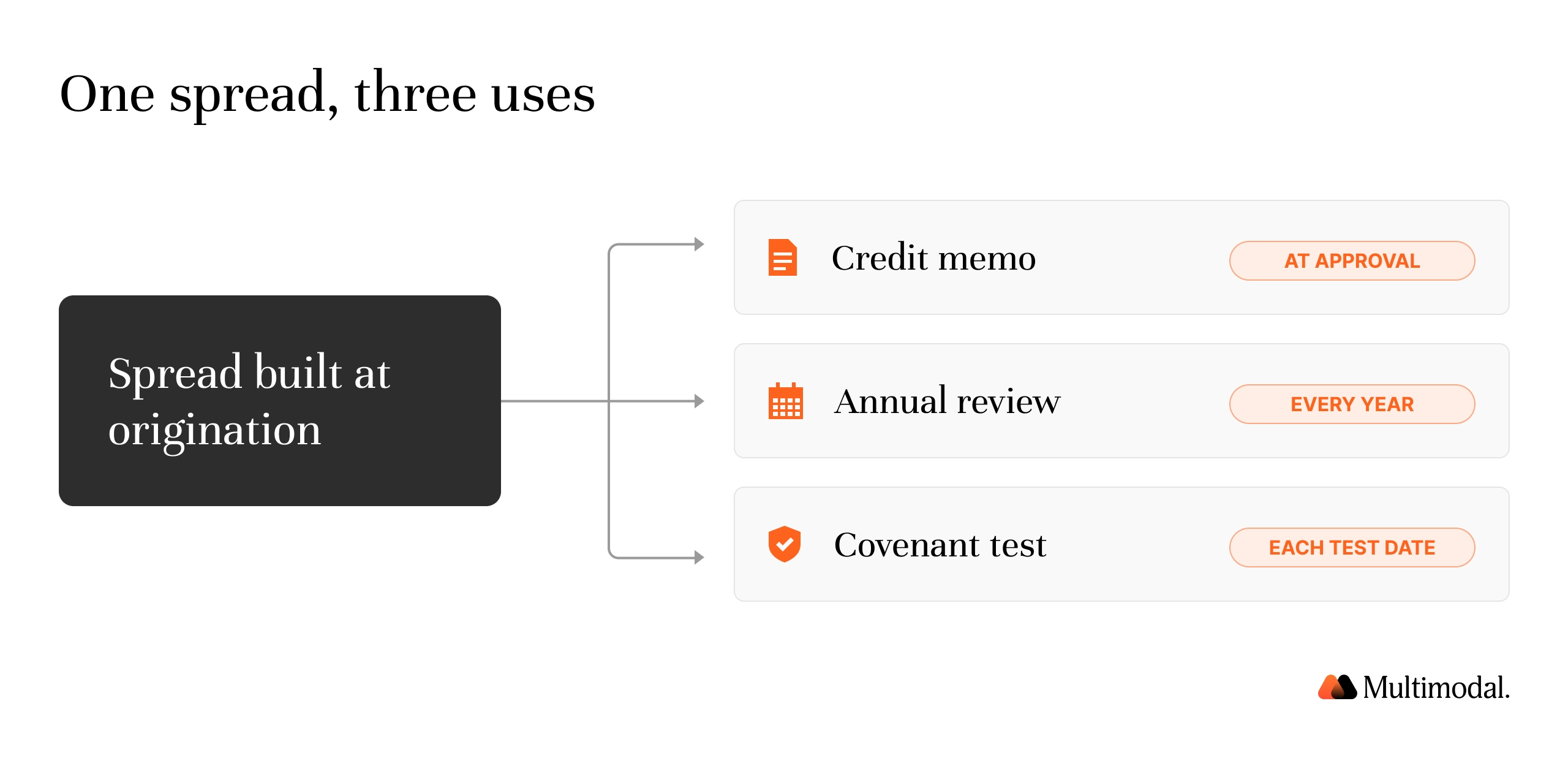
The spread built at origination feeds the annual review and the covenant test, so nobody re-keys the borrower's figures each year. The FDIC manual's agricultural lending section says financial information should generally be updated at least annually; each bank's policy sets the cadence for other credit. Fresh statements flow into the same spread, and commercial lending AI recalculates the ratios and covenant tests accordingly.
What does a person still decide?
Character, management quality, the business model, industry outlook, policy exceptions, structure, and the final recommendation stay with people.
“AI can definitely help in the initial process, automate the process of gathering the data, gathering these documentation, potentially even with some of the underwriting. And then your team can review the results and build the story behind the numbers. And then your lender definitely will need to make the decisions.” — Youssi Farag, CFO, WEOKIE Federal Credit Union
What does this look like in practice?
A published customer story from a Romanian, EU-regulated bank shows the pattern on AgentFlow. Analysts used to key trial balances into the bank's workbook by hand, hours per client. Document AI now reads the files, including scans; Decision AI maps the accounts into the workbook; and Report AI builds a 13-section credit report from the same verified numbers. The analyst reviews before anything moves on.
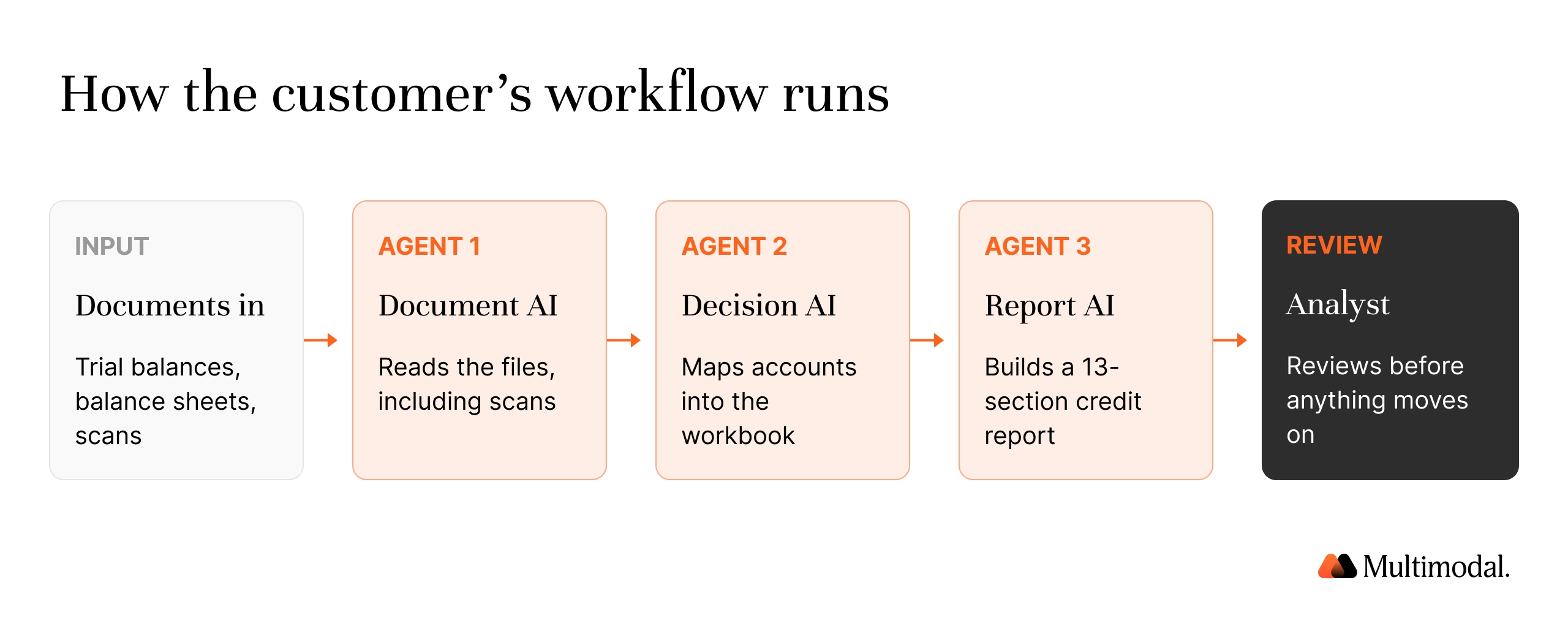
Across a 12-client test set of about 4,000 account cells, the workflow reproduced 93.6% of the analyst's corrections in the corrected workbook for native digital documents and 87.1% across all clients, including scans. The bank calls 87.1% a floor, because the test set leaned toward the hardest cases. The test covered workbook extraction only; the bank reports hours cut to minutes. Community banks can start with lending workflows for banks and AI for banks built around the analyst's review.
What should a bank do on Monday?
Pull 10 closed credits and time the current memo. For example, spread each one twice, by hand and with the automated workflow, then compare ratios and mark every review point. Track minutes per memo, the share of figures the analyst corrects, and any ratio that differs between spreads.
Bring us three closed credits, and we will show you what the spread, ratios, and memo look like in your files. A demo is the quickest way to see it.
Test Automated Credit Memos on Three Closed Credits
Send us three closed credits. We will spread them, calculate the ratios, and draft the memo for your analyst.
Frequently Asked Questions
How can a community bank automate commercial credit memos?
Extract figures from tax returns, spread them into a standard format, calculate ratios in code, and draft the narrative from verified numbers. The analyst edits and the committee decides.
What is financial spreading?
Financial spreading moves line items from tax returns into the bank's standard template. The spread feeds the ratios, memo, annual review, and covenant test.
What is the difference between FCCR and DSCR?
DSCR compares income with debt service. FCCR includes other fixed charges, such as lease payments and, often, preferred dividends. Credit policy or the loan agreement defines each.
What is UCA cash flow?
UCA cash flow is a format for commercial cash flow analysis derived from the balance sheet and the income statement.
How do you calculate DSCR for a commercial real estate loan?
Divide net operating income by annual debt service, after removing one-time income, then run a downside case.
Can AI make the credit decision?
AI extracts figures and drafts the narrative, and code calculates the ratios. Analysts and the committee determine the credit decision.