AI Loan Origination for Credit Unions: The 6 Best Platforms in 2026
Compares six AI loan origination platforms for credit unions, including AgentFlow, Origence, MeridianLink, Zest AI and Scienaptic AI. Explains that these tools work alongside your existing loan origination system and which lending layer each covers. Opens with why AI loan origination matters now.
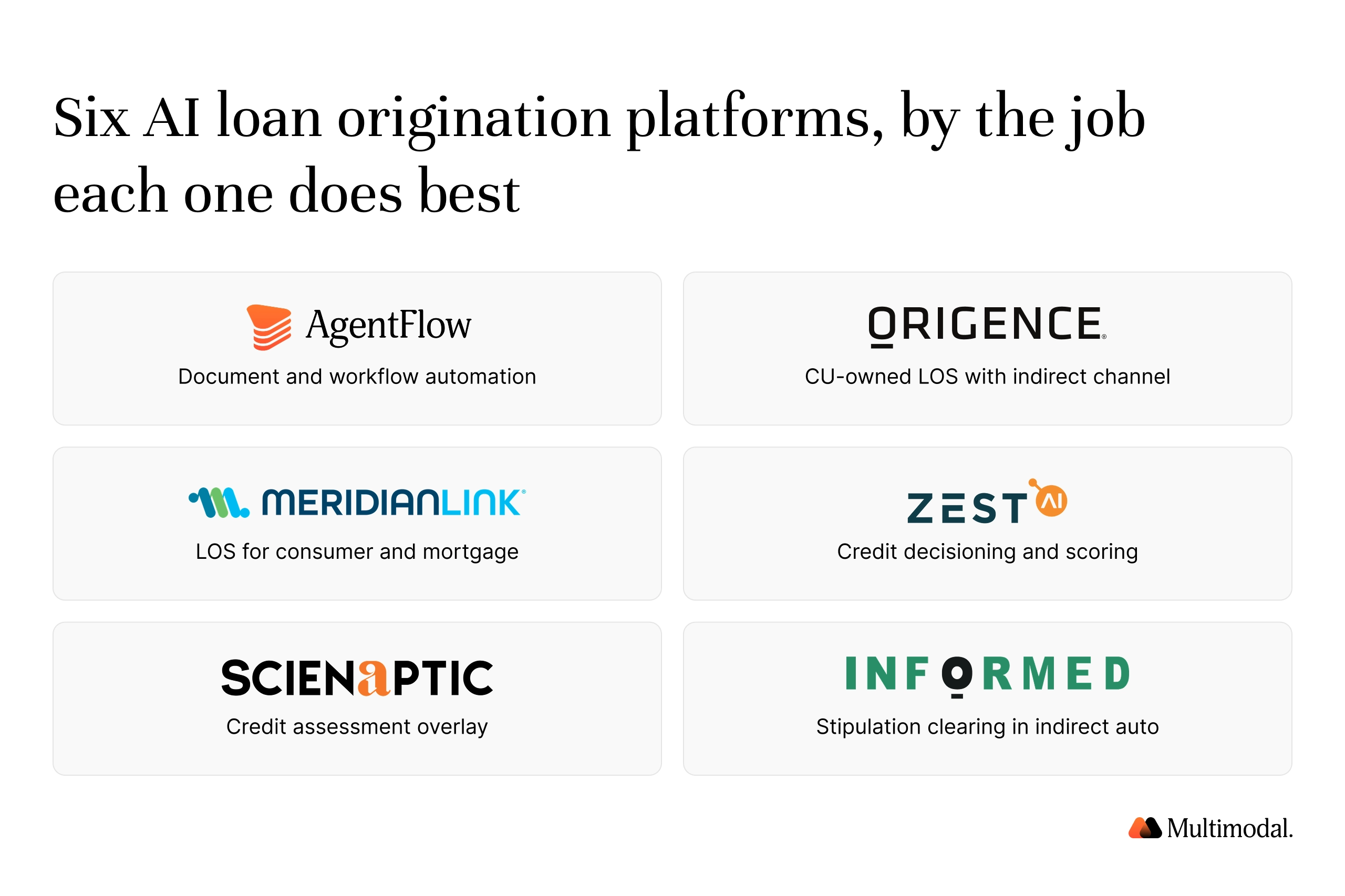
Best for end-to-end document and workflow automation across the entire loan lifecycle: AgentFlow
Best for credit-union-owned loan origination software with an indirect lending channel: Origence
Best for a modern loan origination system spanning consumer and mortgage lending: MeridianLink
Best for AI credit decisioning and credit scoring without replacing your LOS: Zest AI
Best for consistent credit assessment layered on an existing platform: Scienaptic AI
Best for document validation and stipulation clearing in indirect auto: Informed.IQ
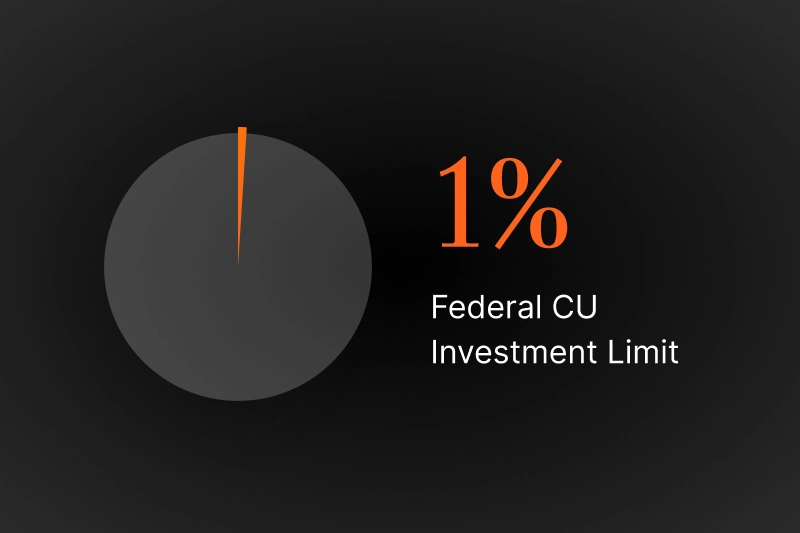
Get 1% smarter about AI in financial services every week.
Receive weekly micro lessons on agentic AI, our company updates, and tips from our team right in your inbox. Unsubscribe anytime.
Thank you! Your submission has been received!
Oops! Something went wrong while submitting the form.
AI loan origination for credit unions is the use of AI agents to read, verify, and route the loan file through the loan origination process, working alongside the existing loan origination system rather than replacing it. The platforms below sit at different layers of the lending process, across consumer and commercial lending, so the right shortlist depends on which layer you are actually buying.
The Growing Importance of AI Loan Origination for Credit Unions
Traditional loan origination relies on manual work and fragmented data. Loan officers spend excessive time verifying details and gathering documents, and data fragmentation complicates the creation of the unified borrower profile that every credit decision depends on. Those gaps carry into loan servicing, loan management, portfolio monitoring, and payment operations, so the cost compounds throughout the lending lifecycle.
Faster, More Consistent Lending Decisions
Loan origination software automates application intake and credit analysis. Modern LOS platforms reduce manual tasks and accelerate approvals, and AI-powered systems push further into credit scoring and risk assessment. Automated loan processing cuts funding times from days to minutes where every condition matches. Inconsistent credit evaluations increase default risks, so models that produce repeatable risk assessments matter as much as fast ones.
Lower Operational Costs Across the Loan Lifecycle
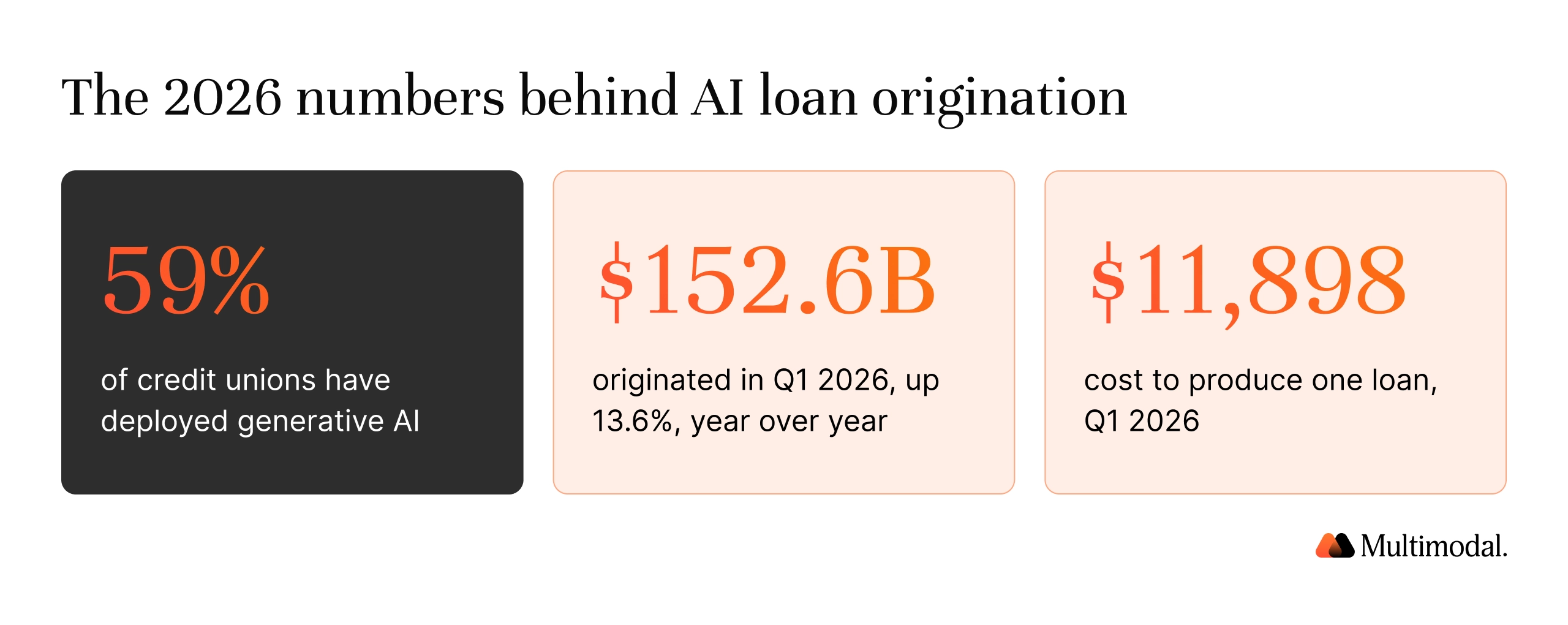
Manual underwriting carries high operational costs. Total loan production expenses reached $11,898 per loan in Q1 2026 for independent mortgage banks and bank mortgage subsidiaries. No comparable credit union figure is published, but the work driving it, document handling and manual data entry is identical. Operational efficiency gains land hardest in commercial lending operations, where spreading and deal-structuring inputs consume the most analyst hours, and where commercial banking platforms such as Finastra's Loan IQ operate in a different market from the consumer LOS most credit unions run.
Stronger Fraud Detection and Risk Management
AI analyzes behavioral data and multiple signals at once, so it flags document tampering and identity fraud during application intake rather than after funding. That belongs to the risk management layer, alongside identity verification from providers such as Alloy, and it feeds the credit risk picture underwriters use later.
Growing Adoption Across Credit Unions
59% of credit unions have already deployed generative AI, ahead of 49% of banks. Originations reached $152.6 billion in Q1 2026, a 13.6% increase, while auto fell to just over $480 billion. Winning that volume back runs through indirect lending, where stipulation turnaround decides whether the dealer sends the next deal.
A Better Member Experience
Members judge the lending process by how long the loan pipeline takes and how often they get asked for the same document twice. AI assistants can support members during the application process, and faster condition clearing shortens the wait without affecting the credit decision.
Do You Have to Replace Your Loan Origination System?
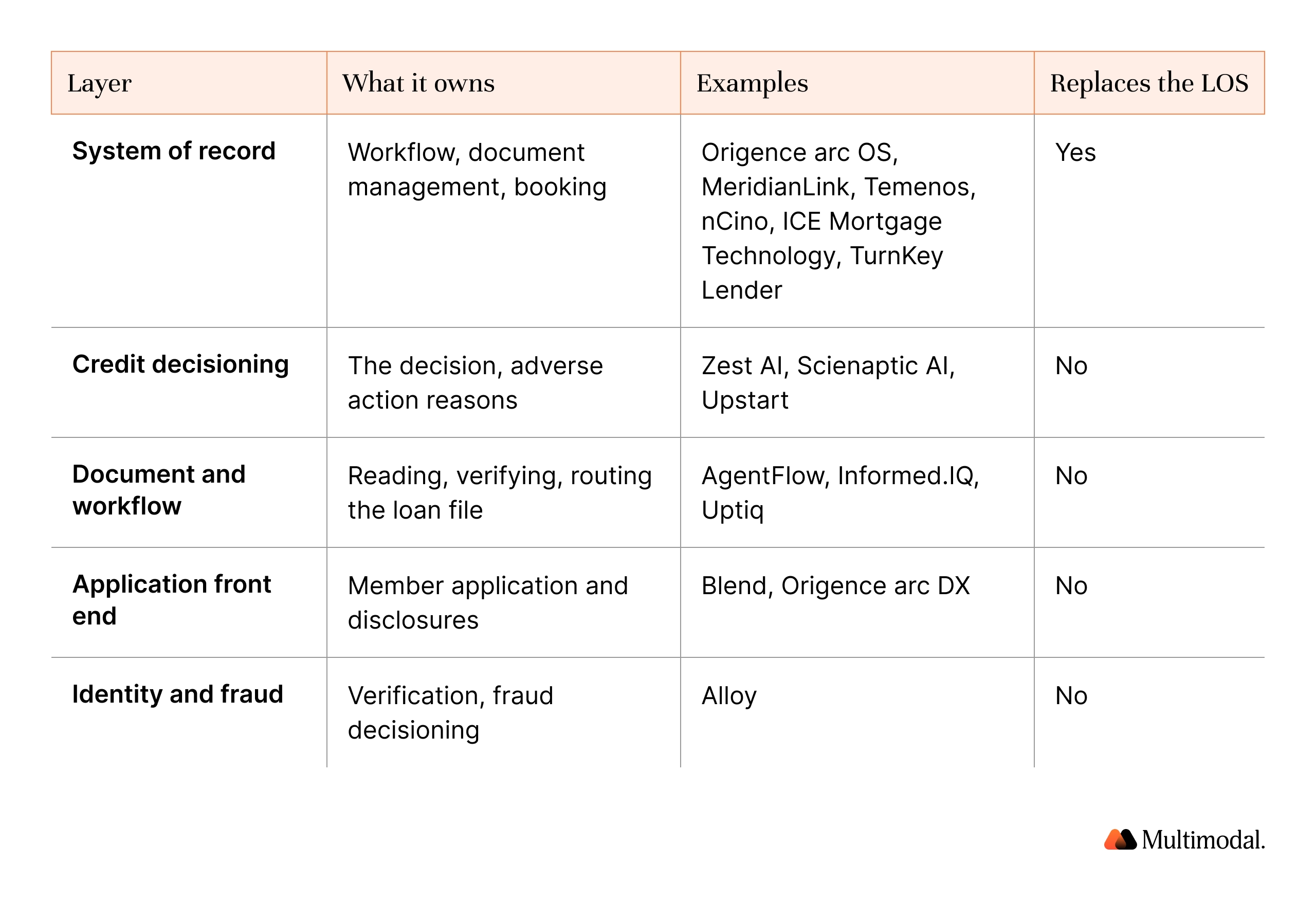
No. For most credit unions, the AI layer sits atop the loan origination system already in production, reads the loan file, and writes structured loan data back to core banking systems and internal systems of record. You will also see this sold as a "banking OS" or an agentic layer, so ask which row in the table below the product belongs to.
The vendors are the evidence. Scienaptic integrated with Temenos in April 2026, so credit unions can add AI decisioning without replacing the platform; Origence embeds Scienaptic, Alloy, and Zest Protect within its own system, and MeridianLink announced Doc Agent for MeridianLink One in May 2026, with the mortgage version planned for Q4 2026 and the consumer version for early 2027.
"We definitely looked for partners… you need to have strong partnerships with existing vendors. It's hard to get away from legacy systems, but we didn't need to reinvent the wheel." — Youssi Farag, Chief Financial Officer, WEOKIE Federal Credit Union
A single loan origination platform reduces data fragmentation across loan types and maintains consistency across consumer, indirect, mortgage, and commercial loans. The AI layer produces a unified borrower profile, enabling lenders to make decisions across the full loan lifecycle.
1. AgentFlow
AgentFlow automates complete financial workflows, from document intake and data extraction through compliance validation and loan booking, for credit unions and community banks.
Key Features
Application intake, data collection, and document validation across every loan type
Document automation with confidence thresholds, compliance checks, and audit trails
Integrations with core banking systems, loan origination systems, and third-party services
One platform for consumer, mortgage, indirect, and small business lending
Why It's Ideal for Credit Unions
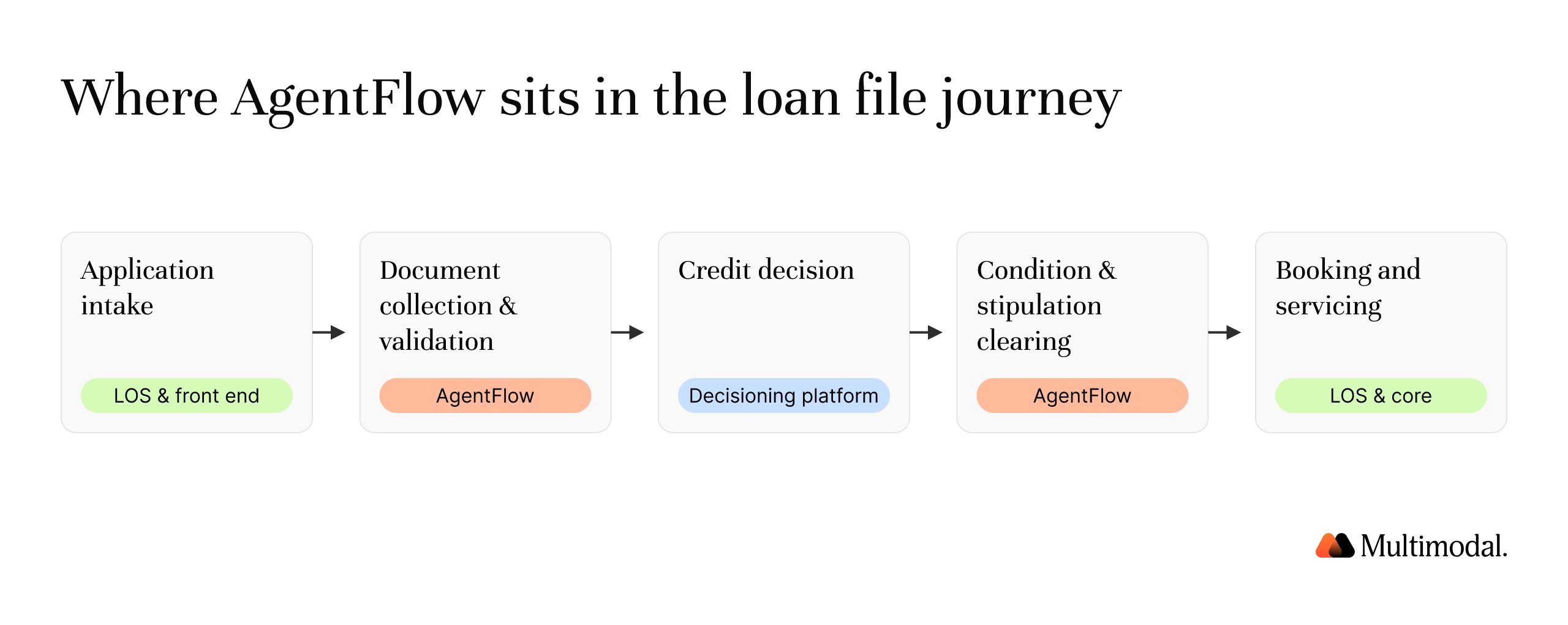
AgentFlow adds automation capabilities without requiring a system-of-record migration, so lending teams can keep the loan origination software they already use. Because it sits at the document layer rather than the decisioning layer, it does not generate adverse action reasons, keeping it outside the model risk scope while still removing manual work.
Real-World Use Case
FORUM Credit Union reached 99% data-extraction accuracy with human review of exceptions and estimates that automated underwriting lets it process up to 70% more loans than manual methods, without adding staff. In our deployments, document-heavy loan file review drops from roughly 45 minutes to roughly 8 minutes.
2. Origence
Origence is a CUSO that provides a loan origination system, a digital point-of-sale system, and the CUDL indirect lending network.
Key Features
Loan origination, document generation, and booking on one system of record
Indirect lending through a dealer network, plus mortgage and consumer channels
Embedded partners for credit decisioning and fraud
Why It's Ideal for Credit Unions
Origence is CU-owned and CU-exclusive, with 124 shareholders and 1,100 credit unions on the platform. For credit unions where the indirect channel drives volume, the dealer network is the differentiator that general-market loan origination software cannot match.
Real-World Use Case
Origence funded $62 billion in 2025, up 17% year over year, across 89 new or expanded credit union contracts, and reports that its document processing automation improved funding efficiency by 50%.
3. MeridianLink
MeridianLink is a loan origination and account-opening platform that covers consumer lending, mortgage lending, and collections on a single unified platform.
Key Features
Consumer, mortgage, and DecisionLender loan origination software
Digital application front end with autofill and enhanced decisioning
Doc Agent, a role-based AI agent announced in May 2026, planned for MeridianLink Mortgage in Q4 2026 and MeridianLink Consumer in early 2027
Why It's Ideal for Credit Unions
MeridianLink serves more than half of US credit union members, making it the most common system of record onto which credit unions layer AI. It is not a CUSO, so governance and roadmap influence work differently than with Origence.
Real-World Use Case
3Rivers Federal Credit Union reported a 40% increase in automated decisioning, a 25% increase in instant approvals, and a reduction in application processing time from two days to two hours.
4. Zest AI
Zest AI builds AI credit decisioning models, fraud detection models, and a lending analytics layer for financial institutions of all sizes.
Key Features
Custom credit scoring models that evaluate alternative data points
Fair lending and model risk documentation built into the deployment
Fraud decisioning and a lending intelligence layer
Why It's Ideal for Credit Unions
Zest is a registered CUSO serving nearly 300 lenders, with SchoolsFirst FCU, Members 1st FCU, ORNL FCU, and Truliant FCU among its strategic investors. It overlays your existing LOS rather than replacing it, so loan decisions improve without a platform project.
Real-World Use Case
Zest reports a 25% increase in approvals with no added risk, and models that reduce defaults by 20% while holding approvals constant. In February 2026, it launched the CU Lending Collective with Commonwealth Credit Union to bring AI credit scoring to smaller credit unions.
5. Scienaptic AI
Scienaptic AI provides credit decisioning that layers onto an existing loan origination system or core.
Key Features
Automated credit decisioning with configurable policy rules
Machine learning risk assessment across consumer and indirect portfolios
Integrations with Temenos, Origence, and other loan origination systems
Why It's Ideal for Credit Unions
Scienaptic is a CUSO backed by 17 strategic investors, and its April 2026 Temenos integration was built so credit unions could add AI decisioning without a migration.
Real-World Use Case
Scienaptic serves over 150 lenders and powers over 3 million credit decisions monthly. Named 2026 credit union selections include GHS Federal Credit Union, Genisys Credit Union, and Communication Federal Credit Union.
6. Informed.IQ
Informed.IQ automates document verification and stipulation clearing inside the origination workflow, embedded in Origence and MeridianLink.
Key Features
Income, asset, and identity verification from submitted documents
Automated stipulation and condition clearing in indirect auto
Document validation at the point of dealer submission
Why It's Ideal for Credit Unions
Stipulation clearing is where the loan file stalls. The decision generates conditions, the dealer uploads documents, and a processor compares each one to the application by hand. Automating that step is the highest-volume, lowest-risk entry point in the lending process.
Real-World Use Case
Desert Financial Credit Union, running Informed.IQ with MeridianLink, increased daily funder capacity by 66%, from 15 to 25 closed deals per day, and cut employee onboarding from two weeks to three days.
How to Choose the Right AI Loan Origination Platform for Your Credit Union
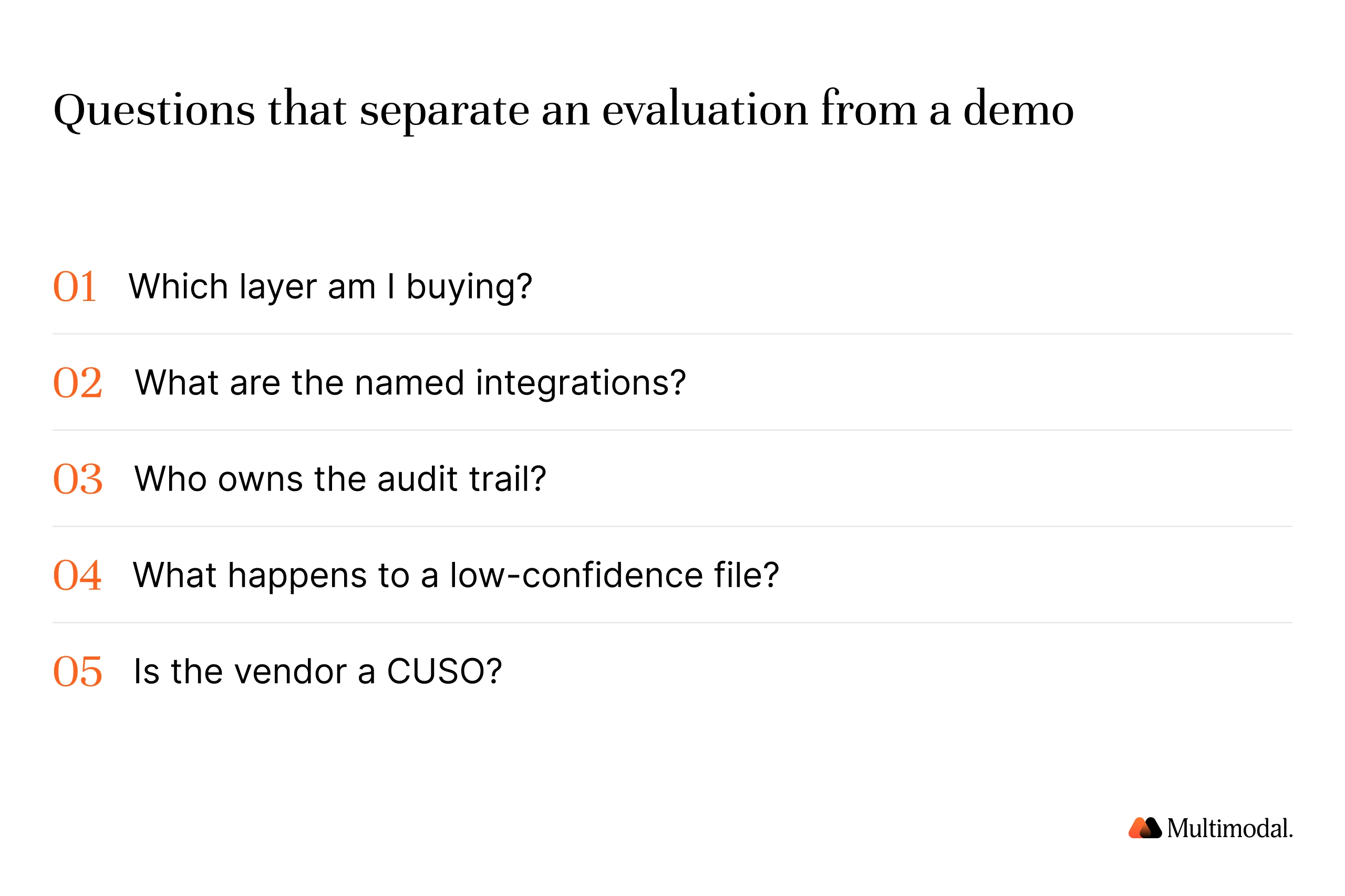
Evaluate integration capabilities before feature depth. A platform that cannot read from and write to your core banking systems just relocates the manual data entry you wanted to remove.
Layer. Decisioning, documents, front end, or system of record. Vendors blur this deliberately.
Integrations. Named core banking systems, loan origination systems, data providers, and credit bureaus, not a logo wall.
Compliance tools. Audit trails, retention, and evidence you can hand an examiner.
Scalability. One platform across loan types, from consumer to commercial lending.
For a system-of-record comparison, see our roundup of the best loan origination software, which covers commercial loan origination software.
What Examiners Will Ask
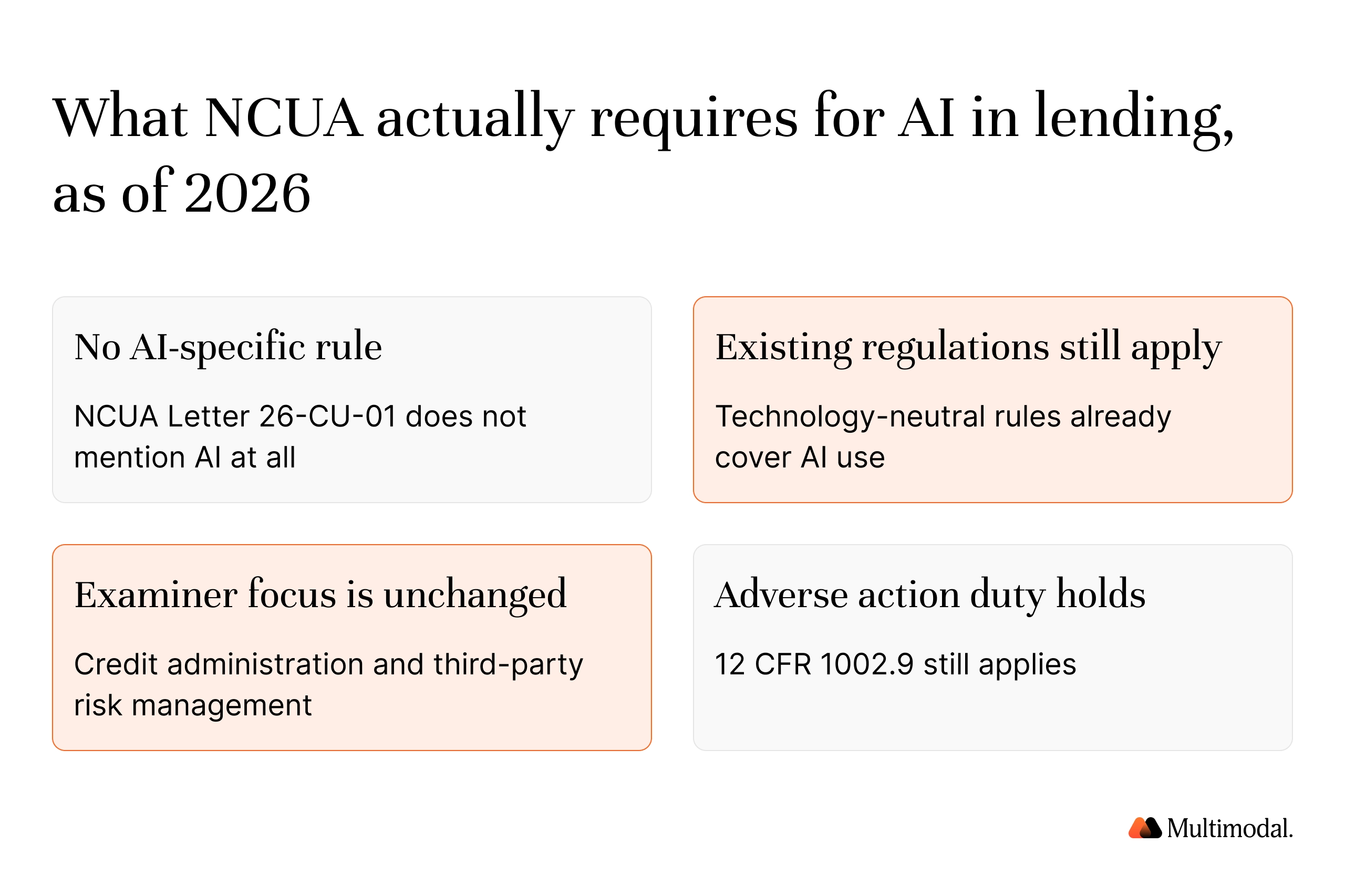
NCUA Letter 26-CU-01, the 2026 Supervisory Priorities, contains no mention of artificial intelligence. It does say examiners will focus on "the sufficiency of credit administration, including loan underwriting," and will assess third-party risk management where lending or servicing is outsourced. NCUA's Credit Union AI Resources page is explicit that "NCUA has not issued AI-specific rules or regulations. However, existing regulations are technology-neutral and apply to AI use."
"The most you're gonna get from an NCUA auditor right now is, let me see your AI governance policy. They haven't yet come in and started saying, show me how your AI agents work and show me that you're validating the data. Show me that you're not discriminating." — Jeffrey Staw, Chief Information and Innovation Officer, Firefighters First Credit Union
Existing banking regulations already carry the regulatory requirements that apply when AI touches the file. On adverse action, be precise. CFPB Circular 2022-03 was withdrawn effective May 12, 2025. The ECOA and Regulation B obligation to give specific principal reasons under 12 CFR 1002.9 was not withdrawn, because withdrawing guidance is not the same as changing a rule. AI should explain its lending recommendations, and should not replace human responsibility for lending decisions.
Why AgentFlow Is the Best Choice for AI Loan Origination
The other five platforms each own one part of the picture. Origence and MeridianLink own the system of record, Zest AI and Scienaptic own the credit decision, and Informed.IQ owns verification in one channel. AgentFlow handles the work between them: reading the file, validating documents, clearing conditions, and writing clean loan data back to whichever LOS and core you already run.
That keeps the project small, the audit trail complete, and the credit decision exactly where your policy says it belongs, while clean loan data flows through to portfolio management and servicing.
AI loan origination for credit unions is the use of AI agents to automate application intake, document validation, data extraction, credit analysis, and condition clearing across the loan origination process. The AI layer usually works alongside the existing loan origination system, reading the loan file and writing loan data back to core banking systems.
Does AI loan origination require replacing my loan origination system?
No. Credit unions running Origence, MeridianLink, Temenos, nCino, or a homegrown platform can add AI decisioning or an AI document layer on top. Scienaptic integrated with Temenos in April 2026 for exactly this reason. Replacing the system of record is a separate decision.
What is the best AI loan origination system for credit unions in 2026?
It depends on the layer. For a credit-union-owned system of record with an indirect channel, Origence. For a general-market LOS, MeridianLink. For credit decisioning, Zest AI or Scienaptic. For document processing, stipulation clearing, and workflow automation across the full loan lifecycle, AgentFlow or Informed.IQ.
What does NCUA expect from a credit union using AI in loan origination?
NCUA has not issued AI-specific rules. Existing regulations are technology-neutral and apply to AI use, and credit unions using third-party AI must conduct due diligence on how the product functions, its risks, and the vendor's controls. The 2026 priorities point examiners at credit administration and third-party risk.
Can you still issue a compliant adverse action notice if AI touched the file?
Yes, provided the reasons are specific and accurate. Circular 2022-03 was withdrawn in May 2025, but the Regulation B obligation under 12 CFR 1002.9 remains in effect. An AI agent classifying a pay stub does not generate adverse action reasons. A credit decisioning model does.
See AgentFlow Live
Send us one week of your stipulation queue. We will run sample files through AgentFlow and show you the before-and-after minutes per file in writing, so your lending teams and your board see the math first.
Put One Week of Your Stip Queue through AgentFlow
Real files, real numbers, in writing. You keep your LOS and your credit policy exactly as they are.

.svg)
.svg)

.avif)
.png)

.png)