More than half of institutions now discuss agentic AI at the executive or board level.
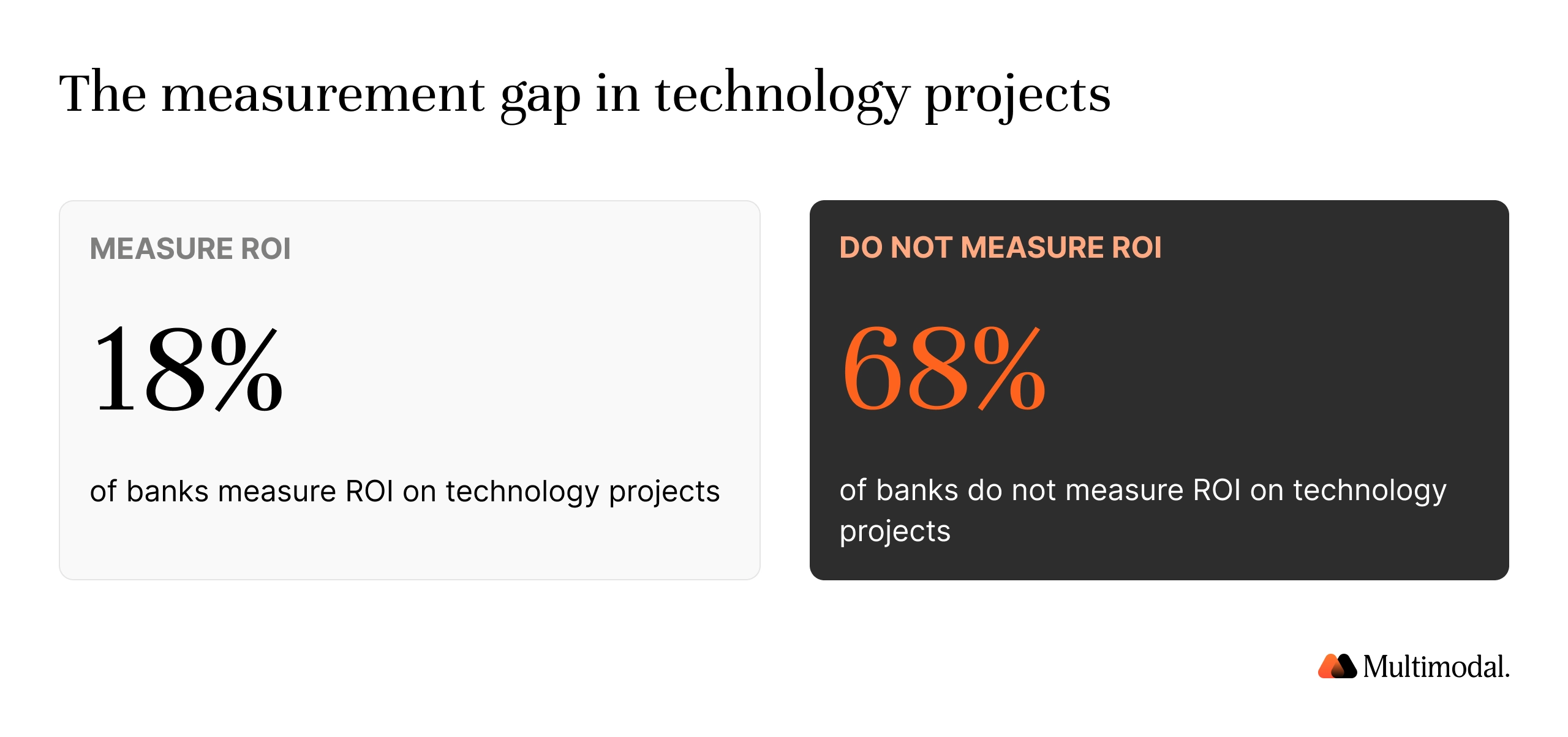
Just 18% of surveyed banks measure ROI on technology projects, and 68% do not.
A budget-ready use case has a baseline, an owner, and a price that scales with volume.
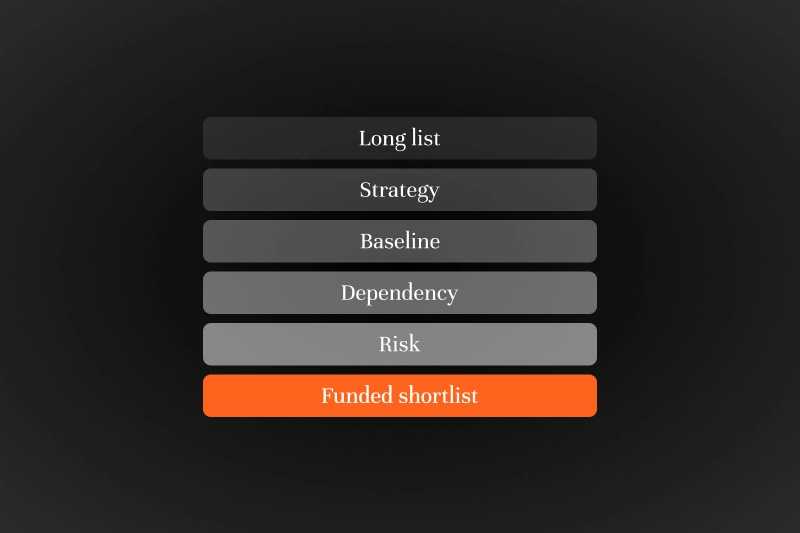
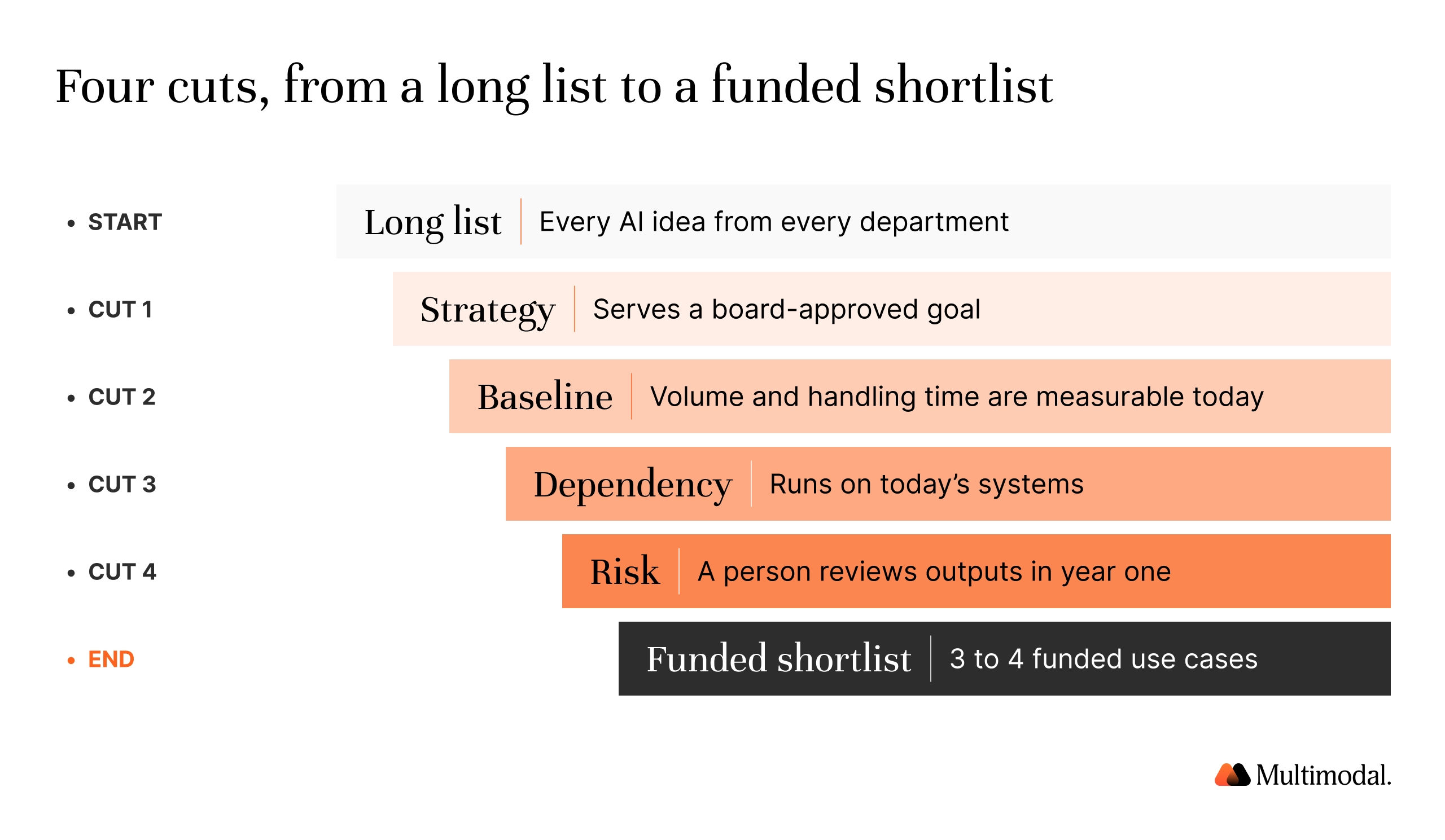
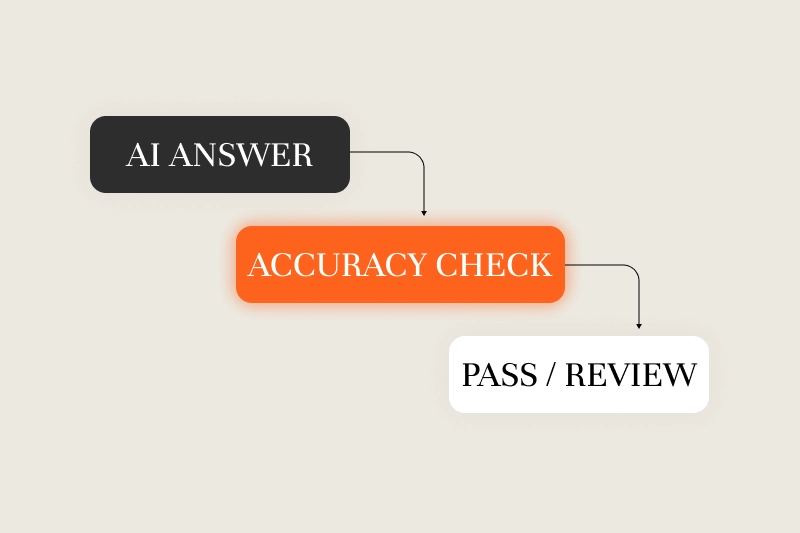
Four cuts turn a long AI idea list into three or four fundable use cases.
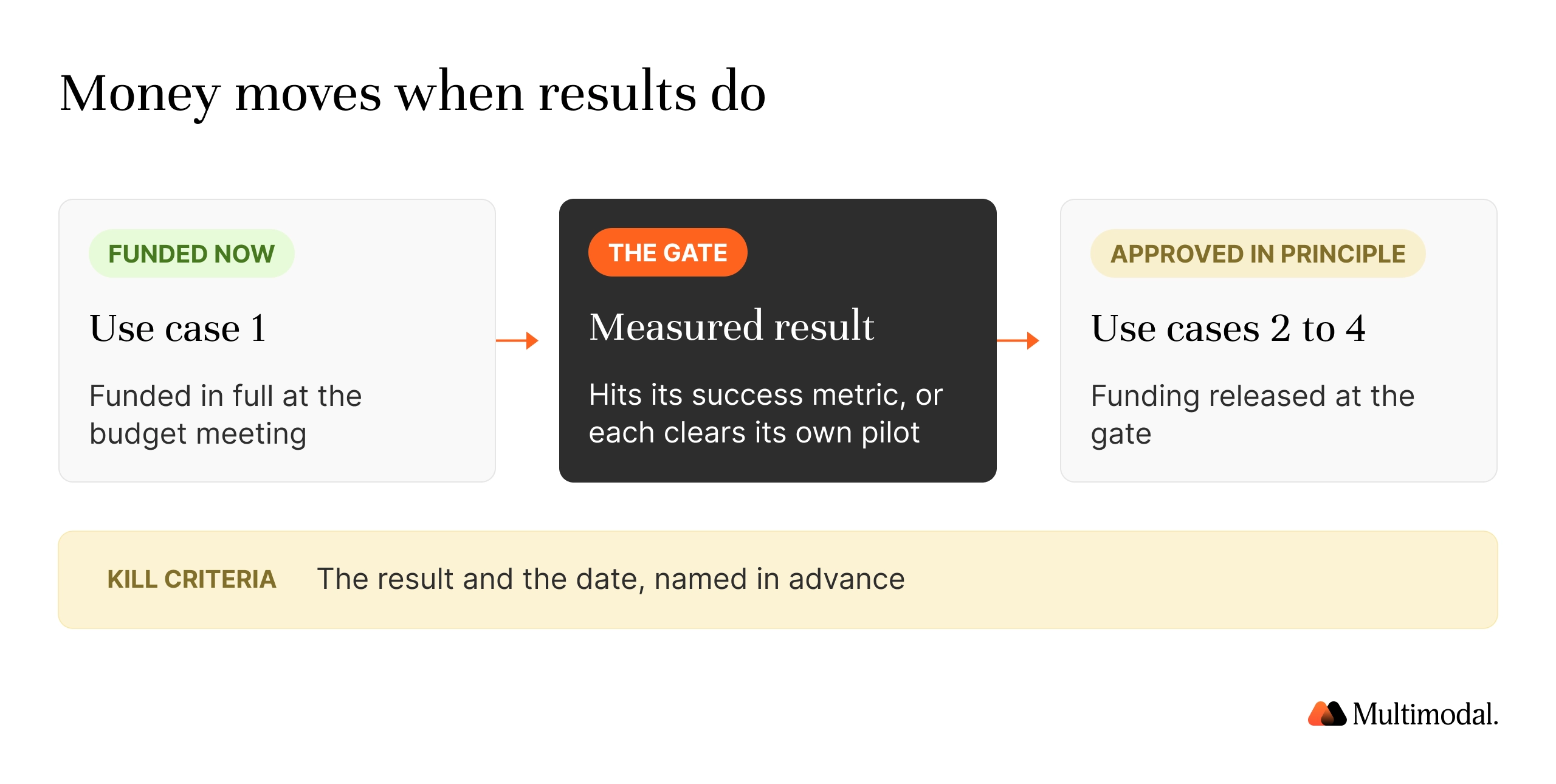
Fund the first use case in full and release the rest against measured results.
Get 1% smarter about AI in financial services every week.
Receive weekly micro lessons on agentic AI, our company updates, and tips from our team right in your inbox. Unsubscribe anytime.
Thank you! Your submission has been received!
Oops! Something went wrong while submitting the form.
AI use case scoping is the step between a list of AI ideas and a budget line your board will approve. You cut the list to the three or four workflows you can defend, set where each one starts and ends, price it based on your own volume, and give decision-makers one page per use case. For credit unions entering the 2027 budget process, the process determines which AI projects get funded.
The money is moving. 48% of financial institutions name AI as their top planned technology investment, and 88% expect to raise technology budgets within two years, according to Jack Henry. Measurement has not kept up: in Bank Director's 2025 technology survey, just 18% of respondents said their bank measures return on investment for technology projects, and 68% said it does not.
This guide covers four cuts that narrow the list: the scope card, a bottom-up price, staging the AI program, and the board page.
What is AI Use Case Scoping?
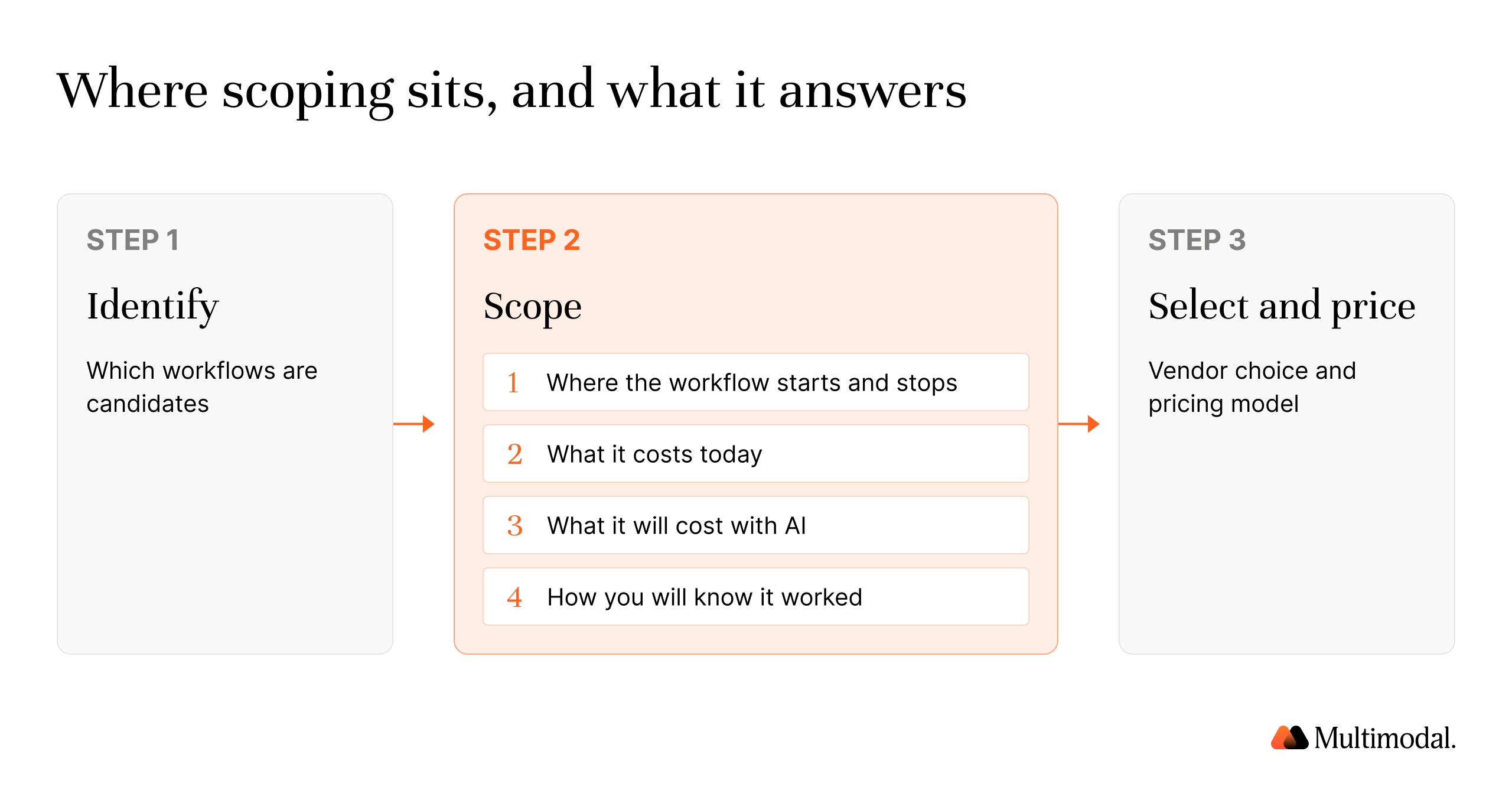
Project scoping defines the objectives, deliverables, timeline, and budget of a piece of work. AI use case scoping focuses on one use case and answers four questions: where the workflow starts and stops, what it costs today, what it will cost with AI, and how you will know it worked. It also says what the AI systems will not do, because a fixed boundary makes two prices comparable.
Use case identification comes first (see our guide to identifying AI use cases), scoping second, and vendor selection and pricing models third. Defining AI use cases this way lays the foundation for every subsequent AI investment.
Scoping also specifies the type of artificial intelligence involved, which affects the cost. For example, reading loan documents relies on computer vision and natural language processing, routing may use machine learning models, and drafting relies on generative AI. An AI solution that already does the job skips the model development, data pipeline, and data preparation work that would otherwise need data scientists and a data science budget.
Cornerstone Advisors found that agentic AI "is now being discussed at the executive or board level at more than half of institutions." Those boards will ask for a number.
Why Do Long AI Idea Lists Stall at Budget Time?
Engaging cross-functional teams is the right way to identify operational pain points, and it produces a long list: lending wants stipulations cleared, member service wants a knowledge assistant, finance wants reconciliation. Each idea looks cheap alone. None have been priced against the others, so whether the list contains 15 or 50 ideas, it remains a wish list within budget.
Spreading the money across all of them creates pilot sprawl: many small experiments, none funded well enough to reach production. Deloitte's 2026 State of AI in the Enterprise survey of 3,235 business and IT leaders found that only 25% of organizations have moved 40% or more of their AI pilots into production.
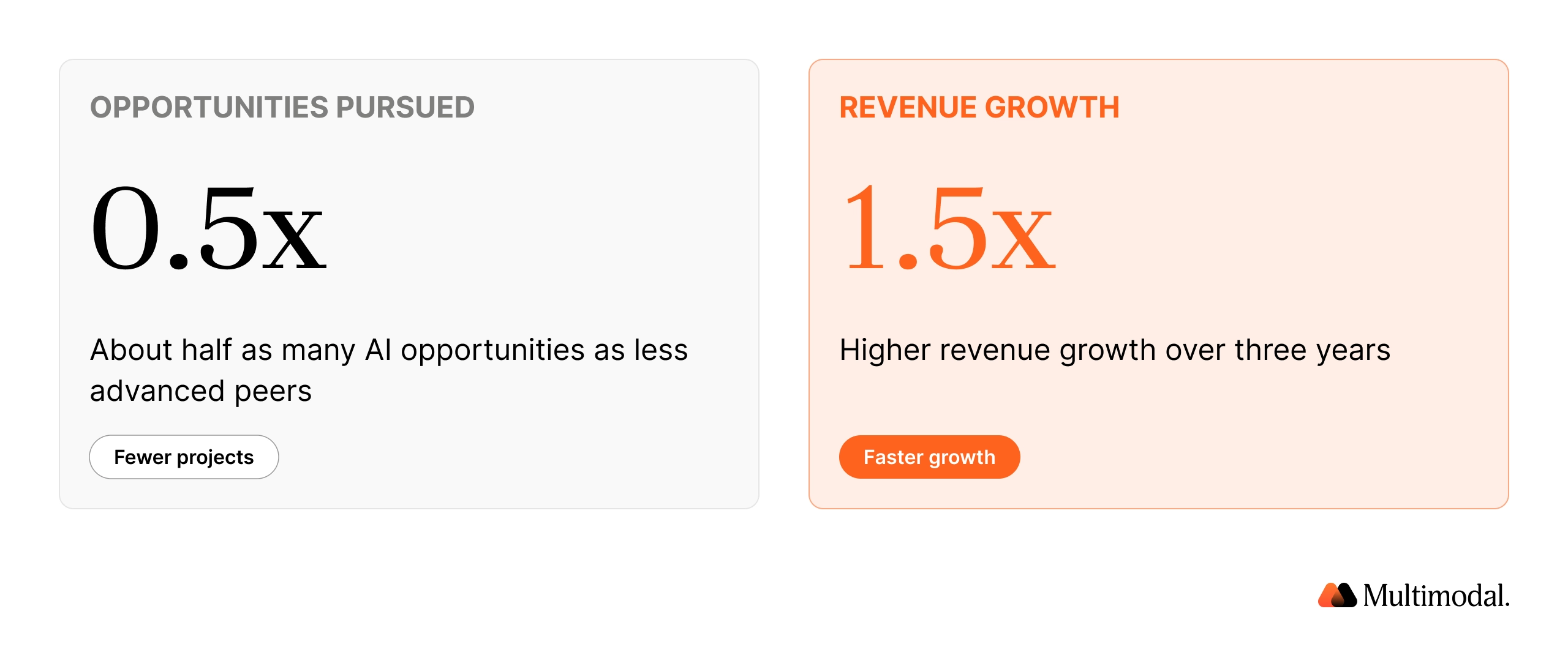
Focus pays. In BCG's 2024 survey of 1,000 executives, AI leaders "pursue, on average, only about half as many opportunities as their less advanced peers," and achieved 1.5 times higher revenue growth over three years.
How Do You Cut 50 AI Ideas Down to Three or Four?
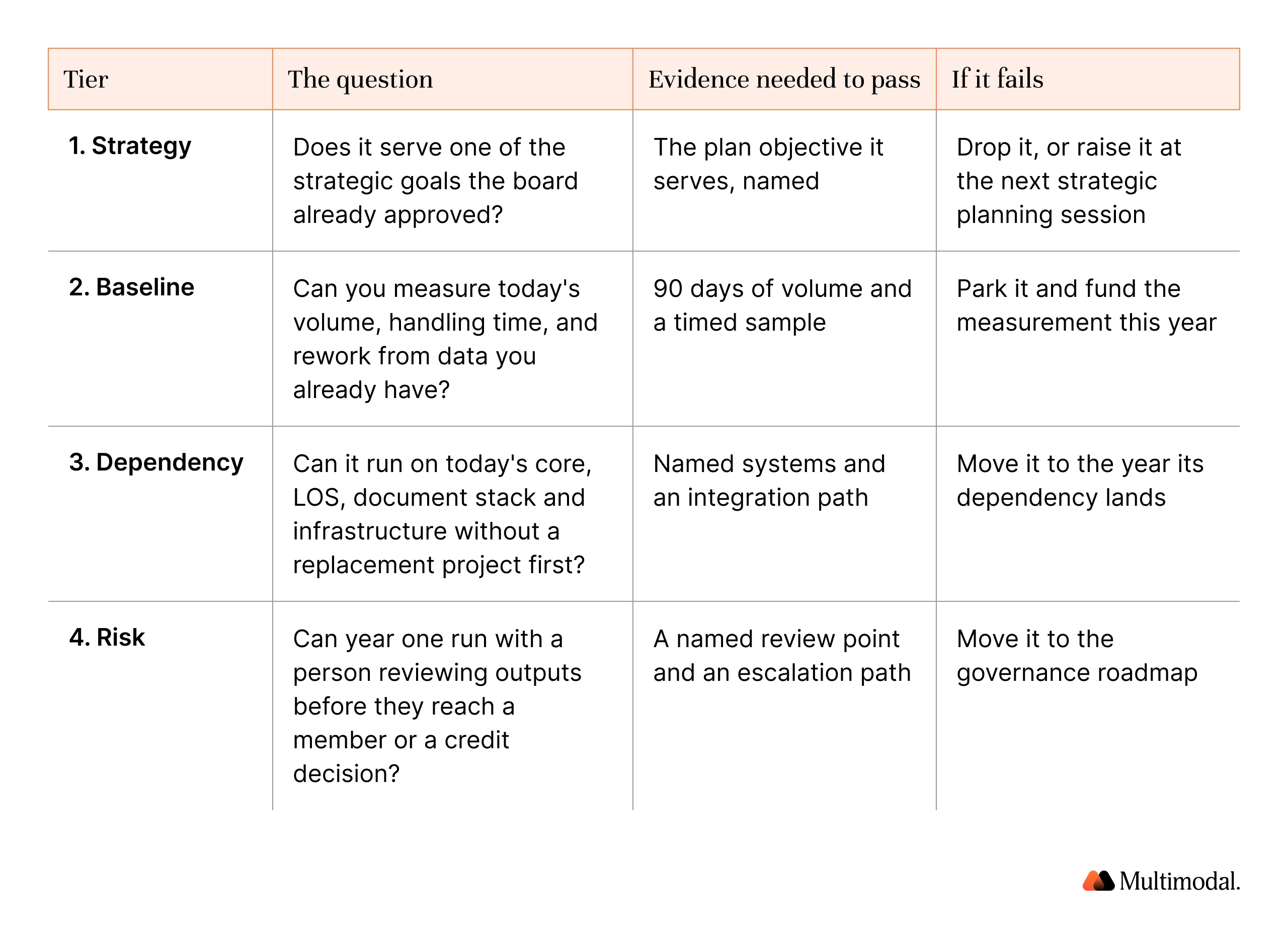
Most prioritization frameworks use a two-axis grid that scores ideas on business value and feasibility; the impact/effort matrix is the common version. Attractiveness depends on business value, AI advantage (whether AI beats rules or people alone), and feasibility. A grid ranks ideas, and the budget also needs to know which ones can carry a price this year. Run four cuts in order. Each removes ideas for a stated reason and parks them for next cycle, so nothing valuable is lost.
The four cuts
The strategy cut ties the list to business objectives. The baseline cut assesses data readiness for each use case; our look at whether you need clean data for AI clarifies what "ready" means. The dependency cut exposes implementation complexity before it reaches a statement of work.
The risk cut makes governance a constant gate in case prioritization, the job a governance axis does in other frameworks. It takes into account regulatory exposure, data security, potential risks to members, and ethical considerations, such as how a decision affecting a member will be explained to that member. Skip it, and you get ungoverned AI projects. The NIST AI Risk Management Framework organizes this work into four functions (Govern, Map, Measure and Manage), with accountability built into Govern and the context of use, including potential harm, established in Map.
"I look at examples of AI being implemented at scale, not just in a pilot program… And then if it's not something that can be totally operationalized and deliver with measurable ROI, then maybe we're just talking a little bit of hype… The third thing, which is probably the most important, is how does it align with the strategy?" — Steve Zich, Chief Marketing Officer, Capital Credit Union
Then balance the survivors into three or four: one use case that can show a measured result in its first quarter, one or two in adjacent workflows that reuse the same documents or systems, and at most one longer bet. Put low-effort, high-value work first, because early results build momentum.
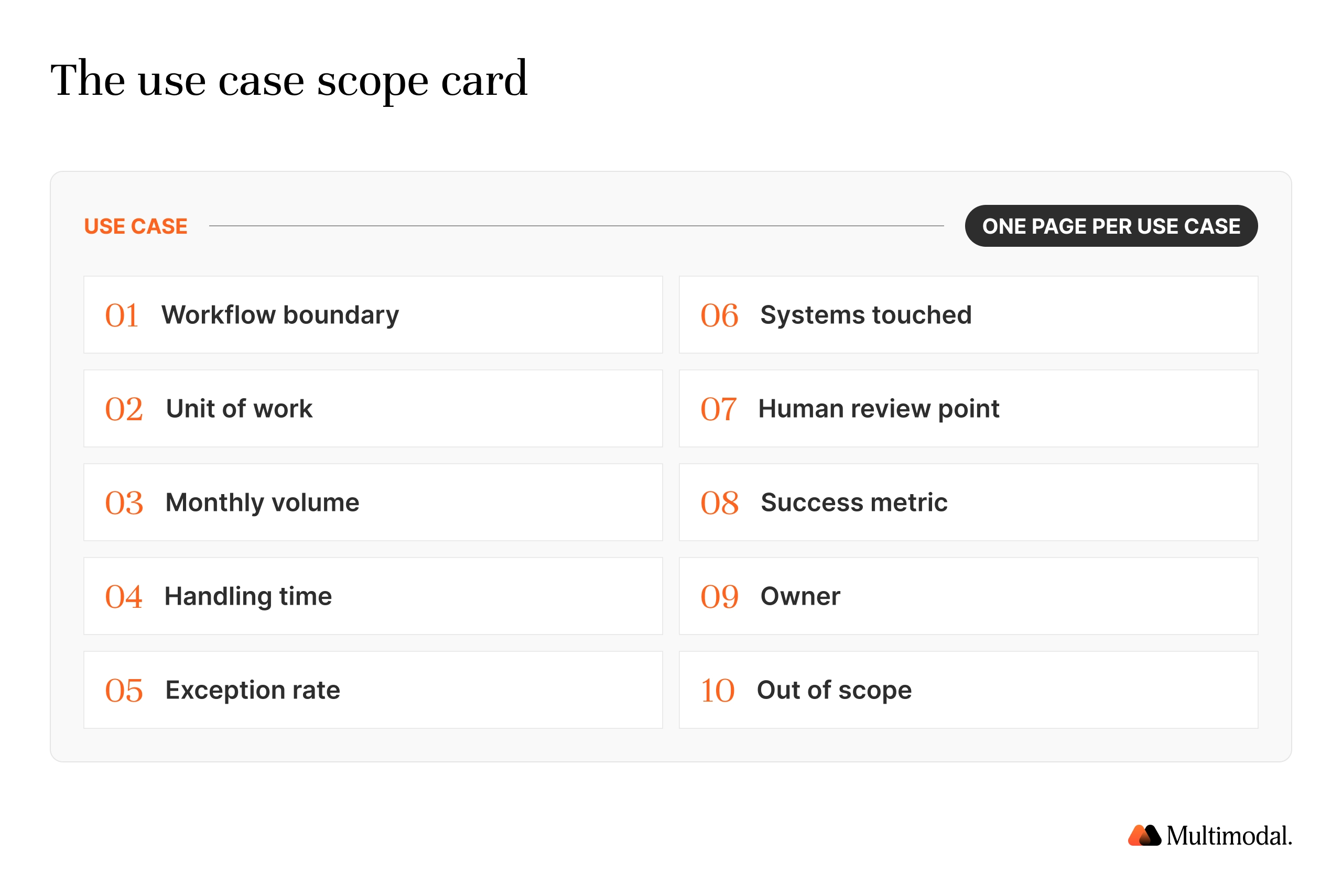
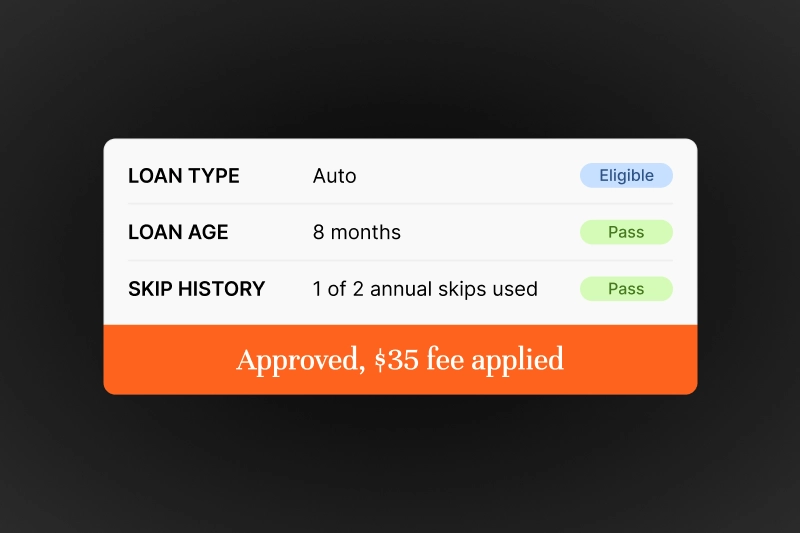
Write one page for every surviving idea. The scope card makes vendor quotes comparable, because every vendor prices the same boundary, volume, and review points. Many scoping problems trace back to missing definitions, such as what counts as a finished file. Defined deliverables also let you assess progress and risks once work starts.
The use case scope card
The handling time and exception rows hold the current cost. Work that is manual, time-consuming, and error-prone is well suited to AI, and the card shows how much manual effort is at stake. At the systems row, decide between a point solution or a platform, and run the card past your vendor due diligence questions so data security is defined up front.
Project managers usually own the card, and good project management means pulling in the process owner, IT, compliance, and finance. Name an executive sponsor, too; executive sponsorship keeps a use case funded when priorities shift.
How Do You Price an AI Use Case From the Bottom Up?
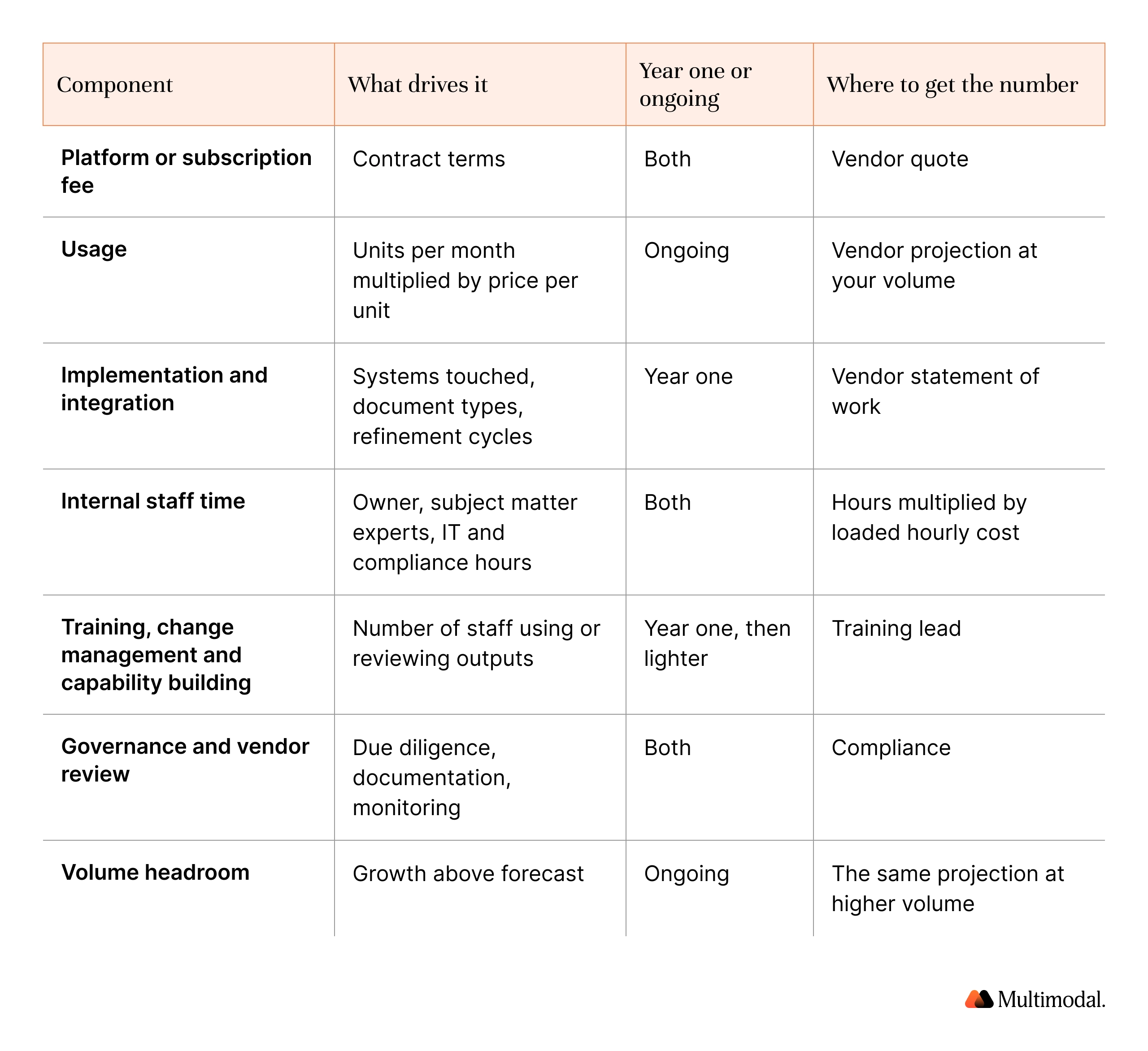
The same idea can carry very different price tags. Scope drives the difference: monthly volume, document types, the number of systems the AI model must read and write, exception handling, and how many departments share the workflow. So "small pilot or real program?" can only be answered from the scope card. An AI business case should include direct financial expenses and resource requirements, built component by component.
The cost of one AI use case, component by component
Plan for more than one refinement cycle, because the first configuration rarely handles every exception. Operational costs can vary significantly with demand, since usage tracks volume, and can fall per unit as initiatives mature and reach economies of scale. Transition costs (training, change management, running old and new processes side by side) are easy to leave out and hard to absorb later. For pricing models, see how credit unions should price AI.
"FAQ bot sounds like a great idea. Low risk, low impact, high volume. But it racks up those interactions faster than we could count, and we had to move away from that because it ate up our initial spend without touching any of the business outcomes that we wanted." — Zach Cox, Director of Business Innovation, Credit Union 1
Then write the value side as arithmetic, using your own financial data:
Hours returned: minutes saved per unit, multiplied by annual units, divided by 60.
Labor value: hours returned multiplied by loaded hourly cost.
Everything else: rework avoided, faster turnaround, and capacity to handle more volume without new hires.
Productivity gains and operational efficiency are the usual lines; where members are involved, add turnaround time or customer satisfaction, because business impact rarely stops at cost reduction. Our research on manual document processing found that 55%–70% of that cost never appears in the general ledger, and the AI ROI calculator provides a first estimate based on headcount, salary, and page volume.
How Should AI Budget Planning Stage Three or Four Use Cases Across 2027?
Good AI budget planning is sequencing work so that each use case earns the next, with resource allocation following the evidence:
Fund the first use case in full. Approve its complete cost at the budget meeting.
Approve the rest in principle. Release their funding when the first hits its success metric, or when each clears its own pilot.
Write kill criteria in advance. Name the result, and the date, that stops funding.
Carry the lessons forward. Feed the insights gained from the first use case into the scope cards for the next ones.
Pilot projects should show measurable value against clear success criteria, so budget for production from the start. In Deloitte's survey, 54% of organizations expected to reach the 40%-in-production mark within three to six months. Set time horizons for each use case, track leading indicators such as monthly exception rates, and measure realized value against the projection that secured funding. Monitoring progress this way shows the board what the longer bet is buying.
For gates within a single implementation, our board-ready business case sets out three: approve scope and budget, review pilot results, and approve production.
What Should the Board Ask Include?
The NCUA Examiner's Guide states that "the board of directors reviews and approves the business plan, including a budget, in the context of its consistency with the credit union's strategic plan." That sentence is the test for every AI line. NCUA's 2026 supervisory priorities letter, 26-CU-01, does not mention AI, so the board is approving a budget that aligns with its plan, with no AI mandate to address.
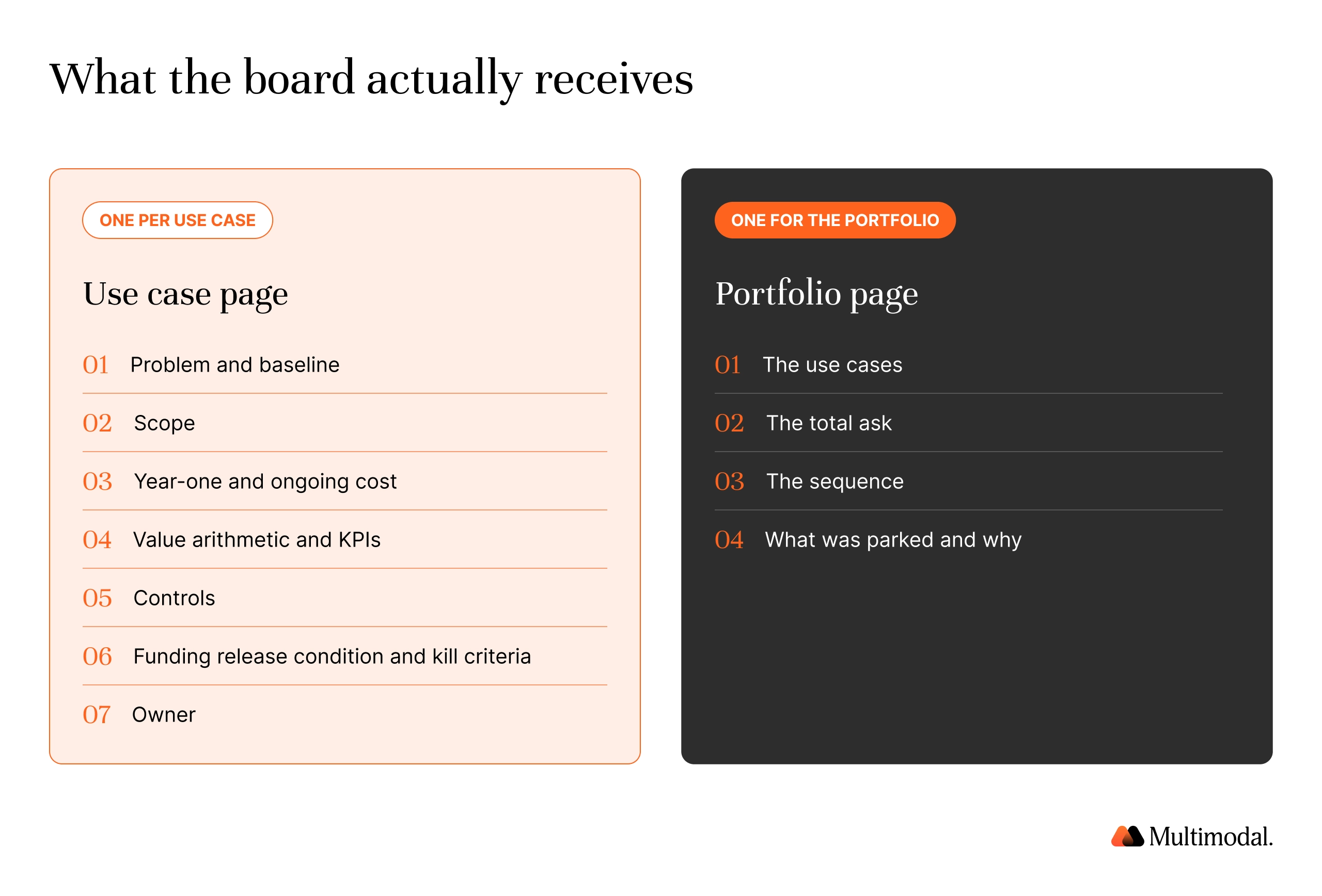
Give the board one page per use case, covering seven items:
The problem and today's baseline
Scope: boundary, volume, and what is out of scope
Year-one and ongoing cost, by component
The value arithmetic and the key performance indicators
Controls: human review point, vendor due diligence status and data handling
The funding release condition and kill criteria
A named owner
Add one portfolio page: the use cases, the total ask, the sequence, and what you parked and why. It answers the critical considerations decision makers raise first: what it costs, what it replaces, and what happens if it underperforms. A 90-day plan with measurable outcomes gives the board something concrete to fund.
With AgentFlow, scoping starts with your volume: we fill in the scope card with your team, run a sample of your documents, and price the use case per unit based on your file count. At FORUM Credit Union, AgentFlow reached 99% document classification accuracy across 62 loan packages and 99% data extraction precision.
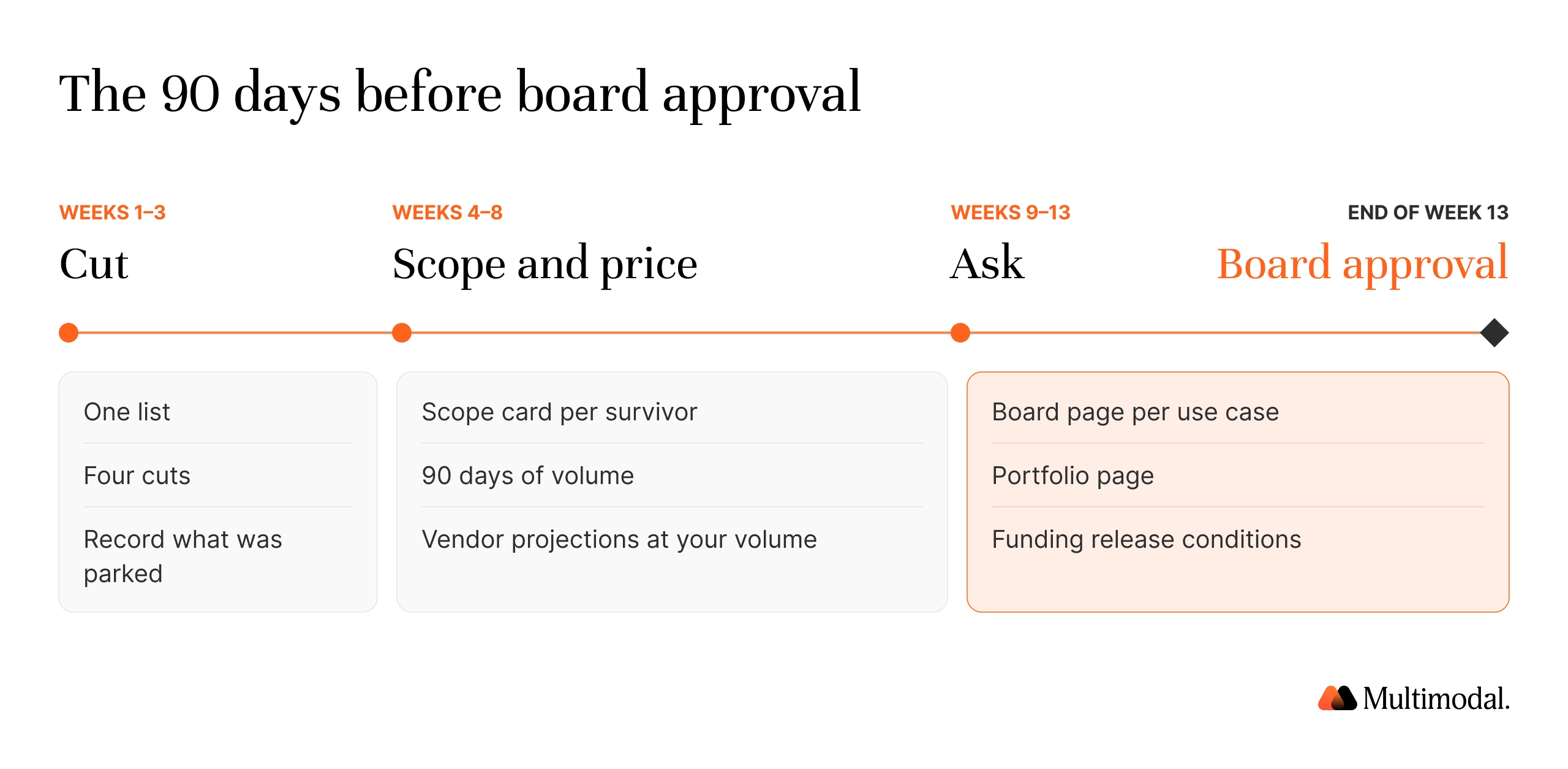
Your First 90 Days
Count back from your board's approval date.
Cut (weeks 1-3). Put every AI idea from every department on one list. Run the four cuts, and record why each parked idea was parked.
Scope and price (weeks 4-8). Write one scope card per survivor. Pull 90 days of volume, ask vendors for projections at your volume, and build the bottom-up price.
Ask (weeks 9-13). Prepare one board page per use case plus the portfolio page. Agree on the funding release conditions and name the owner who will start the first use case the week after approval.
A Price the Board Can Check
Boards are already discussing AI, and they approve numbers they can check: a short list, a boundary, a unit price, a metric, and an owner. Organizations that scope this way avoid the common pitfalls of AI-driven programs, from pilots that never reach production to usage bills nobody forecast.
Bring us the three or four AI use cases on your list. We will scope each one with you, price it against your volume in AgentFlow, and hand back a per-use-case cost your board can check: your volumes, your numbers.
Price Your AI Shortlist Before the Committee Meets
Send us the three or four use cases on your list, with 90 days of volume for each. We will fill in the scope card with your team and hand back a per-use-case price your board can check.
The step that turns an AI idea into a budget line: a workflow boundary, today's cost, the cost with AI, a success metric, and an owner.
How should a credit union approach AI budget planning for 2027?
Cut the idea list to three or four using strategy, baseline, dependency, and risk tests; price each based on your volume; and release funding against results.
How many AI use cases should a credit union fund in one budget year?
We recommend three or four. BCG found AI leaders pursue about half as many opportunities as their peers.
How do you estimate the cost of an AI use case?
Add platform fees, usage at your volume, implementation, staff time, training, governance and headroom for volume above forecast.
What should an AI business case for a credit union board include?
The baseline, scope, year-one and ongoing cost, value arithmetic, controls, funding conditions, kill criteria and a named owner.
Should a credit union budget for an AI pilot or for production?
Plan the production cost from the start. Deloitte found only 25% of organizations have moved 40% or more of their AI pilots into production.
Does NCUA require credit unions to budget for AI?
No. Letter 26-CU-01 does not mention AI. The board approves a budget consistent with the strategic plan, and AI lines meet that test.

.svg)
.svg)

.avif)
.png)

.png)