The CUSO Model Is Slowing Credit Union AI Adoption
The CUSO model gave credit unions scale for 40 years. See where the 1% cap, shared roadmaps, and vendor structure now slow AI adoption, and what to do.
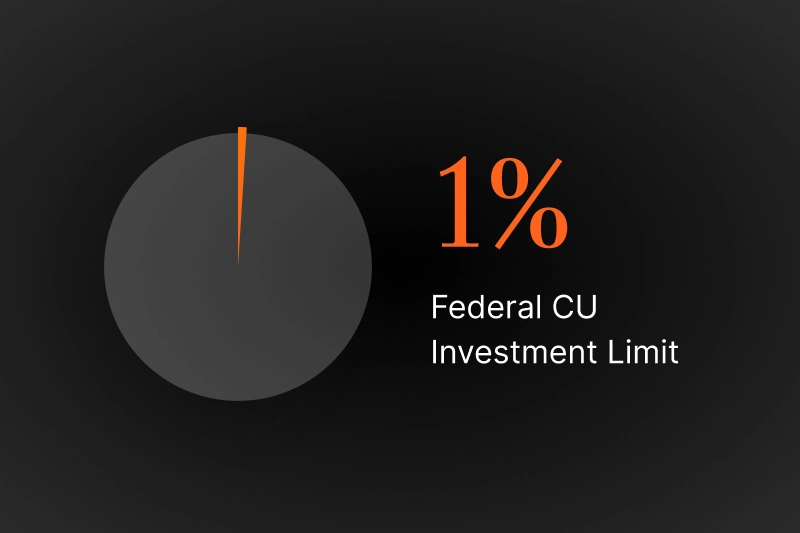
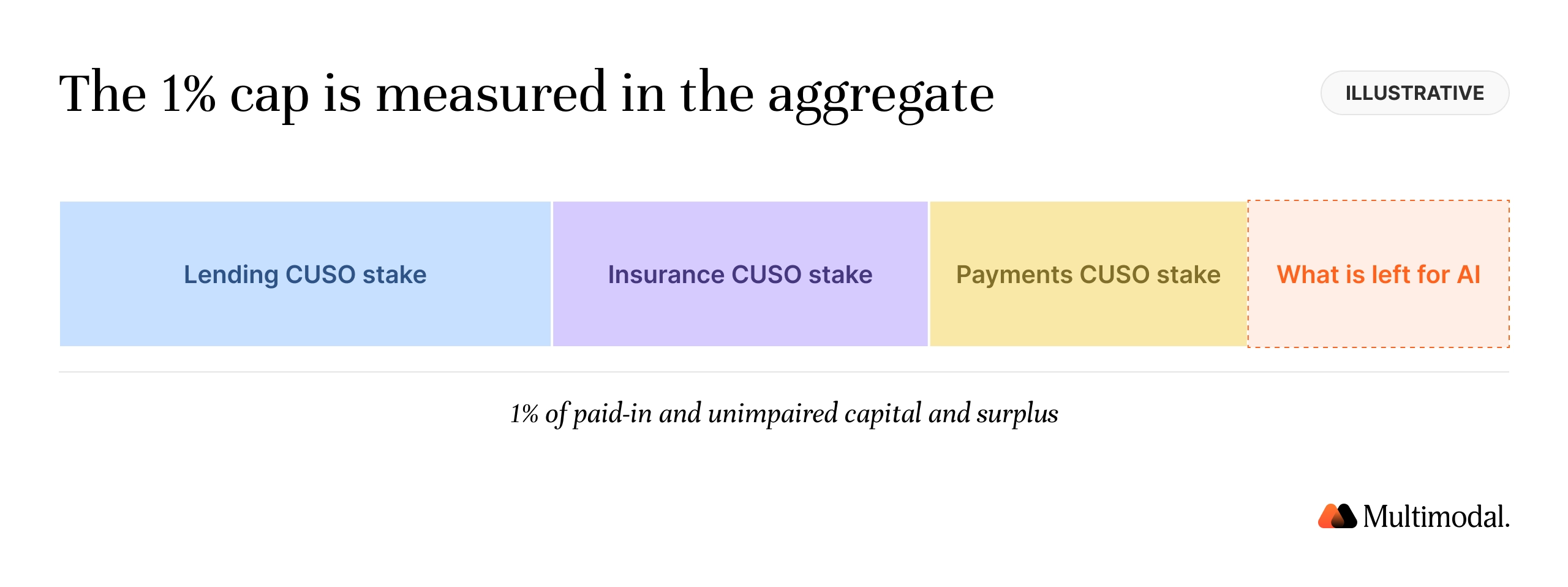
A federal credit union can invest only 1% of unimpaired capital across every CUSO it holds, in the aggregate.
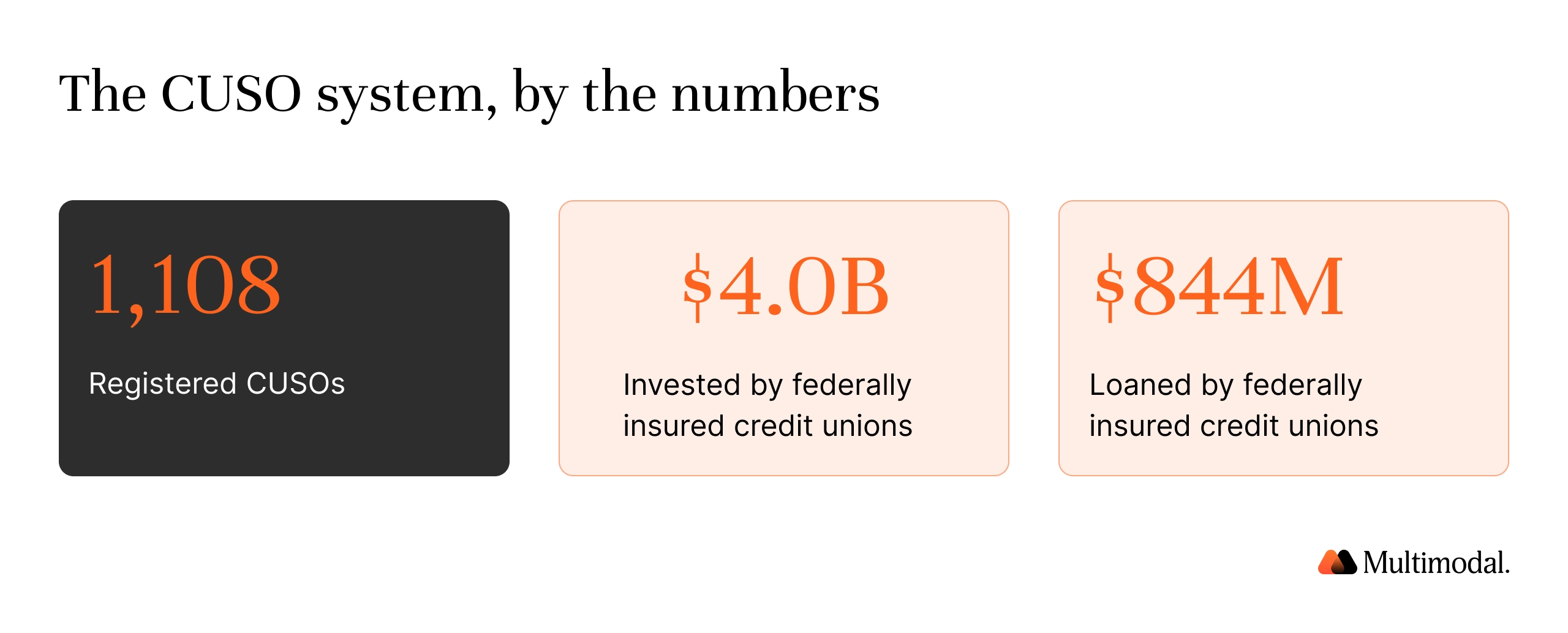
1,108 registered CUSOs held $4.0 billion of federally insured credit union investment as of December 2024.
Roughly 93% of credit unions used at least one CUSO, yet the NCUA cannot directly examine a CUSO.
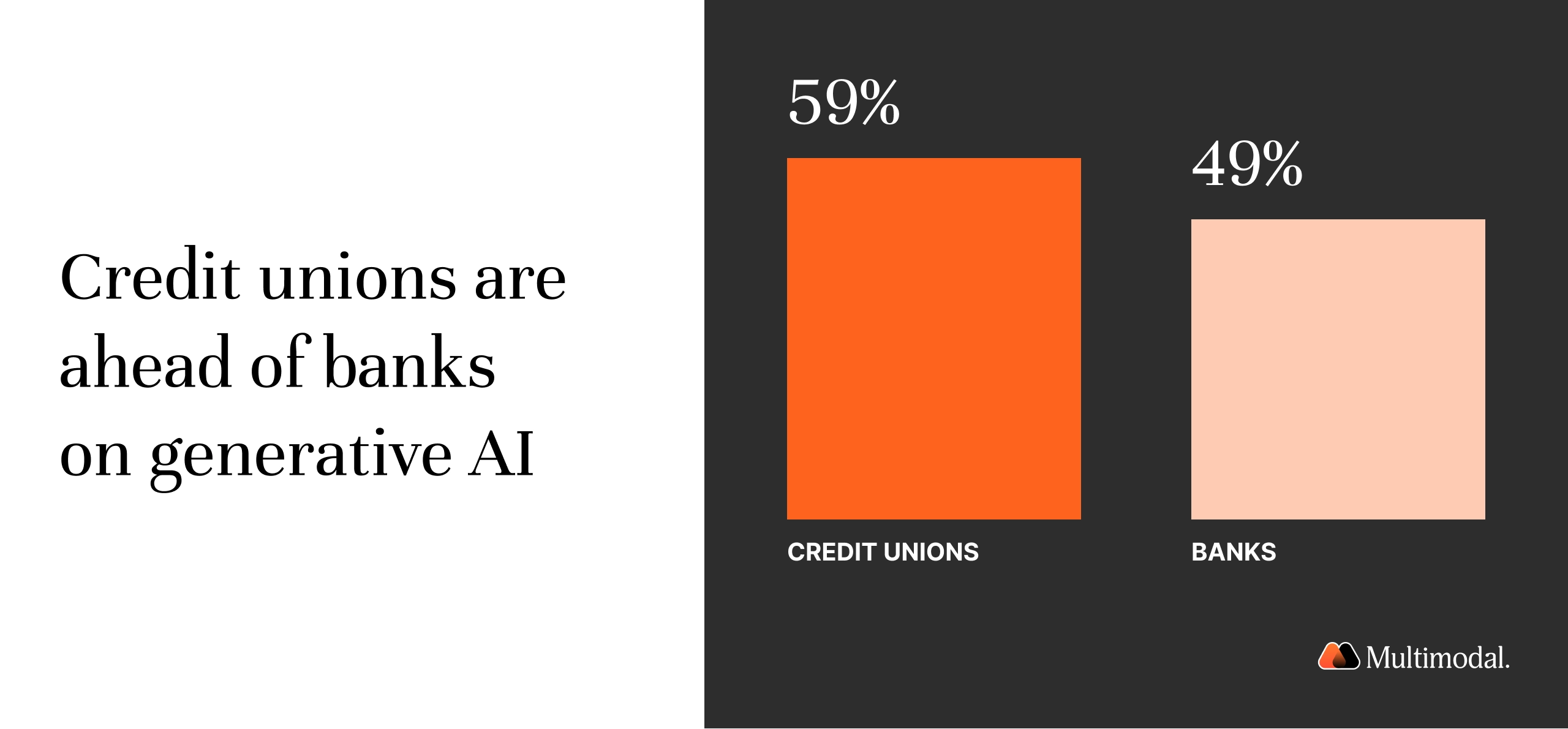
59% of credit unions have deployed generative AI, compared with 49% of banks, so awareness is not the gap.
Ownership and procurement are separate decisions, and running both through one structure costs quarters.
Get 1% smarter about AI in financial services every week.
Receive weekly micro lessons on agentic AI, our company updates, and tips from our team right in your inbox. Unsubscribe anytime.
Thank you! Your submission has been received!
Oops! Something went wrong while submitting the form.
On a CUSO credit union technology decision, the structure sets the clock more often than the technology does. The AI rarely holds a project at the line. The buying path does.
Awareness stopped being the problem some time ago. 59% of credit unions have already deployed generative AI, compared with 49% of banks, among 416 senior executives at institutions with $250 million to $50 billion in assets. The credit unions that stall usually do so in how they buy.
What Is a CUSO and What Does It Do?
A credit union service organization is an entity that NCUA rules allow credit unions to invest in or lend to, enabling them to offer services beyond their direct legal authority. The forty-year-old model let several credit unions share a function none could justify on its own: a fractional CFO, a commercial underwriter, an insurance agency.
There were 1,108 registered CUSOs as of December 31, 2024, holding $4.0 billion of investment and $844 million in loans from federally insured credit unions. CUSOs must be structured as a corporation, limited liability company (LLC), or limited partnership, and must primarily serve credit unions or their membership. That keeps the credit union industry's collaboration model focused on member services rather than external profits.
Preapproved activities are broad: checking and currency services, professional and management services, electronic transaction services, insurance brokerage or agency, loan support services, record retention and security services, securities brokerage services, shared branch operations, trust services, and payroll processing.
In 2021, the NCUA Board voted 2-1 to add loan origination. Shared branch operations enable collaborative networks to provide credit union members with access to far more surcharge-free ATMs than any single institution could fund on its own.
Why Do Credit Unions Use CUSOs for Technology?
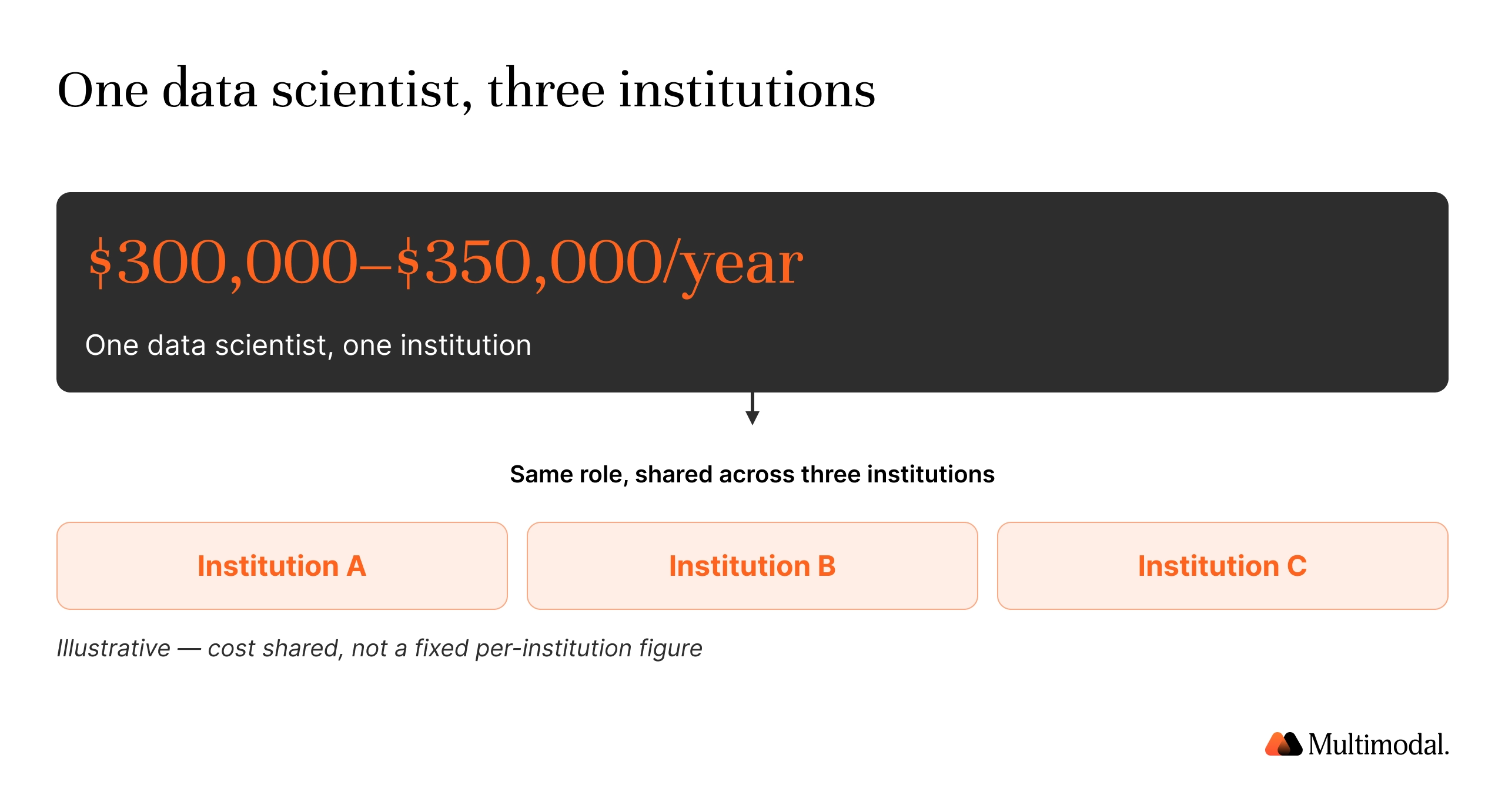
The case for the model is strong, starting with talent economics. Randy Salser, who runs the CUSO trade association, does the arithmetic on our Main Street AI podcast:
"You're three hundred, three hundred and fifty thousand a year for one FTE. Can you share that across three institutions? All of a sudden it becomes far more manageable." — Randy Salser, President and CEO, NACUSO
A SOC 2 certification that lands as a six-figure line item at one institution becomes ordinary when four or five credit union owners split it. Economies of scale reduce operational costs, and pooled resources enable the purchase of technology and expertise that a $400 million balance sheet cannot fund alone.
The member-facing case is real too. In Q3 2025, credit unions averaged 5.64% on a 60-month new-car loan, compared with 7.47% at banks. Member ownership produces better rates and lower fees, and CUSOs push that member-centric logic, ahead of profits, into services a single institution could not staff.
More than eight in ten credit unions with the highest innovation readiness scores say external partners help them innovate faster. For many credit unions chasing growth against larger banks, that is the difference between competing and watching.
So the model is a real accelerant for capability, and on an eighteen-month AI cycle, a brake on pace.
Do CUSO Credit Union Investment Rules Limit AI Adoption?
On the ownership path, yes. The rule reads: "An FCU's total investments in CUSOs must not exceed, in the aggregate, 1% of its paid-in and unimpaired capital and surplus as of its last calendar year-end financial report". A separate, independent 1% ceiling governs loans to CUSOs.
The load-bearing words are "in the aggregate." A stake in a commercial lending CUSO and a stake in an insurance CUSO draw from the same 1%. Every dollar committed to vehicles built over the past 20 years is unavailable to the one you want to build now. By the time the proposal reaches the board of directors, the question has changed shape: directors weigh what comes out to make room, rather than whether the investment earns its keep.
Advocacy to raise the cap is underway: a panel at NACUSO Reimagine 2026, led by Dennis Dollar, explored the constraints it creates. Timing matters more. In January 2026, the NCUA announced a fourth round of deregulation proposals, and Part 712 was not on the list. The agency is cutting regulatory requirements while the 1% cap stays in place, so no credit union should build a 2027 technology budget assuming it will move.
Where the Model Slows the Clock: Three Structural Frictions
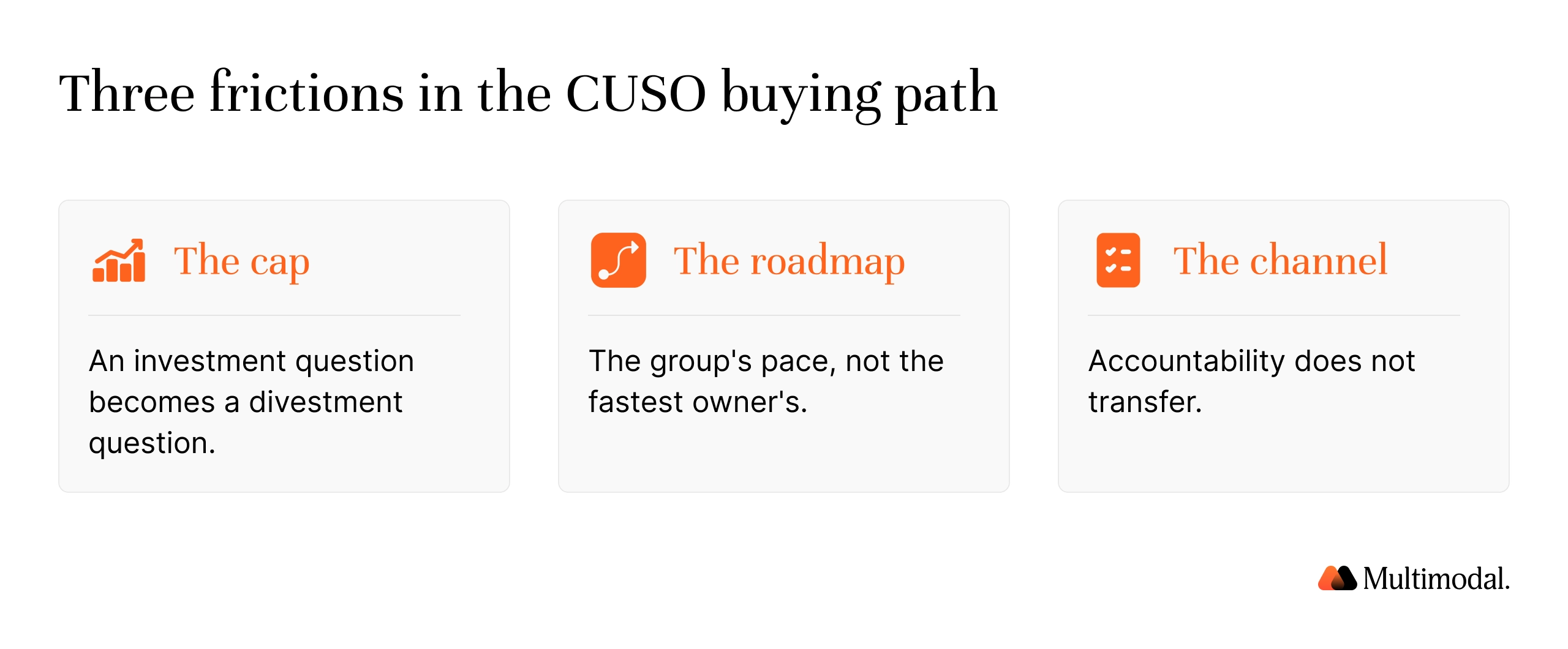
1. The Cap Turns an Investment Question Into a Divestment Question
A credit union holding positions across lending, insurance, and payments CUSOs reaches an AI decision with the ownership budget already spent. The proposal has to displace something rather than stand on its merits, and good ideas die in that comparison.
2. A Shared Roadmap Runs at the Consensus Pace
A shared vehicle serves credit unions with different core systems, asset sizes, risk appetites, and examination histories. The roadmap that emerges is the one every owner can agree on, which, by construction, is not the one the fastest owner would have chosen. Correct behavior for the vehicle, a real cost for the institution ready to move now.
Artificial intelligence is now the top planned technology investment among financial institutions, named by 48%. Demand at that level does not wait for a committee.
3. The Channel Does Not Transfer the Accountability
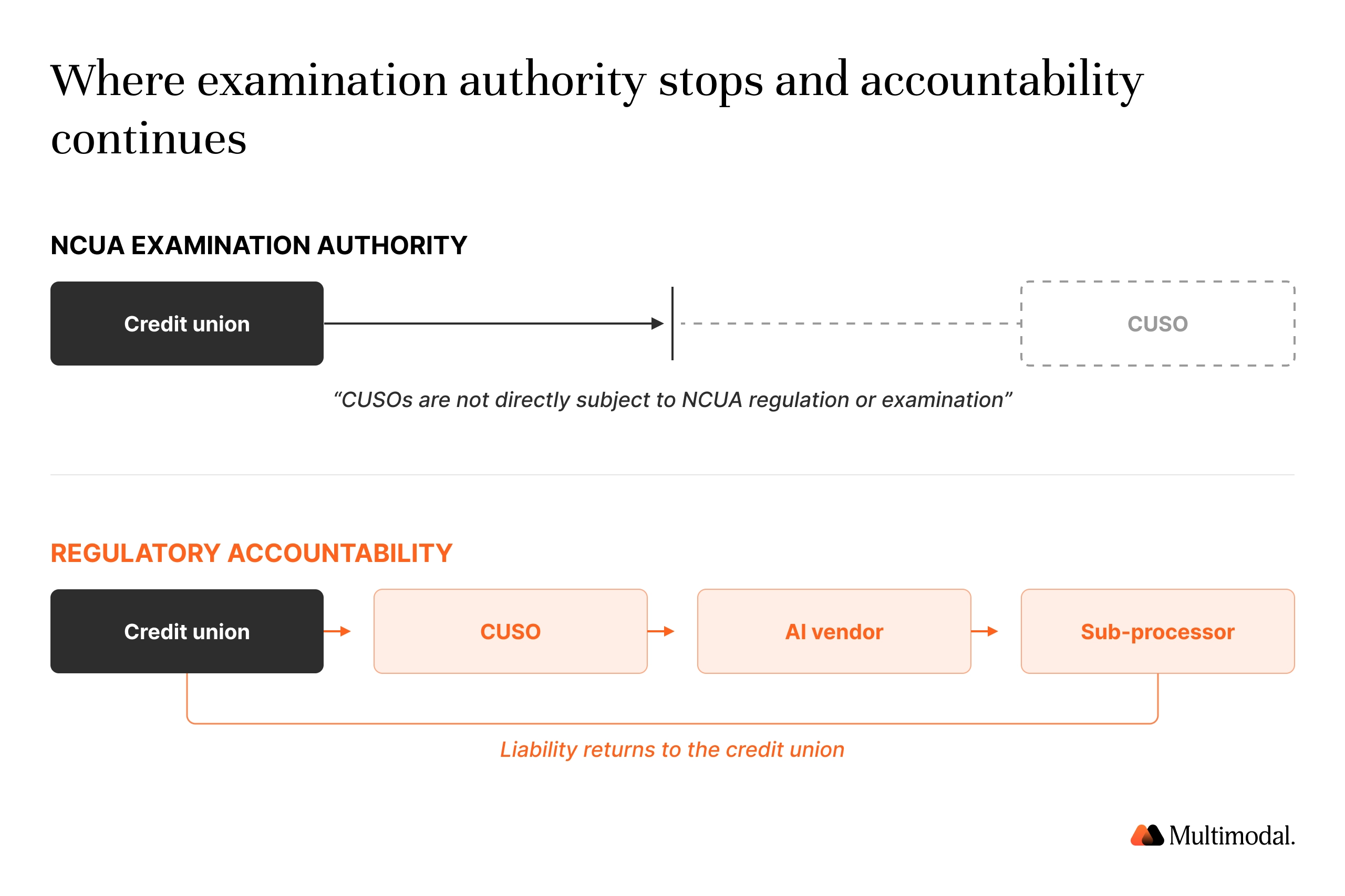
Buying through a CUSO reads as safer. The counterparty sits inside the movement and carries an implicit endorsement. The comfort is structural. The compliance liability stays where it was.
The NCUA is direct about the limits of its own reach. Its Examiner's Guide states that "CUSOs themselves are not directly subject to NCUA regulation or examination," and that the agency "does not have the authority to examine third-party vendors."
The GAO agreed in 2025, noting Congress had not acted on its 2015 recommendation to grant that authority. The gap is not theoretical: nine CUSOs contributed to material losses to the National Credit Union Share Insurance Fund between 2008 and 2015. A mismanaged CUSO damages the finances and reputation of every credit union owner behind it.
Michael Heller, who runs the vendor side at a firm representing both credit unions and CUSOs, put it plainly on our Main Street AI podcast:
"Although you may utilize a vendor to provide a certain product or service, you can't outsource the risk. Even if you use, through extension, a third party to offer that product or service, you're still on the hook for that at the end of the day." — Michael Heller, Associate Attorney, Messick Lauer & Smith
Due diligence gets shortened because the counterparty carries movement credentials. The regulatory requirements do not.
What Are the Alternatives to Buying AI Through a CUSO?
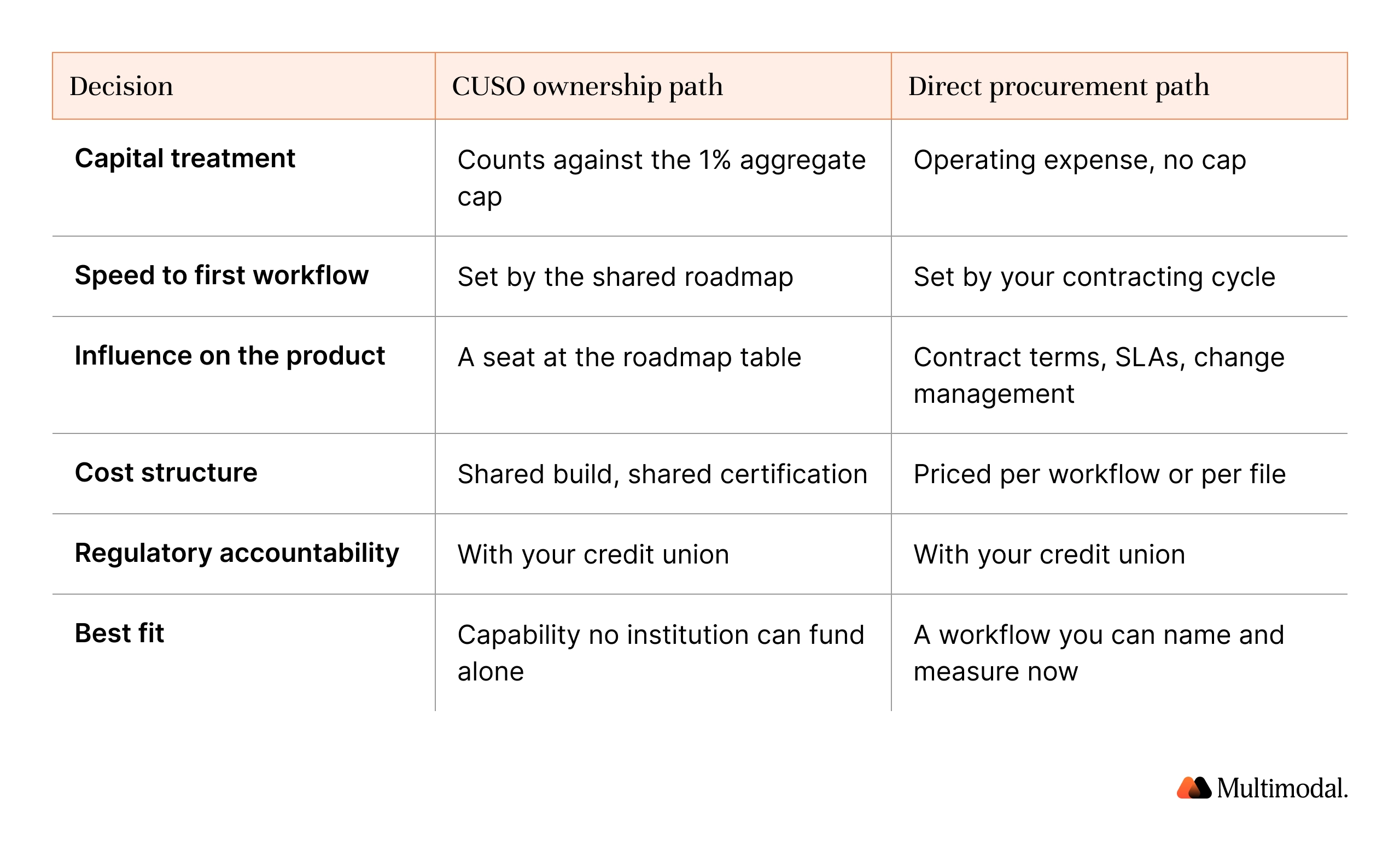
Separate the two decisions the model bundles, then choose each on its own terms.
The accountability column does not change regardless of which path you take, and the best-fit row is the argument in one line.
Name the workflow before choosing the structure: a measurable workflow can be procured this quarter, while a broad capability nobody can scope belongs in a shared vehicle several credit unions fund together. Then price both paths against one baseline, using our breakdown of how credit unions should price AI.
How Should a Credit Union Evaluate a CUSO-Backed Vendor?
Four questions ownership does not answer.
Where do the model, data, and sub-processors sit? Holding equity tells you nothing about where member records travel.
What does the exit look like, and is there an alternative?
How does the roadmap get set when your priority is not the group's?
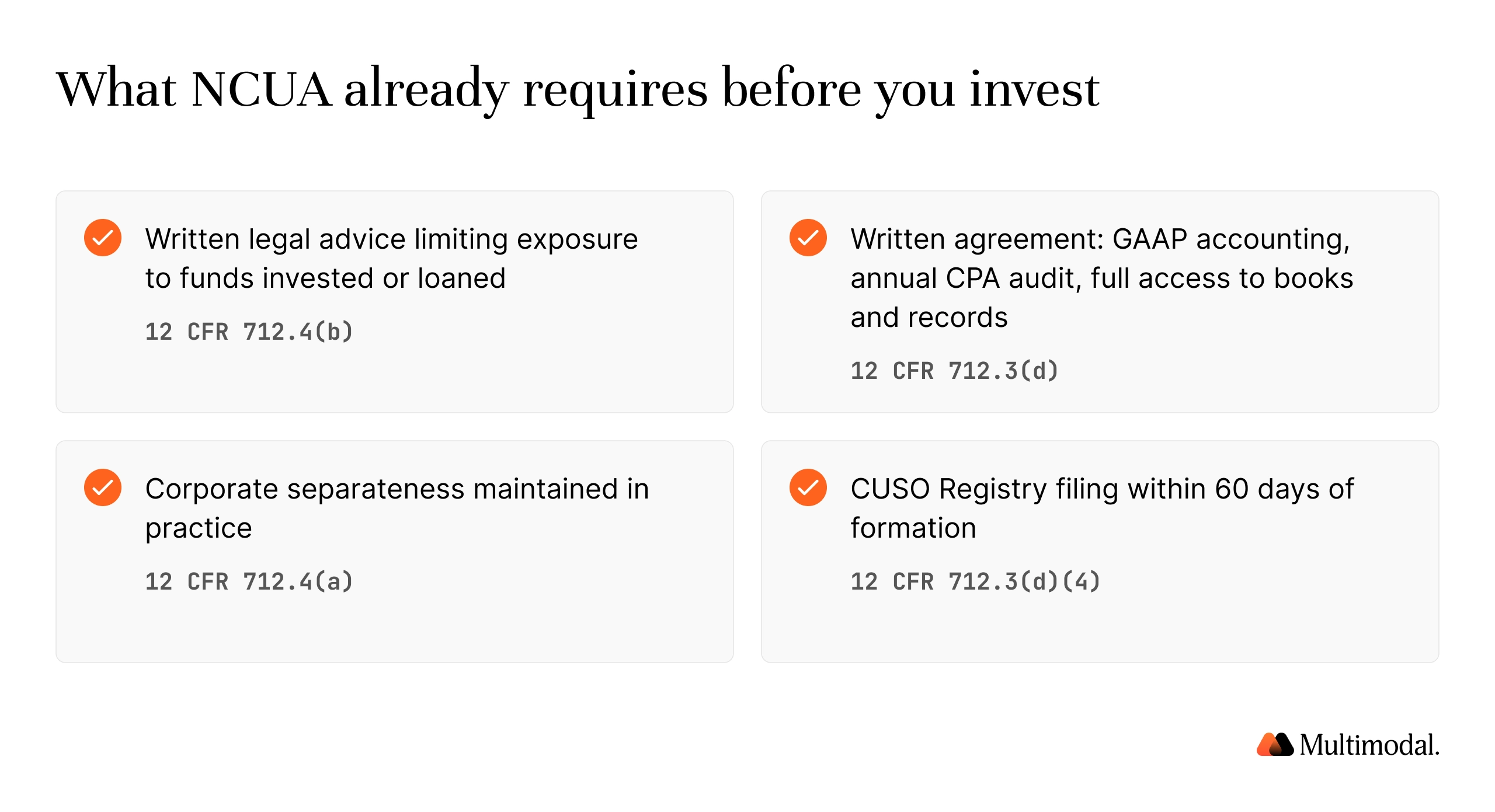
The NCUA has issued no AI-specific rules, and its 2026 Supervisory Priorities letter includes no AI section, so the documentation burden falls on you. The due diligence scaffolding is substantial. Before investing, a credit union must obtain written legal advice confirming the CUSO limits exposure to the funds invested or loaned, and secure a written agreement covering GAAP accounting, an annual CPA audit, and full access to its books and records.
Corporate separateness must be maintained in practice. The CUSO Registry requires a newly formed CUSO to file within 60 days of formation, carrying its legal name, address, services offered, and the credit unions investing in it.
That process is a floor. AI deployment sits above it, as does the training your employees need.
A head of operations at a community bank, in Multimodal's 2026 Field Report: "By leveraging relationships you already have, you can sort of get away with adding new things to your ecosystem more easily than if you're just introducing a bunch of new partners."
The Structure Is a Choice, and It Is Being Made by Default
Two decisions, one structure. Ownership entails a capped balance-sheet commitment, a board seat, and a consensus roadmap. Procurement carries a contract, a timeline, no cap. Both leave accountability where it started.
The credit unions moving fastest have stayed within the model and stopped letting it make sequencing decisions for them. The future of credit union innovation gets decided well before Congress touches the cap, in the choice each institution makes this budget season.
Send us one workflow you are routing through a shared vendor conversation. We will run it through AgentFlow and hand you the before-and-after numbers: minutes per file, extraction accuracy, exceptions routed back to your team. No capital investment, no board resolution.
See what one workflow actually costs you
Bring us a single credit union workflow, and we will run it through AgentFlow and then hand back the before-and-after numbers for cycle time, accuracy, and exception volume.
A CUSO, or credit union service organization, is an entity that credit unions may invest in or lend to under NCUA rules, enabling them to offer services beyond their direct authority. There were 1,108 registered CUSOs as of December 2024, providing lending support, insurance, payments, and operational services.
Why do credit unions use CUSOs for technology?
Several credit unions share costs that no single institution could carry alone: specialized talent, security certifications, and build expenses. Pooling resources produces economies of scale, lowers operational costs, and earns a seat at the table with core providers.
Do CUSO investment rules limit AI adoption?
Yes, on the ownership path. A federal credit union's total investments in CUSOs cannot exceed 1% of paid-in and unimpaired capital in the aggregate, with a separate 1% ceiling for loans. Buying services from a CUSO you do not own carries no cap.
Can federally chartered credit unions invest 2% in CUSOs?
The investment ceiling is 1%. A separate, independent 1% loan authority sits alongside it, so total exposure can reach 2% of paid-in and unimpaired capital, though only half counts as investment.
What are the alternatives to buying AI through a CUSO?
Direct procurement of a named workflow, priced as an operating expense. Name the workflow first, then choose the structure. Broad capabilities that resist scoping suit a shared vehicle where multiple credit unions fund discovery.
Does buying AI through a CUSO reduce regulatory risk?
No. The NCUA cannot examine CUSOs directly and lacks authority over third-party vendors, so the credit union remains accountable to its examiner. The compliance burden, the audit trail, and the member impact stay with the institution.

.svg)
.svg)

.avif)
.png)

.png)