How AgentFlow Integrates with Jack Henry, Fiserv, and Symitar Core Banking Systems
How AgentFlow works alongside Jack Henry, Symitar, and Fiserv core banking systems to automate document processing and lending workflows. No core replacement.
Core integration decides whether credit union AI delivers capacity or shelfware
Three vendors serve roughly half of US credit union cores.
AgentFlow works alongside existing cores; no replacement, no migration.
Documented results: 60% decision automation, 99% classification accuracy at FORUM CU.
Deployment is a ~12-week POC with forward-deployed engineers.
Get 1% smarter about AI in financial services every week.
Receive weekly micro lessons on agentic AI, our company updates, and tips from our team right in your inbox. Unsubscribe anytime.
Thank you! Your submission has been received!
Oops! Something went wrong while submitting the form.
Every AI vendor tells credit unions their platform "connects to your core." Fewer explain how. Credit union core integration determines whether an AI deployment delivers real results or becomes just another system your team rekeys data into.
This guide covers how AgentFlow works alongside the core banking systems and loan origination systems credit unions and community banks already run, and what financial institutions have measured.
Why Credit Union Core Integration Is the First Question Buyers Ask
Ask an operations leader what stands between their credit union and AI adoption, and the answer is rarely the AI. The answer is the stack: the core processing system that maintains member accounts, loans, and transactions; the loan origination system that moves applications to funding; and the document management tools in between.
The pressure behind the question comes from members' expectations. Account holders judge their credit union's digital experience against the largest banks, and to meet member expectations without adding headcount, teams must eliminate manual work and tasks across every process. Credit unions adopt new technologies to remain competitive and drive growth, but new solutions must fit the stack teams already use to serve members.
The caution is rational. Core system transitions carry operational risk that can disrupt member services; unexpected technical issues strain budgets; legacy systems have limited interfaces; and data migration from older internal systems exposes hidden inconsistencies. On recent sales calls, questions about core and LOS integration came up more often than questions about the AI itself, with buyers naming Jack Henry, Fiserv, MeridianLink, and nCino.
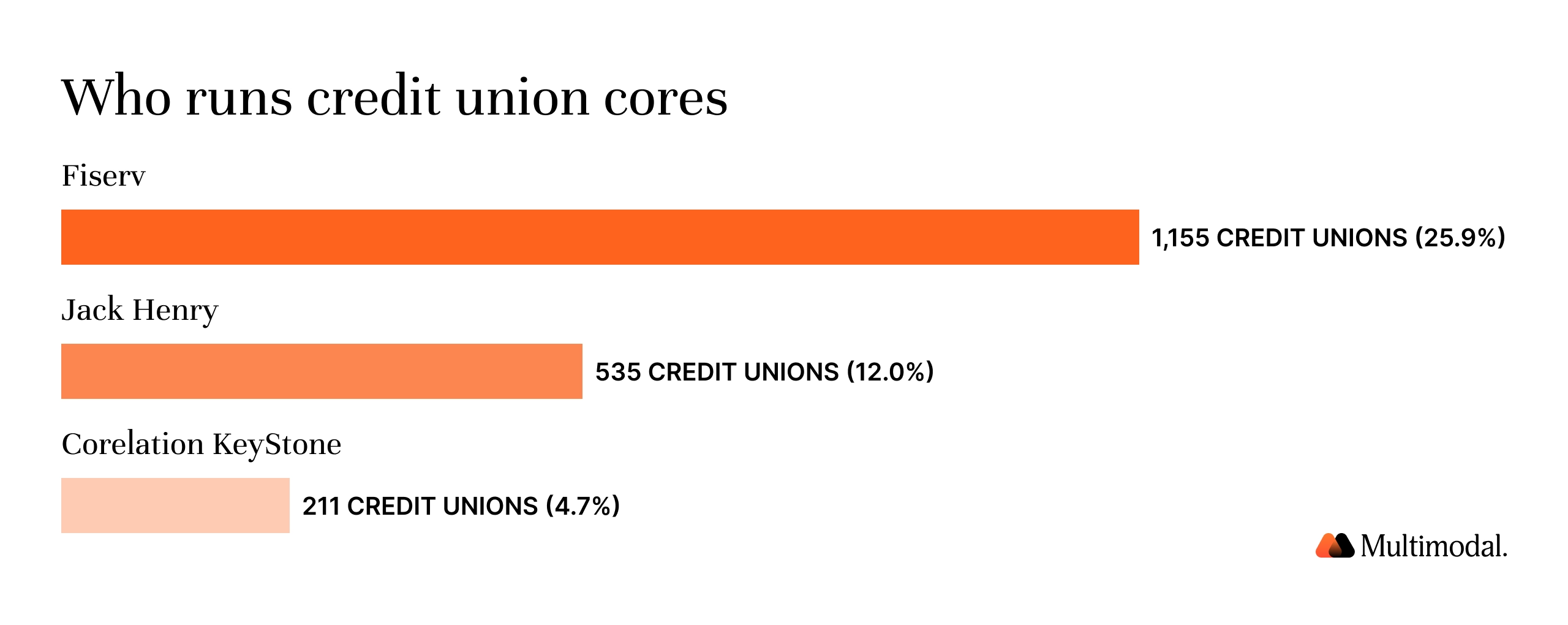
Fiserv, FIS, and Jack Henry together serve roughly half of US credit unions and more than 70% of banks. As of mid-2025, Fiserv had 1,155 credit union core clients, Jack Henry had 535, and Corelation's KeyStone had 211. An AI platform that cannot work alongside those core platforms cannot serve most of the industry.
"This best of breed thing, there's a reason why people invest in a best of breed. Because it's really hard and expensive to integrate things in and out of your environment... It's gotta be sustainable." — Jeffrey Staw, Chief Information and Innovation Officer, Firefighters First Credit Union
What AgentFlow Connects To: Jack Henry, Symitar, and Fiserv Environments
Core integration connects a credit union's core processing system to external software, enabling the two to exchange data automatically. Done well, it eliminates manual data entry, breaks down data silos, and gives staff real-time access to member data, improving member service. Done poorly, staff copy fields between screens and reconcile multiple vendors by hand.
The core handles a wide range of work, from the general ledger to payment processing, card production, and digital banking, so the right approach is to work alongside it to streamline operations and reduce friction.
Jack Henry and Symitar
Symitar, Jack Henry's core platform for credit unions, has ranked number one every year since 2018, with about 699 credit unions on it overall.
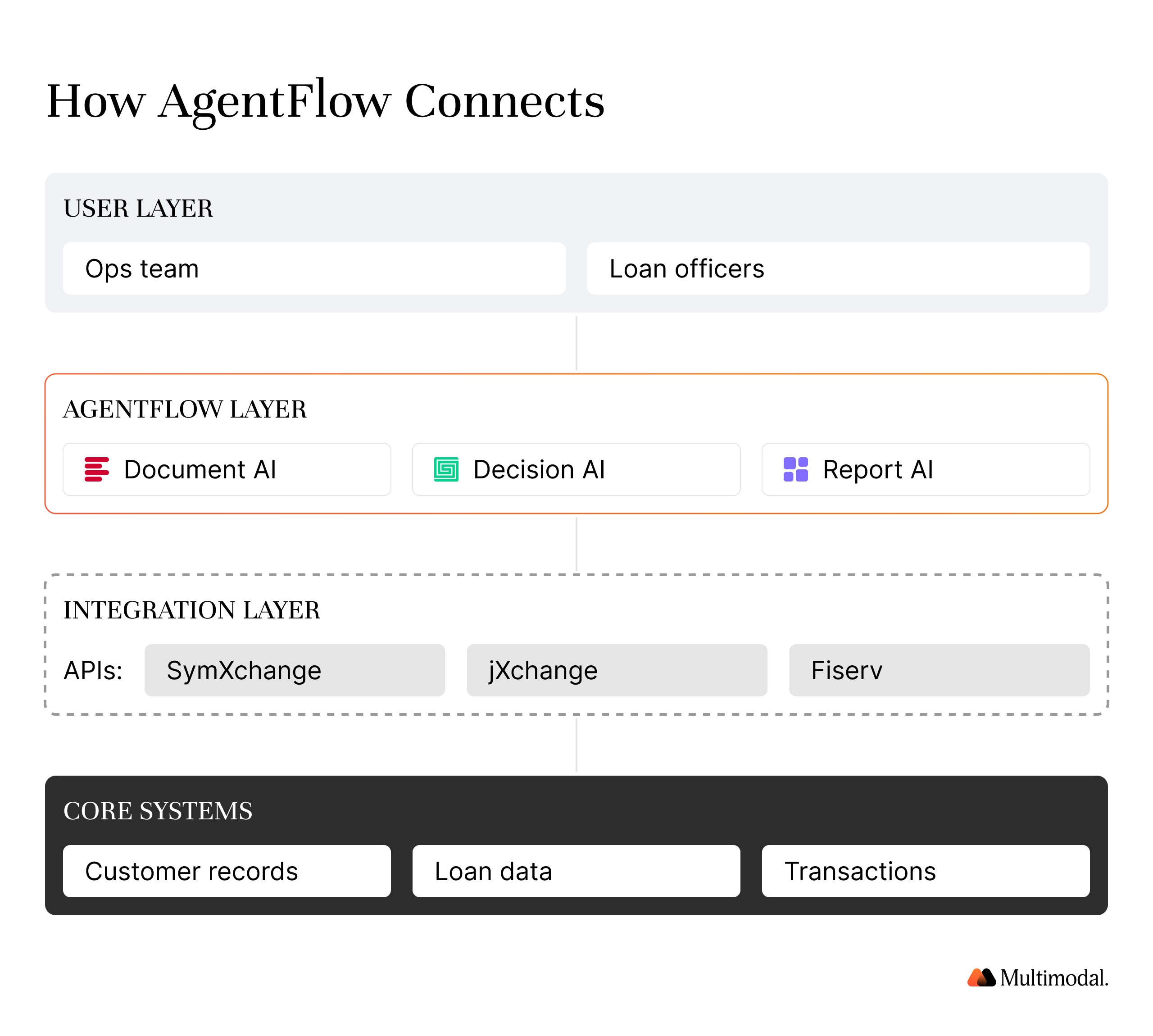
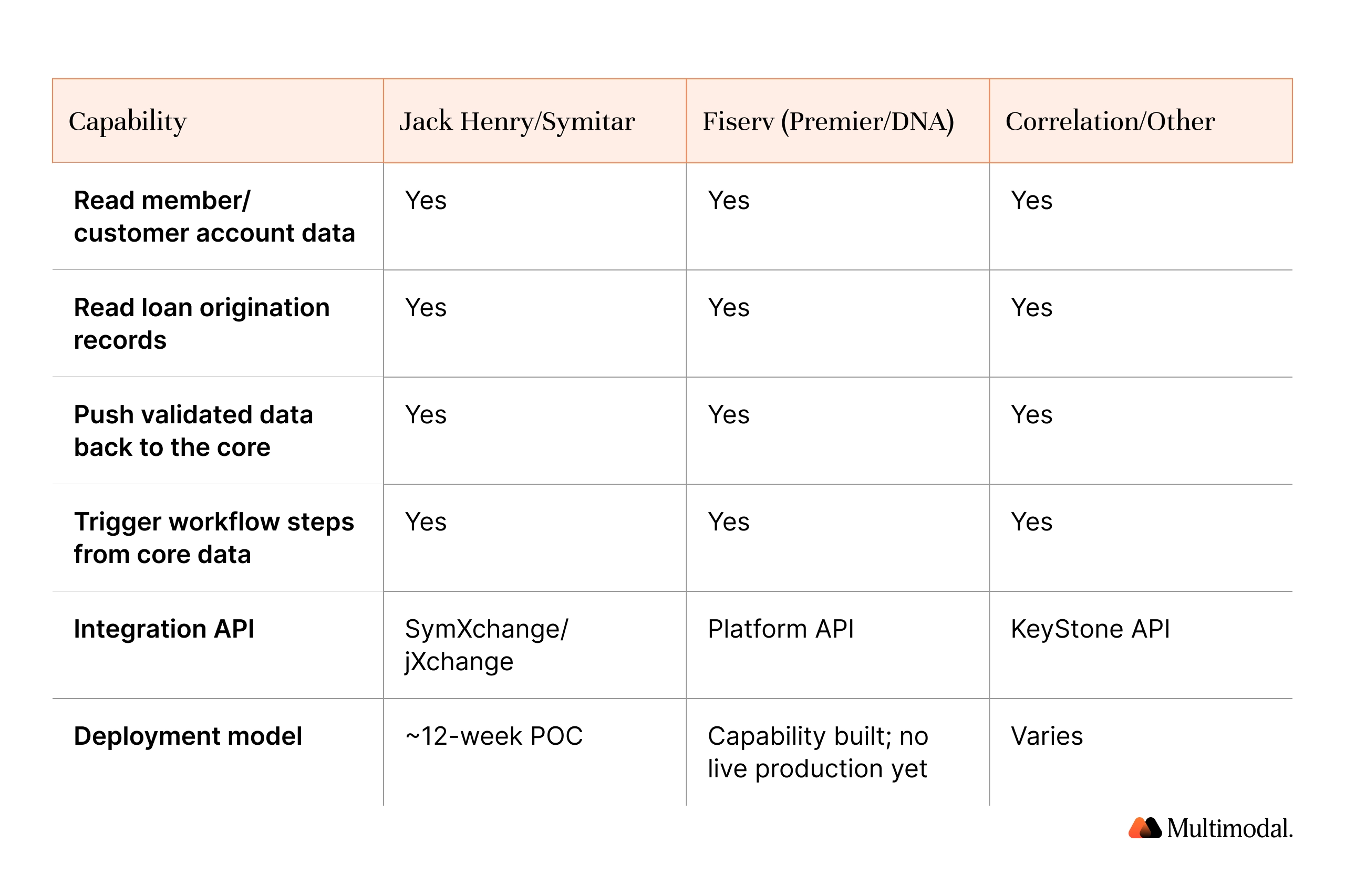
Jack Henry publishes the integration layers that enable third-party connectivity. SymXchange is the services-based API through which external applications query member data and post transactions on a Symitar core; for community banks on SilverLake or CIF 20/20, serving retail and business customers alike, the equivalent is jXchange. Jack Henry's developer platform reflects the industry's shift to open architecture, where an open core adds fintech capabilities without an overhaul.
AgentFlow works alongside Symitar through these published interfaces, with prebuilt connectors that shorten the path for common workflows. Verified output flows to the Jack Henry core without staff retyping it; APIs carry the data directly, enabling real-time synchronization.
Fiserv: DNA, Portico, and the Bank Cores
Fiserv serves more credit union core clients than any other provider. Its credit union platforms are DNA, built around real-time processing and open, configurable architecture, and Portico, its cloud-enabled core; the bank lineup includes Premier, Precision, and CoreAdvance.
AgentFlow is built to work alongside the full range of Fiserv products. Fiserv-connected deployments are not yet in production; institutions running DNA or Portico can engage Multimodal to scope a pilot. We would rather state that plainly than imply otherwise.
Other Core Systems
Credit unions on Corelation KeyStone, FIS, or other core platforms follow the same model: forward-deployed engineers handle institution-specific connectivity. A central integration layer replaces point-to-point connections, and canonical data models keep information consistent across disparate systems.
Where the LOS Fits: MeridianLink, Origence, and nCino
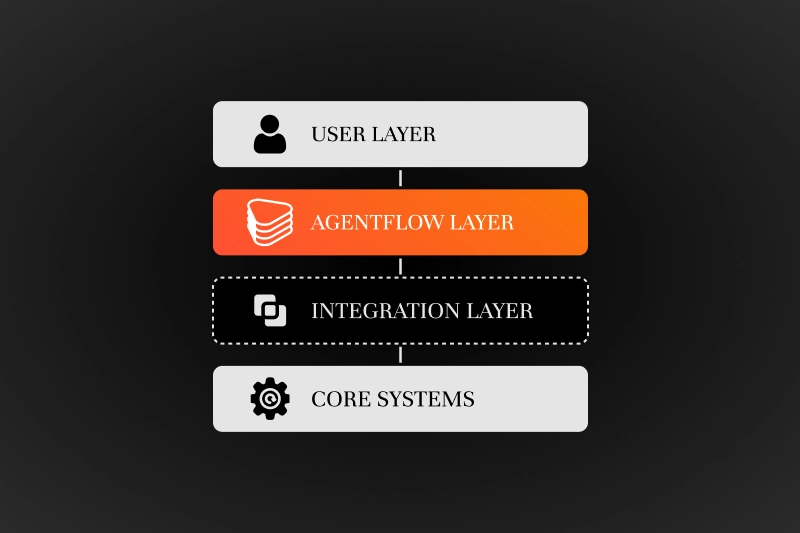
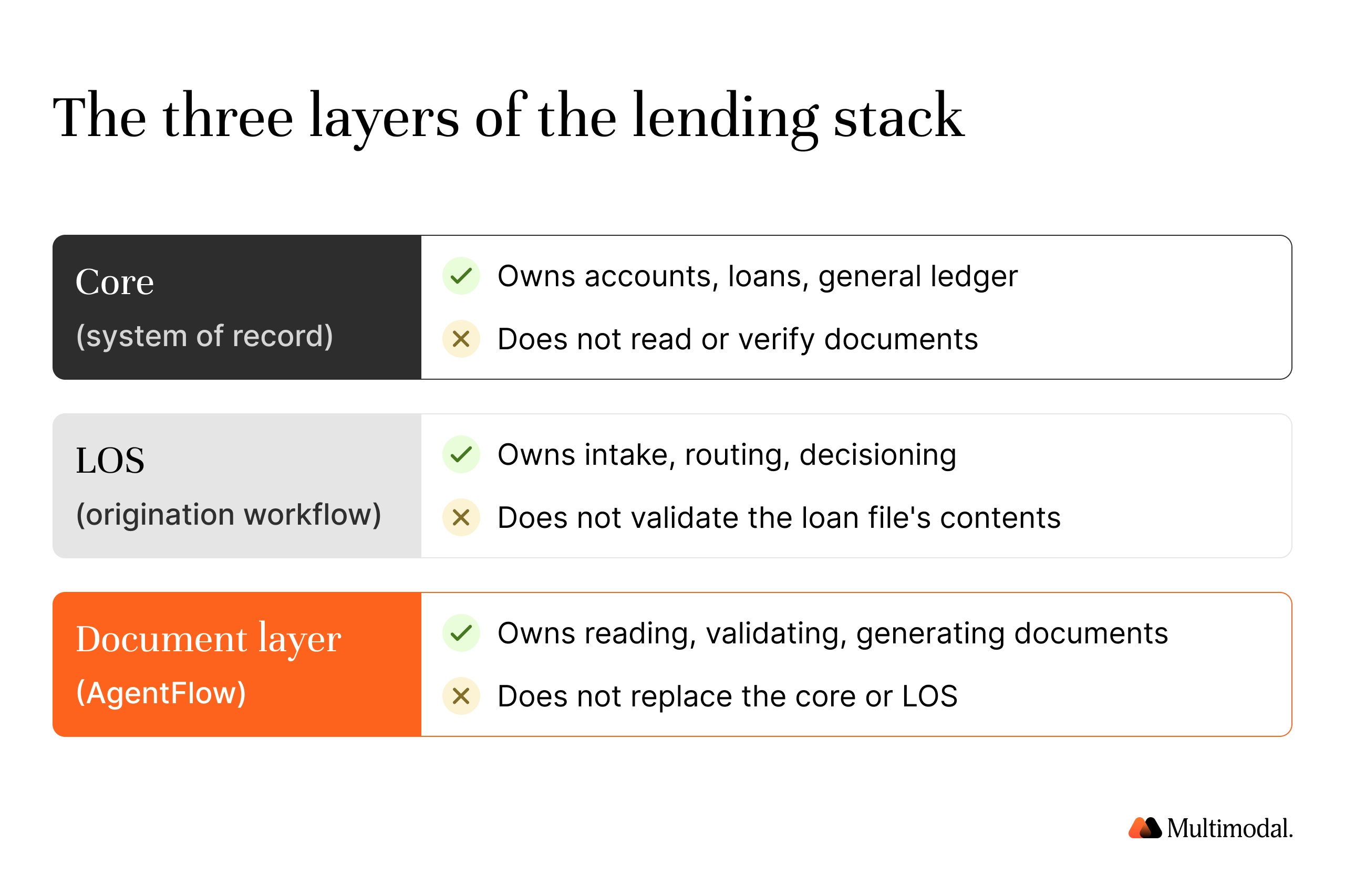
The lending stack has three layers. The core is the system of record. The loan origination system runs the workflow from intake through decisioning to funding; modern LOS platforms connect to core banking systems through APIs. The document layer, where AgentFlow operates, reads, classifies, and validates the documents both other layers depend on.
MeridianLink states it serves more than half of US credit union members. Origence, the CUSO behind the CUDL network, reported $62 billion in funding across 1,100 credit unions in 2025. nCino serves commercially oriented institutions.
AgentFlow works alongside these loan origination systems the same way it works alongside the core: the LOS routes the application, and AgentFlow processes the accompanying loan file, checking completeness, validating data across documents, and generating the documentation required for regulatory compliance.
Core-Connected Workflows AgentFlow Automates
1. Document Extraction and Validation
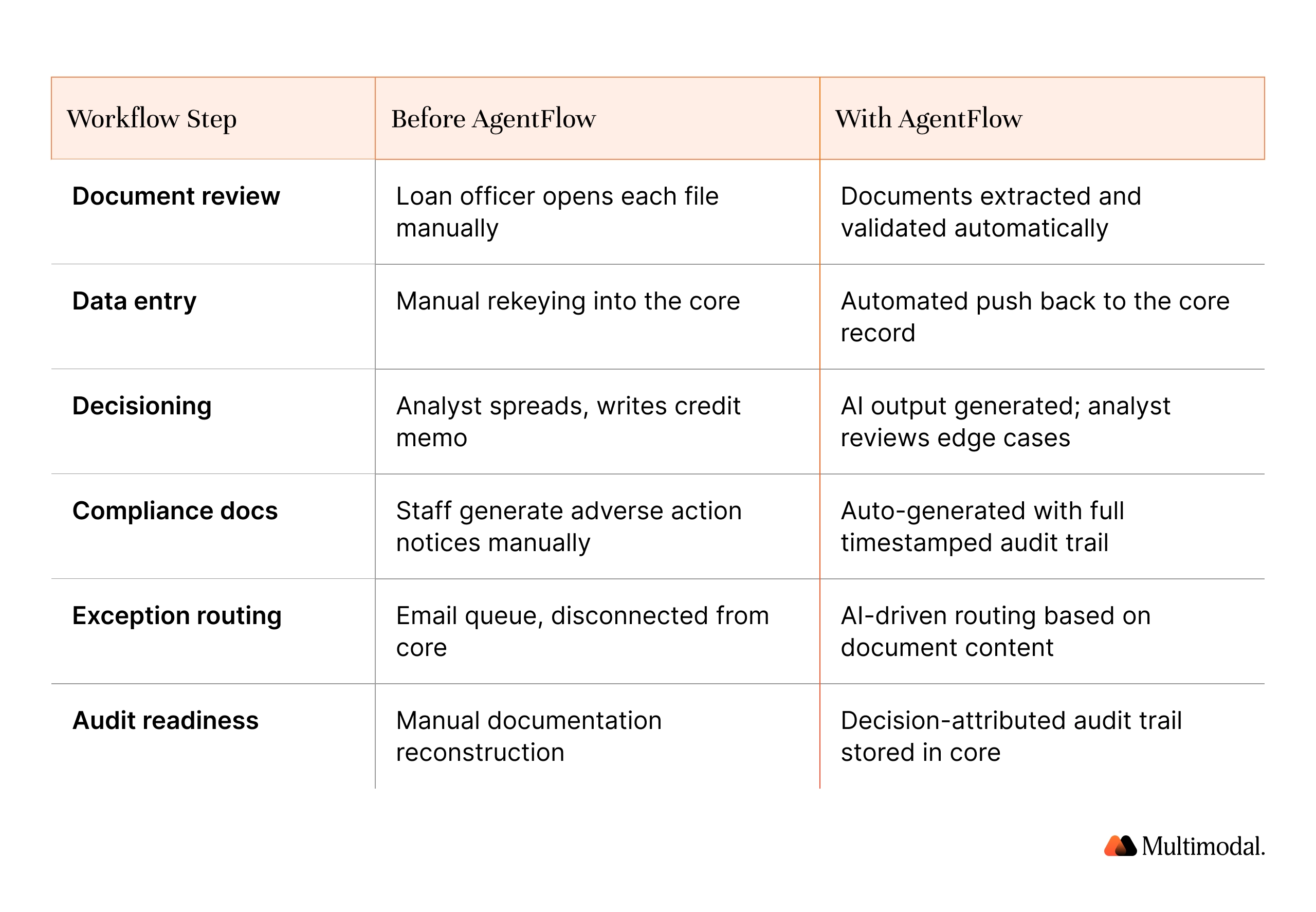
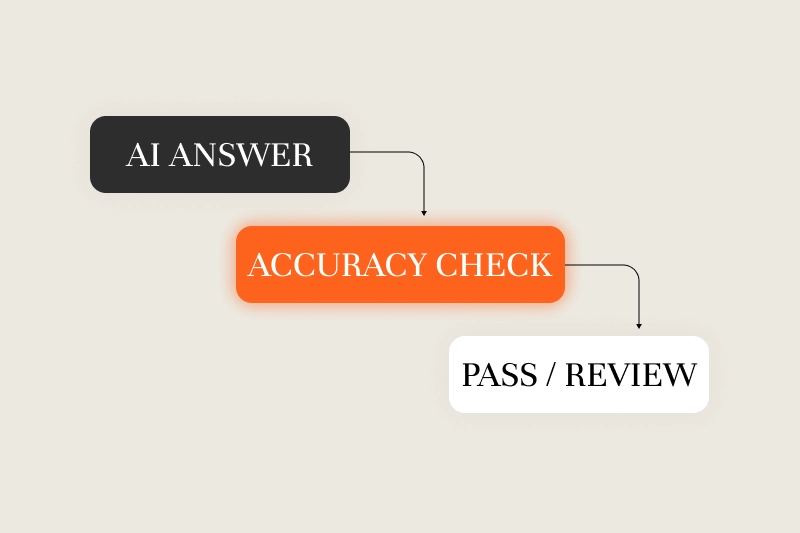
Loan files arrive as PDFs, scans, and photos. AgentFlow ingests, classifies, extracts, and validates each one against member data and policy rules. This is where enterprise content management stops being a filing system: integration automates data sharing between the core and surrounding applications, manual steps disappear, and exceptions requiring judgment reach a person with full context.
2. AI-Powered Decisioning Support
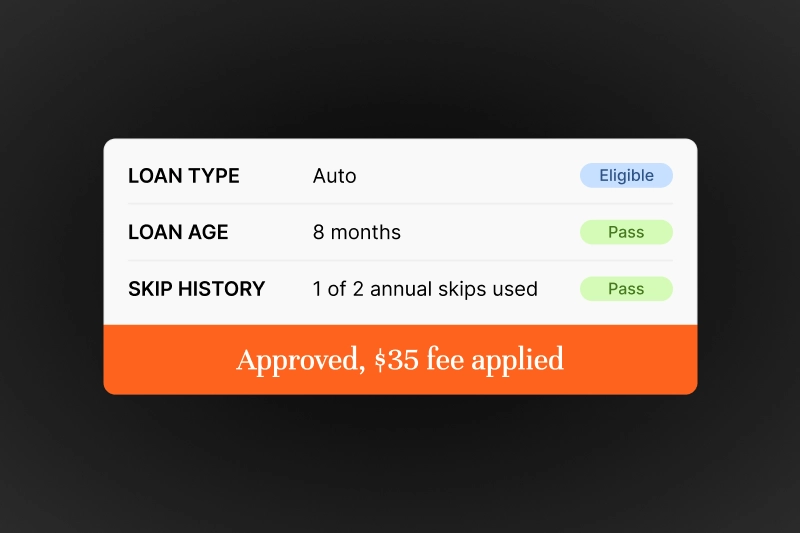
Credit analysis typically takes 30 to 60 minutes per application. AgentFlow assembles the verified file, applies the institution's rules, and produces a recommendation with evidence cited. Straightforward applications move end-to-end without analyst involvement; automated loan processing takes funding decision support from days to minutes, on demand. The same team handles more volume, freeing more resources for member relationships, and faster answers lift member satisfaction and member engagement, because the shortest route to a better member experience in lending is a shorter wait.
3. Compliance Documentation
Adverse action notices, credit memos, and exception reports are regulatory requirements, and producing them by hand is error-prone. AgentFlow's document generation builds them from the same validated data used in decisioning, which is what AI consistency in regulated workflows requires: identical inputs, identical documented outputs. Every step is logged with the decision basis, sources, and timestamp, creating an audit trail that satisfies industry regulations, which means stronger compliance and lower compliance risk.
4. Exception Routing
Applications route automatically based on document content and policy rules: clean files proceed; flagged exceptions reach the right queue. Fraud detection and fraud prevention benefit too, and fraud risk drops, because cross-document validation surfaces mismatches manual review misses at volume. The pattern extends across back-office operations, from account-opening checks to check-fraud queues.
Security, Governance, and the Examiner Question
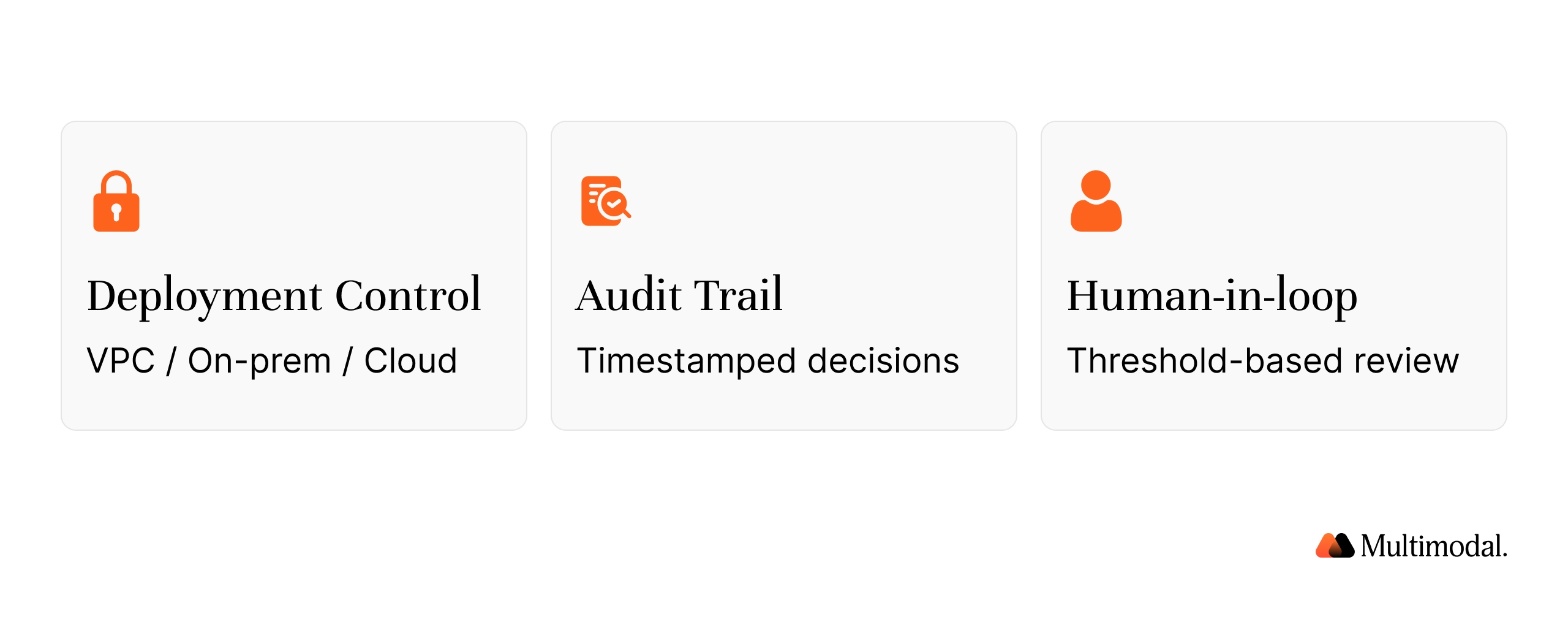
Core-connected AI touches member data, so security and regulatory compliance are design requirements for any credit union core integration. AgentFlow deploys inside the institution's controlled environment: a VPC, on-premises, or a cloud-based platform. Core banking data does not leave it, and anything below a configurable confidence threshold routes to human review.
Two practices separate deployments that hold up under examination: comprehensive testing before go-live against real production documents, and post-integration monitoring against defined metrics (accuracy, exceptions, processing times). Training staff should be included in the same plan. With the NCUA signaling growing supervisory attention to AI, federal credit union teams should see our NCUA guide and confidence-scoring post.
Results From Institutions Running on These Core Systems
FORUM Credit Union, running indirect auto lending on AgentFlow, automated 60% of consumer loan decisions with 99% document classification accuracy and processed 70% more loan volume without adding staff.
"There's a lot of easy decisions, so many easy decisions that we don't need to have a human look at it... We make a great decision, it's a great member experience, and on the back end, we know the loan's going to be repaid." — Andy Mattingly, COO, FORUM Credit Union
In mortgage lending, Direct Mortgage Corp cut per-document processing costs by 80% and approved applications 20 times faster across 200+ document types, reducing closing time from 10 weeks to 5. Industry data agrees: digitally optimized lenders save about $1,700 per loan, close 5 days faster, and see 40% fewer defects.
The Bottom Line: Core Integration Decides Whether AI Delivers
The budget cycle makes this a 2026 decision. AI is the top-planned technology investment among bank and credit union executives at 48%; 88% plan to raise technology budgets; and 59% of credit unions have deployed generative AI, ahead of banks at 49%.
The institutions getting results chose technology solutions that work alongside the core systems and loan origination systems they already run. Evaluating innovative solutions on that standard separates AI capabilities that compound into future growth from pilots that stall at integration. The same discipline applies to vendors helping banks; both large and small institutions run on the same handful of cores.
If your credit union or community bank runs on Symitar, another Jack Henry core, Fiserv, or Corelation, we will show you what AgentFlow does on your own documents: a ~12-week proof of concept, forward-deployed engineers doing the heavy lifting, delivered like fully managed services with ongoing support after production.
See AgentFlow on Your Own Loan Files
Bring a sample loan file and your funding checklist to us. We will walk through how AgentFlow works alongside your core and LOS, with no core replacement and no migration.
What is core banking integration for AI platforms?
Core integration connects a credit union's core processing system to external software, enabling data to flow automatically. The AI platform reads documents and member data, then writes validated output back to core systems without manual data entry, keeping data consistent across the institution.
Does AgentFlow work with Jack Henry and Symitar?
Yes. AgentFlow works alongside Symitar through SymXchange, the Symitar core's published API, and alongside Jack Henry bank cores like SilverLake and CIF 20/20 through jXchange.
Does AgentFlow work with Fiserv cores like DNA and Portico?
AgentFlow is built to work alongside Fiserv's platforms, including DNA and Portico for credit unions. Fiserv-connected deployments are not yet in production; institutions on Fiserv cores can engage Multimodal to scope a pilot.
Does AgentFlow work with my loan origination system, such as MeridianLink, Origence arc OS, or nCino?
AgentFlow works alongside major loan origination systems rather than replacing them. The LOS keeps running intake, routing, and decisioning; AgentFlow processes the loan file's documents and returns verified output.
Does this require a core migration or replacement?
No. AgentFlow connects to existing core banking systems through their published integration layers and deploys inside the institution's own environment. The core remains the system of record.
How long does deployment take?
A typical engagement is a structured proof of concept of roughly 12 weeks: integration, configuration, calibration against real documents, and go-live, with forward-deployed engineers throughout. The timeline reflects a substantive deployment with testing and training.

.svg)
.svg)

.avif)
.png)

.png)