Waiting for perfect data stalls credit union AI projects. See when clean data matters, when it does not, and how document AI handles messy inputs today.
Clean data requirements depend on the workflow, never on a blanket rule.
43% of data leaders call data readiness their top AI barrier.
Document AI extracts reliable data from messy inputs by design.
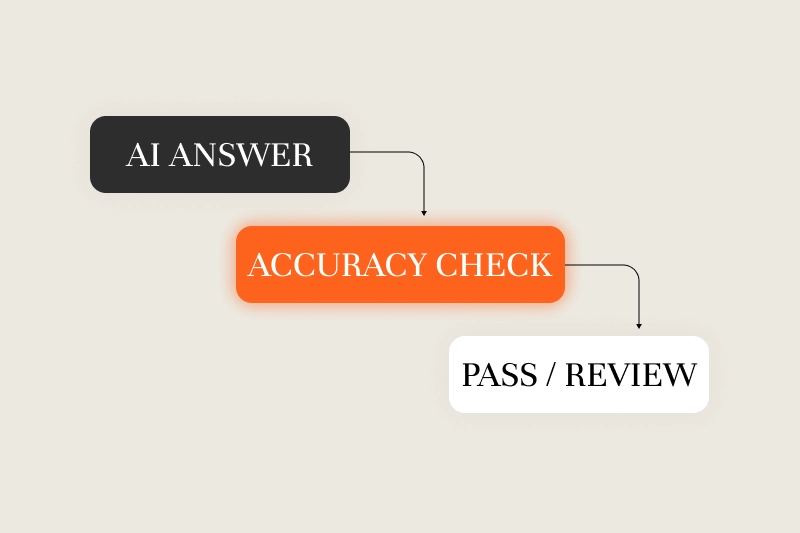
Human-in-the-loop review and confidence scoring safely lower the quality bar.
Your first AI workflow is the one that actually cleans your data.
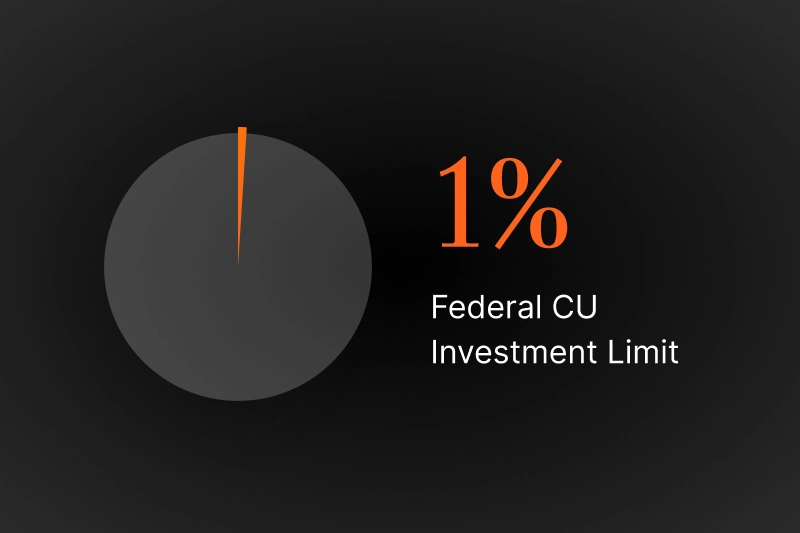
Get 1% smarter about AI in financial services every week.
Receive weekly micro lessons on agentic AI, our company updates, and tips from our team right in your inbox. Unsubscribe anytime.
Thank you! Your submission has been received!
Oops! Something went wrong while submitting the form.
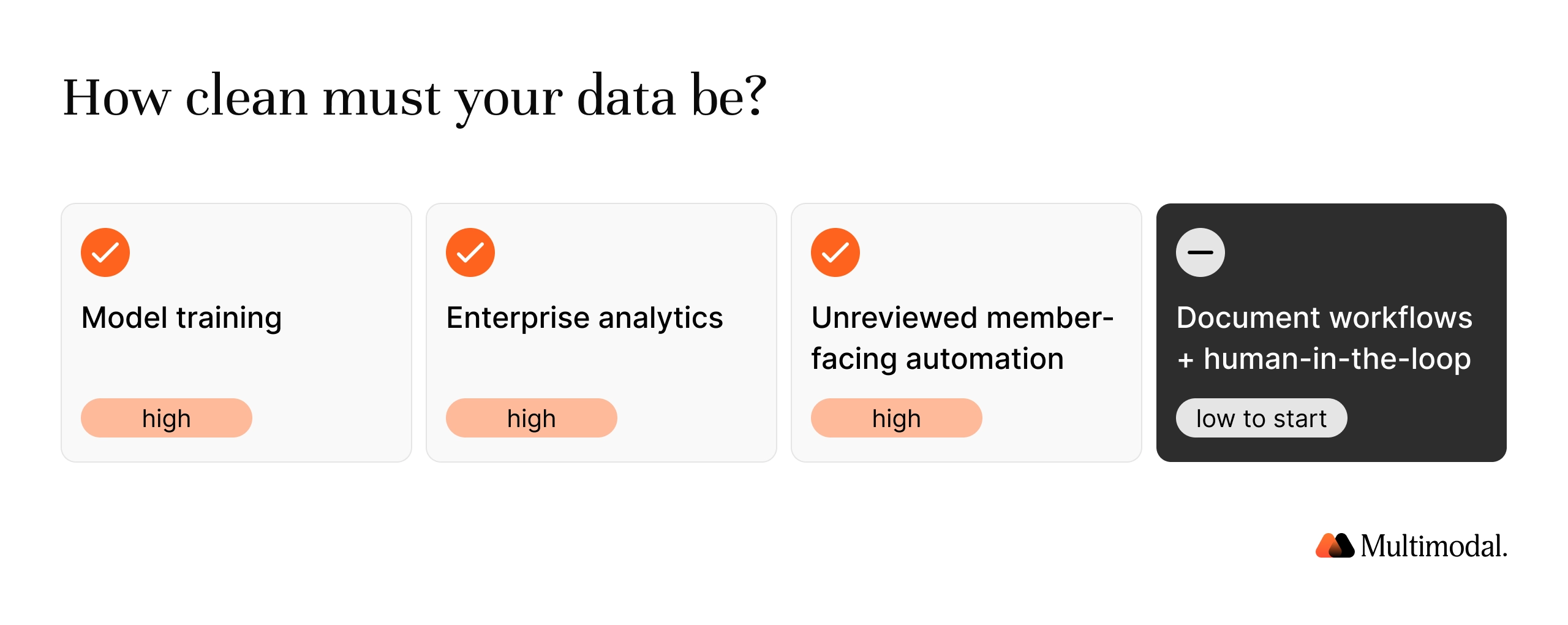
So, do you need clean data for AI? No. You need data that is good enough for one well-chosen workflow, and for document-heavy credit union operations, modern AI systems handle the messy data that stalls traditional automation. Clean data is what a working AI workflow produces, and a true prerequisite only for a specific class of projects: training machine learning models, enterprise data analysis, and member-facing automation that runs without human review.
This post answers the buying question we hear on sales calls. For the full readiness checklist, our guide to AI-ready data covers data readiness in depth. What follows is the case for starting before your data is perfect, and the honest map of where data quality truly gates the outcome.
Why Does Every Credit Union AI Conversation Start With Data?
"That feels like the cart before the horse."
A credit union executive said that to us on a sales call when the conversation turned to deploying AI before a data cleanup. Some version of "is our data clean enough for AI" now surfaces in a tenth of our conversations with financial institutions. The instinct behind it is decades old: garbage in, garbage out.
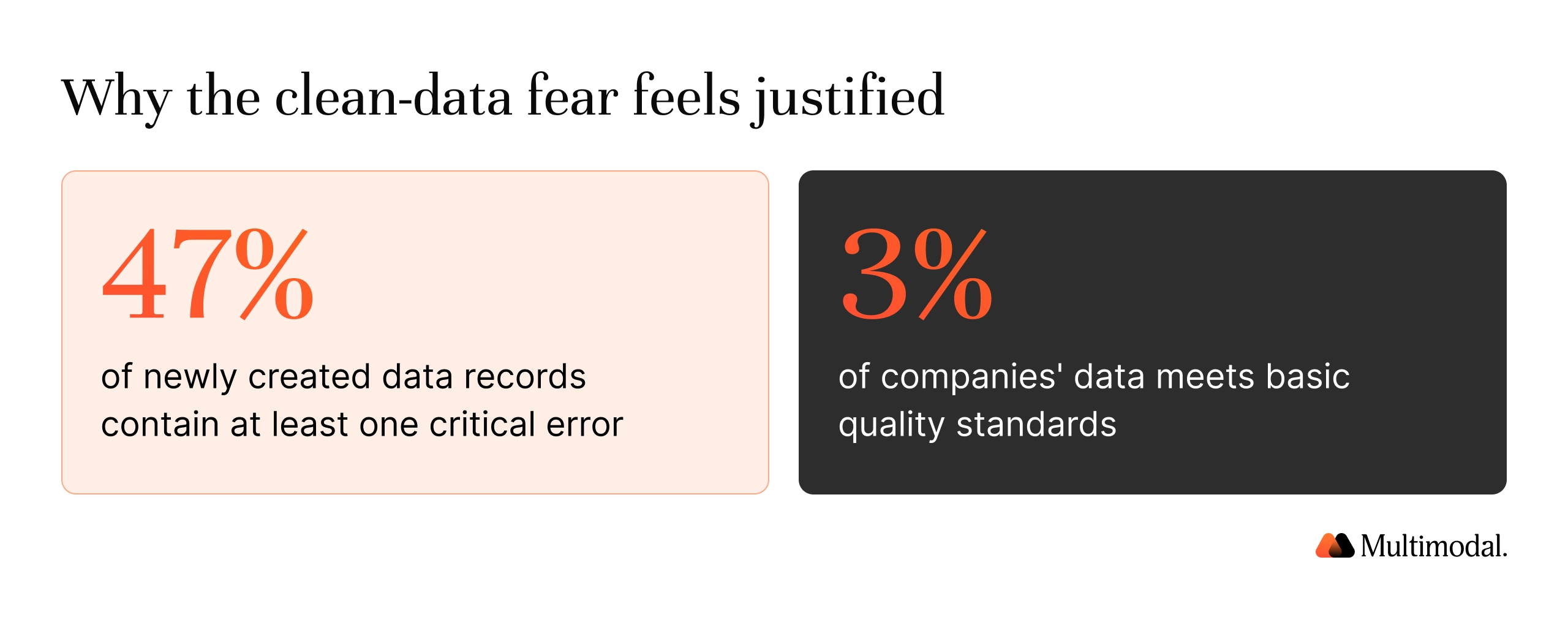
The fear is well funded, too. Poor data quality costs organizations at least $12.9 million a year on average, according to Gartner research from 2020; Gartner's earlier Data Quality Market Survey put the figure at $15 million annually. A Harvard Business Review study found that only 3% of companies' data meets basic quality standards, and that 47% of newly created data records have at least one critical error. Read those numbers together, and the conclusion writes itself. If almost half of new records contain data errors and almost nobody clears the quality bar, surely the data cleaning process must come first.
Here is the problem with that conclusion. The garbage-in, garbage-out rule was written for systems that pass raw data through untouched. A document AI workflow inspects, extracts, and validates its inputs as the actual job. The better question for a credit union leader carries one more word: clean enough for what?
What Does "Clean Data" Actually Mean for AI?
People conflate two different bars when they talk about clean data, and that confusion freezes AI initiatives.
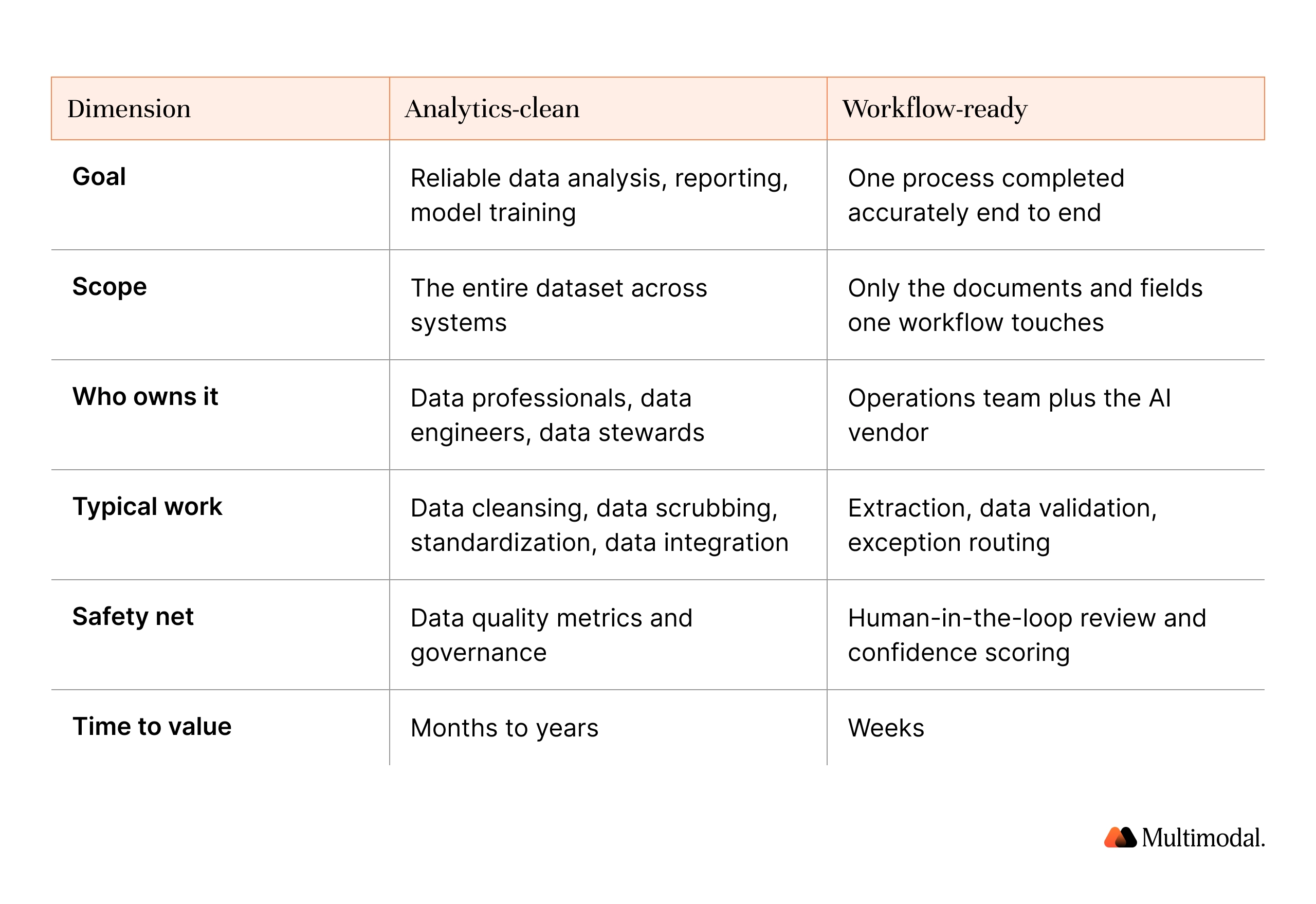
The first bar is analytics-clean, the world of data scientists and data engineers: deduplicated, standardized warehouse data ready for exploratory data analysis and model training. The full data cleaning process runs from data profiling, which flags structural errors, through standardizing data formats and correcting errors, to data validation for data accuracy. Deduplication, the key technique for handling duplicate data, removes redundant entries that carry the same information; missing data is imputed or dropped.
The second bar is workflow-ready, with a simpler test: do the inputs the workflow needs exist, and does a human check the edge cases? Member data, the credit union's version of customer data, arrives however members send it: a crumpled pay stub, a 100-page upload, a faxed title. All dirty data by the analytics definition, and exactly what document AI is built to process. Natural language processing models work natively on unstructured inputs; producing structured data from raw data is the product, never the precondition.
Clean data does not mean perfect data. It means data appropriate for the task, and the two tasks have different appetites.
Analytics-clean vs. Workflow-ready
What Does the Data Actually Say?
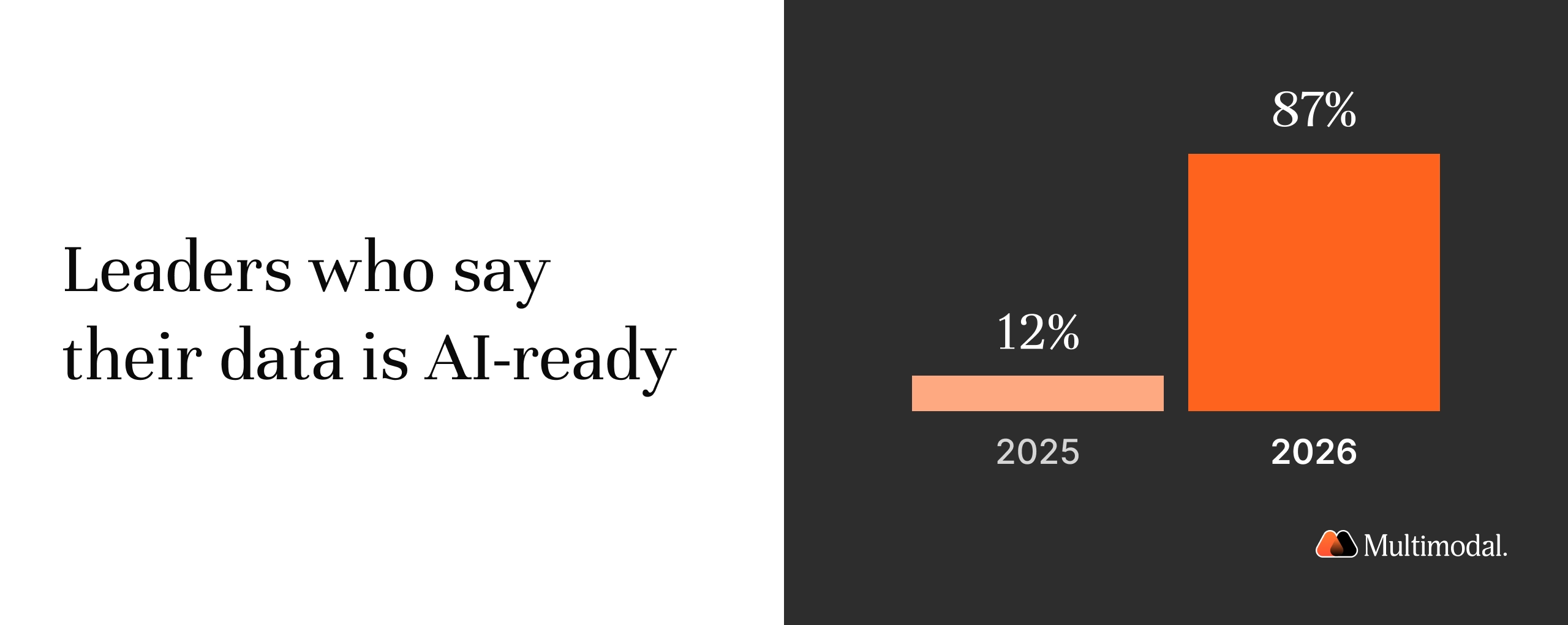
The anxiety is real but shrinking. In the 2026 State of Data Integrity and AI Readiness survey of 505 data and analytics leaders, 43% cited data readiness as the top barrier to aligning AI with business objectives. Yet 87% now perceive their data as AI-ready, up from just 12% a year earlier. As AI tools improve at handling imperfect inputs, the panic fades.
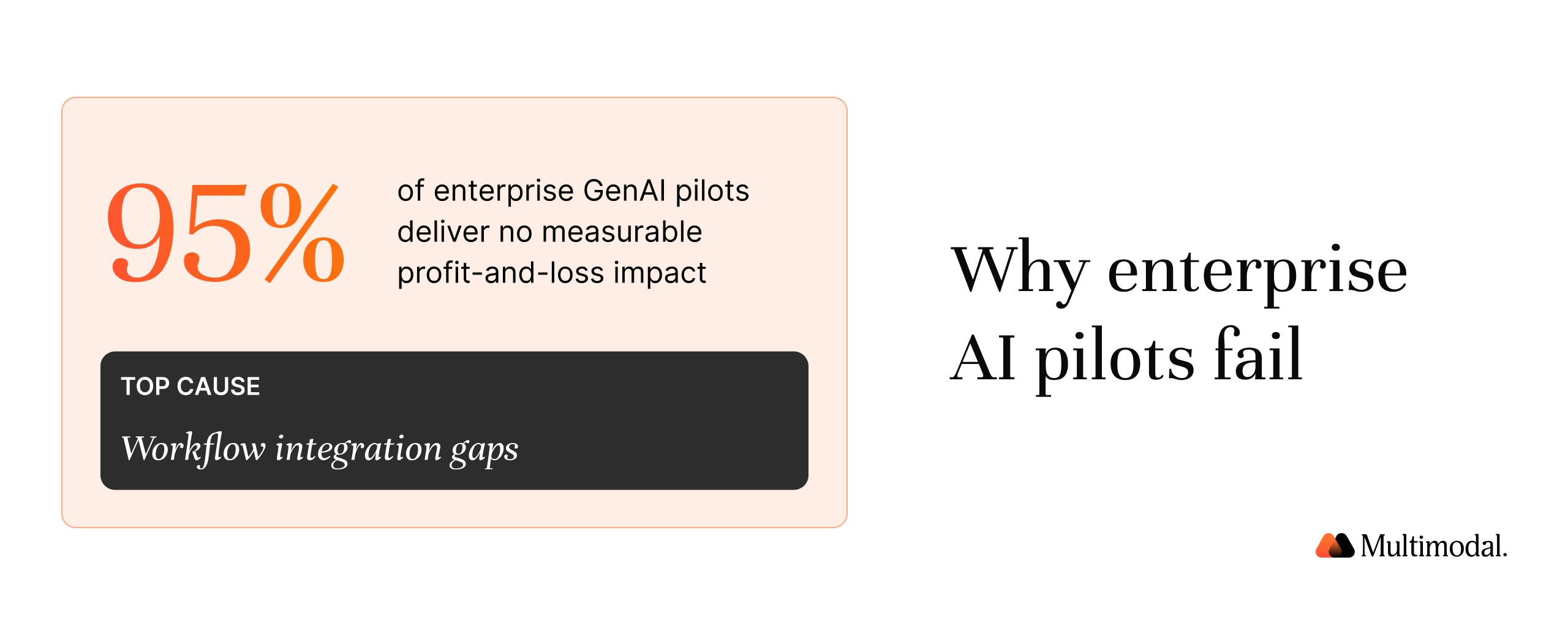
What actually kills AI initiatives sits elsewhere. MIT Project NANDA found that about 95% of enterprise generative AI pilots fail to deliver measurable profit-and-loss impact, and the report attributes failure primarily to workflow integration gaps, with low-quality data nowhere near the top of the list. A data cleanup does not fix what kills pilots, and it delays every pilot it precedes.
Credit unions prove the point. 59% have deployed generative AI, compared with 49% of banks, yet fewer than 5% of credit union leaders call their organization fully adopted. Our 2026 Agentic AI Field Report, built on 445 prospect conversations across 144 financial institutions including 70 credit unions, shows the same deploy-versus-use gap. The institutions stuck in it are, disproportionately, the ones waiting on a data project.
When Does Clean Data Matter, and When Does It Not?
An honest answer to "do you need clean data for AI" has to concede the cases where the answer is yes. AI models learn patterns directly from their training data, so flawed data leads to compromised results. Missing, incorrect, or inconsistent data can cause machine learning models to learn the wrong patterns, while clean, relevant training examples help models generalize well to new data. Dirty data can also carry hidden systemic prejudices that AI amplifies, which is why identifying biases in datasets matters for fair lending long before it matters for model accuracy.
In high-stakes fields, erroneous data inputs can lead to catastrophic failures. None of that is in dispute here. The dispute is about scope. Those risks are specific to use cases, and a use-case-level map beats a blanket rule.
Why Waiting for Clean Data Is the Bigger Risk
Enterprise data cleanups run long. Meanwhile, the queue never empties: check and lockbox keying at 300 to 1,000 items a day, stipulation chasing, tax-return spreading, income verification across transaction data and bank statements. Every month spent preparing data before touching a workflow is a month of that backlog handled through manual data processing, a month of staff time fixing errors by hand, and a month of learning cycles handed to competitors. And data volume only grows while you wait.
There is a subtler cost, too. Cleanup-first plans tend to over-scrub. Excessive data sanitization can remove valuable variations, and overly aggressive data cleaning may introduce bias of its own, which is why data professionals describe the work as a balance between thoroughness and data integrity. Spending a year fixing data errors that no workflow would ever touch, including irrelevant data no process reads, is effort with no return. A live workflow tells you which defects matter. A cleanup project has to guess, and guessing means scrubbing random data points no decision ever depends on.
Amy Stevens, SVP of Member Experience at GreenState Credit Union, described what shipping before perfect looked like when GreenState opened its chat channel:
"We didn't even wait for it to be perfect. And actually the membership didn't even care. And they quickly adopted... they then started telling us things like, thank you for this." — Amy Stevens, SVP of Member Experience, GreenState Credit Union
And here is the part the cleanup-first camp misses entirely: starting is how the data gets clean. Every loan file an AI workflow processes yields validated, structured data points your warehouse never had. High-quality data comes out the back of the workflow. It does not have to go in the front.
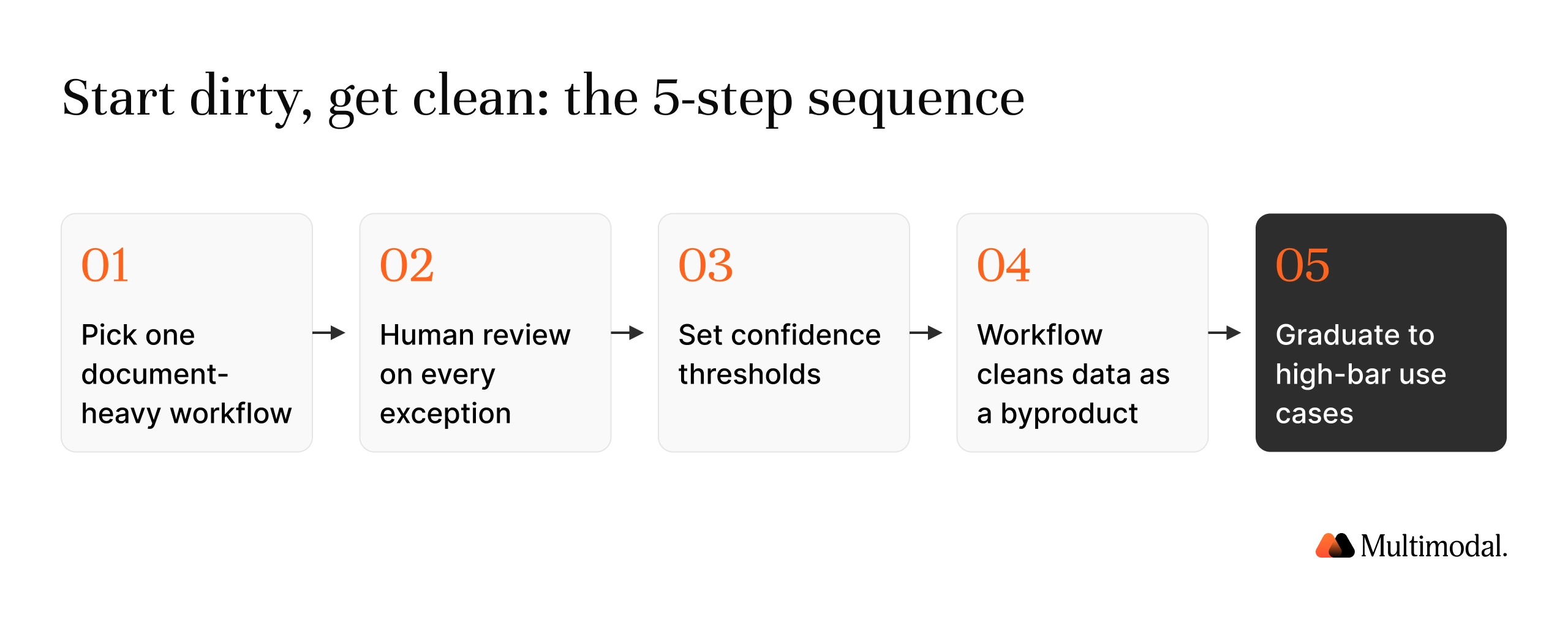
Start Dirty, Get Clean: The 5-Step Sequence
This is the sequence we run with credit unions that want quality data and working AI at the same time, in that order of effort.
1. Pick One Document-Heavy Internal Workflow
Choose a first workflow you can baseline today: loan document intake, stipulation clearing, income verification. Internal workflows carry no member-facing risk while the team learns, and messy data in a single workflow is a contained problem, never an enterprise one.
2. Put Human-in-the-Loop Review on Every Exception
Human-in-the-loop review is what safely lowers the bar for data quality. Incomplete data, ambiguous fields, and documents that the AI cannot read are routed to a person rather than failing silently. Human error on repetitive keying goes down; human judgment on real exceptions stays in place.
3. Set Confidence Thresholds
Every extracted field carries a confidence score, and low-confidence extractions are routed for review. Confidence scoring turns "can we trust AI on imperfect inputs" from a philosophical question into a dial your risk team controls. Decision-making stays with people wherever the score says it should.
4. Let the Workflow Clean the Data as a Byproduct
Each processed file produces validated output in a consistent format: names matched, incomes calculated, duplicate records flagged, missing values surfaced the moment they block a step. Modern AI-driven tools improve data-cleaning accuracy over time by learning from patterns in the historical corrections your reviewers make. Feed that output back, and the workflow becomes the data cleansing program nobody had time to run.
5. Graduate to the High-Bar Use Cases
Once months of structured, validated output exist, the projects that truly need analytics-clean inputs stand on a solid foundation: reliable exploratory data analysis, member insight models, and eventually machine learning algorithms trained on data your own workflows verified. This is where data science work pays off, because model accuracy now rests on data assets your own operations validated. Use our AI-ready data checklist as the gate for this step, with domain knowledge from the people who ran the workflow guiding what to fix first.
What Does This Look Like in Practice?
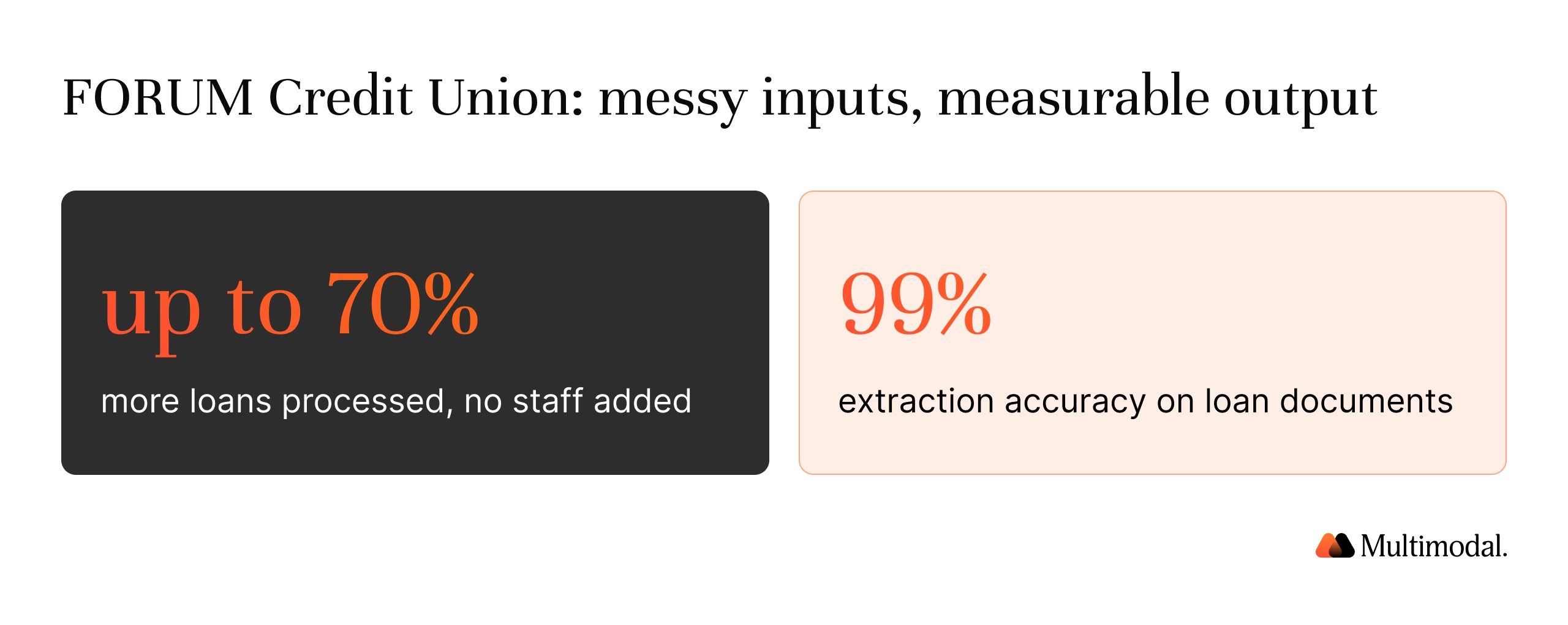
FORUM Credit Union processes up to 70% more loans without adding staff, with 99% extraction accuracy on loan documents. The inputs were ordinary member paperwork: pay stubs photographed at kitchen tables, statements in a dozen layouts, files arriving through multiple data sources. Nobody cleaned that data first. The workflow extracted reliable data from it, and the exceptions went to people.
AgentFlow sits in exactly that layer. It ingests the documents, extracts and validates the member data, applies policy rules, and routes exceptions to the humans who should see them. It also respects the boundaries that matter to a regulated institution, including data protection regulations governing member information. It does not eliminate the need to prepare data for every AI ambition you will ever have. It removes the data cleanup as the toll booth between you and your first working workflow.
Frequently Asked Questions (FAQs)
Do you need clean data for AI?
No, you do not need clean data before starting with AI. You need data appropriate for the specific task. Document workflows with human-in-the-loop review work on messy data today, while training machine learning models and enterprise analytics do require high-quality data. Match the bar to the use case.
What happens if you use AI with messy data?
It depends on the AI system. In model training, dirty data leads to inaccurate predictions because models learn the errors. In a document workflow, the AI extracts what it can, assigns a confidence score to each field, and routes incomplete data and low-confidence fields for human review, so messy inputs become validated outputs.
How clean does data need to be for machine learning vs. document AI?
Machine learning models need representative, well-labeled training data because data quality affects model performance across tasks, and representative data reduces the risk of biased outcomes. Document AI needs legible documents and a defined process. The extraction and data validation happen inside the workflow itself.
Should a credit union clean its data before buying an AI tool?
Not as a blocking project. Run the data cleanup and the first workflow in parallel, and let the workflow show you which data quality issues actually matter. Ask vendors how their AI solutions handle exceptions, missing values, and inconsistent data, rather than asking whether your data is clean enough.
Can AI clean your data for you?
Largely, yes. Automated tools like OpenRefine and Trifacta outperform manual methods: data profiling flags errors, and AI can detect duplicate entries, validate data, and fill missing values through predictive analytics. Document workflows run that extraction and validation continuously.
How do credit unions know if their data is ready for AI?
Readiness is workflow-specific. If the documents a workflow needs exist and a human reviews exceptions, you are ready for that workflow now. For the enterprise-wide view, including data management, governance, and ownership, our AI-ready data guide walks through the full data readiness assessment.
Your Data Is Ready for Its First Workflow
Bring us one week of your document queue, as it is. We will run it through AgentFlow and hand back the numbers: minutes per file, extraction accuracy, and exceptions routed to your team. No data cleanup required first.
"Cart before the horse" started as an objection on a sales call. Run the sequence above, and the order reverses: the workflow pulls the data quality behind it, one validated loan file at a time. The institutions that ship a first workflow this quarter will have cleaner data next year than the institutions that spend next year cleaning, and they will have the processed files to prove it.
Bring us one week of your document queue. We will run it through AgentFlow and hand you the before-and-after numbers: minutes per file, extraction accuracy, and the number of exceptions routed to your team. No data cleanup required first.

.svg)
.svg)

.avif)
.png)

.png)