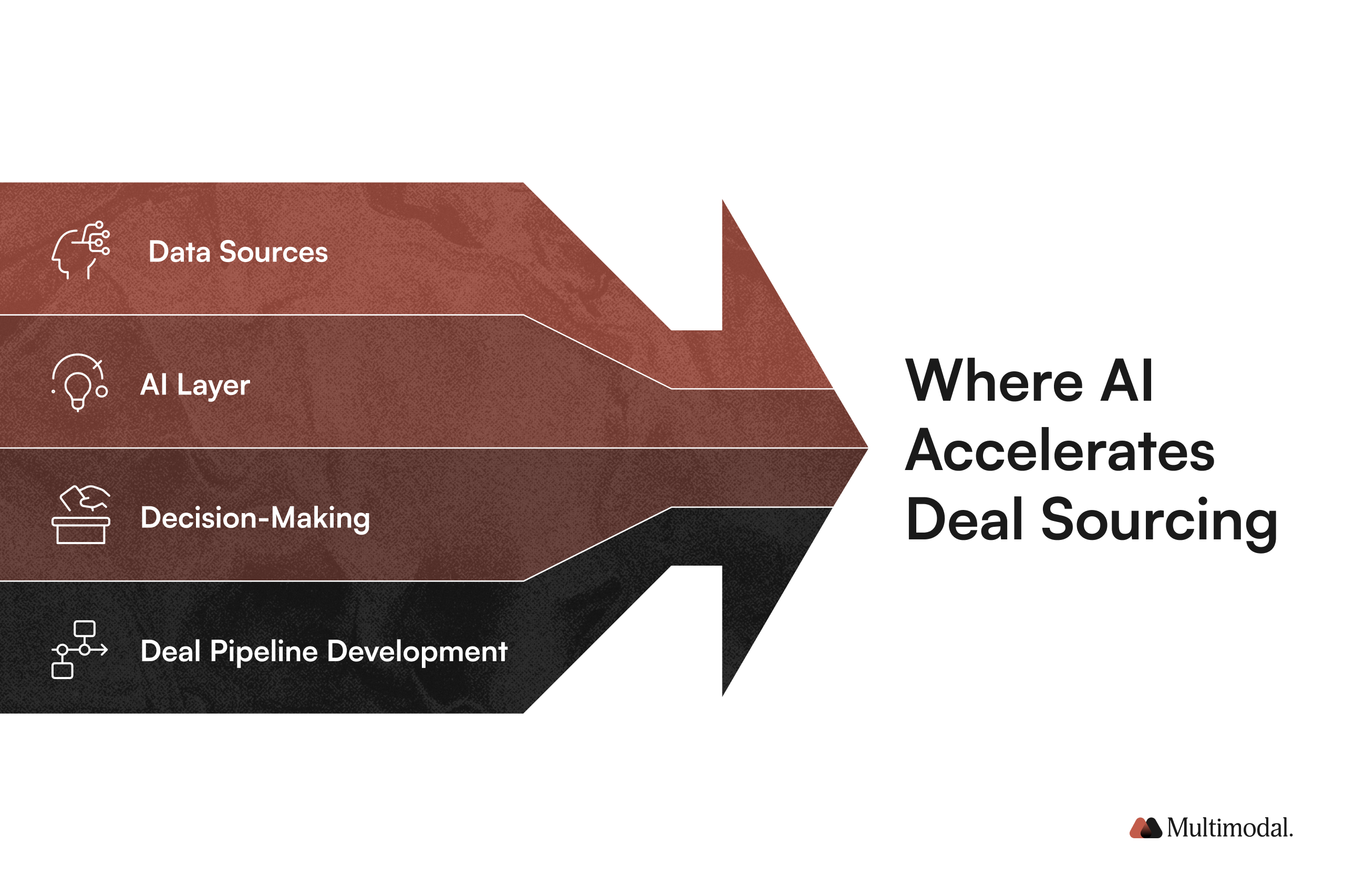
AI transforms private equity deal sourcing by automating identification, due diligence, and prioritization of high‑potential deals.
Predictive modelling and strategic partner alignment turn sourcing into value‑creation, not just deal flow.
Embedding AI in existing workflows, using proprietary data, and sustaining SME feedback loops are essential for scaling sourcing across complex markets.
Get 1% smarter about AI in financial services every week.
Receive weekly micro lessons on agentic AI, our company updates, and tips from our team right in your inbox. Unsubscribe anytime.
Thank you! Your submission has been received!
Oops! Something went wrong while submitting the form.
Best AI Use Cases in PE Deal Sourcing
Private equity deal sourcing has traditionally relied on partner networks, investment bankers, boutique investment banks, and sector specialists to find viable targets. But traditional deal sourcing is falling behind. It cannot keep pace with today’s deal flow volume, tighter timelines, and the rise of proprietary data sources.
The private equity landscape is increasingly data-driven. When firms rely solely on relationship building, they limit their comprehensive market coverage and reduce their visibility into potential investment opportunities.
To stay competitive, private equity firms are integrating AIinto their deal sourcing strategies. AI is now a core part of staying ahead in private equity. Firms use it to uncoverhigh-quality deals. It accelerates the capital deployment strategy and maintains a steady pipeline of potential investments.
Each opportunity is evaluated against the firm’s investment thesis. It is also aligned with the firm’s current market position.
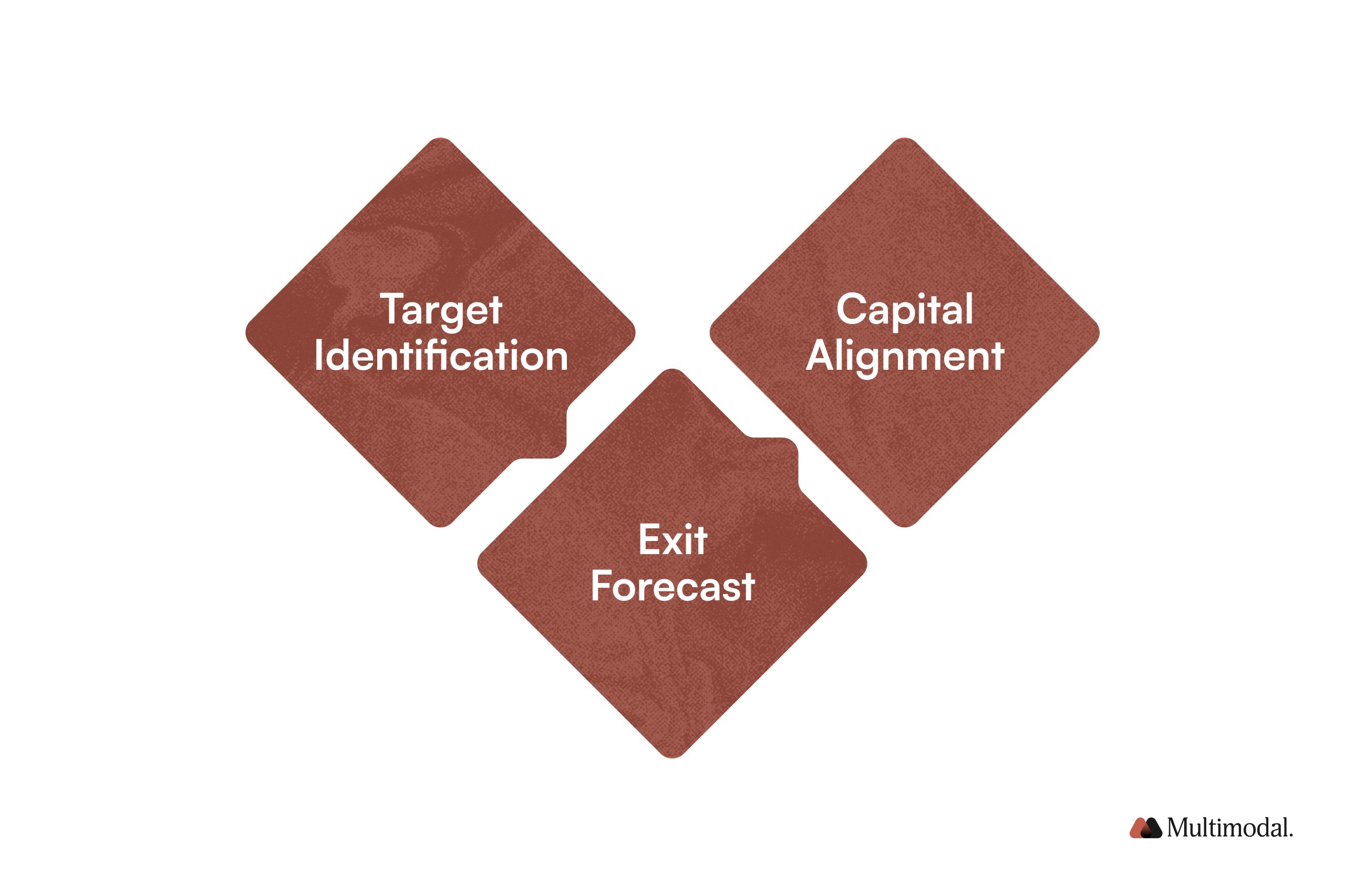
Here arefive ways private equity firms are using AI to transform the deal sourcing process:
1. Finding Targeted Prospects
Most private equity firms already have clearly defined investment criteria. AI expands the scope, speed, and accuracy of identifying prospects. It identifies targets that meet both quantitative criteria and qualitative indicators.
Traditional deal sourcing methods lack the scalability needed to manage today’s data volume and complexity. Purpose-built AI Agents scan massive datasets at scale.
These range from public filings and earnings calls to CRM entries and niche databases. The goal is to surface private companies that align with the firm's investment strategy.
The signals are often buried in PDFs, scanned documents, or investor memos. AI converts this unstructured content into structured insights. These insights strengthen deal sourcing strategies.
This approach enables proprietary deal sourcing and gives private equity investors a clear competitive edge. AI surfaces high-quality deals that traditional channels often miss.
It supports investment professionals and business development teams in spotting targets with strong growth potential. Deal teams with deep expertise can identify and assess opportunities faster and more confidently.
The result is a more focused deal pipeline that stays aligned with the firm’s investment thesis.
2. Automating Due Diligence
Due diligence slows down most deal teams in private equity. AI accelerates this process by automating key tasks like:
conducting market research
financial normalization
pricing validation
AnAI-enabled private equity company gains speed and accuracy in filtering high-quality opportunities.
Private equity investors and venture capital firms increasingly rely on AI agents and data analytics tools trained on internal checklists, firm-specific investment criteria, and external regulatory frameworks.
These tools shorten diligence timelines from weeks to days and help evaluate privately owned companies more efficiently by turning unstructured content into actionable insights.
AI enhances expert review rather than replacing it. It flags issues like abnormal financial patterns or weak customer retention early. This allows investment professionals to focus more time on bigger risks and opportunities.
These improvements are especially valuable for private equity companies scaling deal sourcing in the middle market. AI-driven due diligence improves deal flow quality and accelerates execution.
When sourcing deals through online deal sourcing platforms, business brokers, or inbound deal flow, AI ensures no potential investment opportunities are missed. It helps firms maintain consistently high standards for every private equity deal under review.
3. Prioritising the Right Deals, Faster
Deal flow continues to accelerate. Private equity firms now face intense pressure to triage both inbound and outbound proprietary deal sourcing efforts with greater precision.
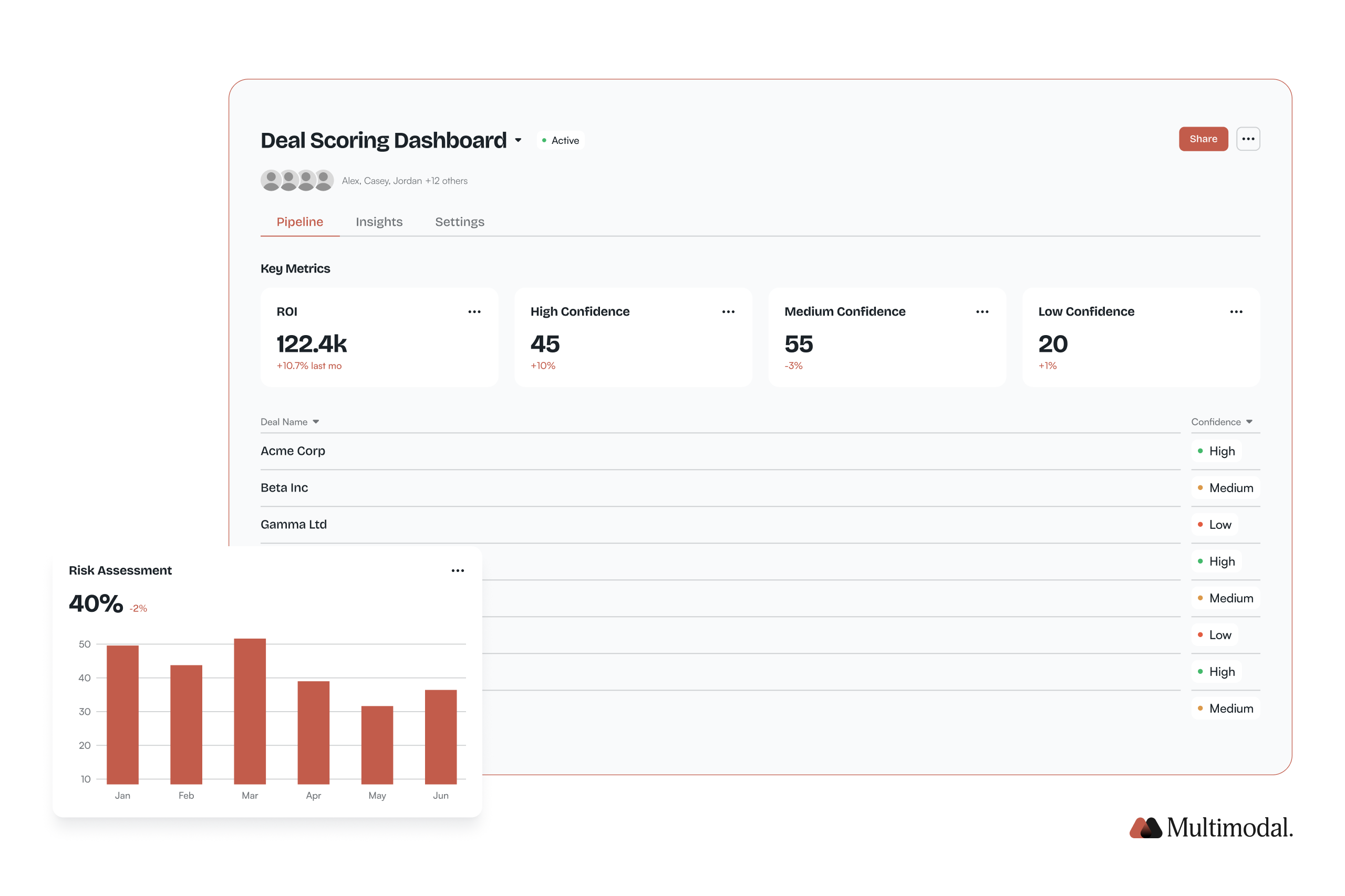
AI helps manage this volume. It scores each potential investment opportunity in real time. These scores reflect alignment with:
firm’s investment criteria
past portfolio performance of portfolio companies
current market trends
This prioritisation keeps deal sourcing teams focused on opportunities with real growth potential. Low-probability leads that fall outside the firm’s investment strategy are quickly deprioritised.
To maintain a steady pipeline of high-quality deals, firms need scale. AI filters out noise and surfaces the most relevant private equity deals for further review.
Embedding AI into the triage layer increases the efficiency of deal sourcing private equity workflows, ensuring that every prospect receives a data‑driven score grounded in real business logic. Every prospect receives a data-driven score grounded in real business logic.
4. Forecasting the Most Profitable Exits
AI gives private equity firms strategic foresight that extends beyond deal sourcing. It models exit scenarios and forecasts value creation pathways.
Predictive agents simulate return profiles using data from:
historical exit outcomes
current industry trends
market intelligence reports
market research
fund performance benchmarks
macroeconomic indicators
These models enable reverse-engineered deal origination. They draw on insights from past exits and the performance of portfolio companies. AI flags potential investments aligned with strong exit conditions, such as strategic acquisitions or sponsor-to-sponsor transactions.
Simulations factor in market cycles, EBITDA multiples, customer retention metrics, and the strength of the management team. As a result, forecasting market position and valuation becomes data-driven.
For fund managers and deal teams focused on proprietary deals that align with the firm’s investment thesis, AI adds clarity. It guides them to opportunities with clear, quantifiable paths to value realisation.
5. Aligning Deals With the Most Likely Capital Partners
Private equity deals are more likely to succeed when aligned with the right capital partners from the start. This is particularly important in today’s competitive private markets. And AI facilitates this alignment. It analyses firm-specific investment preferences, CRM insights, and past syndication records.
Each potential investment opportunity is scored based on the goals and historical activity of co-investors, family offices, and private equity funds.
These insights help AI map characteristics to compatible capital partners. It identifies syndicate members and institutional investors most likely to engage.
As a result, this:
strengthens existing ties
supports maintaining relationships
opens new strategic connections.
By delivering relevant opportunities to each party, AI enhances relationship building and accelerates deal origination. It also fosters collaboration among private equity firms, venture capital investors, and limited partners.
The process becomes more efficient and transparent, aligning with strategic goals and long-standing industry relationships that drive capital deployment.
Best Practices for Implementing AI in Deal Sourcing
Effective deal sourcing in private equity requires more than just access to data. It depends on operational integration and real-time application. These practices work together to create an effective deal sourcing strategy that aligns AI capabilities with firm-specific goals:
Embedded AI: Integrate AI directly into current sourcing automation platforms to boost functionality without adding new tools.
Proprietary data: Use internal memos and historical deal records to train AI for more accurate sourcing.
SME feedback loops: Let subject matter experts validate and refine AI outputs for improved results over time.
Compliance-ready platforms: Ensure platforms support in-VPC deployment, logging, and scoring to meet regulatory standards.
End-to-end workflows: Use AI to manage the full process, from CIM analysis to investment committee documentation.
Industry event insights: Feed takeaways from conferences and meetings into AI tools to improve sourcing intelligence.
In a data-driven private equity industry, best practices in deal sourcing private equity rely on leveraging technology and data analysis. These tools provide a deeper understanding and help firms scale across complex markets.
Platforms like AgentFlow allow private equity funds to identify potential targets, forecast exits, and accelerate access to lucrative investment opportunities. AI delivers differentiation not just in strategy, but in daily execution.
Explore How AI Is Boosting Deal Sourcing in Private Equity
AI is changing how private equity firms find and evaluate deals. It speeds up sourcing, sharpens targeting, and boosts execution with data-driven precision.
See how it works. Book a demo to explore AI-powered deal sourcing, from identifying the right targets to forecasting the most profitable exits.

.svg)
.svg)

.avif)
.png)


.png)