Digital transformation helps credit unions stay competitive.
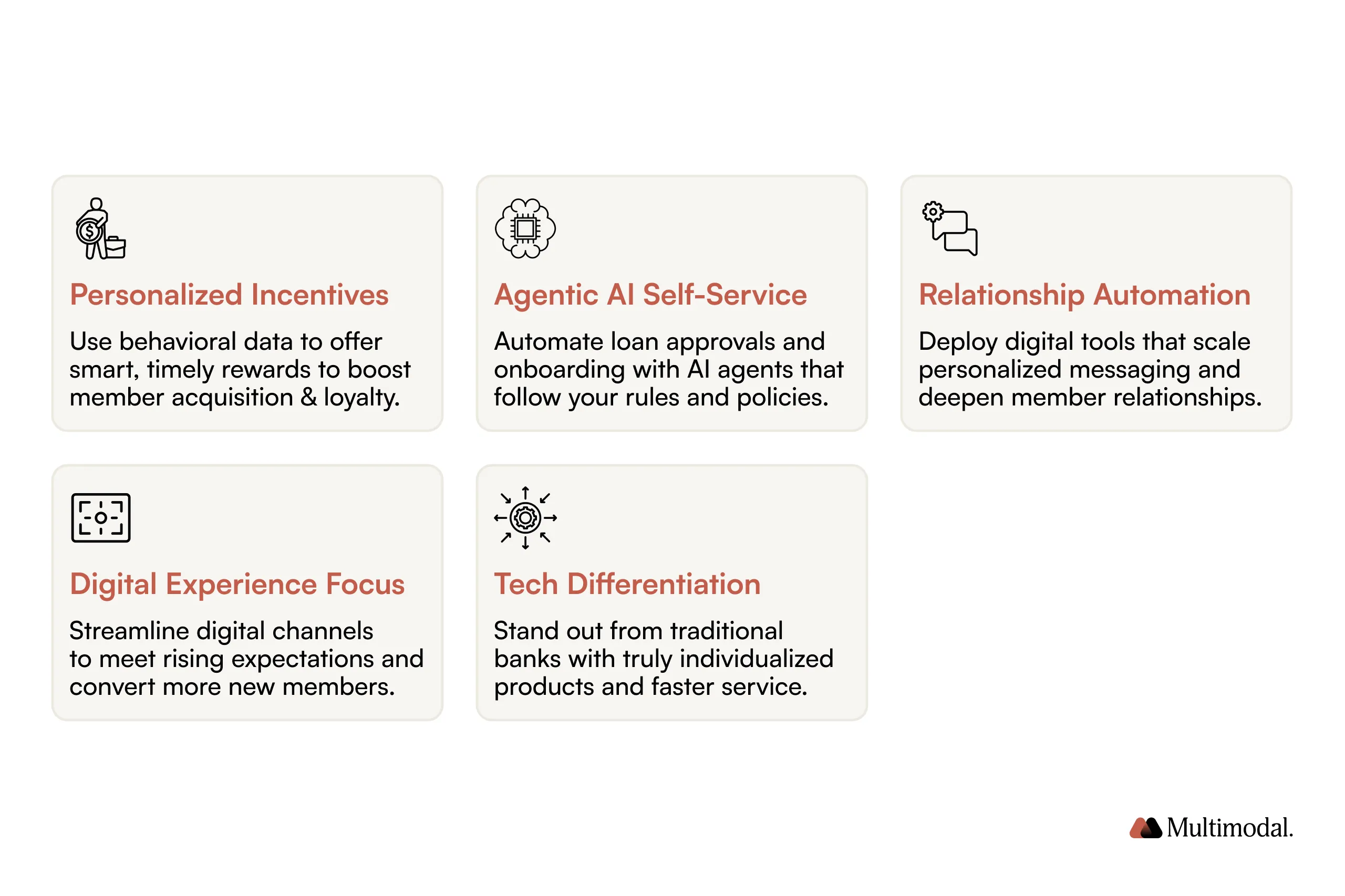
Personalized incentives boost member engagement and growth.
Agentic AI automates lending and improves efficiency.
Better digital banking drives new member acquisition.
Tech differentiation fuels credit union growth strategies.
Get 1% smarter about AI in financial services every week.
Receive weekly micro lessons on agentic AI, our company updates, and tips from our team right in your inbox. Unsubscribe anytime.
Thank you! Your submission has been received!
Oops! Something went wrong while submitting the form.
In our deep dive on credit union growth trends, we concluded that credit unions must become more digitally nimble and deliver seamless modern experiences or risk losing ground to fintech companies and larger financial institutions. One key takeaway was the imperative to bridge the digital divide: traditional strengths in community and relationships are only sustainable if backed by digital banking capabilities that meet evolving member expectations.
Here, we expand on practical, tech-driven credit union growth strategies that not only help credit unions grow membership and assets but also position them for sustainable growth and long-term competitive advantage in a landscape dominated by digital-native competitors.
1. Data‑Driven, Personalized Incentives
Incentives work, but only when they’re personalized. Offering cash bonuses, rate discounts, or reward points may drive short-term engagement, but generic incentives rarely build lasting member relationships.
As credit union leaders, Barry Roach and Drew Megrey discuss that engaging new members early is critical; nearly 70% of newly opened accounts go inactive within the first 90 days, underscoring the importance of understanding member behavior through data so credit unions can tailor experiences that build long‑term loyalty.
To increase relevance, credit unions must move beyond static segmentation and start tailoring offers to individual behaviors and goals. That means:
Using transaction data to identify spending, saving, and borrowing patterns
Building dynamic member personas, not based on age or income alone, but on life stages and intent
Deploying smart triggers to deliver the right offer at the right time
This kind of responsive personalization requires more than just data collection; it demands technology investments that can analyze, act, and learn continuously. With the right tools in place, credit unions can enhance member engagement, strengthen loyalty among existing members, and attract new members in a scalable, measurable way.
2. Agentic AI for More Self‑Service Features
Legacy systems are slowing credit unions down, and members are noticing. According to WhiteBlue, up to 75% of credit unions still rely on outdated loan origination systems that lack robust automation.
The result? Manual decisioning, long wait times, and fragmented experiences, especially for new members expecting instant, mobile-first access to financial products.
Agentic AI changes this. Unlike rigid workflows or black-box automation, agentic systems are built to operate within your rules, policies, and regulatory constraints, including credit risk guidelines, National Credit Union Administration compliance, and member eligibility logic. When deployed correctly, they:
Automate complex decisions in real time
Scale digital onboarding and loan approvals without adding headcount
Reduce turnaround time from days to minutes
Because decisions are explainable and traceable, agentic AI also strengthens internal controls, a key advantage for credit union executives balancing innovation with governance.
This shift isn't about replacing staff. It’s about enabling existing members to access more of what they need, when they need it, and giving teams back the time to focus on deepening relationships.
3. Building Customer Relationships
Personalized service has always been the edge that credit unions hold over traditional banks. But as First Alliance Credit Union points out, “it’s no longer enough to simply know your members’ names.” Today’s members, especially younger demographics, expect personalization to be built into every interaction, not just delivered at the teller window.
Technology now makes that possible at scale. By leveraging digital platforms, credit unions can strengthen member relationships through timely, relevant, and proactive communication. That includes:
Tailored product recommendations based on member behavior and goals
Automated follow-ups after key life events or financial changes
Smart assistants that guide members through complex decisions, 24/7
These AI-powered touchpoints don’t replace human service; they extend it. They ensure that even as your membership base grows, every member continues to feel seen, supported, and served in a way aligned with your mission.
Done right, this builds deeper engagement, drives member growth, and reinforces the kind of loyalty that fuels long term growth.
4. Laser Focus on Improving Digital Experiences
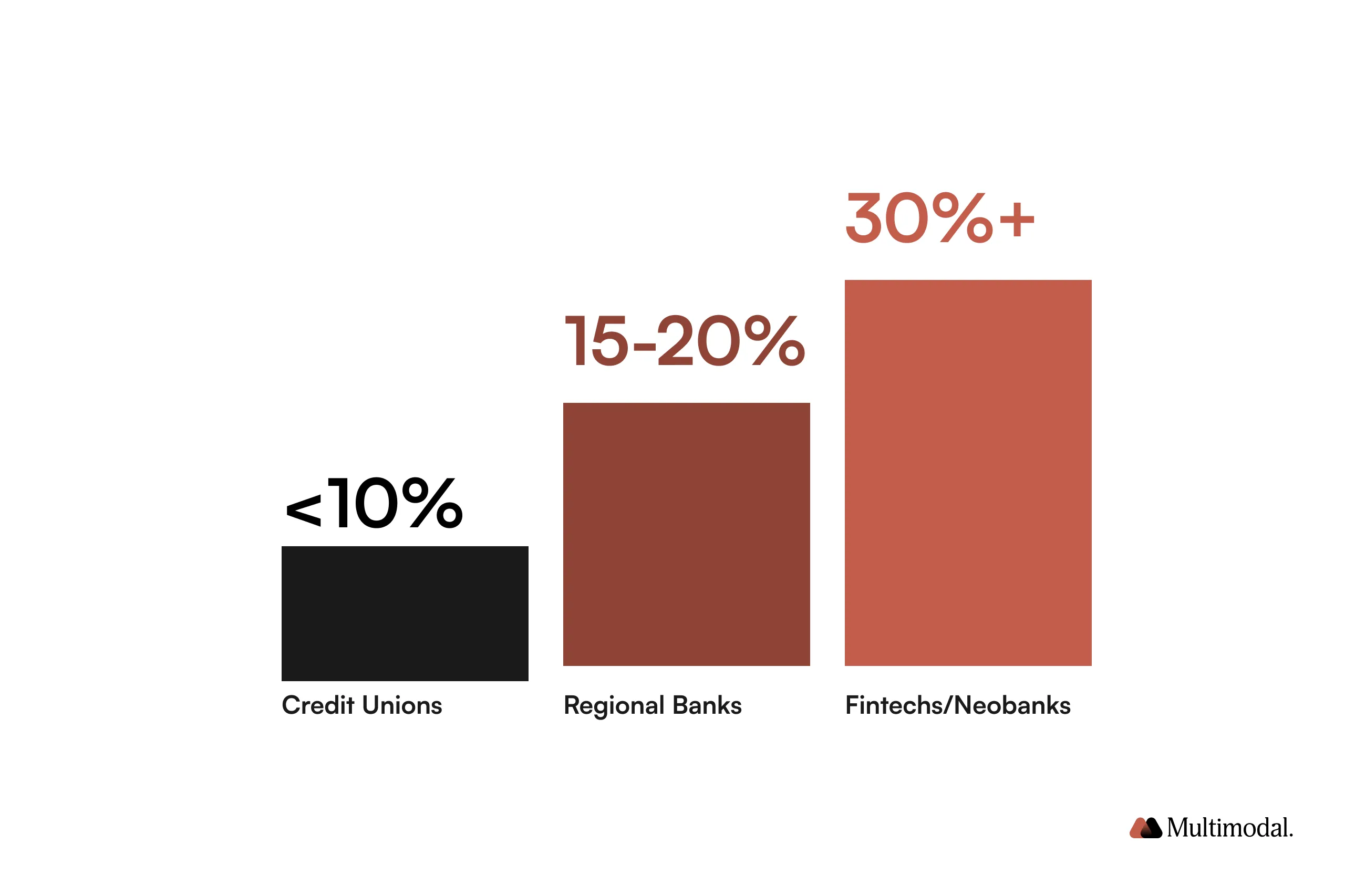
Digital experience is now the frontline of member engagement and acquisition. Yet, according to McKinsey, most credit unions fall behind regional banks in digital sales penetration, with fewer than 10% of new product openings occurring through digital channels. Meanwhile, fintechs and larger institutions are achieving 30% or more.
The implication is clear: credit unions must close the digital gap or risk becoming irrelevant to members who prioritize convenience, speed, and ease of use. Focusing on digital experience means:
Streamlining loan applications and account openings across all digital platforms
Ensuring consistency and functionality across mobile and web apps
Embedding financial education and financial well-being tools directly into the user journey
These changes reflect that credit unions are now rethinking the member journey from the ground up. Those that do this well drive growth, increase member acquisition, and solidify their relevance for the next generation. On the other hand, those that don’t, risk being left behind by online banking platforms that already meet, and often exceed, modern customer expectations.
5. Using Tech to Differentiate Your Credit Union
Most credit unions aren’t losing members because of poor service, but because they look and feel interchangeable. As highlighted in Cornerstone’s 2025 Digital Banking Takeaways, many credit unions are “drowning in a sea of sameness,” offering identical products, similar messaging, and indistinct digital experiences.
Meanwhile, neobanks are capturing record numbers of new accounts not by outspending traditional players, but by boldly differentiating. They’re launching unique products, simplifying access, and aligning more closely with the lifestyles and values of modern consumers.
For credit unions to remain competitive, they must do the same by using technology to differentiate in ways that reflect their mission and member base. That might mean:
Offering truly individualized product bundles, not just segment-based offers
Reducing loan decisioning time from days to minutes with AI-guided workflows
Embedding interactive tools for financial inclusion and education directly into the app experience
Creating onboarding journeys that feel personal, not procedural
These upgrades serve as strategic levers that shape brand identity and drive growth. Credit unions that lean into their values and pair them with innovative technologies will not only attract potential members but redefine what personalized service means in a digital era.
Download Full Report
Access the full research to understand where the industry is heading and how top decision-makers are approaching agentic AI.
Final Thoughts — Growth Through Strategic Digital Investment
In a time of economic uncertainty, credit unions must focus on digital transformation that meets real member needs while improving operational efficiency. The five growth strategies outlined here combine data, automation, and experience to help credit unions achieve measurable outcomes.
Whether your goal is membership growth, loan growth, or stronger business development with your community, the path forward is digital. Want deeper insights into what’s driving credit union performance in 2026? Download our State of the Agentic AI in Credit Unions report to see the strategies, benchmarks, and tools fueling industry leaders.
Frequently Asked Questions
How do we personalize offers when member data sits in separate systems?
Personalization starts with transaction data that reveals spending, saving, and borrowing patterns. Credit unions then build dynamic personas around life stage and intent, and deploy triggers that time each offer. This requires technology able to analyze, act, and learn continuously, well beyond one-time data collection.
Will automating lending decisions damage our member relationships?
Automation absorbs routine decisioning so staff regain time for the conversations members remember. Agentic systems scale digital onboarding and loan approvals without added headcount and cut turnaround from days to minutes. Because decisions stay explainable and traceable, internal controls get stronger while relationship work remains firmly human.
How far behind are credit unions on digital account opening?
Most trail regional banks on digital sales penetration, with fewer than 10% of new product openings happening through digital channels while fintechs and larger institutions reach 30% or more. Closing that gap means streamlining applications, keeping mobile and web consistent, and embedding financial education into the journey.
What can we do if our loan origination system is outdated?
Up to 75% of credit unions still rely on loan origination systems that lack robust automation, which produces manual decisioning and long wait times. Agentic AI operates within your existing rules, credit risk guidelines, and eligibility logic, so approvals speed up before any core replacement project starts.
How do we differentiate when every credit union offers similar products?
Members drift when institutions look and feel interchangeable. Differentiation comes from individualized product bundles, AI-guided workflows that cut loan decisioning time to minutes, embedded tools for financial inclusion and education, and onboarding journeys that feel personal. Pair those choices with the mission your membership already recognizes.
How do we keep newly opened accounts from going inactive?
Engage members in the first weeks, since nearly 70% of newly opened accounts go inactive within 90 days. Reading member behavior through data lets credit unions time relevant offers, automate follow-ups after key life events, and guide members through complex decisions with smart assistants around the clock.

.svg)
.svg)

.avif)
.png)