

.svg)
.svg)

.svg)
This is a summary of an episode of Main Street AI, an educational podcast on AI led by our founder. Join 3,700+ business leaders and AI enthusiasts and be the first to know when new episodes go live. Subscribe to our newsletter here.
TL;DR:
- UKFCU: $1.75B credit union in Lexington, Kentucky, five major change initiatives running simultaneously
- Software selected before team hired: Empower let the mortgage department launch with one processor instead of two
- Branch referrals built the mortgage book faster than anyone expected
- Zest AI went live November 2025 on home equity and auto, targeting 40% automated decisions by year one
- GLIA launched the day before recording: 60% call deflection and 70% reduction in after-hours spend as year-one targets
- Every staff change tied to AI has been voluntary, absorbed by attrition across departments
- First merger closed April 2026, second already in progress
Before we dive into the key takeaways from this episode, be sure to catch the full episode here:
Pick the Software Before You Size the Team
When UKFCU committed to standing up a brand-new mortgage department in late 2024, the first decision was not who to hire. It was which software to buy.
"With the mortgage lending, we really did have to create a new department. One of the first things we did was select a software."
UKFCU picked Empower. The selling point was not features. It was what the software would do to the headcount plan.
"If we go with Empower, I think I can go live with one processor instead of two. Like it would cut out an entire person to do work because the software would do certain things for us."
That decision was made before the team was hired, which is the only moment it can be made cleanly. Empower handles tax return analysis against investor guidelines, orders appraisal, title, and flood automatically when a file hits the right milestone, and indexes the documents a member uploads into the right buckets. The processor and underwriter still own the file. The repetitive work that used to consume their day is handled.
Most credit unions deploy AI to teams they have already staffed. The ROI gets murky, the headcount conversation becomes political, and the savings never fully materialize. UKFCU got the leverage because the software decision came before the staffing forecast hardened into a roster. For any institution standing up a new function, the lesson is sequencing: software first, then size the team around what it cannot do.
Branch Referrals Built the Book
The bigger surprise was not the software. It was where the loans came from.
"Our mortgage department has been incredibly successful, more successful than I could have ever imagined, and it is due to the referrals coming from our branches."
One of UKFCU's two mortgage lenders came from inside the credit union in a different role. The other came from an outside bank and brought existing business with him. The result is a mix of existing-member conversions and net-new acquisitions, exactly the diversification mortgage was supposed to deliver.
What Is Zest AI and How Is UKFCU Using It
Zest AI is an AI-automated underwriting platform that auto-approves loans based on configurable parameters including credit score floors, maximum loan amounts, past-loss flags, and bankruptcy history. Anything outside those parameters routes to a human underwriter. According to a Zest AI press release via PRNewswire, the platform has helped lenders assess over 39 million consumer loan applications resulting in $250 billion in loans granted, with approvals increasing by 40% on average for all protected classes while holding risk constant.
UKFCU went live with Zest AI in November 2025 on home equity and auto loans. Conventional mortgages are excluded because Fannie and Freddie's LP and DU engines already handle auto-decisioning on those files.
"One of the main things was to be able to approve more loans without taking on additional risk. So again, it's not all about reduction in staff. Being able to help our members more, that's our number one goal."
The year-one target is 40% of home equity and auto decisions made by Zest without underwriter review. UKFCU has its six-month business review with Zest coming up.
"I'm excited to go through this business review and continue to tweak the model and help us get to that 40% approval rate at the end of a year, and then hopefully even higher after that."
Speed as a Competitive Advantage
Beyond approval rates, Zest delivers something indirect lending dealers and branch lenders both care about: faster decisions.
"It also gives a decision quicker, whether it be to an indirect dealer or to one of our lenders sitting in our branches, waiting to hear back from a loan, and they have the member sitting across the desk from them."
In indirect auto lending, where loan-to-value, rate, and term are the primary competitive levers, funding speed is the secondary differentiator. UKFCU's aspirational target for indirect dealers is same-day funding. The current internal system delivers in 1 to 2 days. Faster decisioning through Zest is one piece of closing that gap.
GLIA on Day Two: 60% Call Deflection
The conversation happened the day after GLIA went live in UKFCU's call center.
"GLIA went live yesterday. Today is day two."
GLIA is a virtual assistant platform that handles inbound member calls and chats, answering questions, processing routine transactions like loan payments, and transferring funds without a human representative. UKFCU's year-one targets are specific: 60% of calls fully handled by the virtual assistant, and a 70%-plus reduction in spend on the external vendor currently handling after-hours support.
"If they can get a virtual assistant that will answer their question, will transfer money for them, that will take care of their issue, and they can have a short conversation or a chat with them and be done, then that's enhanced member experience."
The member-experience framing matters. Asking a member to wait when the technology can answer immediately is no longer a defensible default at any institution, regardless of size.
We Repurpose. We Do Not Lay Off.
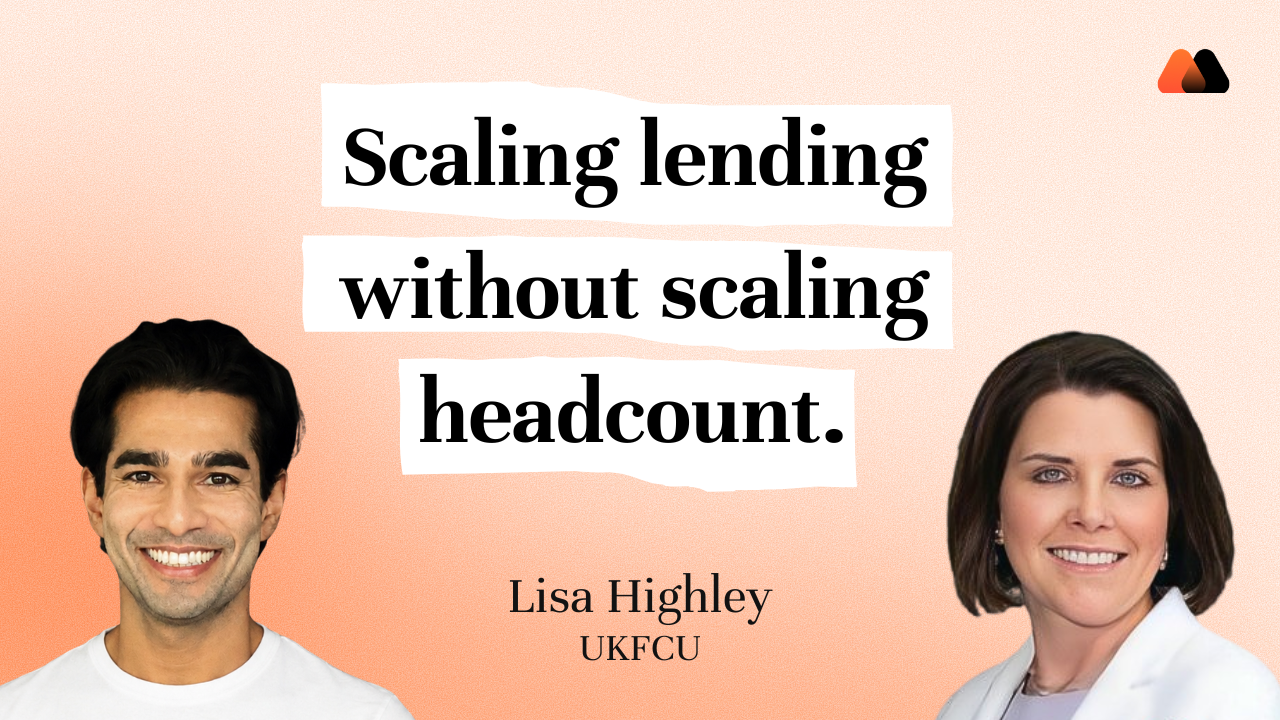
The staffing question that follows any AI deployment is what happens to the people whose work the software now handles. Lisa Highley has answered it the same way for every initiative.
"We don't want to lay off people. We just want to be able to repurpose them into other areas."
The mechanism is opportunistic. When a processor retired in indirect lending, UKFCU went to the call center first: could anyone transfer over rather than hiring externally? That conversation has played out across multiple departments as Zest and GLIA have come online.
"So far all of our moves have been voluntary, which has been great. Everyone that we've moved around has wanted and been willing to do that."
The operational rule this points to: if you do not want layoffs, you have to actively use natural attrition as the absorption layer, and you need to start that conversation before the new tool goes live, not after. The same pattern is queued for underwriters as Zest's auto-decision rate climbs toward and beyond 40%.
What the First Merger Taught
UKFCU closed its first merger in April 2026. A second is already in progress. Both came through CEO-to-CEO conversations rather than formal M&A searches.
"Mergers are not a simple task to take on. We've definitely felt a little bit of the pain. I'm not going to sugarcoat it."
The lesson Lisa keeps returning to is operational rather than strategic.
"How important communication and collaboration are. It's just extremely important to have good communication and collaboration with our own internal teams and also with our vendors and with the credit union that we are merging."
The unit that made it work was not senior leadership. It was the AVP layer, the people who owned day-to-day coordination across internal teams, vendors, and the merging institution. For any first-time-merging credit union, the repeatable insight is to give AVPs both the authority and the time to lead that coordination from the start.
Want more on financial services and AI? Check other episodes here.
Frequently Asked Questions
1.How are credit unions automating lending operations with AI?
By targeting specific friction points first: slow decisioning, document-heavy underwriting, high call transfer rates. Platforms like AgentFlow are built for this kind of targeted deployment in regulated lending environments, with full audit trails on every automated step.
2. Can AI help credit unions approve more loans without increasing risk?
Yes, when configured against the institution's own credit policies and risk thresholds. Edge cases route to a human underwriter while AI handles the straightforward volume. AgentFlow's lending workflows include compliance controls so every decision is explainable and examinable.
3. Does AI in lending lead to credit union layoffs?
Not at UKFCU. Every change has been voluntary, with staff repurposed into open roles through natural attrition. The key is identifying where new roles are opening before tools go live, not after.
4.What is GLIA and how does it work in a credit union?
A virtual assistant platform handling inbound calls and chats without a human rep. UKFCU launched with targets of 60% call deflection and a 70%-plus reduction in after-hours vendor spend.
5. How should credit unions think about AI vendor selection for lending?
Start with the member pain point, not the technology. Map the biggest friction points first, then evaluate whether AI solves them. Avoid tools deployed for their own sake.

.png)