AI in M&A works when agents handle scale, and human oversight handles decisions.
Use generative AI + machine learning to speed due diligence on financial statements and legal documents, while scoring potential risks.
Improve target identification by tracking market data, historical data, and industry trends for data-driven insights.
In the negotiation process, let AI-powered tools draft scenarios and markups; keep human judgment for tradeoffs.
Make post-merger integration the value creation engine with end-to-end tracking of synergies and risk.
Get 1% smarter about AI in financial services every week.
Receive weekly micro lessons on agentic AI, our company updates, and tips from our team right in your inbox. Unsubscribe anytime.
Thank you! Your submission has been received!
Oops! Something went wrong while submitting the form.
Artificial intelligence in M&A has moved beyond theory. Deal teams use AI-powered tools to accelerate due diligence, identify potential targets, and navigate post-merger integration, but results vary dramatically.
This guide delivers practical value whether or not you use AgentFlow. You'll get:
Step-by-step workflows you can implement with any AI system
Features to demand from ANY AI M&A platform, non-negotiables that separate effective tools from hype
Common pitfalls and how to avoid them
We'll cover the complete deal lifecycle: intelligent target sourcing, due diligence process optimization, AI-driven negotiation, and post-merger integration, where most value creation plans succeed or fail.
The Current State of Agentic AI in M&A
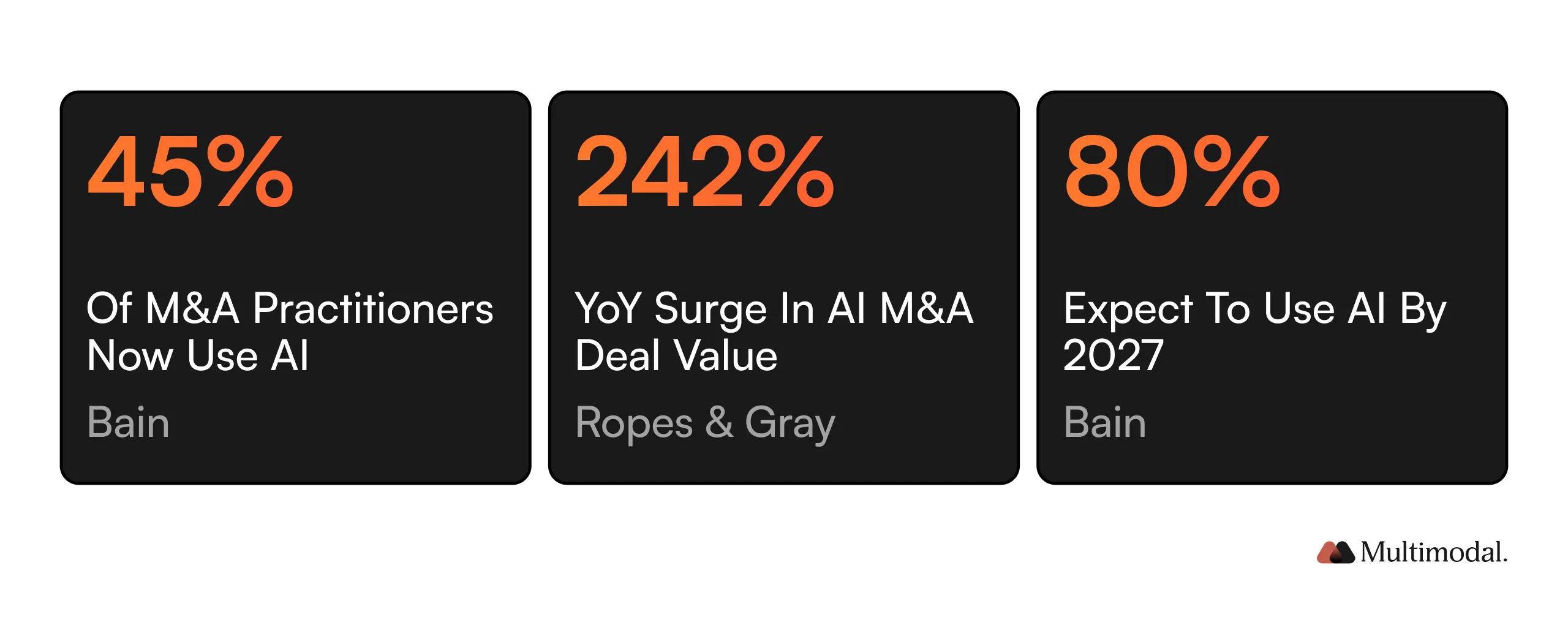
The private equity and M&A landscape is experiencing a seismic shift in AI adoption. According to Bain & Company, 45% of M&A practitioners now use AI tools, doubling from the previous year. AI M&A deal value surged 242% year-over-year by Q3 2025, showing that artificial intelligence has moved into day-to-day execution and is reshaping how deal teams operate.
But here’s the critical distinction most firms miss: they’re deploying basic automation and leaving agentic AI capabilities on the table.
What Makes Agentic AI Different
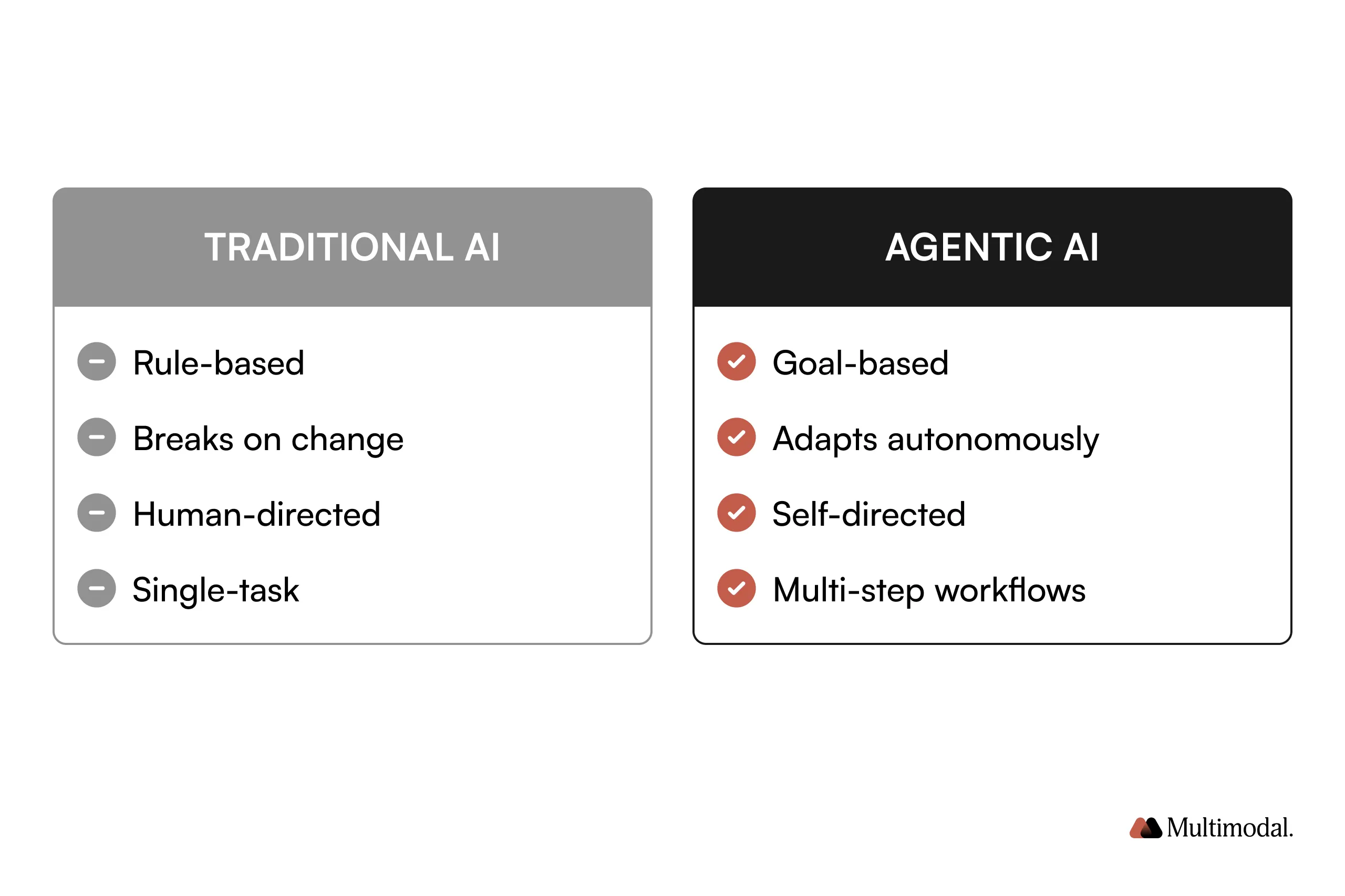
Traditional AI follows rigid rules: "Execute this specific task when triggered." It breaks when conditions change and requires constant human direction. Think: automated email responses or simple data extraction scripts.
Agentic AI operates autonomously: "Achieve this goal independently." It adapts to changing deal conditions, plans multi-step workflows without supervision, and learns from outcomes to improve future performance. This is generative AI with agency: systems that reason, plan, and act across the entire deal lifecycle.
Real-World Impact:
Organizations implementing agentic AI see 20-30% faster workflow cycles, according to BCG research. Accenture's analysis of early adopters in post-merger integration shows even more dramatic results: 2.5x higher revenue growth and 2.4x greater productivity compared to traditional approaches.
The gap between firms using agentic AI and those stuck on traditional automation is widening monthly. The question now becomes how quickly you can implement intelligently, and where to start.
Pre-Deal: Intelligent Target Sourcing
Manual target sourcing is plagued by limitations: you're confined to databases you subscribe to, static searches miss emerging opportunities, continuous monitoring is time-consuming, and there's inherent bias toward well-known targets.
Agentic AI transforms this process through autonomous, continuous market intelligence. Instead of periodic database queries, AI agents monitor markets 24/7, identify trigger events, score opportunities against your investment thesis, and surface actionable intelligence, all without constant human direction.
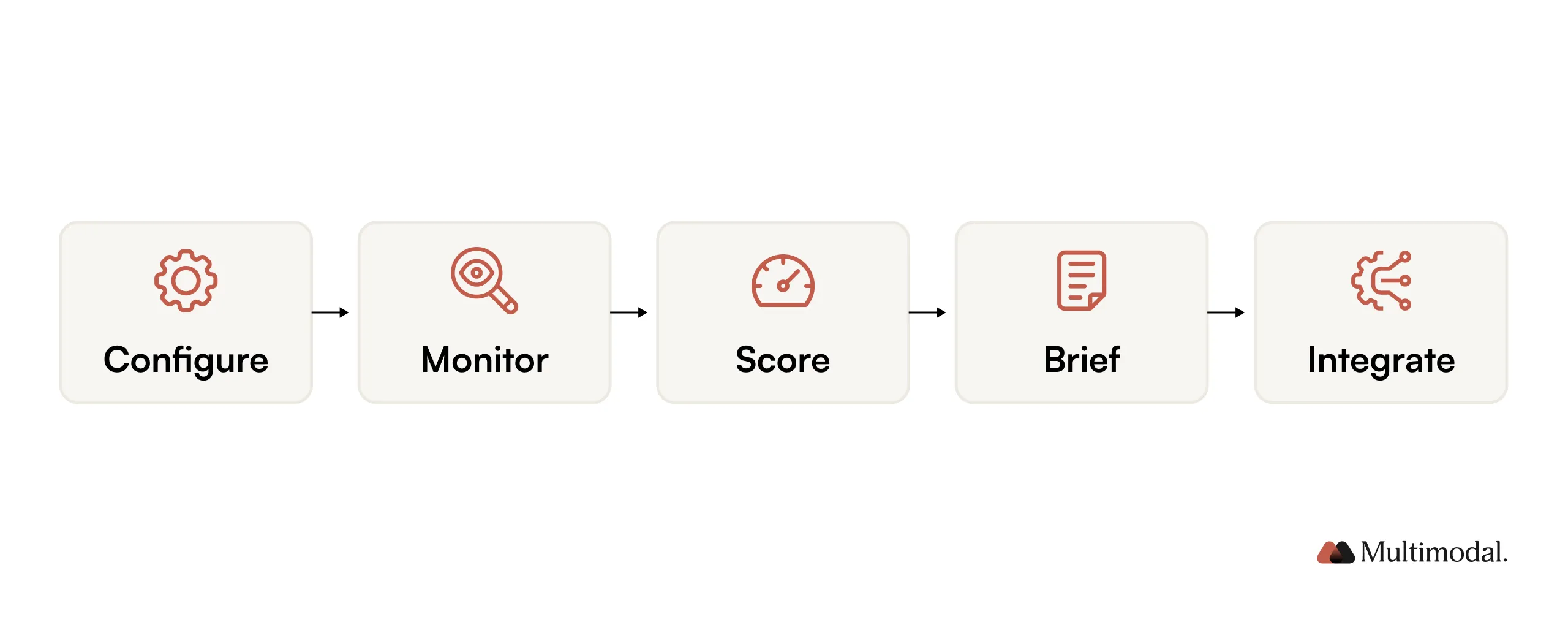
Here's the autonomous sourcing workflow that leading deal teams now deploy:
Qualitative criteria (tech stack, culture indicators, business model)
Deal structure preferences (asset vs. stock, earnout flexibility)
Strategic fit requirements (customer base, product gaps)
AgentFlow differentiator: Natural language configuration vs. rigid filters. Instead of "Revenue > $10M AND < $50M," AgentFlow accepts: "Mid-market SaaS companies showing product-market fit but needing go-to-market expertise." The AI interprets intent and monitors for pattern matches.
Step 2: Continuous Market Monitoring
What any good AI platform should do: Monitor financial databases, news feeds, patent filings, track social sentiment, and identify trigger events (funding rounds, executive changes, product launches).
How AgentFlow's agents work:
Discovery Agent: Scans 50+ data sources continuously
What to demand from your AI platform: Multi-dimensional scoring beyond financials, explainable rankings, and customizable weighting based on your strategy.
AgentFlow's scoring system creates composite scores across:
Strategic Fit (0-100): Business model alignment with your thesis
Financial Attractiveness (0-100): Growth, profitability, capital efficiency
Cultural Compatibility (0-100): Values alignment, work practices
Best practice: Regular delivery of actionable intelligence, including target lists plus clear context on why each company matters.
What AgentFlow generates weekly:
One-page target briefs including business overview and strategic fit rationale, key executives with contact information, recent developments and trigger events, estimated valuation range, and suggested outreach approach.
Step 5: CRM Integration & Workflow
Critical capability: Auto-population of deal pipeline tools, historical tracking of target evolution, and relationship mapping.
AgentFlow's pipeline management automatically creates target records, maintains target history showing how companies evolve, links related targets (same investor, industry cluster), and triggers follow-up tasks based on new intelligence.
Key Features Checklist for AI Sourcing Platforms
Before buying ANY AI sourcing tool, ensure it has:
Continuous monitoring (not batch processing)
Multi-source data aggregation (50+ sources minimum)
Custom scoring models (your strategy, not vendor templates)
Explainable AI (shows reasoning, not a black box)
Integration with existing tools (CRM, email, data rooms)
Learning capability (improves as you accept/reject targets)
Red flags to avoid:
Single data source dependency
Generic scoring with no customization
No explanation of recommendations
Requires manual data export/import
Due Diligence: Document Intelligence That Actually Works
Traditional due diligence is resource-intensive and risky: minimum 60-day timelines for comprehensive review, legal teams manually reviewing thousands of documents, high costs from external counsel and consultants, critical risk of missing key provisions buried in contract fine print, and human fatigue leading to inconsistent analysis quality.
The stakes are particularly high in mid-market deals where deal teams are smaller and timelines compressed. One executive noted: "Prior to adopting Document Intelligence technology, by missing one obligation, it cost us six figures for something that should have been so simple."
Proven efficiency gains from AI in the due diligence process:
What any good AI DD platform must handle: Bulk document upload (hundreds to thousands of files), multiple file formats (PDF, Word, Excel, scanned images), OCR for non-digital documents, and a secure environment with access controls.
AgentFlow's approach:Automatic document classification by type you specify—customer contracts, vendor agreements, employment contracts, leases, IP licenses, financial statements, corporate documents, insurance policies.
Why classification matters: Different extraction logic for each document type. AgentFlow knows what to look for in a customer contract (termination rights, change of control) vs. a lease (renewal options, rent escalations).
Phase 2: Intelligent Data Extraction
Configure extraction rules for your deal thesis:
What terms are deal-killers vs. negotiable? What metrics matter for your valuation? What risks require special indemnities?
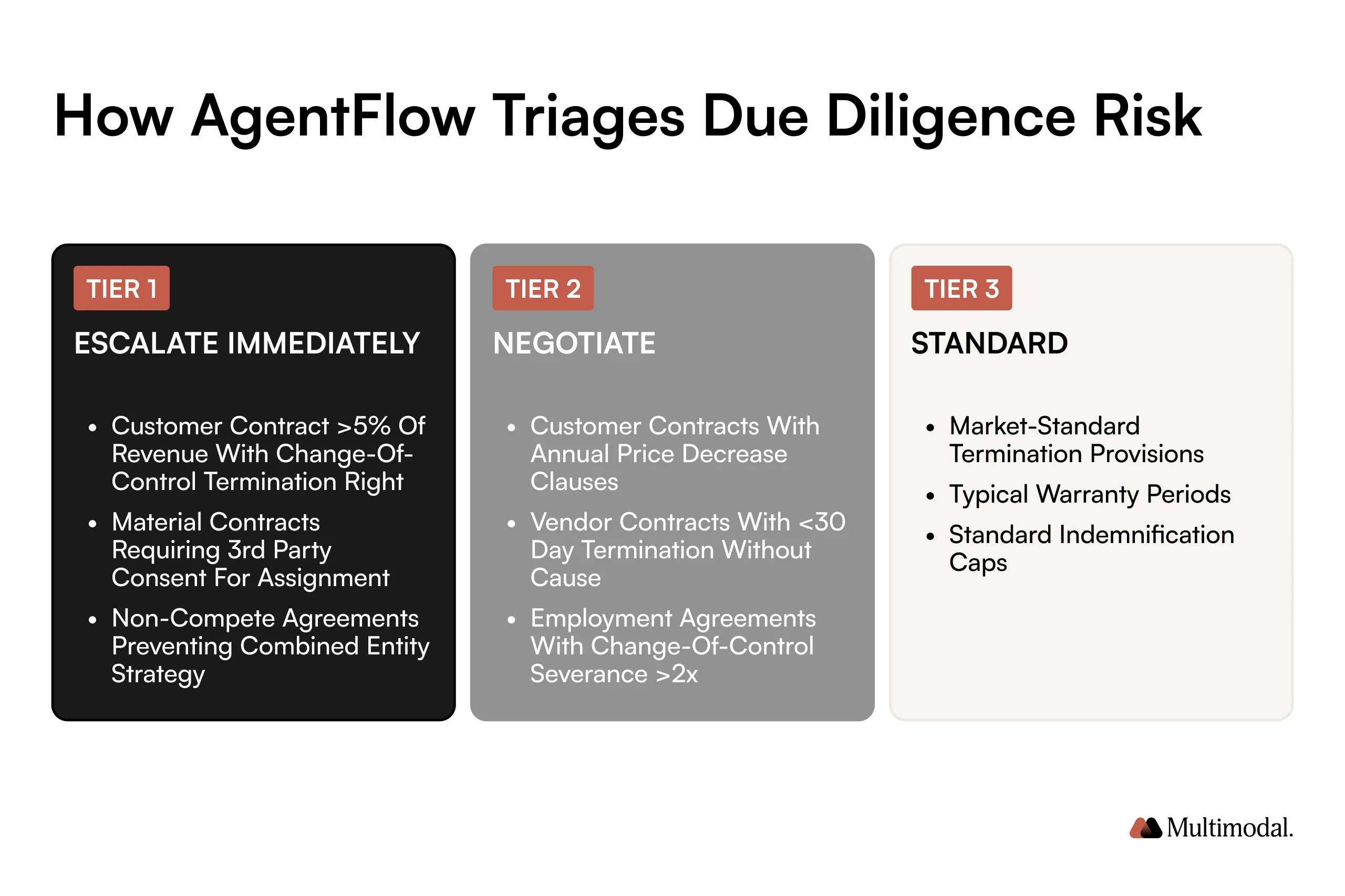
AgentFlow configuration example:
RISK TIER 1 (Escalate):
Any customer contract >5% of revenue with change-of-control termination
Material contracts requiring 3rd party consent for assignment
Non-compete agreements preventing a combined entity strategy
RISK TIER 2 (Negotiate):
Customer contracts with annual price decrease clauses
Vendor contracts with < 30-day termination without cause
RISK TIER 3 (Standard):
Market-standard termination provisions
Typical warranty periods
Phase 3: Risk Analysis & Flagging
How sophisticated AI platforms identify risks through pattern recognition:
"15 of 50 customer contracts have automatic termination on acquisition"
"Top 10 customers represent 67% of revenue (concentration risk)"
"Average customer contract term is 12 months (churn risk)"
Anomaly detection: Contracts with terms significantly different from portfolio average, financial transactions that don't match historical data patterns, unusual relationships (related parties, cross-holdings).
AgentFlow's risk assessment delivers customizable scoring—clients specify that AF needs to provide:
Severity score (1-10): How material is the issue?
Probability score (1-10): How likely to cause problems?
Mitigation complexity: Can we fix this?
Combined risk score = Severity × Probability
AgentFlow prioritizes human attention on the highest combined scores.
Phase 4: Human Expert Review Layer
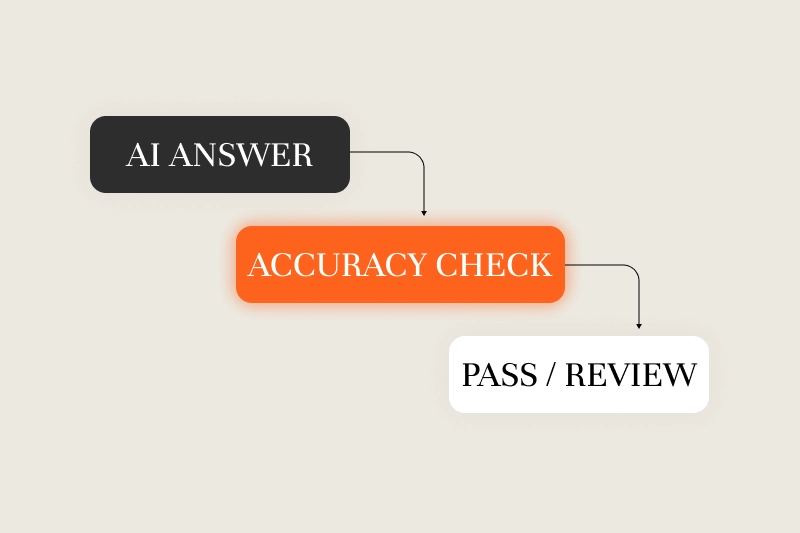
Best AI platforms keep human oversight in the loop.
How AgentFlow structures human review:
Automated triage surfaces only high-priority items
Focused expert time: AI provides context ("This clause is unusual because..."), experts validate AI findings and add business judgment
Collaborative annotation: Experts accept/reject/modify AI assessments, system learns from corrections
Phase 5: Comprehensive Reporting
Different stakeholders need different reports:
For Deal Teams: Executive summary of top 10 risks with financial impact estimates, detailed findings by category
For Finance: Working capital analysis, EBITDA adjustment recommendations
For Legal: Contract exceptions requiring attention, recommended indemnities, and escrows
AgentFlow's reporting automation generates a first draft in hours (vs. days), uses pre-populated templates by industry/deal type, creates dynamic reports that update as new documents are added, and can create separate reports for each stakeholder.
The challenge: The negotiation process often requires real-time analysis: "What if we structure it as 70% cash, 30% earnout?" Waiting days for updated models kills momentum.
How agentic AI solves this:
AgentFlow's Valuation Agent is pre-loaded with your valuation model and assumptions, runs scenarios in seconds, and tests sensitivity to key variables: different growth rate assumptions, discount rate variations, EBITDA adjustment scenarios, earn-out probability modeling, and working capital peg changes.
2. Purchase Agreement Intelligence
Key AI applications in agreement negotiation:
Precedent Analysis:
Upload 5-10 comparable deals you've done
AI identifies "your market" terms: typical indemnification cap (e.g., 20% of purchase price), standard basket/deductible, survival periods for representations, and MAC definition scope
Issues List Generation:
AI reviews the counterparty's markup
Identifies all material changes from your form
Prioritizes by impact on deal risk/economics
Suggests a negotiation strategy for each point
Term Sheet to PA Consistency Check:
Ensures PA reflects the term sheet agreement
Flags new provisions not addressed in the term sheet
Identifies ambiguities requiring clarification
3. Negotiation Playbook Automation
Best practice approach (implement with or without AgentFlow):
Build a negotiation rulebook documenting your standard positions on key areas, define fallback positions and conditions, and specify deal-breakers requiring escalation.
Build AI Your Industry Can Trust
Deploy custom multimodal agents that automate decisions, interpret documents, and reduce operational waste.
Splits into three categories: within standard, within fallback (acceptable), outside parameters (requires human judgment)
Drafts response markup automatically for the first two categories, flags the last for strategic decision
Time savings: First-pass response in minutes vs. hours of lawyer review
What Makes AI Negotiation Tools Actually Useful
Must-haves:
Customizable rulebooks (your rules, not generic)
Fast processing (respond in minutes, not the next day)
Explains reasoning (why it recommends accepting/rejecting)
Integration with document systems (no copy-paste)
Version control (track evolution of agreement)
AgentFlow-specific advantages:
Natural language rulebook updates ("Be more flexible on earnouts for this deal")
Learning from outcomes (tracks which tactics win vs. lose)
Cross-deal pattern recognition ("You typically concede on X to win on Y")
Post-Merger Integration: The Value Realization Phase
Post-merger integration is where deal value is won or lost. Harvard Business Review reports that 70-90% of acquisitions fail to achieve projected synergies, and integration typically takes 9-24 months.
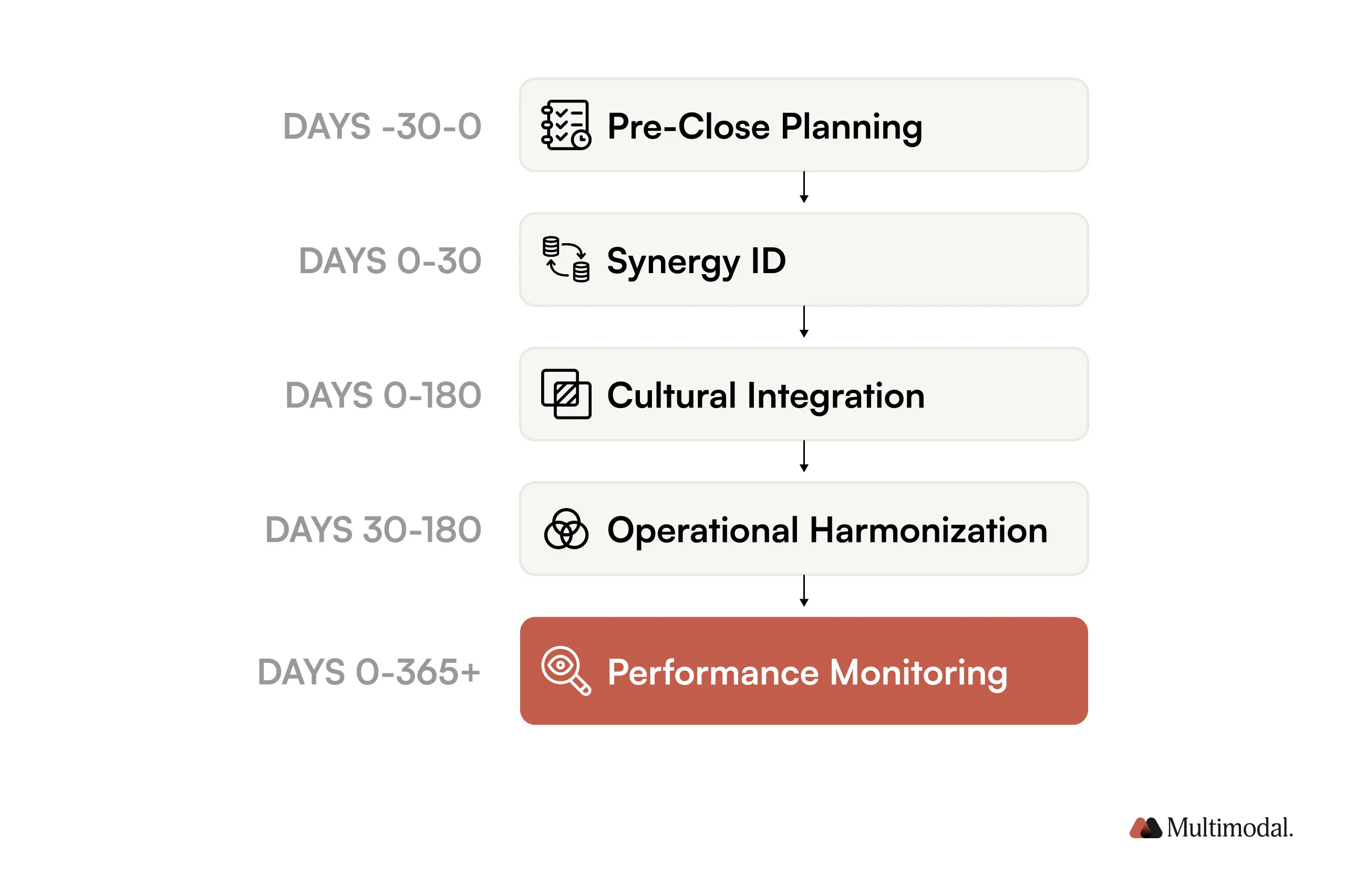
Phase 1: Pre-Close Integration Planning (Days -30 to 0)
Integration planning starts too late, after close, when pressure is highest, and information flow slows.
Best practice: Start during the exclusivity period, parallel to final DD and definitive agreement negotiation.
How AgentFlow accelerates this:
Input Day 1: Upload signed purchase agreement, due diligence findings, strategic rationale, and define integration philosophy (speed vs. completeness priority, cultural preservation vs. full integration, revenue vs. cost synergy focus).
AgentFlow generates a comprehensive work plan:
Learns from your past integrations: "In your last 3 acquisitions, ERP integration took 5 months on average"
Incorporates DD findings automatically: DD flagged customer concentration → Plan includes customer retention workstream
Creates critical path and dependencies: "IT email integration must complete before HR onboarding"
The synergy trap: Deal models include assumptions, but integration teams struggle to make them concrete and actionable.
AgentFlow's Synergy Intelligence:
Cost Synergy Deep-Dive:
1. Vendor & SaaS Consolidation
Ingests vendor lists and operational data from both companies
Identifies overlapping vendors
Estimates volume discount potential
Calculates consolidation cost savings
2. Organizational Efficiency
Analyzes org charts for role duplication
Identifies span of control improvements
Models reporting structure optimization
Quantifies the overhead reduction opportunity
Revenue Synergy Intelligence:
Cross-Sell Analysis: Analyzes product attach rates by customer segment, customer overlap and whitespace, geographic expansion potential, and channel synergies.
Geographic Expansion Example: Company A is strong in the Northeast, Company B in the Southeast, models market entry acceleration, and estimates share gain timeline.
AgentFlow's synergy tracking creates a detailed synergy register, links to integration workplan tasks, tracks actual vs. planned monthly, forecasts achievement timeline, and flags at-risk synergies early.
Phase 3: Cultural Integration & Change Management (Days 0-180)
Why culture matters: Cultural misalignment is the #1 reason cited for integration failure.
How AI helps make culture tangible:
Post-Close Sentiment Monitoring:
What AgentFlow tracks:
Weekly pulse surveys (3-5 questions, high response rate)
Employee feedback from internal communications (anonymized)
Talent Risk Assessment: Identifies flight-risk employees based on sentiment scores, LinkedIn activity, engagement levels, and historical data patterns. Recommends retention interventions.
Phase 4: Operational Harmonization (Days 30-180)
What AgentFlow's Process Mining Agent does:
Current State Mapping: Connects to both companies' finance systems and maps key workflows automatically (order-to-cash, procure-to-pay, quote-to-close).
Comparative Analysis Example:
ORDER-TO-CASH ANALYSIS:
Company A: 32-day cycle, 8 manual steps
Company B: 21-day cycle, 4 manual steps
BEST PRACTICE SYNTHESIS:
Adopt Company B's approval structure (faster)
Keep Company A's credit review (better collections)
Continuous optimization: Learns what works in THIS integration, applies learnings to future deals, and builds an organizational playbook.
Your Path Forward
1. Agentic AI is fundamentally different
Agentic AI focuses on autonomous goal achievement across multi-step workflows, rather than single-task automation across the deal lifecycle.
2. ROI is proven and significant
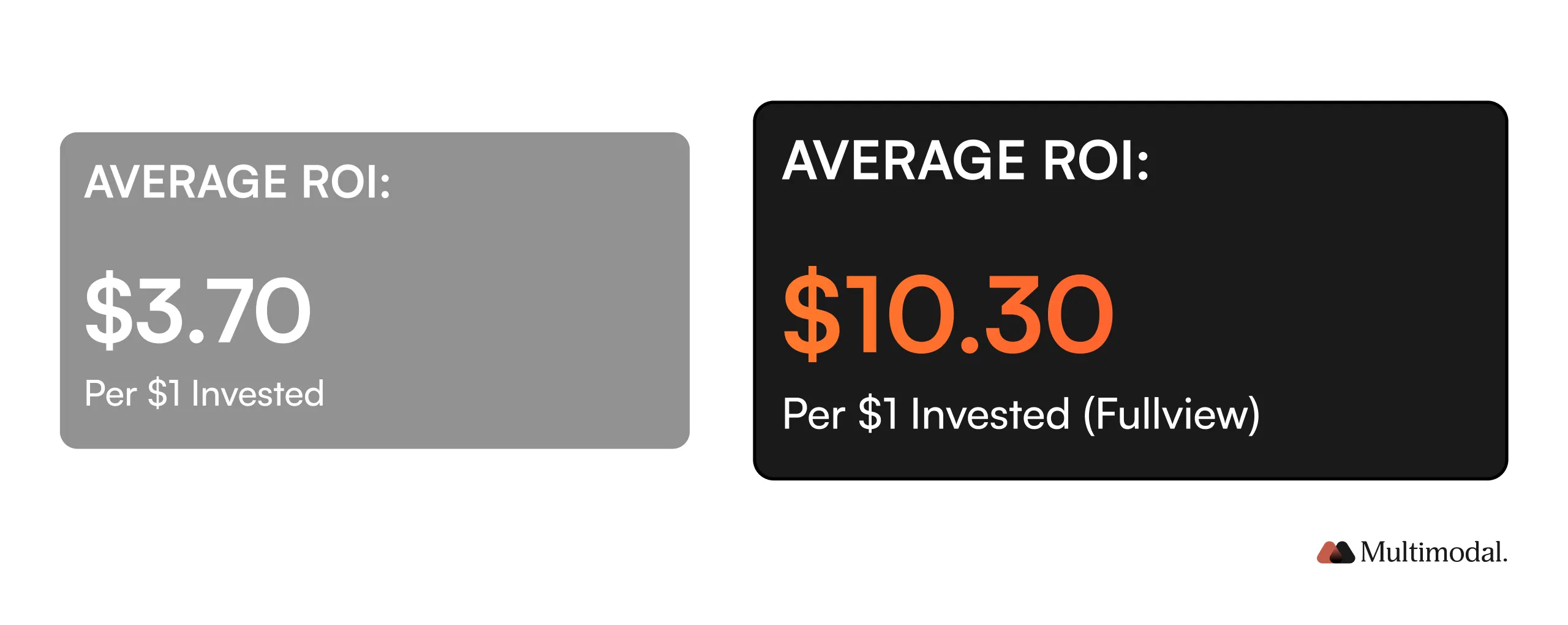
$3.70 per dollar invested on average, with top performers at $10.30. Organizations implementing agentic AI see 20-30% faster workflow cycles (BCG).
3. Implementation requires a strategy
Start focused on high-impact areas like due diligence or target identification. Ensure data quality from structured and unstructured data sources. Establish governance balancing AI capability with human judgment. Measure relentlessly against baseline performance.
4. Human expertise remains essential
AI models augment human capability and keep decision ownership with the deal team. Best results come from human-AI collaboration; AI handles routine tasks and analyzes vast amounts of market data while experts apply strategic judgment, relationship building, and nuanced decision-making.
5. Competitive pressure is real
45% of practitioners already use AI tools, 80% expect AI adoption by 2027. Early adopters gain data advantages that compound; more deals mean smarter AI models, creating widening competitive gaps.

.svg)
.svg)

.avif)
.png)