De-Risking Agentic AI: Our Security, Trust & Governance Systems



Table of contents

Key Takeaways:
- Agentic AI increases risk because it acts and compounds over time, not because it is more “intelligent.”
- The primary failure mode is unbounded autonomy, not model accuracy.
- If an agent’s decisions can’t be reconstructed, they can’t be defended to regulators or auditors.
- Governance that works in pilots often fails in production unless change control is built in.
- Trustworthy autonomy is designed through limits, not added after incidents.
Get 1% smarter about AI in financial services every week.
Receive weekly micro lessons on agentic AI, our company updates, and tips from our team right in your inbox. Unsubscribe anytime.
Agentic AI does not fail in new ways. It fails in faster, harder-to-reverse, and harder-to-explain ways. That distinction matters.
Traditional AI systems generate outputs inside a single transaction boundary. When they are wrong, the blast radius is limited to a recommendation, a score, or a response. Agentic systems, by contrast, operate across time, systems, and decisions. They act, observe outcomes, update context, and act again.
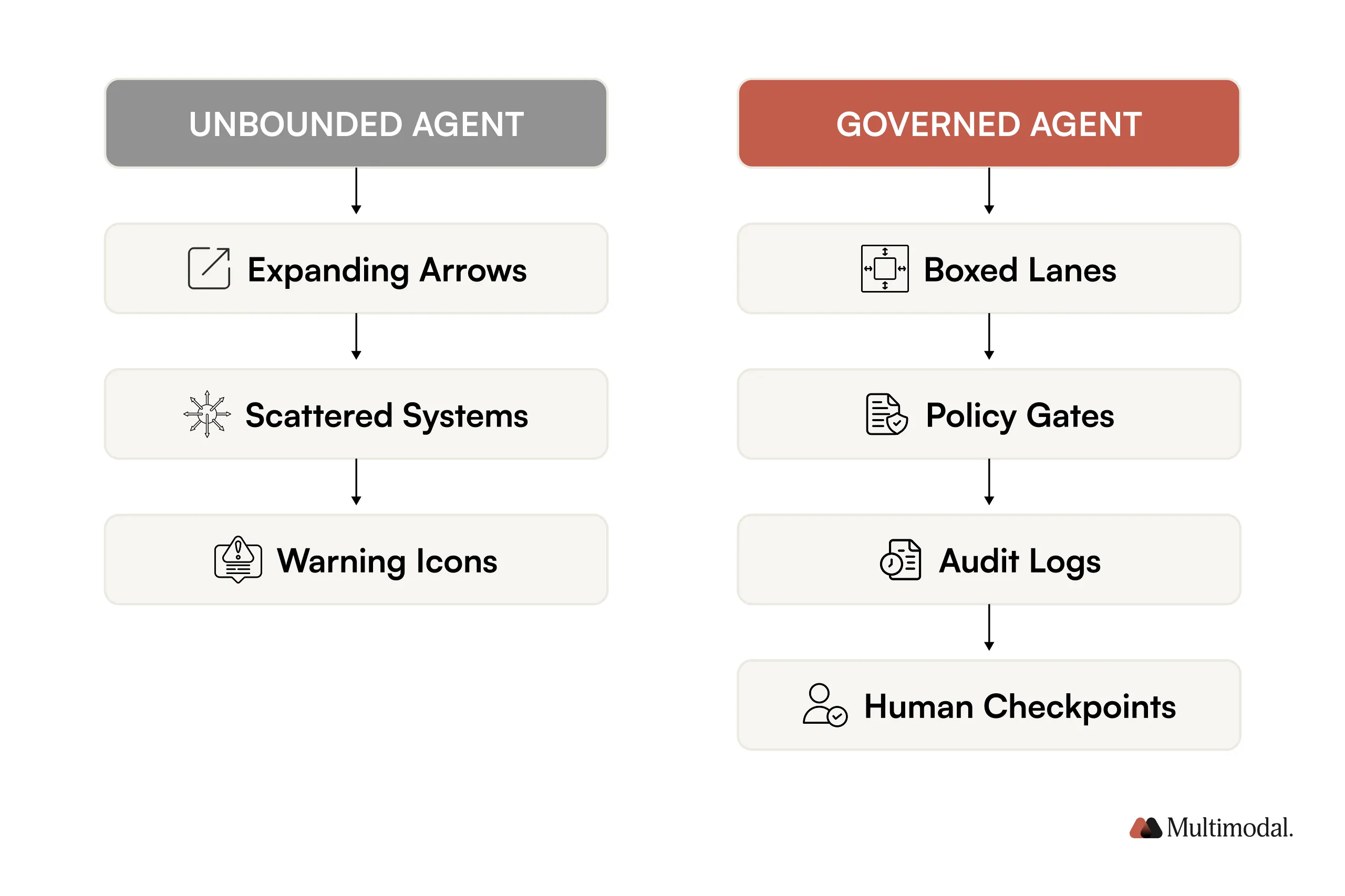
In regulated environments, this fundamentally changes the risk profile. We start from a non-negotiable assumption: agents will fail. The only responsible question is whether failure is contained, observable, and governable when it happens.
Executive Framing: Why Agentic AI Changes the Risk Conversation
Agentic AI introduces three properties that legacy AI controls were never designed to handle.
First, persistence. Agents do not stop after a single output. They maintain state, accumulate context, and influence downstream decisions over time.
Second, actionability. Agents do not just recommend. They trigger workflows, call APIs, modify records, escalate cases, and sometimes commit irreversible actions.
Third, composability. Modern agentic systems rarely act alone. They orchestrate multiple sub-agents, tools, and external systems, creating decision chains that span teams and platforms.
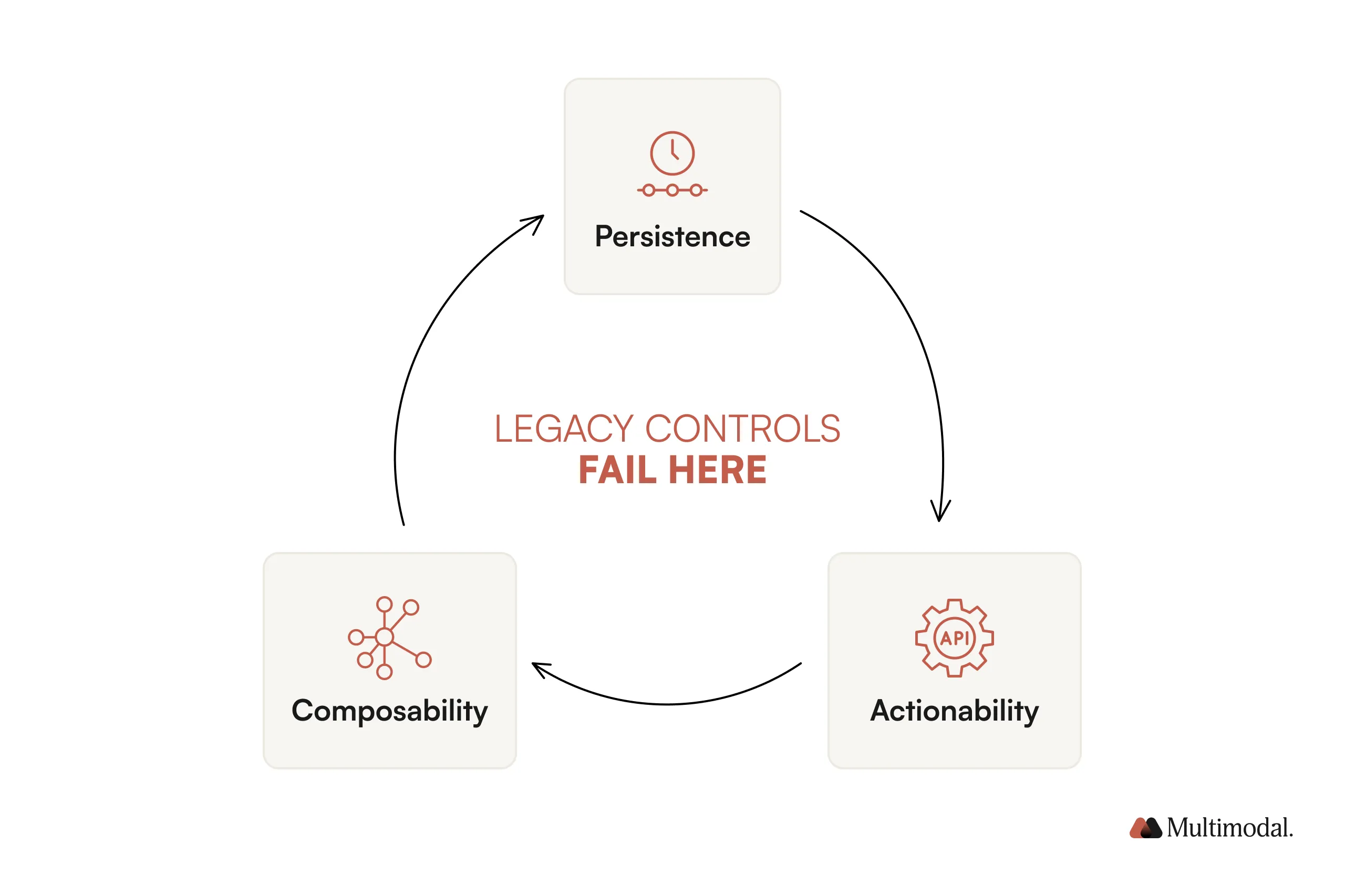
In finance and insurance, these properties directly conflict with regulatory expectations for accountability, explainability, and operational control. Risk is no longer hypothetical. It shows up as:
- Regulatory exposure when decisions cannot be reconstructed
- Operational incidents when agents act outside the intended scope
- Reputational damage when failures propagate before humans intervene
The biggest misconception is that risk comes from “bad models.”
In practice, most serious failures come from unbounded autonomy wrapped in good intentions.
The Three Failure Modes Executives Worry About (and Vendors Rarely Name)
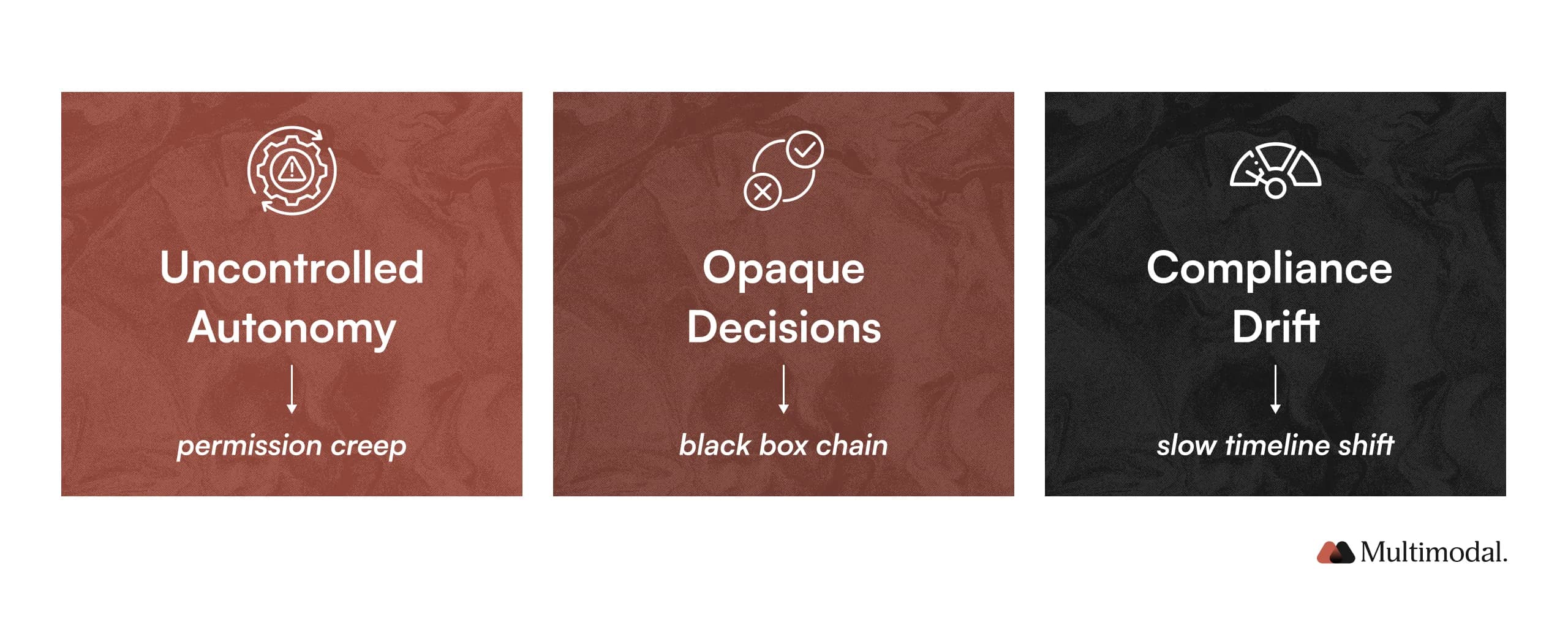
Uncontrolled Autonomy
Uncontrolled autonomy rarely appears on day one. It emerges gradually.
An agent is launched with narrow permissions. A new tool is then added to improve coverage. Then another data source is connected. Then exception handling is automated. Over time, the agent’s effective authority expands far beyond its original mandate.
What breaks here is not accuracy; it is accountability. When an incident occurs, executives face uncomfortable questions:
- Who approved this action
- Which permissions made it possible
- When did the system cross the line from assistance to authority
If those answers require archaeology instead of inspection, the system is already too autonomous.
Opaque Decision-Making
Opacity is rarely intentional. It is often the byproduct of speed.
Agent frameworks optimize for throughput and flexibility, not traceability. Decisions are distributed across prompts, intermediate tool calls, and ephemeral context windows. When asked why an agent acted, teams can often replay what happened, but not why.
This fails immediately under regulatory scrutiny. Regulators do not audit intent. They audit decision provenance. They expect to see:
- Which inputs were considered
- Which rules applied
- Which thresholds were crossed
- Where human judgment entered or did not enter the process
If the answer is “the agent reasoned its way there,” governance has already failed.
Compliance Drift Over Time
Compliance drift is the most dangerous failure mode because it is quiet. An agent passes initial reviews. Controls are validated. The pilot succeeds. Then the system evolves:
- Prompts are tuned
- Tools are swapped
- Confidence thresholds change
- Business logic shifts as teams iterate
Without structural change control, the production system slowly diverges from the approved plan. Months later, the organization is exposed, not because of a single bad decision, but because no one noticed the system had changed.
Executives recognize this pattern from past automation cycles. Agentic AI simply accelerates it.
Our Core Philosophy: Control Before Capability
Most platforms ask, What can this agent do? We ask, What is this agent explicitly allowed to do, and under what conditions?
This distinction sounds subtle. Operationally, it is everything. Control precedes capability in three concrete ways.
First, least privilege is enforced structurally, not by convention. Agents are provisioned with narrowly scoped permissions tied to specific workflows, data domains, and actions. There is no ambient authority to “figure things out.”
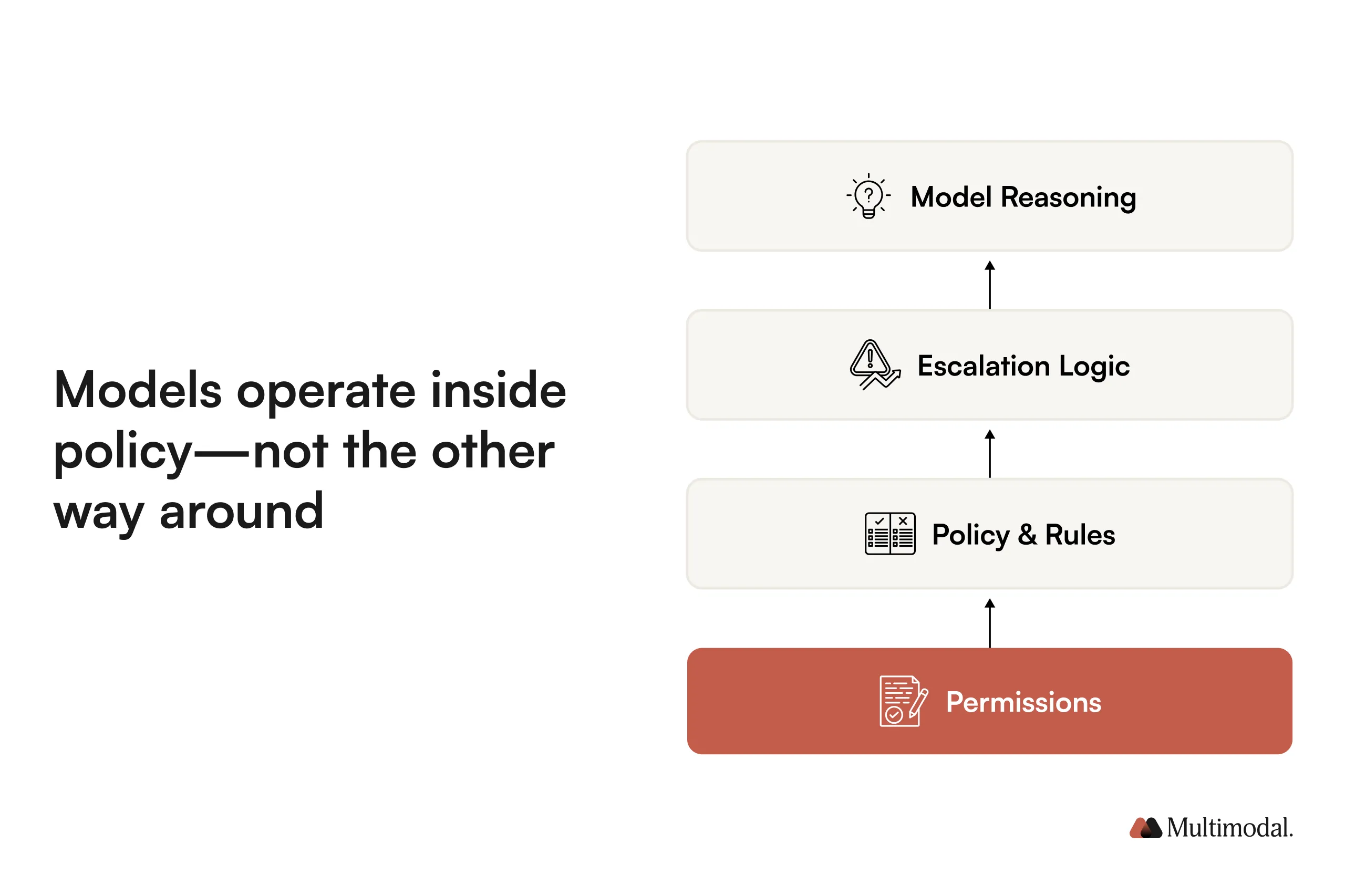
Second, policy defines behavior before models do. Business rules, compliance constraints, and escalation logic shape the agent’s decision space. The model operates inside those boundaries rather than discovering them dynamically.
Third, boundaries are explicit and inspectable. Scope, time horizons, allowable actions, and confidence thresholds are defined upfront and versioned over time.
Intentional limitation is not a constraint on innovation. It is what makes safe autonomy possible.
Designing Agentic Systems for Auditability, Not Demos
Most agent demos collapse under a single question: Show me how this decision happened. Auditability cannot be retrofitted. It must be designed into the execution model.
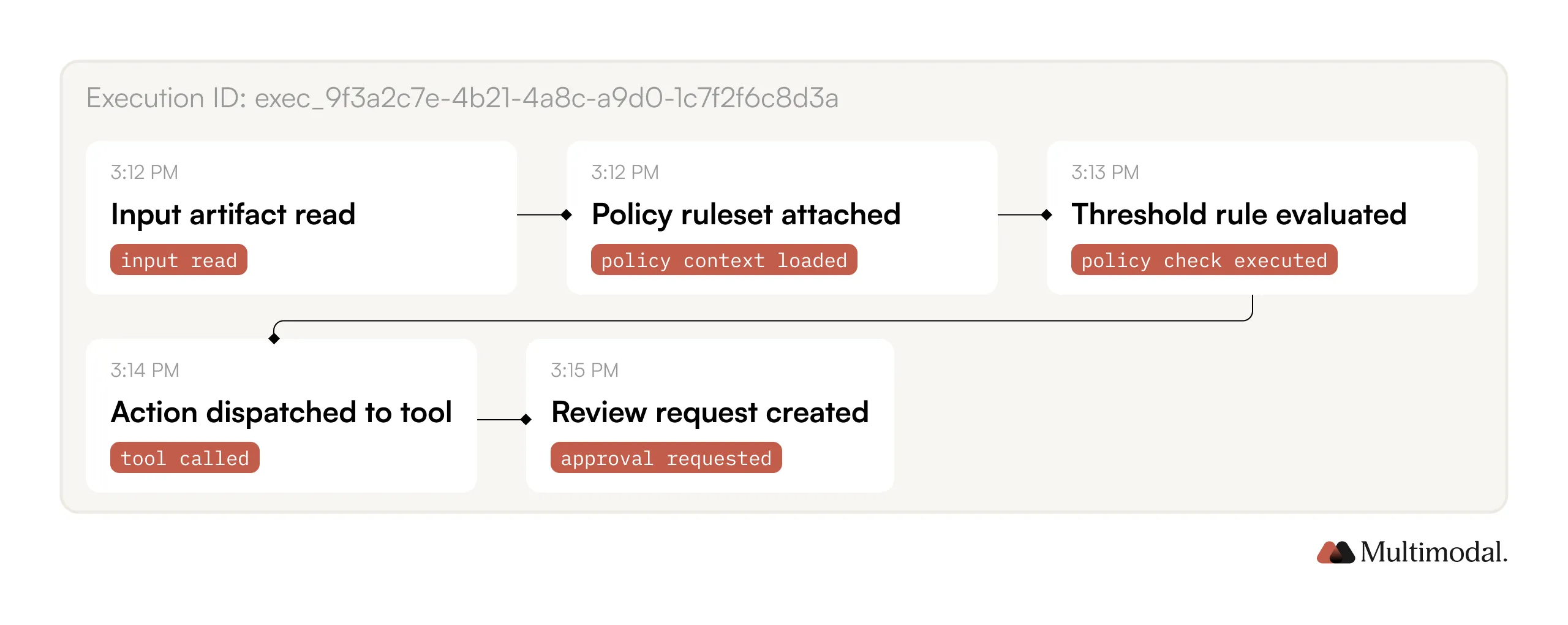
In practice, this means treating every agent action as an auditable event rather than a side effect. Each step must produce:
- A record of inputs considered
- The policy context in force
- The confidence or risk assessment applied
- The action taken or deferred
- Whether a human was involved
Critically, these records must be intelligible to non-technical reviewers. A compliance officer should be able to trace a decision without reverse-engineering prompts or reading model logs.
If a system cannot reconstruct its own behavior, it has no place in a regulated workflow.
Governance That Scales Beyond Pilots
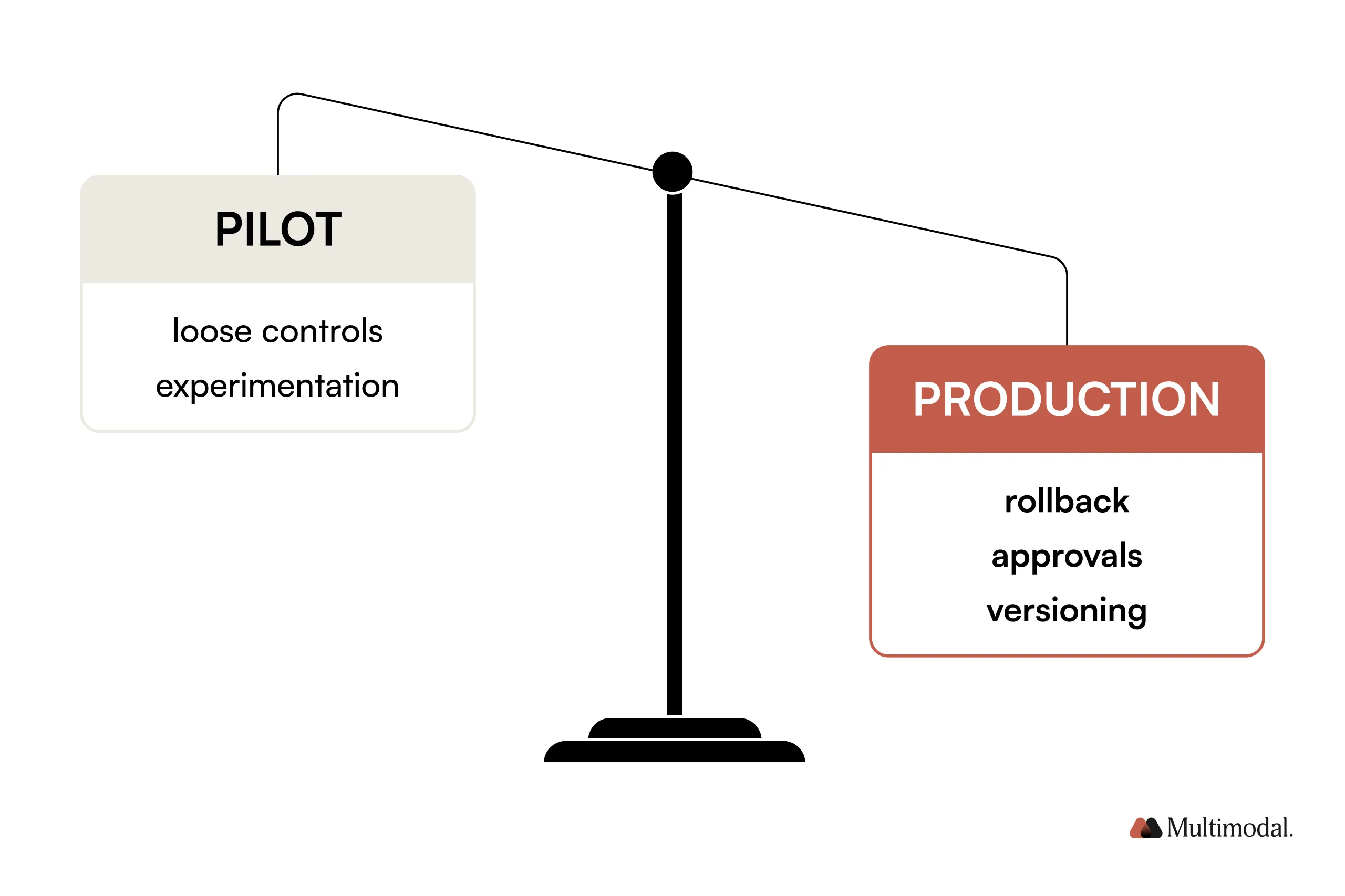
Pilots are easy to govern. Production systems are not. Real governance assumes that:
- Teams will change
- Workflows will expand
- Agents will be updated
- Models will evolve
To survive this reality, governance must include versioning, environment separation, and change control as first-class concerns.
Experimentation and production cannot share the same controls. Changes must be reviewable, reversible, and attributable. Drift must be detectable before it becomes exposure.
This is not bureaucracy. It is operational hygiene for autonomous systems.
The Role of Human Oversight by Design, Not as a Fallback
Human oversight fails when it is reactive. Placing human-in-the-loop everywhere slows systems without improving safety. Removing humans entirely creates unbounded risk. The correct approach is intentional intervention points.
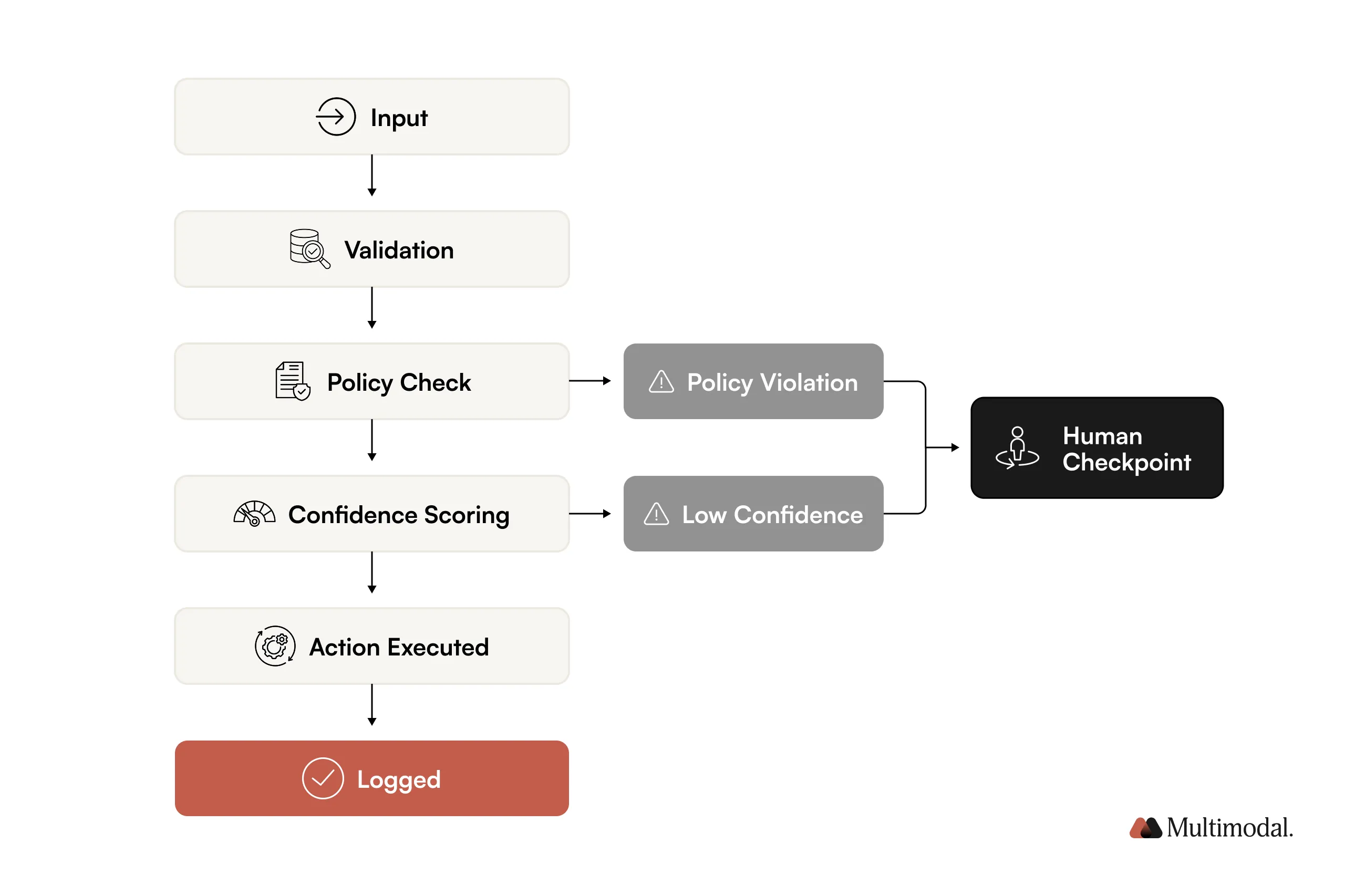
Agents should escalate based on:
- Confidence thresholds
- Exception patterns
- Policy violations
- Material risk signals
Humans remain accountable because the system is designed to deliberately hand off control, not because someone noticed a problem too late.
What We Intentionally Do Not Allow
Trust is built as much by what a system refuses to do as by what it enables.
We do not allow agents to operate with unrestricted permissions in regulated workflows. We do not allow silent expansion of authority. We do not allow decision chains that cannot be reconstructed step by step.
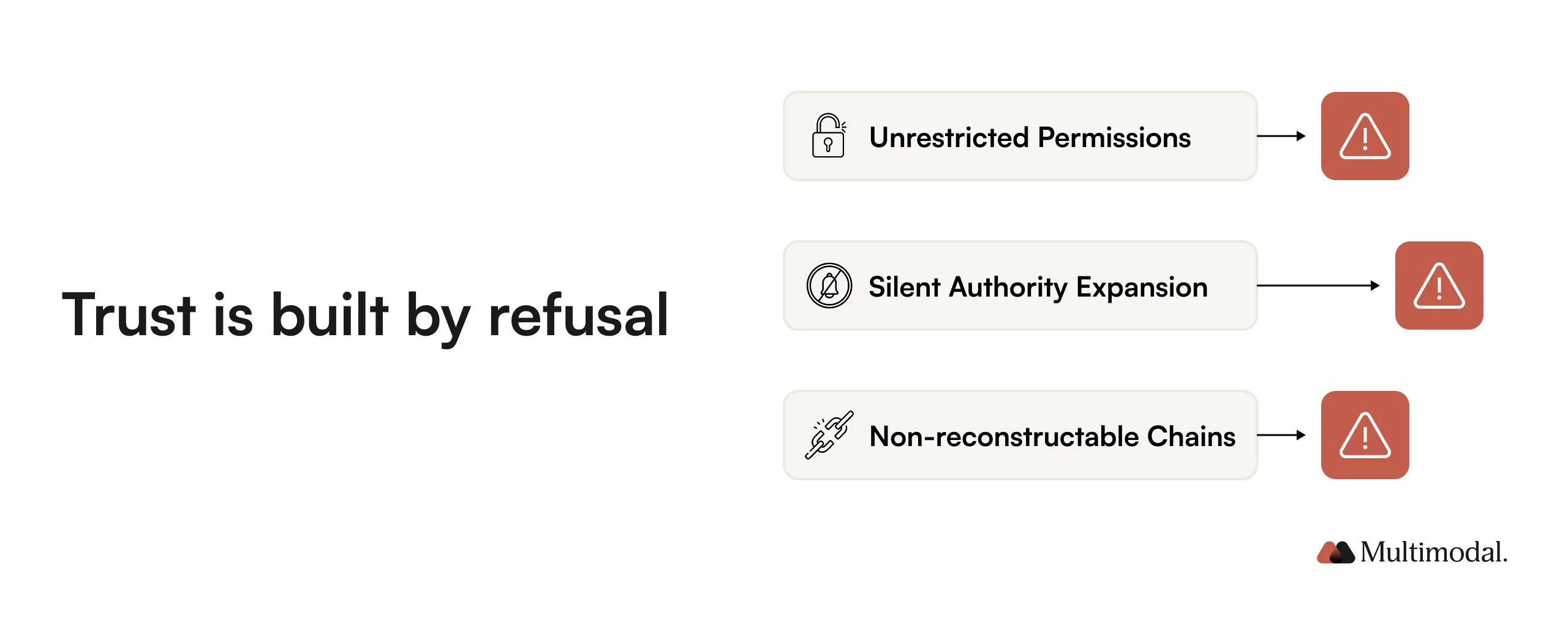
These constraints are not philosophical. They are operational safeguards that prevent small failures from becoming institutional events.
What This Means for Regulated Organizations Adopting Agentic AI
When agentic systems are designed with control first, organizations gain leverage instead of exposure.
They can experiment without betting the institution. They can face regulators with evidence rather than explanations. They can assign accountability clearly. And when failures occur, as they inevitably will, the damage is contained.
This is not about slowing down adoption. It is about making progress survivable.
See AgentFlow Live
Book a demo to see how AgentFlow streamlines real-world finance workflows in real time.
Safe Progress, Not Blind Acceleration
Agentic AI does not demand urgency at the expense of judgment. The systems that endure will not be the most autonomous.
They will be the ones whose autonomy is bounded, observable, and governed. This should feel deliberate. Measured. Adult.
Learn More About AgentFlow
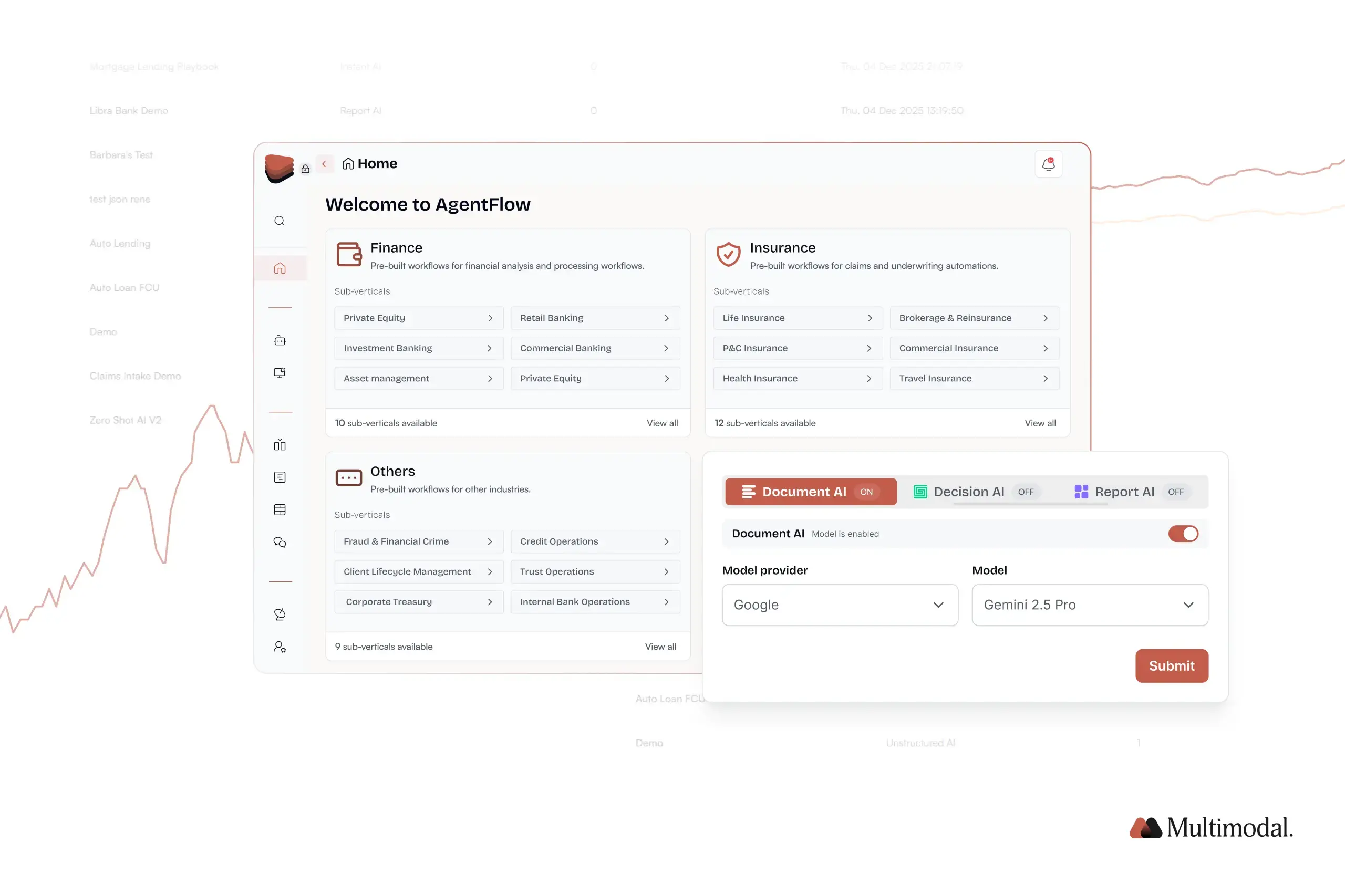
AgentFlow is Multimodal’s platform for building and operating agentic AI workflows where control, governance, and trust are non-negotiable.
It is built for organizations that want to experiment safely, retain clear accountability, and scale autonomy only when governance keeps pace. Rather than maximizing autonomy by default, AgentFlow enforces policy-driven control, audit-ready observability, and intentional human oversight.
For regulated institutions, it provides a way to move forward with agentic AI without turning autonomy into institutional risk. Book a demo to see AgentFlow in action and to learn how it can fit your business needs.