What Are Agentic AI Frameworks? A 2026 Guide (With Examples)
Learn what an agentic framework is, how agentic AI frameworks work, and which 2026 options fit banks and credit unions running real production workflows.
Agentic AI frameworks supply memory, orchestration, and tool integration to build autonomous agents.
Horizontal frameworks suit builders; vertical frameworks suit regulated production workflows.
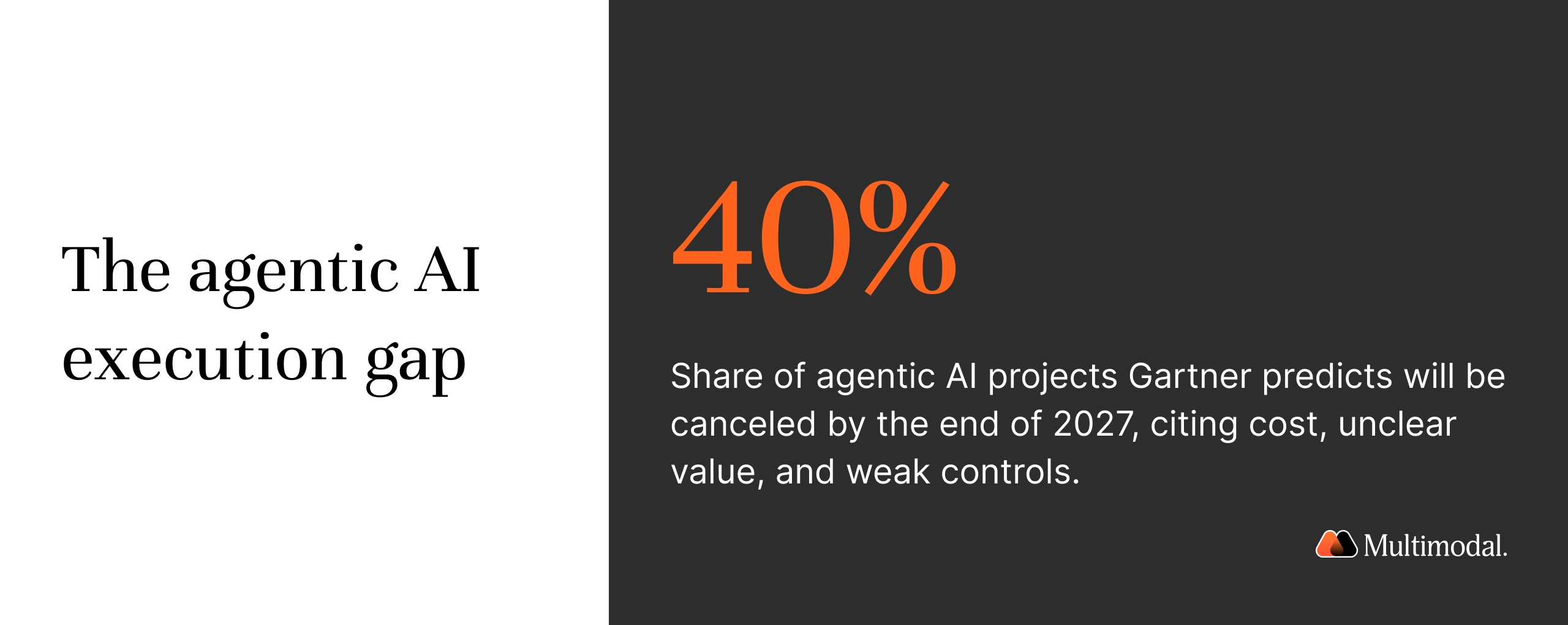
Gartner expects 40% of agentic AI projects to be canceled by 2027 due to weak controls.
Vertical frameworks reach compliant production faster with prebuilt financial workflows.
FORUM Credit Union hit 99% extraction accuracy on loan processing with AgentFlow.
Get 1% smarter about AI in financial services every week.
Receive weekly micro lessons on agentic AI, our company updates, and tips from our team right in your inbox. Unsubscribe anytime.
Thank you! Your submission has been received!
Oops! Something went wrong while submitting the form.
An agentic AI framework is the software layer used to build, coordinate, and govern autonomous AI agents: systems that reason, plan, call tools, and complete complex tasks with limited human input. Agentic AI frameworks supply the building blocks, including memory, state management, multi-agent coordination, and tool integration, so teams do not wire intelligent agents together from scratch.
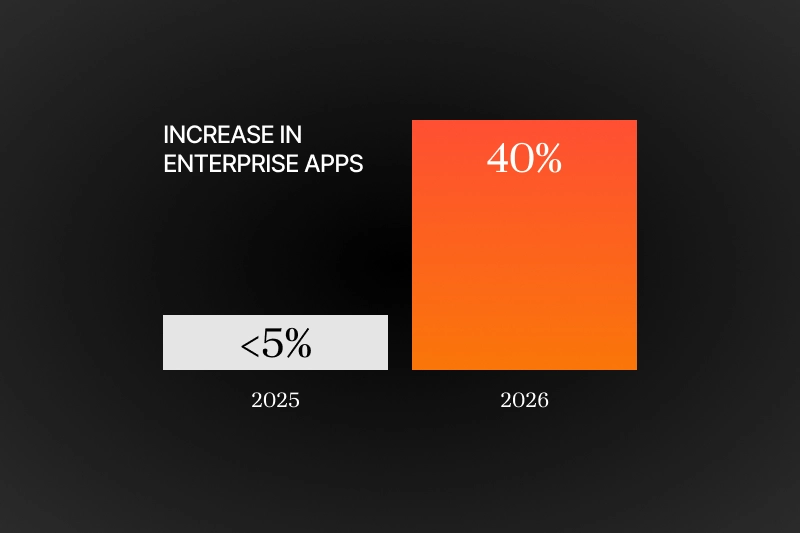
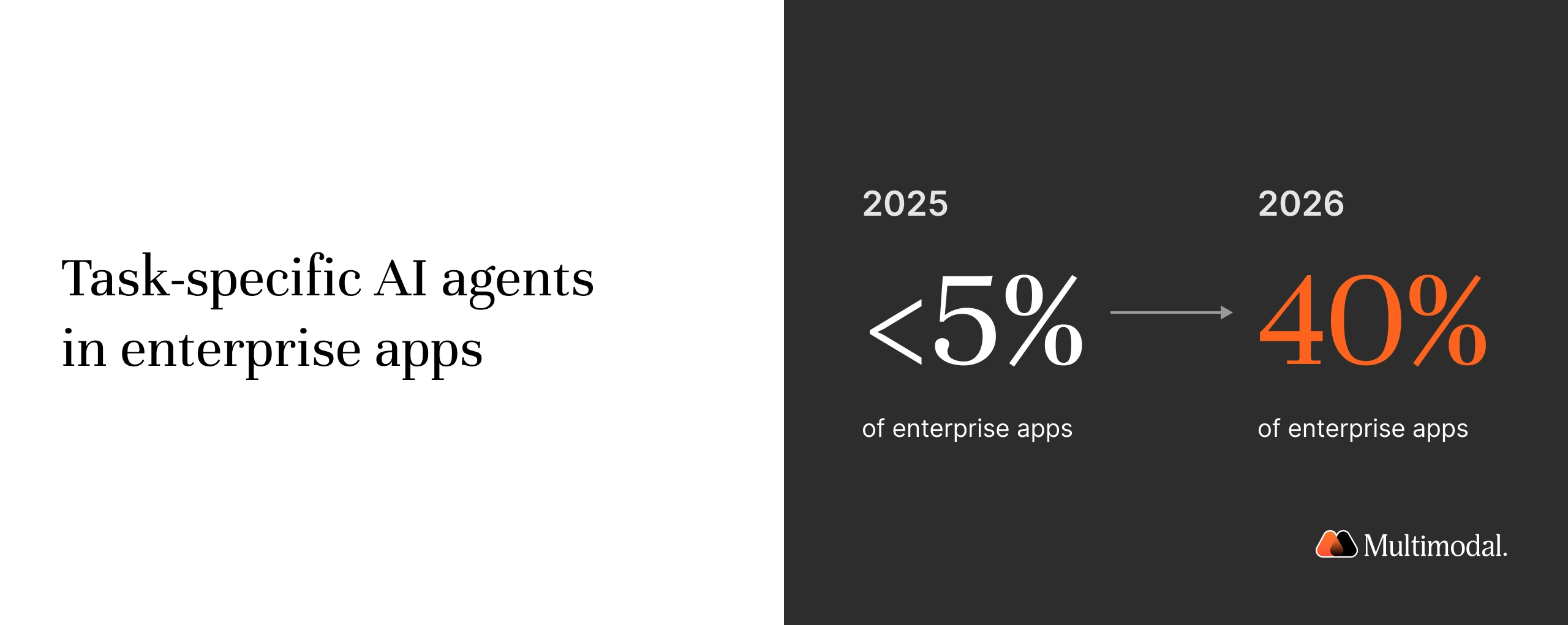
The shift is already measurable. Gartner predicts that 40% of enterprise applications will feature task-specific AI agents by the end of 2026, up from less than 5% in 2025. The frameworks below are how those agents get built, connected to enterprise systems, and kept under control.
This guide explains what an agentic framework is, how agentic AI works under the hood, the difference between horizontal and vertical options, and which agentic AI frameworks matter in 2026 for financial institutions running real production workflows.
What Is an Agentic Framework?
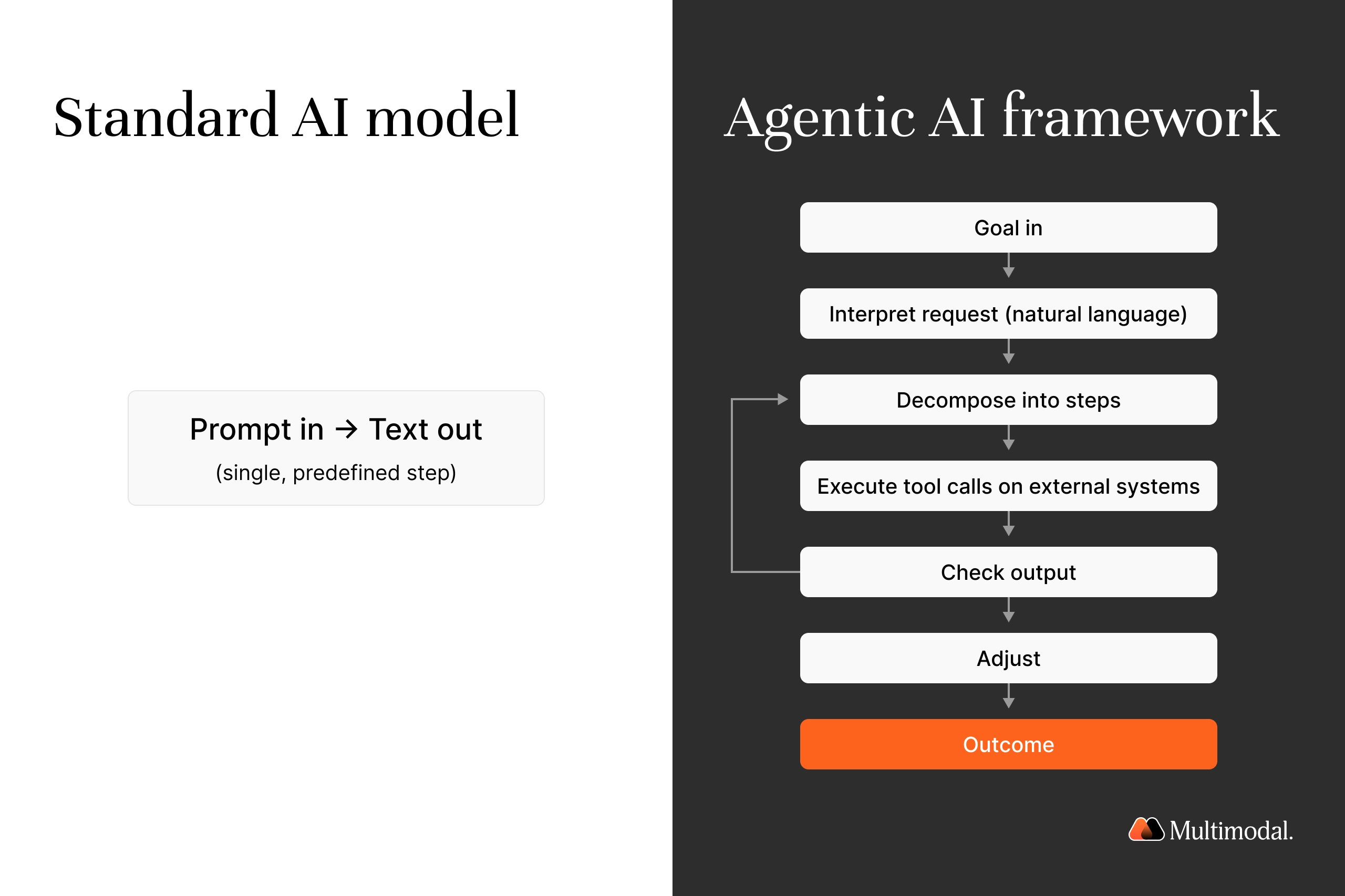
An agentic framework is a structured environment for building AI agents that act on goals rather than respond to single prompts. Where a standard model returns text, an agentic AI system uses natural language to interpret a request, breaks it into steps, executes tool calls on external systems, checks its own output, and adjusts as needed. The framework provides the orchestration, memory access, and monitoring that make this behavior reliable.
Traditional AI models follow predefined paths. Agentic systems decide the path at runtime. That is the core difference, and it is why agentic AI frameworks have become the foundation for automating multi-step workflows in regulated industries, where accuracy and auditability are not optional.
These frameworks are most valuable for work that involves large volumes of unstructured data, multiple agents working in sequence, and decisions that carry compliance weight. By allowing agents to operate semi-autonomously, institutions reduce manual effort and standardize the handling of complex tasks.
How Do Agentic AI Frameworks Work?
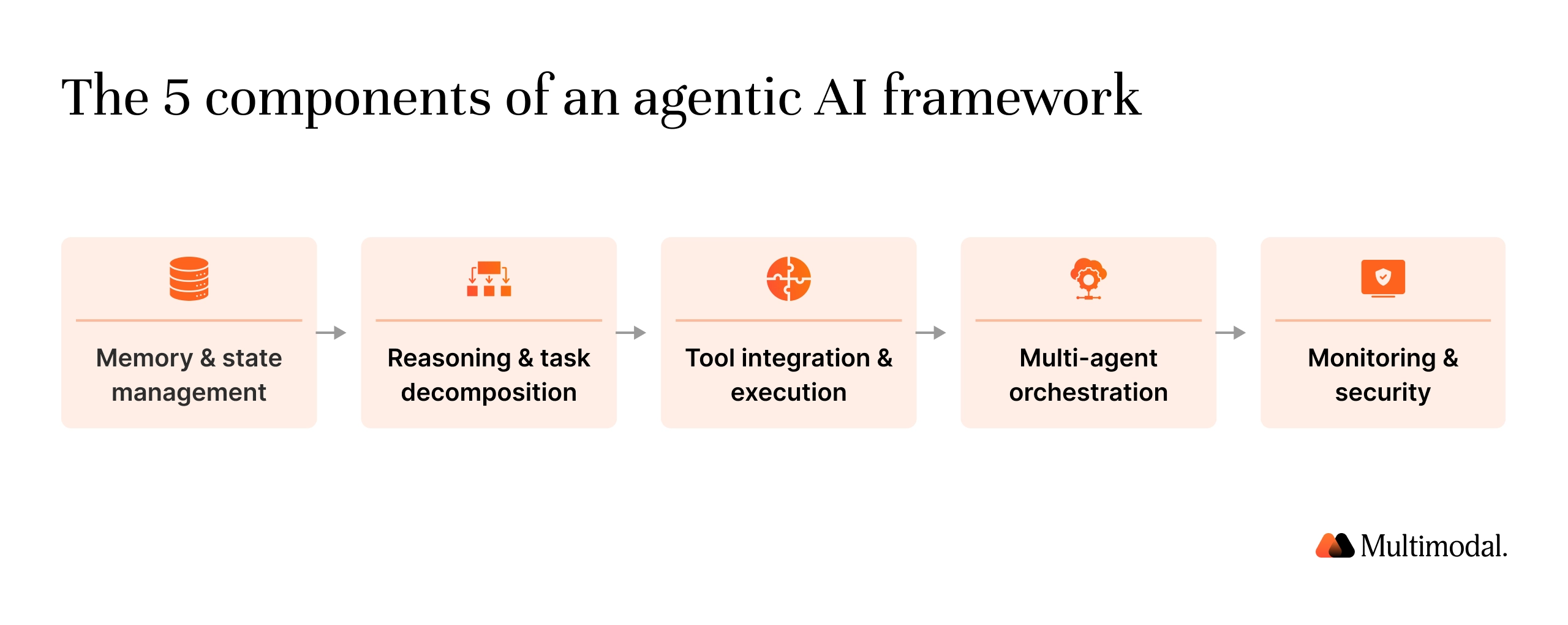
Most agentic AI frameworks share the same key features. Understanding these components clarifies what separates a production-ready agent framework from a weekend prototype.
Memory and State Management
Autonomous agents need to remember what they have done. Frameworks handle state management across tasks, hold relevant context within the model's context window, and draw on past interactions when a decision depends on history. For knowledge beyond the context window, frameworks connect to vector databases and use retrieval-augmented generation to ground agent actions in source documents rather than guesswork.
Reasoning and Task Decomposition
Complex reasoning is what makes an agent more than a script. The framework supports task decomposition, where one agent breaks a large objective into ordered steps and then sequences task execution accordingly. This planning loop governs agent behavior and lets the system recover when a step fails or new data arrives.
Tool Integration and Execution
Agents are useful only when they can act. Tool integration lets agents make tool and function calls to APIs, core systems, and enterprise systems to read records, run calculations, and write results back. The Model Context Protocol (MCP) has become a common standard here: MCP servers expose tools and data to agents through a single interface, simplifying tool execution and integration across distributed systems.
Multi-Agent Orchestration
A single AI agent struggles with broad objectives. Multi-agent systems assign specialized roles, one agent for retrieval, another for decisioning, another for reporting, and coordinate them. Strong multi-agent coordination is what lets teams scale autonomous agents from a single agent to multi-agent applications without losing control of multi-agent workflows.
Monitoring and Security
Production environments demand oversight. Frameworks built for enterprise environments provide real-time monitoring, error tracking, and enterprise-grade security, ensuring autonomous systems remain accountable. For financial services, this layer is the difference between a demo and a deployable agentic AI solution.
Horizontal vs. Vertical Agentic AI Frameworks
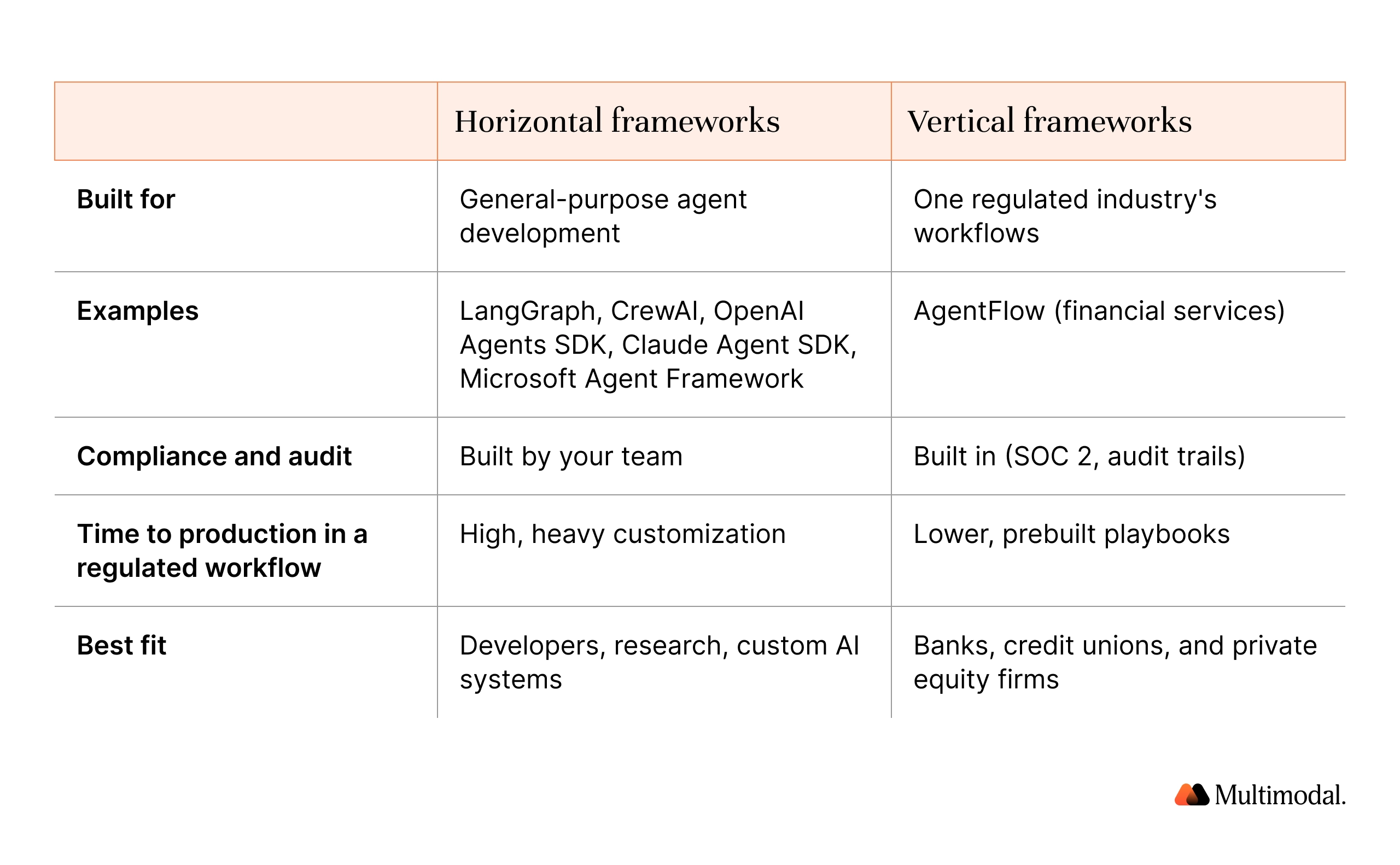
Agentic frameworks divide into two categories. The right choice depends on whether you are building software or buying an operational outcome.
Horizontal frameworks are flexible and powerful, but they require teams to build compliance, integration, and workflow logic themselves. Vertical agentic AI solutions ship those capabilities for a specific domain, which is why regulated buyers reach production faster with them.
Which Agentic AI Frameworks Are Most Used in 2026?
The open-source frameworks below dominate the conversation among teams that build agentic AI systems. Each takes a different stance on control, speed, and orchestration, enabling teams to match a framework to the job at hand.
LangGraph models agents as state machines with explicit control over nodes and edges, which suits complex, stateful agentic workflows that require reliability.
CrewAI organizes work as a team of role-based agents, offering the fastest path to multi-agent prototypes.
OpenAI Agents SDK uses handoffs, where agents transfer control and context to one another, a clean pattern for building agentic systems around a few well-defined roles.
Claude Agent SDK is Anthropic's framework for building production agents, including coding agents, with strong tool use and long-running task support.
Microsoft Agent Framework is the consolidation of AutoGen and Semantic Kernel into a single agent framework, which reached general availability (version 1.0) in April 2026; both predecessor projects are now in maintenance mode.
These are all horizontal. They give engineering teams the parts to build AI agents, but a credit union or bank still has to assemble document processing, decisioning, compliance, and integration with existing systems on top of that. That assembly work is where most projects stall. Gartner predicts that over 40% of agentic AI projects will be canceled by the end of 2027, citing cost, unclear value, and weak controls. Adoption intent remains high regardless: Deloitte reports that 25% of enterprises using generative AI planned to deploy AI agents in 2025, rising to 50% by 2027.
Example: AgentFlow, a Vertical Agentic AI Framework
AgentFlow is a vertical agentic AI framework built for the financial services industry. It orchestrates multiple agents to run complex workflows in regulated, enterprise environments while maintaining security and compliance. Instead of handing teams a toolkit, it completes the work for them.
This is the practical difference for a lender. A horizontal framework gives you components. A vertical framework finishes the job. We are not a chatbot. We process the loan file.
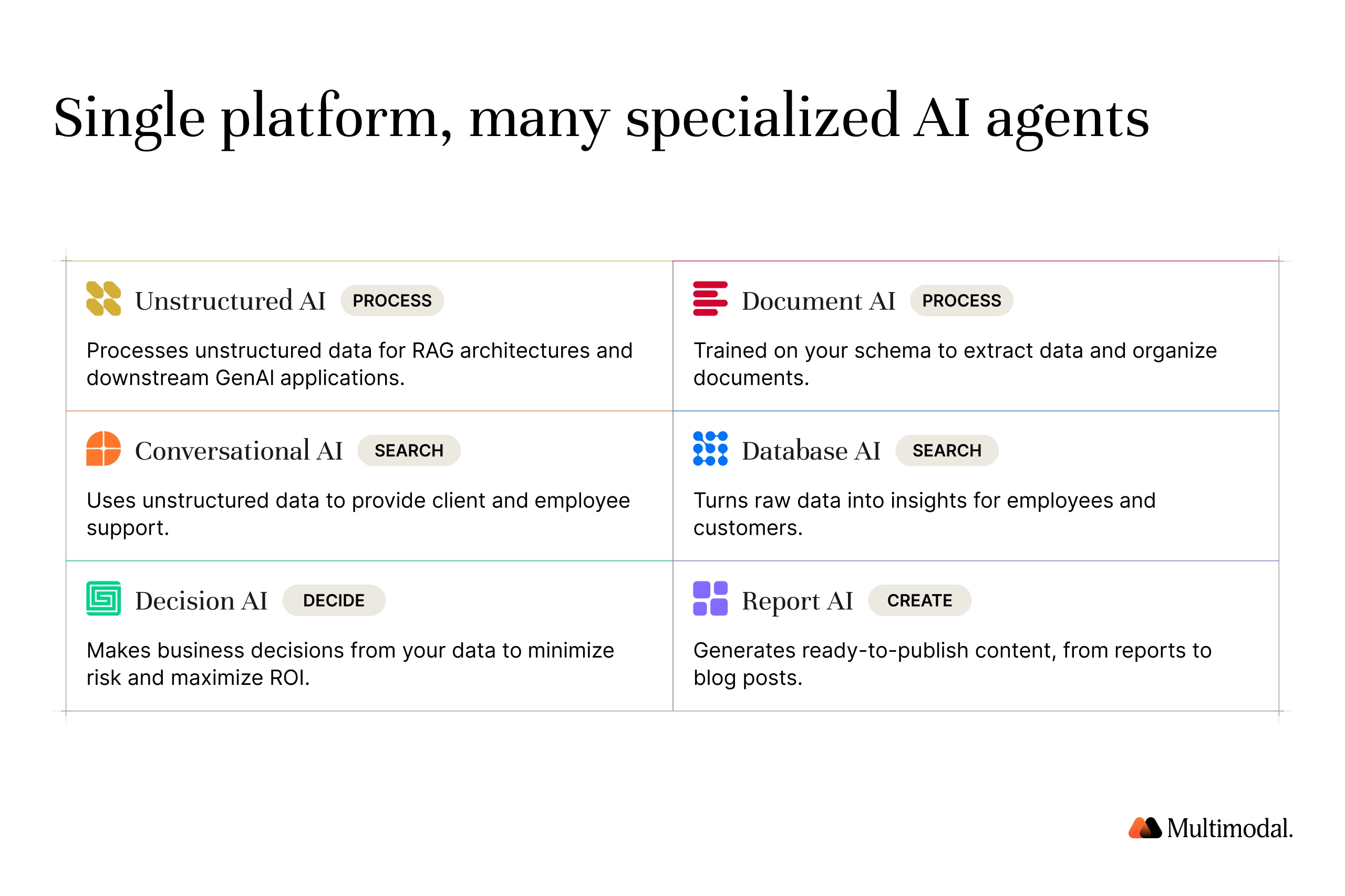
AgentFlow operates as an API-first orchestration layer that coordinates specialized agents across a task:
Process agents classify and extract data from more than 100 document types, including scanned and handwritten files, reducing manual entry and errors.
Search agents cross-reference enterprise databases, external systems, and compliance repositories to verify information in real time.
Decide agents apply rule-based logic to determine loan approvals and similar decision-intensive outcomes, with a clear audit rationale.
Create agents that generate structured, audit-ready reports that meet regulatory requirements.
The platform operates with SOC 2 Type II compliance and a private cloud deployment, preserving human oversight through reviewer workflows. It supports scaling from a single agent to dozens of agents without rebuilding the automation stack, because its modular components can be customized or replaced.
What Do Agentic AI Frameworks Look Like in Production?
The clearest test of any framework is a live, regulated workflow. Two examples show agentic workflows handling real operational load.
Banking and Credit Union Lending
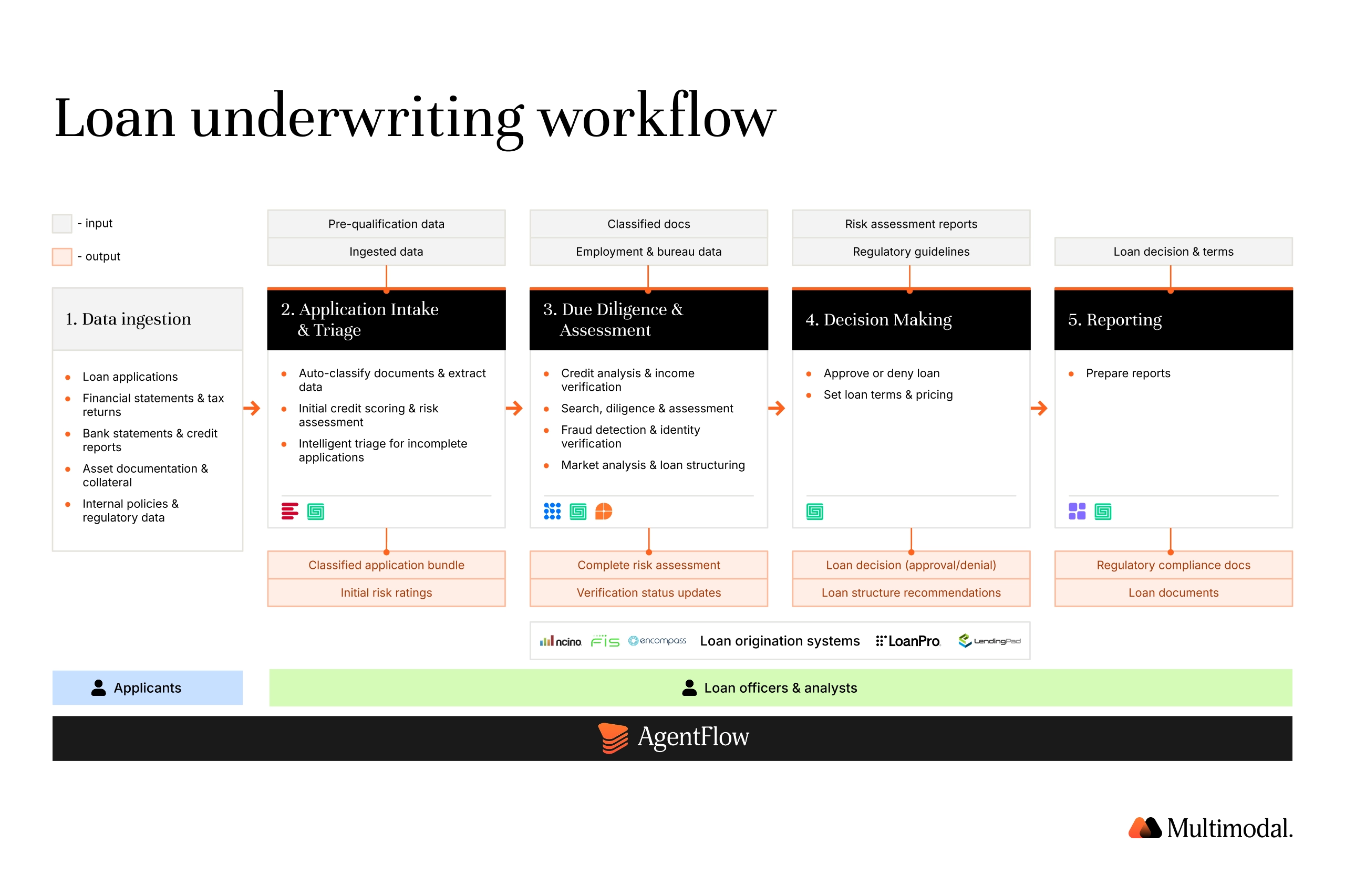
Lenders use agentic AI frameworks to automate loan origination and underwriting. Process agents extract borrower details from applications and financial records. Search agents verify credit history and eligibility. Decide agents check applications against regulatory requirements, and create agents who produce explainable, audit-ready underwriting reports.
FORUM Credit Union put this into production with AgentFlow for auto-loan processing. The result: 99% accuracy in both document classification and data extraction across 62 real loan packages, ranging from 15 to 61 pages each, with 100% automated, audit-ready decisioning integrated into its Temenos core.
With Multimodal's AgentFlow platform, we've seen accuracy levels exceed 99% in both document classification and data extraction, far surpassing our original targets. - Chris Ferguson, Senior Vice President, Consumer Lending, FORUM Credit Union
The lending team now focuses on judgment rather than paperwork, and the institution scales up loan volume without adding headcount.
Private Equity Diligence
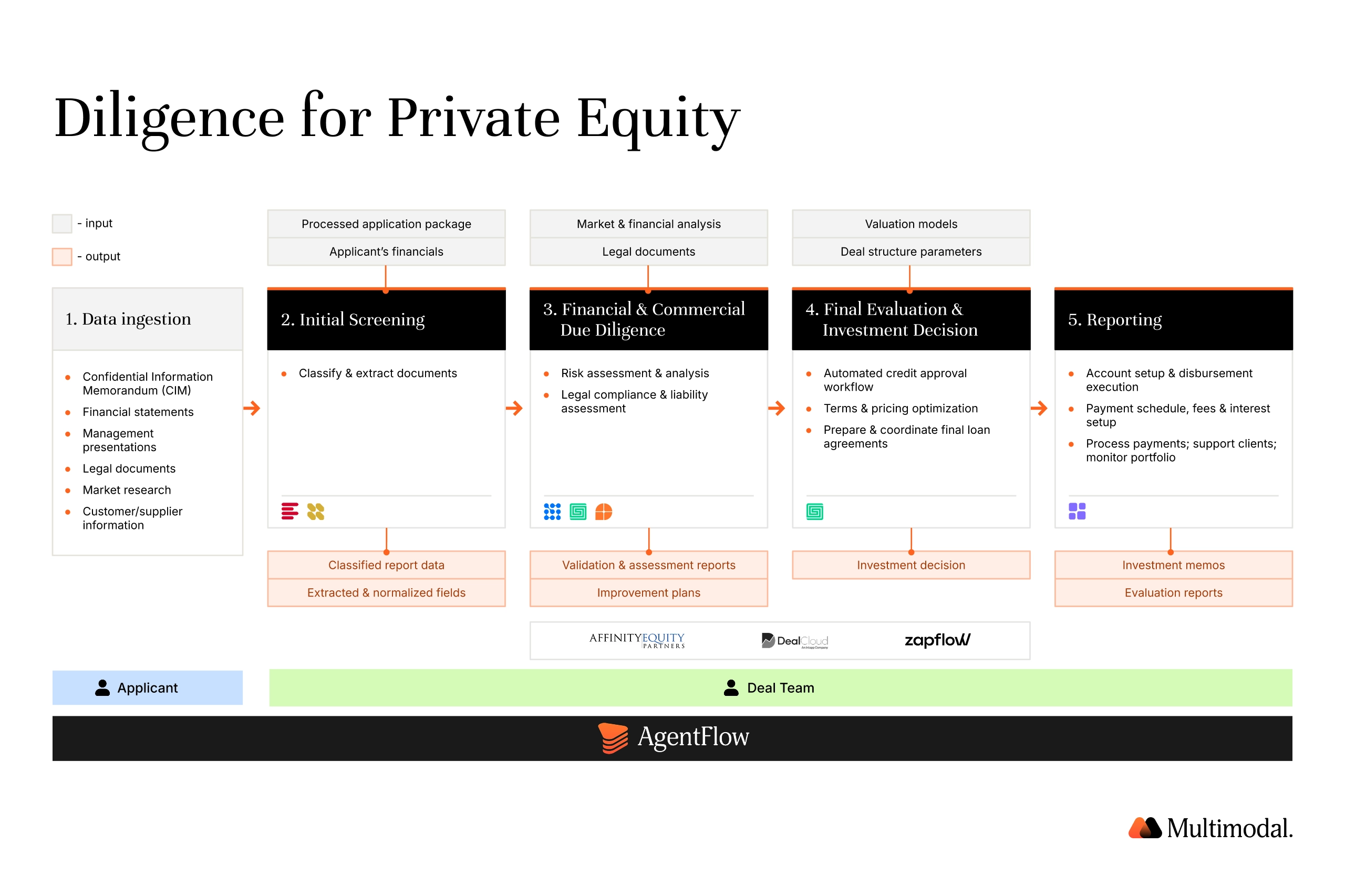
Private equity deal teams run the same four-agent pattern across sourcing and diligence. Process agents extract financials and key metrics from Confidential Information Memoranda (CIMs), financial statements, and data-room files. Search agents check those numbers against the firm's investment criteria and the source documents behind them. Decide agents' score strategic fit, flag deal-breakers, and produce a pass or fail with every output traced to its source. Create agents that generate structured screening memos and IC-ready documentation with a full audit trail.
One leading private equity firm uses AgentFlow to process more than 100 CIMs per month at 98% first-pass accuracy, with every figure sourced to the document that produced it.
The result is a faster pipeline, diligence that holds up in the IC meeting, and associates freed from hours of manual data-room work.
Which Agentic AI Frameworks Should You Not Use?
Not every framework fits every job. LangGraph, CrewAI, and the Microsoft Agent Framework are strong tools, but they rely heavily on in-house engineering to meet the security, compliance, and integration demands of financial services. They are built for builders, not for out-of-the-box regulated production.
LangGraph and similar orchestration frameworks are excellent for teams building custom AI systems, but they require significant work to add compliance controls.
CrewAI is ideal for fast multi-agent prototypes, yet it is not tuned for the audit and security standards that regulated workflows demand.
General-purpose frameworks broadly lack the prebuilt domain models, connectors, and controls that a financial institution needs on day one.
The pattern behind the 40% project cancellation rate is consistent: teams underestimate the work required to bridge the gap between a working agent and a governed production system. For credit unions, corporate banks, and private equity firms, a vertical framework with enterprise-grade security and prebuilt financial workflows is the lower-risk route to value.
Frequently Asked Questions About Agentic AI Frameworks
What is an agentic AI framework?
An agentic AI framework is the software layer for building and coordinating autonomous AI agents that reason, plan, use tools, and complete multi-step workflows. It provides memory, state management, tool integration, and monitoring so teams do not have to build them from scratch. Frameworks are either horizontal, meaning general-purpose, or vertical, meaning purpose-built for one regulated industry.
What are the most used agentic AI frameworks in 2026?
The most used horizontal frameworks in 2026 include LangGraph, CrewAI, the OpenAI Agents SDK, and the Claude Agent SDK. Microsoft merged AutoGen and Semantic Kernel into the Microsoft Agent Framework, which reached version 1.0 in April 2026. Vertical frameworks such as AgentFlow build on these patterns for regulated workflows.
What is the difference between horizontal and vertical agentic AI frameworks?
Horizontal frameworks are general-purpose toolkits that require heavy customization to meet compliance and integration needs. Vertical frameworks are purpose-built for one industry and include domain models, compliance controls, and connectors. For banks and credit unions, vertical frameworks usually enable production to begin faster with lower regulatory risk.
Can an agentic AI framework process loan documents?
General-purpose frameworks orchestrate agents but do not, on their own, process a loan file. You would build the document extraction, decisioning, and audit trail yourself. A vertical framework like AgentFlow does this directly, classifying loan packages, extracting data, and producing explainable, audit-ready decisions. We are not a chatbot. We process the loan file.
Are agentic AI frameworks safe for regulated industries like banking?
They can be, but safety depends on the framework. Horizontal frameworks leave security, audit trails, and compliance for your team to implement. Vertical frameworks built for finance include them. AgentFlow, for example, offers SOC 2 Type II compliance, private cloud deployment, human-in-the-loop review, and full decision audit trails.
Do credit unions need to build their own agentic AI framework?
Usually not. Building on a horizontal framework means assembling compliance, integration, and workflow logic in-house. Most credit unions reach value faster by adopting a vertical agentic AI solution. FORUM Credit Union automated auto-loan processing with AgentFlow and reached 99% extraction accuracy without adding headcount.
See Our Agentic AI Framework Live
Skip the Build. Deploy a Vertical Agentic AI Framework.
See how credit unions automate loan processing without assembling frameworks in-house.
Want to see AgentFlow in action? Book a demo to learn how a vertical agentic AI framework can automate your complex workflows, integrate with your core systems, and withstand compliance review.

.svg)
.svg)

.avif)
.png)

.png)