60% of GPs See Revenue Boost from AI at Portfolio Companies
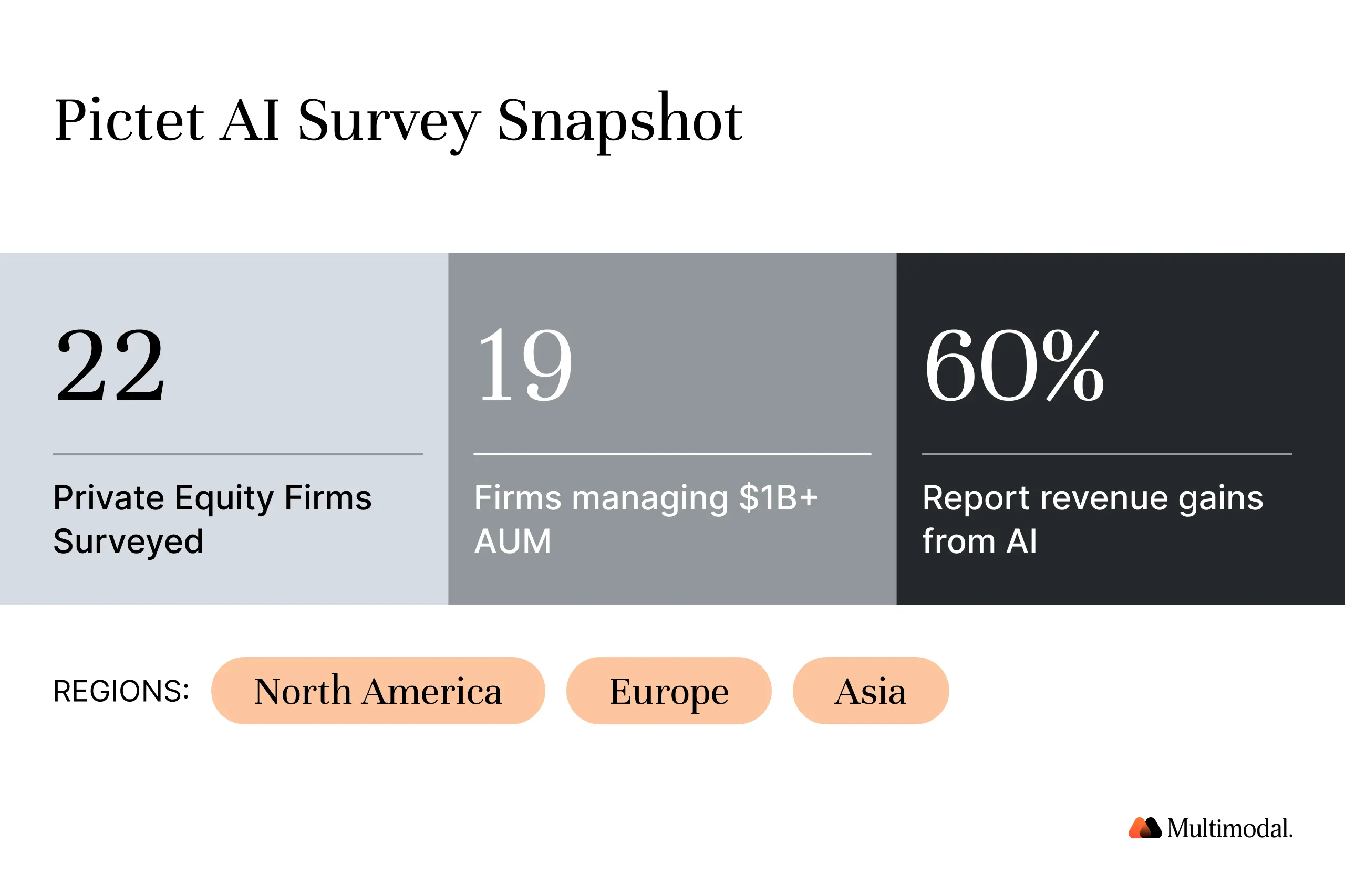
A Pictet survey of 22 PE funds found 60% of GPs see revenue gains from AI at portfolio companies. Here's what drives results, and what the other 40% are missing.
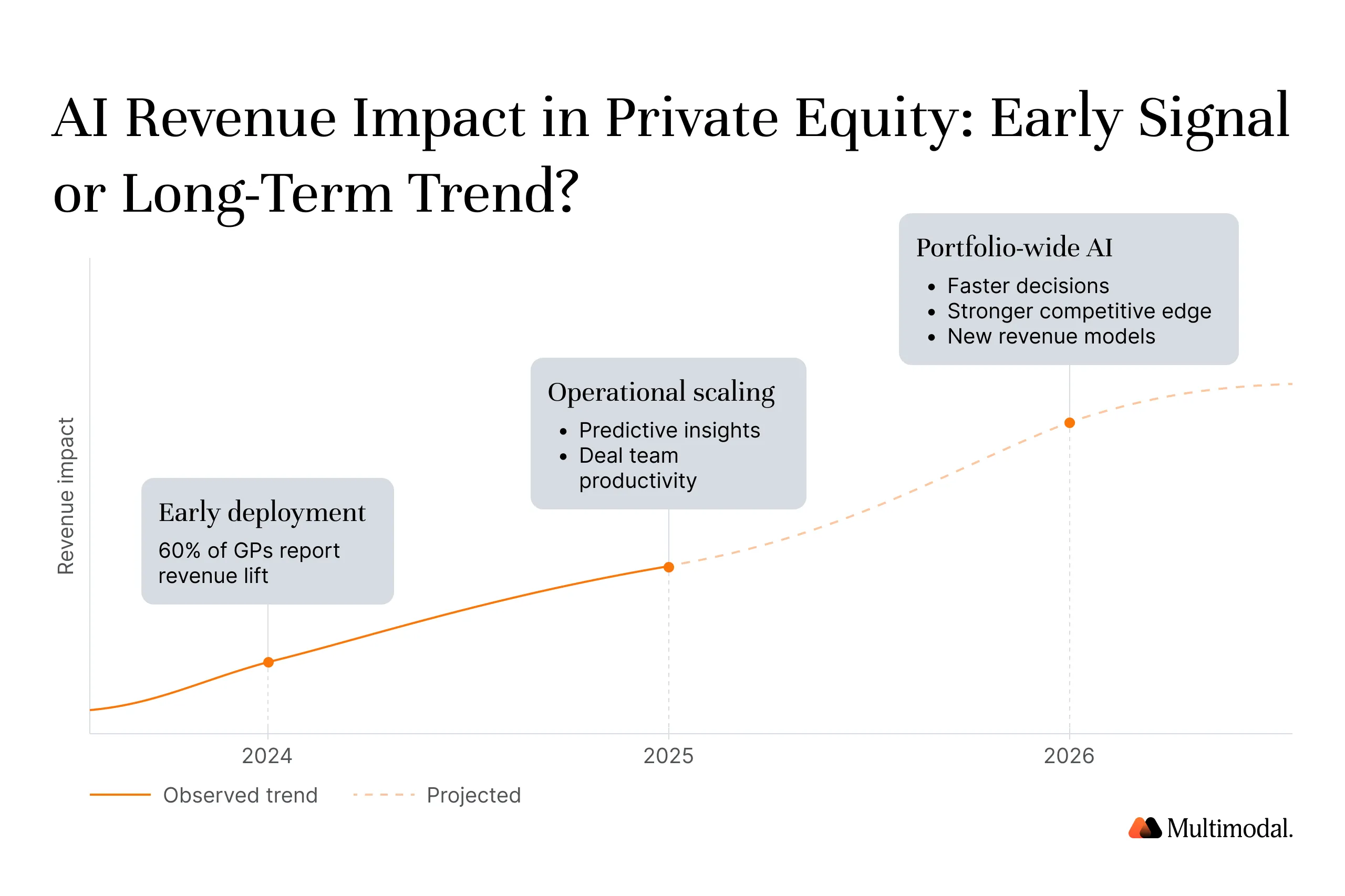
60%+ of GPs reported AI-driven revenue gains at portfolio companies.
The stat comes from a credible late-2024 Pictet PE survey.
One GP linked 25%+ of revenue growth directly to AI.
The gap is execution: many firms pilot AI, fewer deploy it well.
This finding appears in Multimodal’s State of Agentic AI in Private Equity (2026).
Get 1% smarter about AI in financial services every week.
Receive weekly micro lessons on agentic AI, our company updates, and tips from our team right in your inbox. Unsubscribe anytime.
Thank you! Your submission has been received!
Oops! Something went wrong while submitting the form.
Private equity has heard enough abstract promises about artificial intelligence. What gets attention now is evidence that AI technologies are improving financial performance inside their holdings.
In our State of Agentic AI in Private Equity report, one finding stands out: more than 60% of GPs report revenue gains from AI at their portfolio companies. The metric comes from a Pictet Alternative Advisors survey of global private equity firms and indicates that AI adoption in private equity is moving beyond experimentation.
For private equity firms evaluating strategy, the conversation has shifted from whether AI matters to where it delivers measurable results. The question is which AI use cases in private equity actually improve portfolio performance, accelerate deal sourcing, and support faster decision-making across deal teams and operating partners.
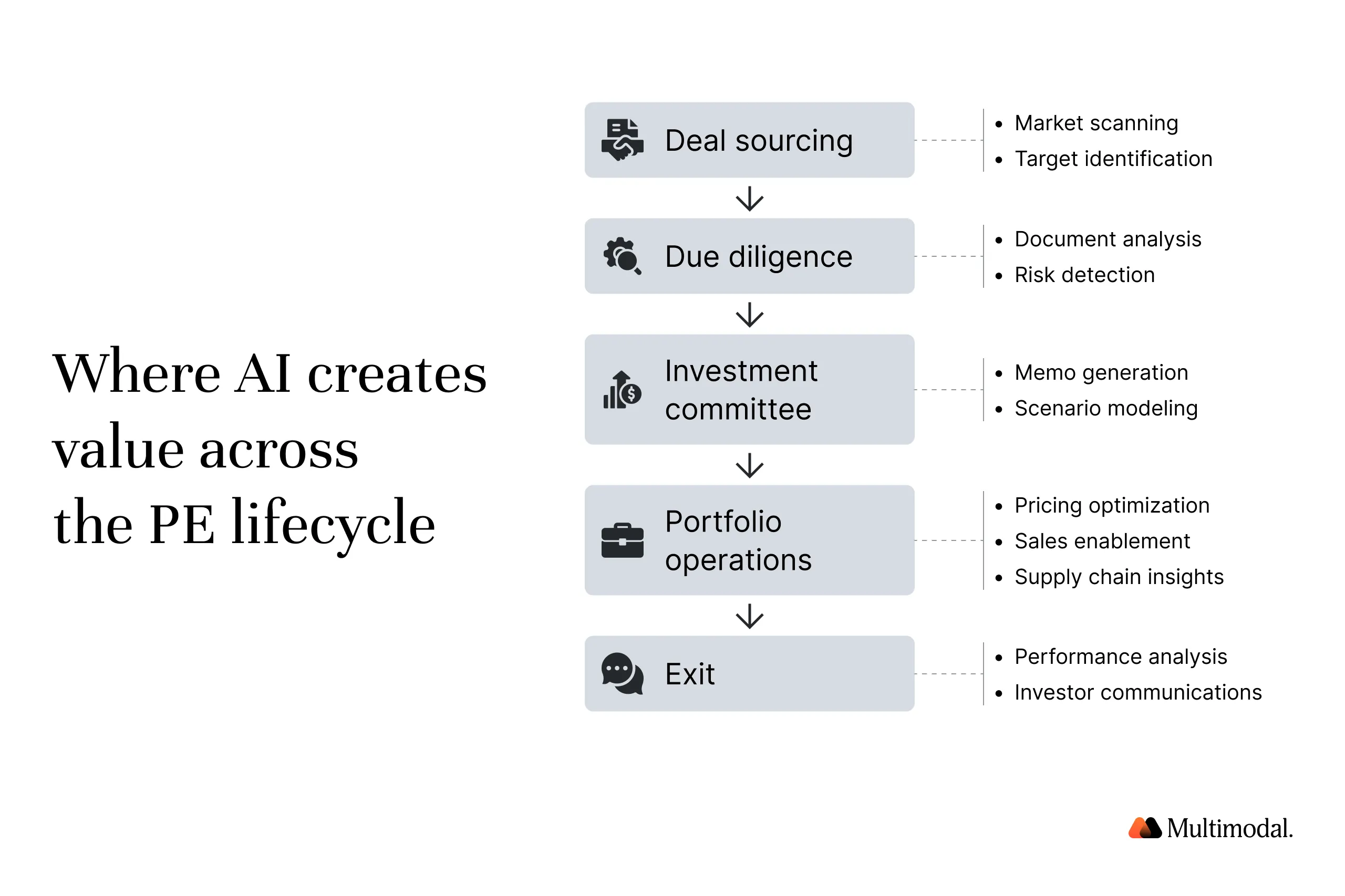
Firms already seeing revenue lift have integrated AI agents directly into the investment lifecycle, embedding them across deal sourcing, due diligence, and portfolio monitoring workflows. Download the full report.
Where the 60% Revenue Lift Number Comes From
The 60% figure comes from Pictet Alternative Advisors' analysis of AI in private equity. Pictet surveyed GPs at 22 private equity firms in October and November 2024. Of those, 19 managed more than $1 billion in assets, and respondents were spread across North America, Europe, and Asia. Responses to individual questions ranged from 14 to 16 directional, but from a relevant group of sophisticated capital allocators with direct visibility into portfolio company performance and financial data.
The core finding: more than 60% of respondents reported some revenue increase at their portfolio companies due to AI, and one respondent said more than 25% of revenue growth at a portfolio company was directly attributable to the technology. That moves the conversation beyond internal productivity and into portfolio performance at the business level.
The broader survey adds important context on where firms stand in the private equity context. 68% of respondents expected AI to reduce costs at the GP level, while many were still early in execution. GPs cited data security, output quality, and privacy as the primary barriers, with more than 36% flagging data quality as close to a critical issue.
The key difference between firms already seeing revenue lift and those still evaluating comes down to execution. It's whether they have moved from testing to integrating AI solutions into the workflows that touch financial performance most directly.
Download Full Report
See how private equity firms are applying agentic AI across sourcing, diligence, portfolio operations, and value creation.
What Revenue Lift Actually Looks Like Inside a Portfolio Company
Revenue lift inside portfolio companies rarely comes from a single launch. It compounds across deal sourcing, customer acquisition, pricing, service delivery, and internal execution, each improved incrementally by AI agents working inside live workflows.
The most effective AI use cases in private equity tend to be specific and operational. In fund operations, deal teams use large language models and other AI technologies to review deal rooms, summarize legal documents, compare market data, and draft investment memos, direct substitutes for work that currently consumes analyst hours.
Management teams at portfolio companies use the same tools to surface valuable insights from unstructured data across contracts, financial reports, and customer records that would otherwise go unanalyzed.
In due diligence, AI agents can process financial statements, fund documents, and commercial documents far faster than manual review, helping deal teams identify financial and operational risks and identify potential risks from financial transactions earlier in the process.
Historical data and proprietary data sources from prior transactions can be layered in to improve pattern recognition and generate predictive insights about company performance during the holding period. The data analysis that once required weeks now yields key insights in hours.
In portfolio management, the same AI solutions extend into pricing optimization, sales enablement, improving investor relations, and knowledge management, supporting the operational efficiency gains that LPs now expect, documented in exit narratives.
AI agents tracking performance data across holdings give operating partners a continuous view of portfolio monitoring rather than a quarterly snapshot, enabling faster decision-making against shifting market conditions.
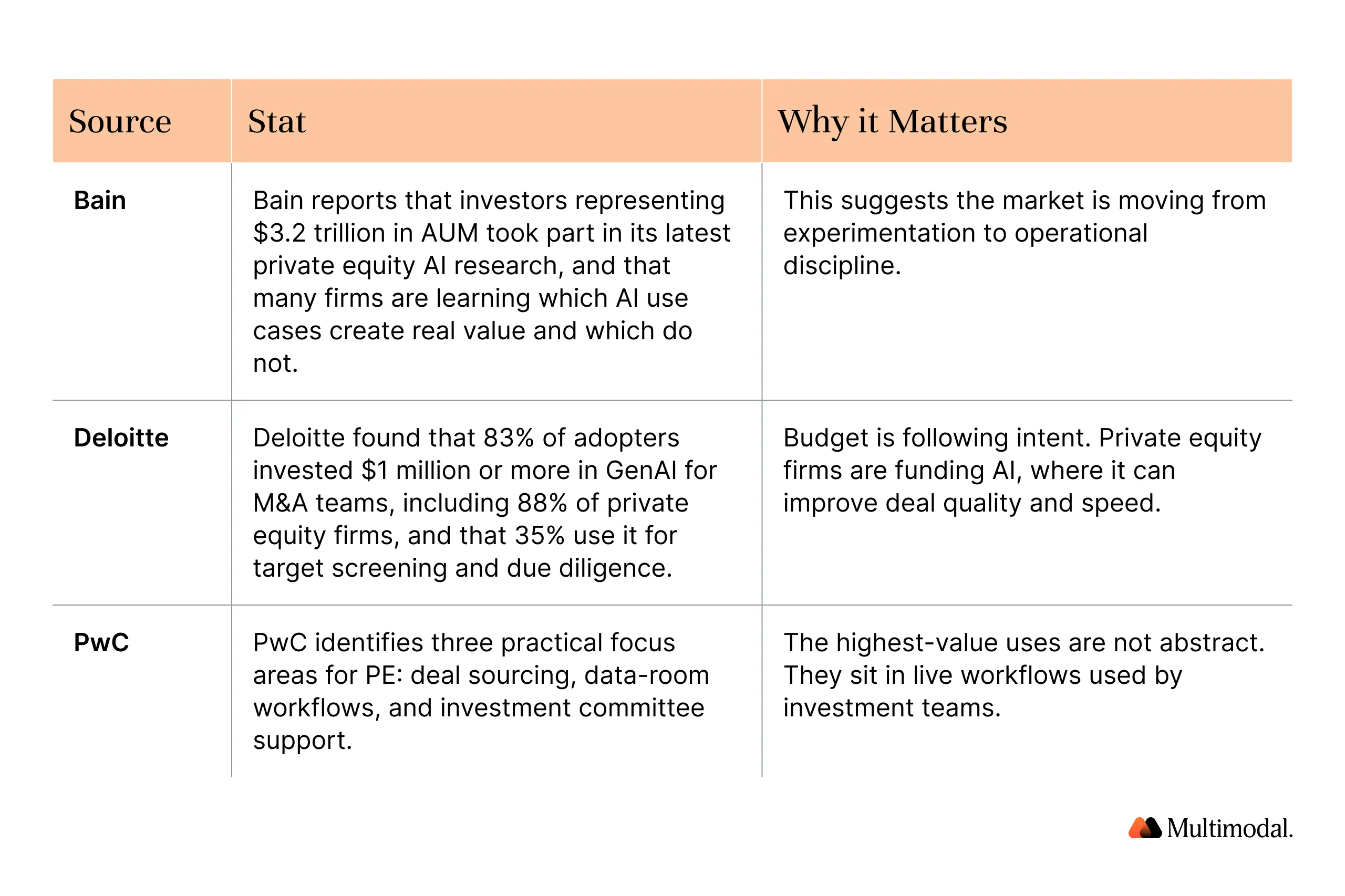
For PE firms evaluating where to focus, PwC identifies the highest-value use cases as deal sourcing, data-room workflows, and investment committee support, all places where speed and accuracy create direct competitive advantage across the investment lifecycle.
Three Other Data Points That Tell the Same Story
The Pictet finding doesn't stand alone. Multiple 2024–2025 surveys of private equity firms point in the same direction, with variation in methodology worth understanding.
1. Bain's Global Private Equity Report surveyed private investors representing $3.2 trillion in assets under management. It found that a majority of portfolio companies were in some phase of generative AI testing and development, and that nearly 20% have already operationalized use cases with measurable results.
The key insights from Bain: many PE firms are learning which AI use cases produce real value creation and which don't, and PE firms that systematically share learnings across their portfolios outpace those running isolated deployments.
2. FTI Consulting's AI Radar for Private Equity found that 40% of PE firms manage AI at the individual portfolio company level, a decentralized model FTI flags as insufficient for scaling. FTI's conclusion: centralized decision making and AI agent orchestration at the firm level correlates with stronger value creation outcomes.
The defining factor is organizational structure and workflow integration, rather than the underlying AI technology. Most PE firms seeing revenue lift aren't just picking better AI tools; they're structuring decision-making differently.
3. BDO's Private Equity Survey found that 84% of fund managers report longer holding periods, extending average holds well past five years. PE firms under pressure to justify extended holds need operational efficiency and portfolio performance improvements they can show to LPs.
As holding periods lengthen, firms increasingly turn to AI adoption to accelerate EBITDA growth and operational improvements, and when target companies in the same sector are already using AI agents to close more deals and accelerate deal sourcing.
Where the sources converge: AI agents and structured workflows are producing measurable results in portfolio companies that have moved past piloting. Where they diverge: Bain and FTI suggest those results depend on how PE firms organize deployment across market conditions, not just which AI tools their companies choose.
What We're Seeing Across Our PE Clients
The pattern in the Pictet data matches what we see working with private equity firms deploying AI agents across portfolio companies. The firms seeing the fastest productivity gains and operational efficiency improvements are those that operationalize AI agents through structured workflows.
Multimodal’s AgentFlow platform supports these workflows with governed AI agents that operate across financial data, performance data, and proprietary data sources, enabling deal teams and operating partners to act on valuable insights faster.
This structured approach shortens the path from AI experimentation to measurable results.
Will the 60% Revenue Lift Number Hold Through 2026 — or Is It About to Move?
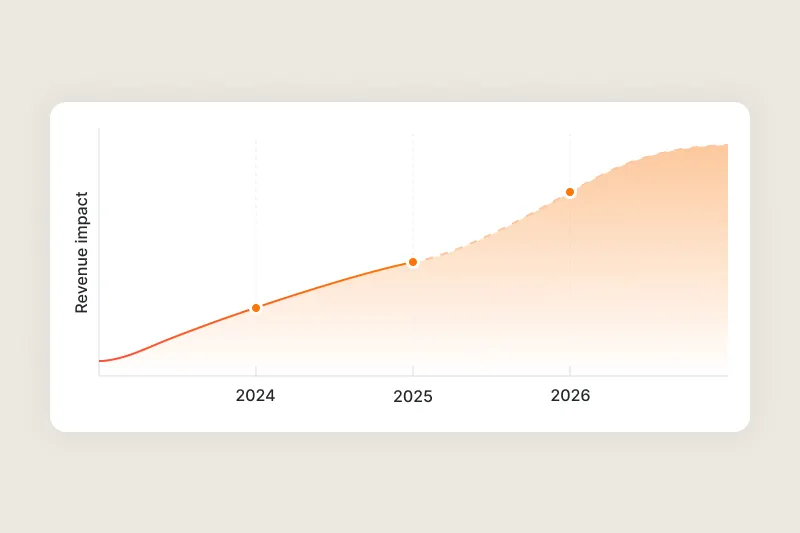
The Pictet survey was conducted in late 2024, when most PE firms were still in early deployment. Agentic AI adoption in financial services has accelerated sharply since, and deploying AI agents into revenue-generating workflows is now faster and more accessible than it was 18 months ago. The 60% figure likely represents an early baseline, with adoption trends suggesting further revenue gains ahead.
The question for investment teams heading into the next hold period: are their portfolio companies far enough into production deployment to show results before the exit window opens? Market trends and market dynamics point in the same direction: PE firms that centralize AI strategy now will hold a competitive advantage that compounds.
The generative AI and agentic AI capabilities available today are already mature enough to support new revenue models across portfolio companies, not just operational improvements and cost reduction.
The operational risks of waiting are real. Many PE firms deferring structured AI adoption while peers build proprietary data sources, institutional knowledge, and repeatable internal processes are not holding neutral ground. Meanwhile, competitors and target companies that already embed AI agents into business objectives continue widening the performance gap.
Macroeconomic trends and compressed exit timelines make productivity gains harder to defer. The historical fundraising data on LP expectations makes the action case clearer still.
Get the Full Picture
The 60% revenue lift finding is one data point from Multimodal's State of Agentic AI in Private Equity report, which covers AI adoption patterns across fund operations and portfolio companies, the operational use cases generating the clearest ROI, and what separates firms seeing measurable portfolio performance gains from those still in experimentation mode. Download the full report now.

.svg)
.svg)

.avif)
.png)

.png)