Credit Union Fraud Detection in 2026: 8 Ways Agentic AI Prevents Fraud
Credit union fraud detection in 2026 pairs real-time monitoring with agentic AI to verify documents and triage alerts. See 8 workflows and current data.
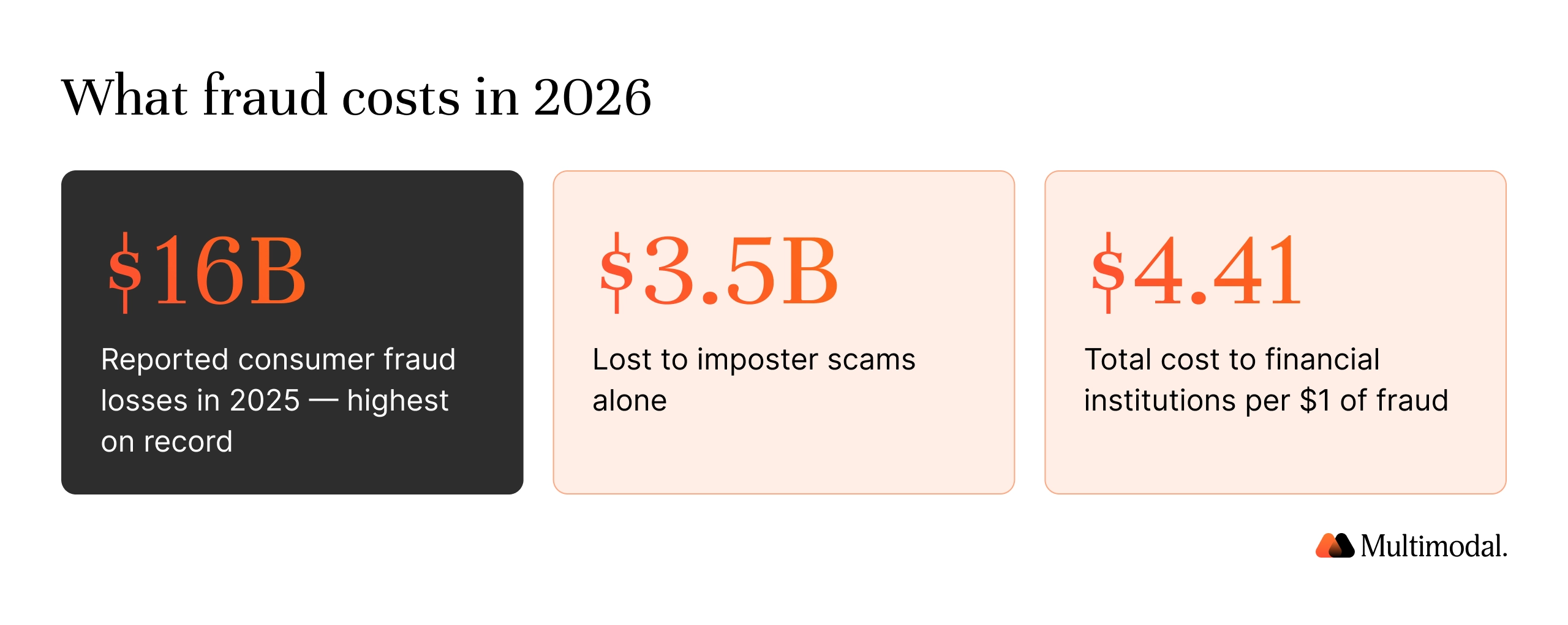
Reported fraud losses hit a record $16 billion in 2025.
Effective fraud detection layers governance, real-time monitoring, analytics, and member education.
Agentic AI verifies documents, triages alerts, and assembles audit-ready case files.
Every agent action is logged, human-reviewed, and aligned with NCUA expectations.
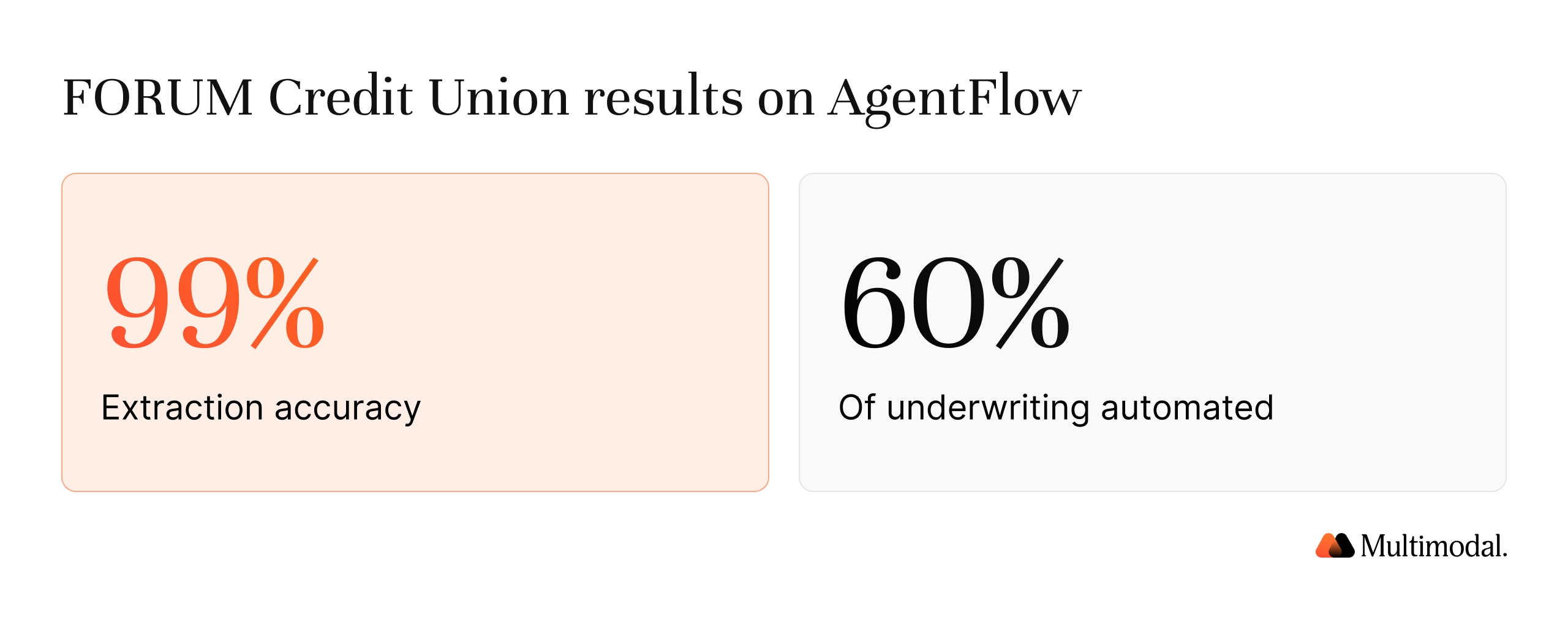
FORUM Credit Union runs AgentFlow at 99% accuracy, with 60% of underwriting automated.
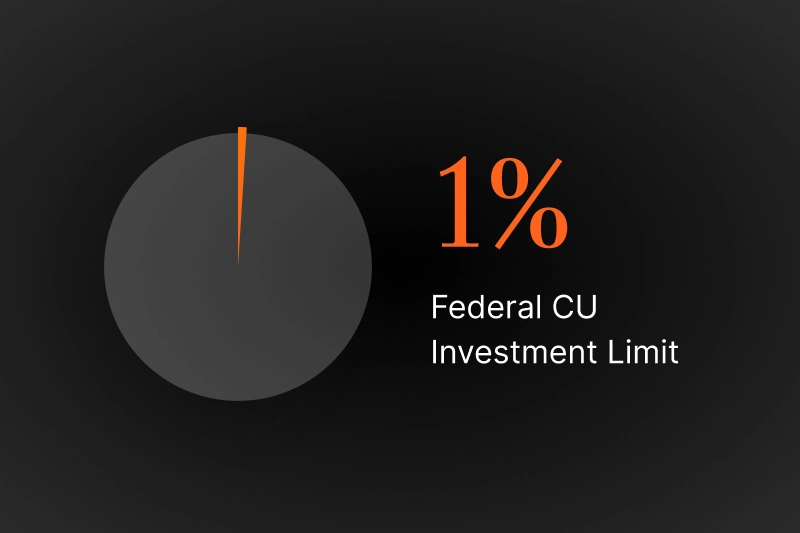
Get 1% smarter about AI in financial services every week.
Receive weekly micro lessons on agentic AI, our company updates, and tips from our team right in your inbox. Unsubscribe anytime.
Thank you! Your submission has been received!
Oops! Something went wrong while submitting the form.
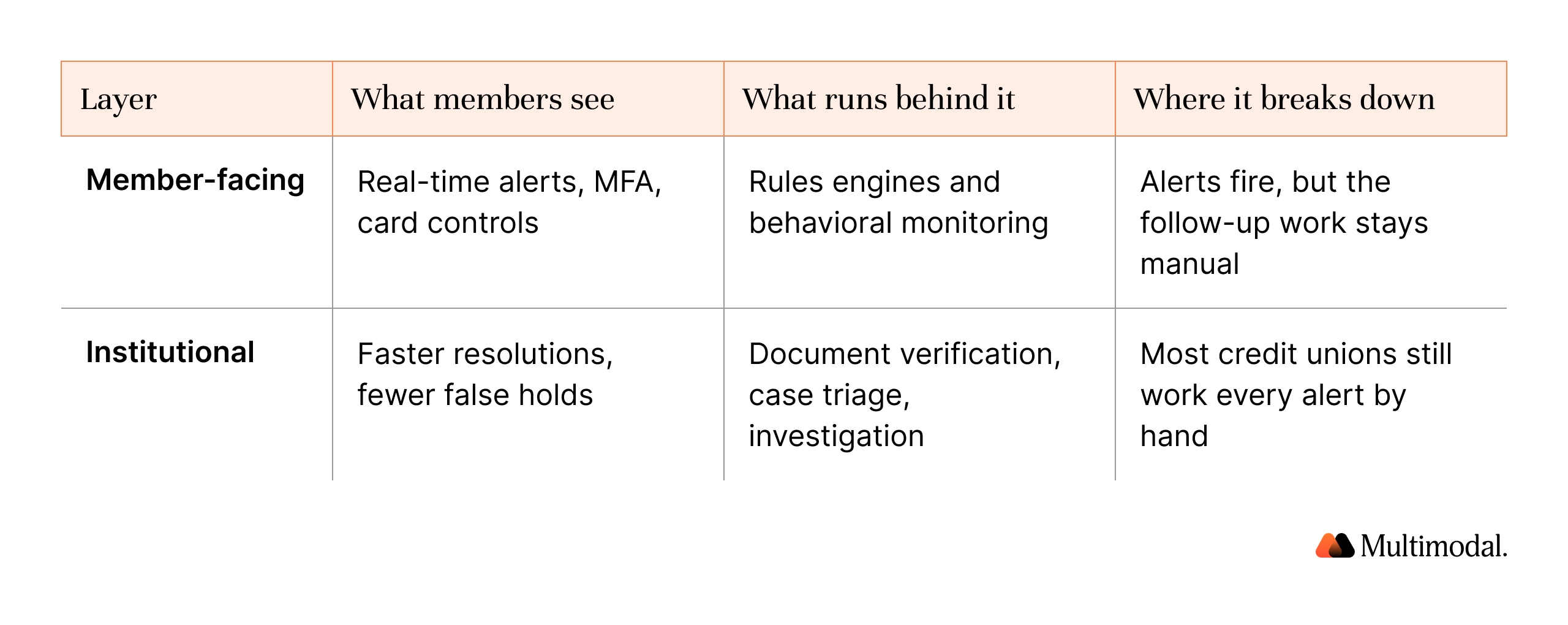
Credit union fraud detection works in two layers: the member-facing layer, where financial institutions monitor accounts for unusual activity and send real-time alerts by text message or phone, and the institutional layer, where artificial intelligence verifies identities and documents, scores risk, and works fraud cases end to end. This guide covers both layers and 8 agentic AI workflows credit unions are deploying in 2026.
What Is Credit Union Fraud Detection and How Does It Work?
Credit union fraud detection is the combination of technology, processes, and people financial institutions use to spot and stop fraudulent activity across financial accounts. Members see one part of it: encryption protecting account information, multi-factor authentication on mobile app logins and high-risk transactions, EMV chips guarding against counterfeit credit card fraud, and fraud alert calls or texts. Behind that sits the institutional machinery: transaction monitoring, identity verification, and case investigation.
None of this is new. AI has been used for fraud detection since the late 1980s, when early neural networks began scoring card transactions. What has changed is scope. Modern systems assign risk scores based on transaction amount, device fingerprint, and IP address reputation, learn each member's account behavior patterns, flag unusual transaction behavior immediately, and continuously adapt to emerging fraud tactics.
Real-time alerts let members stop fraudulent transactions instantly. The gap is everything after the alert, and that is where agentic AI earns its place.
What Does Fraud Cost Credit Unions in 2026?
The money at stake is rising fast. Consumers reported losing about $16 billion to fraud in 2025, the highest on record. Imposter scams alone accounted for $3.5 billion, and business impersonators, led by fake bank and credit union contacts, accounted for nearly $1 billion of that. Losses compound within the institution, too: every $1 lost to fraud costs North American financial institutions $4.41 once labor, investigation, and recovery are accounted for.
Criminals now use the same tools defenders do: 91% of financial institutions report an increase in AI-committed financial crime, and 82% have raised their AI fraud prevention investment in response. Members are federally insured up to $250,000 through the NCUA, but insurance covers institutional failure, not scam losses, so prevention is the only real protection.
What Types of Fraud Hit Credit Unions Hardest?
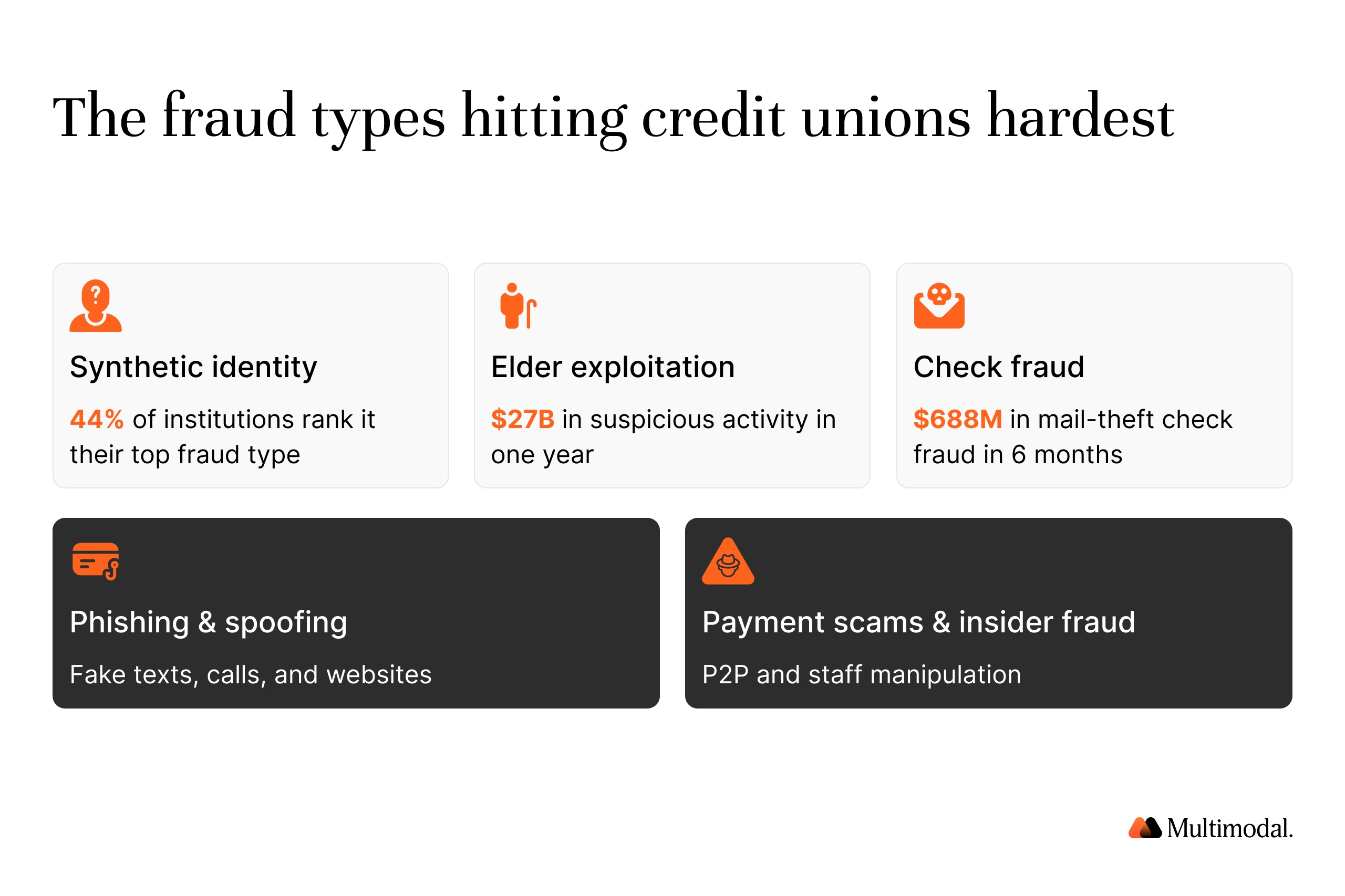
Synthetic identity fraud. Fraudsters combine a real Social Security number with fabricated personal information to build a fake identity, then open accounts and loans. 44% of financial institutions rank it as their top type of fraud, and the Federal Reserve Bank of Boston warns that generative AI can make fake identities appear legitimate.
Phishing, vishing, and spoofing. Phishing uses emails and texts to steal personal information, including login credentials, passwords, and payment information. Scammers spoof email addresses and disguise phone numbers to appear legitimate, impersonate trusted organizations, and direct victims to a fake website that harvests sensitive information. Red flags members can recognize: misspelled words, urgent pressure to wire money, and requests for financial information a legitimate institution would never make by text. Members should avoid clicking links in any suspicious message and report phishing attempts to their financial institution immediately.
Check fraud and card skimming.FinCEN tracked more than $688 million in mail theft-related check fraud in just six months, with 44% of stolen checks altered and redeposited. Card skimming at ATMs is increasingly sophisticated as well.
Elder financial exploitation. FinCEN identified about $27 billion in suspicious activity tied to exploitation of older adults in one year, with account takeover the most common vector.
Payment scams and insider fraud.P2P payments carry heavy scam exposure, and internal fraud plus social manipulation of staff remain significant vulnerabilities, which is why regular employee training on phishing, vishing, and social engineering tactics matters as much as any tool.
"Zelle as a product has a ton of fraud associated with it... So the plan here is, let's get our fraud figured out, let's get our digital identification figured out, and then you move forward to those features that members want." — Phil Caputo, Enterprise Project Management Office Lead, State Employees' Credit Union, on the Main Street AI podcast
8 Ways Credit Unions Can Use Agentic AI for Fraud Detection and Prevention
1. Member onboarding and synthetic identity checks.KYC and KYB processes help prevent fraudsters from opening new accounts. Agents verify identity documents against application data, check for signs of a fabricated credit file, and escalate any mismatches before an account is created that could be used to commit fraud.
2. Loan application and document fraud. Agents cross-validate every document in a loan file, catching tampered paystubs and applications that misstate income to qualify for lower interest rates.
3. Real-time transaction monitoring. Machine learning tools reduce manual reviews and false positives by learning normal behavior for each member, then flagging changes such as new devices, unusual merchants, or velocity spikes. This catches first-party fraud that ignores traditional patterns.
4. Dispute and chargeback analysis. Agents compile the transaction history, member records, and merchant data for each claim, enabling staff to resolve disputes in hours. Quick action protects trust: 66% of consumers say slow dispute resolution would push them to switch institutions.
5. Check and deposit review. Agents inspect remote deposits for altered signatures, verify payee and endorsement data, and hold only the suspect items, rather than all deposits.
6. Elder exploitation monitoring. Agents watch for the patterns FinCEN flags, such as sudden beneficiary changes and atypical wire transfers on older adults' accounts, and then route cases to trained staff.
7. Alert triage and case assembly. Instead of analysts working through every alert, agents clear the low-risk majority, prioritize genuine threats, and draft the narrative for the suspicious activity report for human review. A layered approach like this reduces both financial losses and false positives.
8. Payment scam intervention. Before money moves, agents verify beneficiaries, surface warnings when a transfer matches common scams, and pause transactions that fit coercion patterns.
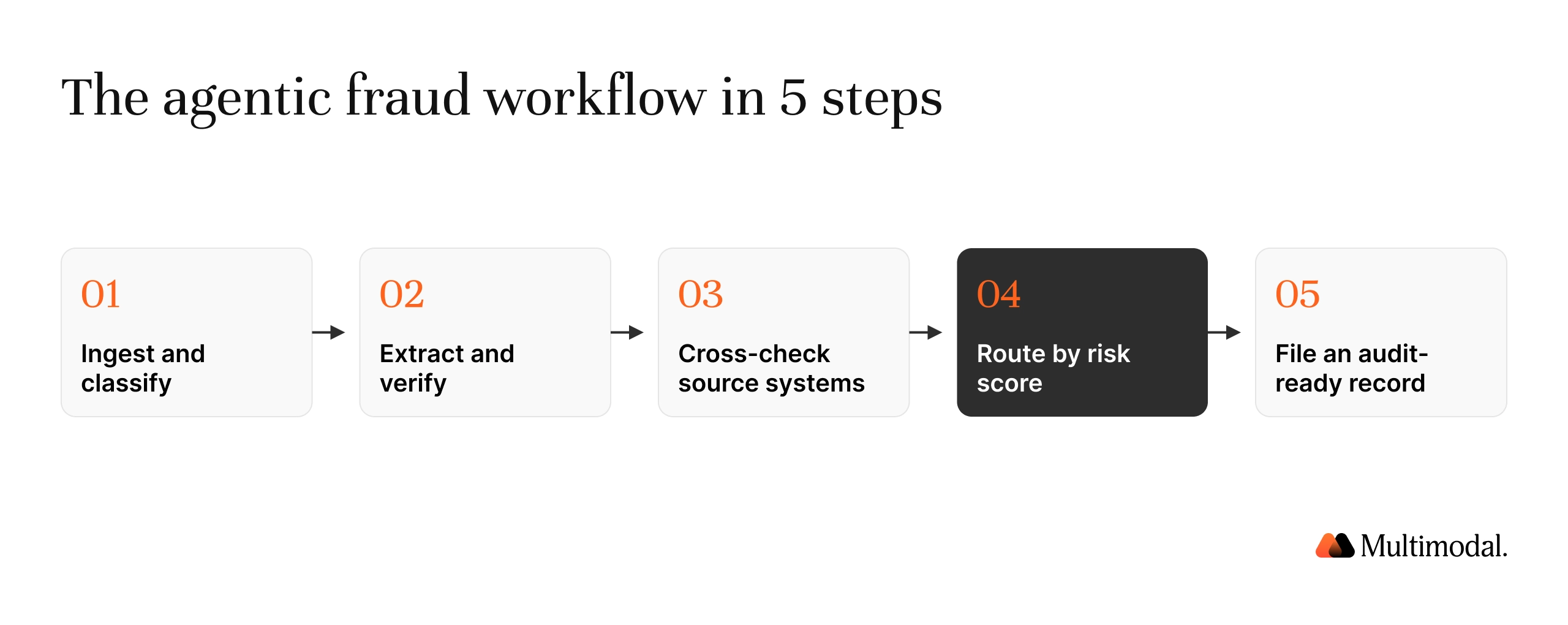
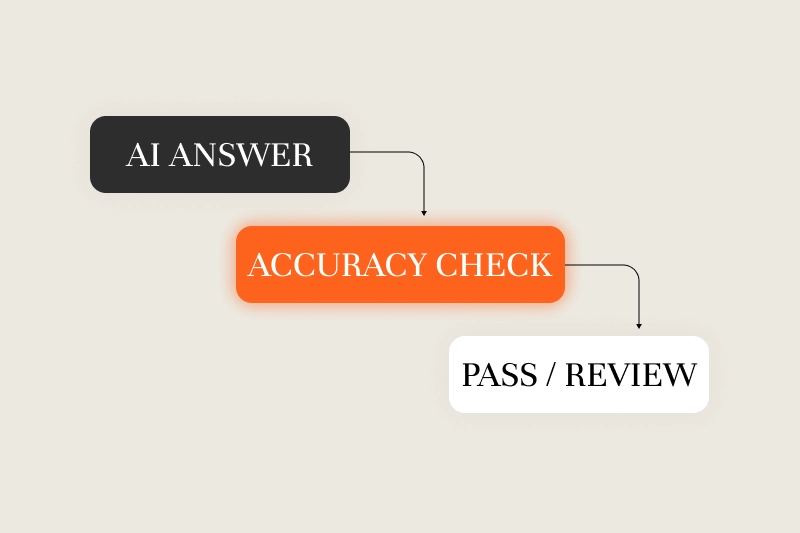
Across all eight, the workflow is the same five steps: ingest and classify, extract and verify, cross-check source systems, route by risk score with a human deciding, and file an audit-ready record.
How Is Agentic AI Different From the Fraud Tools Credit Unions Already Have?
Credit unions often integrate commercial platforms for monitoring, and those platforms are good at deciding whether a transaction looks wrong. Agentic AI performs the following tasks: verifying documents, gathering data, and assembling the case. The two operate as one integrated approach. In 2026, effective fraud prevention strategies combine artificial intelligence, real-time monitoring with cross-account visibility, and member education, and AgentFlow works alongside existing monitoring systems rather than replacing them.
"The areas that we're focusing on right now [are] mortgage and lending... our call center processes... then fraud, fraud is another big thing. We've got some automations in fraud... to see how we can utilize agentic AI in that." — Chris Ortega, Technology Transformation Leader, Lake Michigan Credit Union, on the Main Street AI podcast
The proof is already public: FORUM Credit Union runs AgentFlow document verification with 99% extraction accuracy, 60% of underwriting automated, and every decision logged for examiners.
The Future of Credit Union Fraud Prevention
Fraudsters are scaling with generative AI, and detection has to keep pace. The institutions that stay ahead will pair adaptive AI with what criminals cannot fake: employee vigilance and personalized member-focused service. Credit unions can empower members with resources on recognizing scams, and members who stay informed remain the strongest last line of defense.
Frequently Asked Questions
How do credit unions detect fraud?
Credit unions monitor accounts for unusual transaction behavior using AI risk scoring, verify identity at onboarding, and alert members in real time by text or phone. Investigators then confirm whether the flagged activity is fraudulent and act accordingly.
How does AI improve credit union fraud detection?
AI learns each member's normal patterns, flags suspicious activity instantly, and adapts as tactics evolve. Agentic AI adds execution capabilities: verifying documents, triaging alerts, and assembling cases, which reduce losses and manual workload.
What should members do after identity theft?
Contact the credit union immediately, change passwords, and place a fraud alert with the major credit bureaus. A fraud alert stays active on a credit file for 90 days before needing renewal; a credit freeze locks the credit file completely. Then review your credit report and bank statements for accounts criminals opened.
How can members recognize common scams?
Watch for unsolicited phone calls demanding urgent payment, requests for a Social Security number or login credentials, and messages with misspelled words or unfamiliar links. When in doubt, call the credit union directly using a phone number from a trusted source.
Will fraud AI replace credit union fraud teams?
No. Agents handle the repetitive verification and data gathering; investigators make every consequential decision. The result is a smaller queue and faster, more consistent judgment, with people still accountable for outcomes.
Is agentic AI fraud detection examiner ready?
Yes, when built correctly. Every action is logged, every data point cites its source document, and humans review decisions. That white-box design gives NCUA examiners a complete audit trail.
See What the Agents Catch
Bring one loan packet or dispute case, and we will run it through AgentFlow live: documents verified, mismatches flagged, and the case file assembled with a full audit trail. No prep needed on your side.
Detection Finds the Fraud. Agents Finish the Work.
Credit union fraud detection in 2026 comes down to closing the gap between the alert and the outcome. Layered defenses catch threats at the surface, but every alert sitting in a manual queue puts money and member trust at risk. The credit unions pulling ahead add agentic AI that verifies documents, handles cases, and leaves an audit trail for examiners to follow.
The fastest way to evaluate it is on your own files. Bring one loan packet or dispute case, and we will show you what the agents catch. Book a demo now.

.svg)
.svg)

.avif)
.png)

.png)