
NCUA published a formal AI Compliance Plan and AI Resource Hub (ncua.gov/ai, September 2025). The agency appointed a Chief AI Officer (Amber Gravius) to oversee AI governance for the 2025-2026 examination cycle. NCUA's guidance aligns with the NIST AI Risk Management Framework, which means credit unions must document artificial intelligence model inputs, outputs, and governance decisions in their lending operations.
Any AI system influencing a lending decision must produce an auditable rationale. When a decision model recommends approval, denial, or pricing, the institution must be able to show an examiner exactly what inputs drove that output and who approved the decision logic. Credit unions without explainable, audit-ready AI face growing examination risk.
AgentFlow vs zest AI
AgentFlow vs Zest AI: Credit Decisioning Alone vs End-to-End Lending Automation
Zest AI handles credit decisions only — not intake, documents, exceptions, or compliance reporting.
AgentFlow automates the full pipeline: intake, documents, decisioning, exceptions, and compliance.
FORUM Credit Union: 70% more loan volume, 99% document accuracy, 60% of consumer loans automated.
NCUA now audits AI lending systems — credit unions must document decisions and maintain audit trails.
Already using Zest AI? AgentFlow handles everything outside the decision engine. Fully complementary.
book a demo
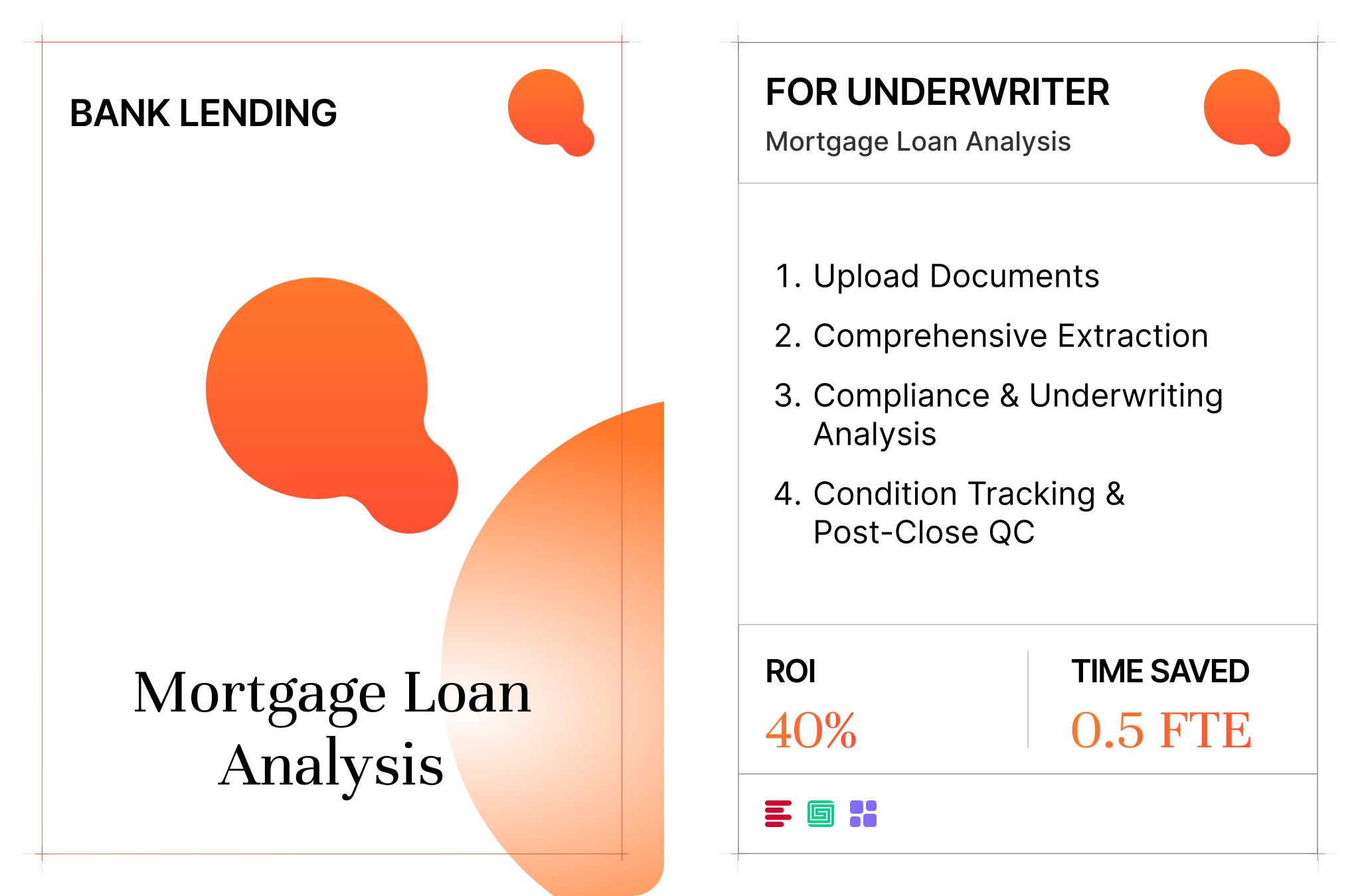
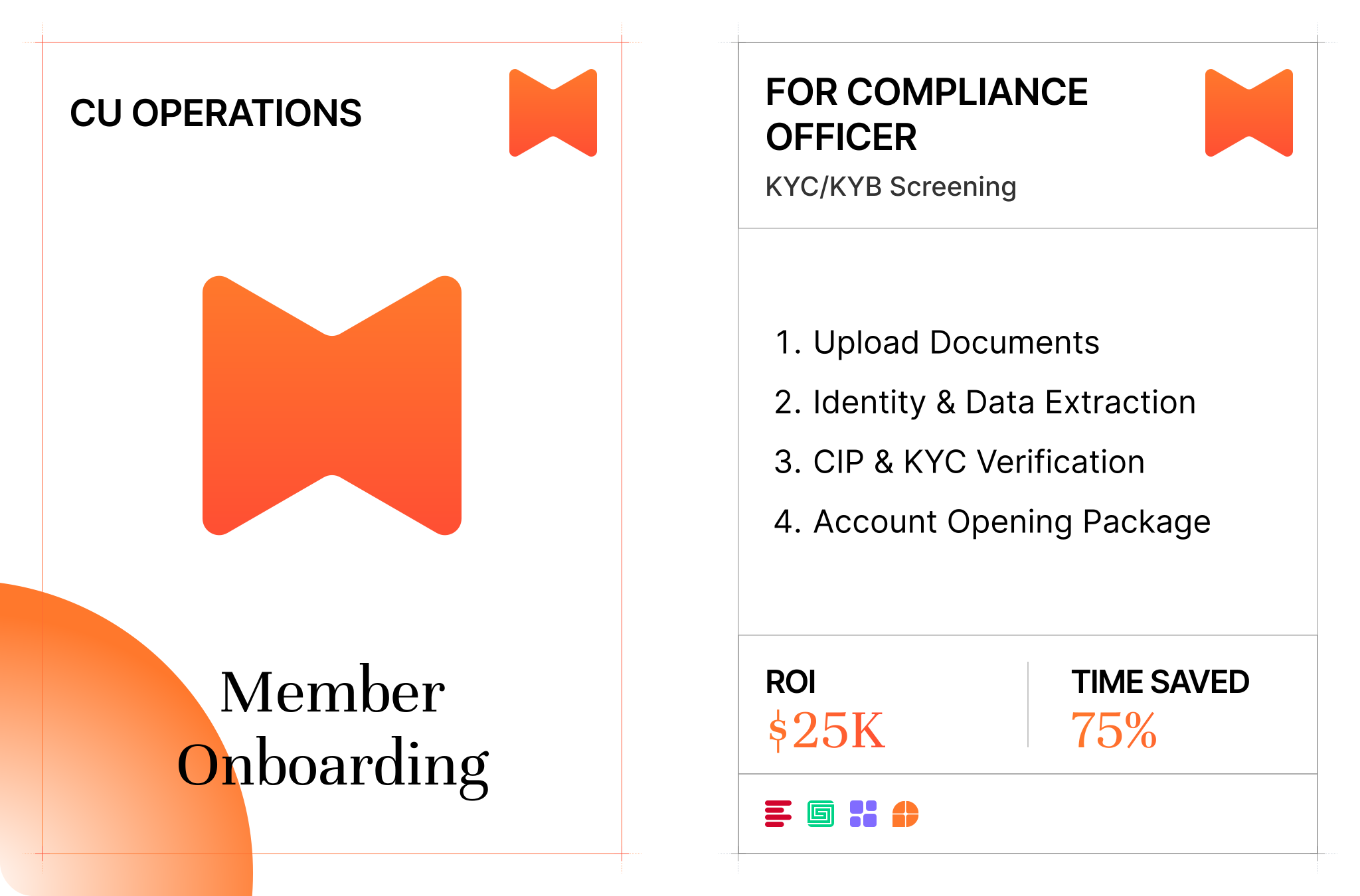

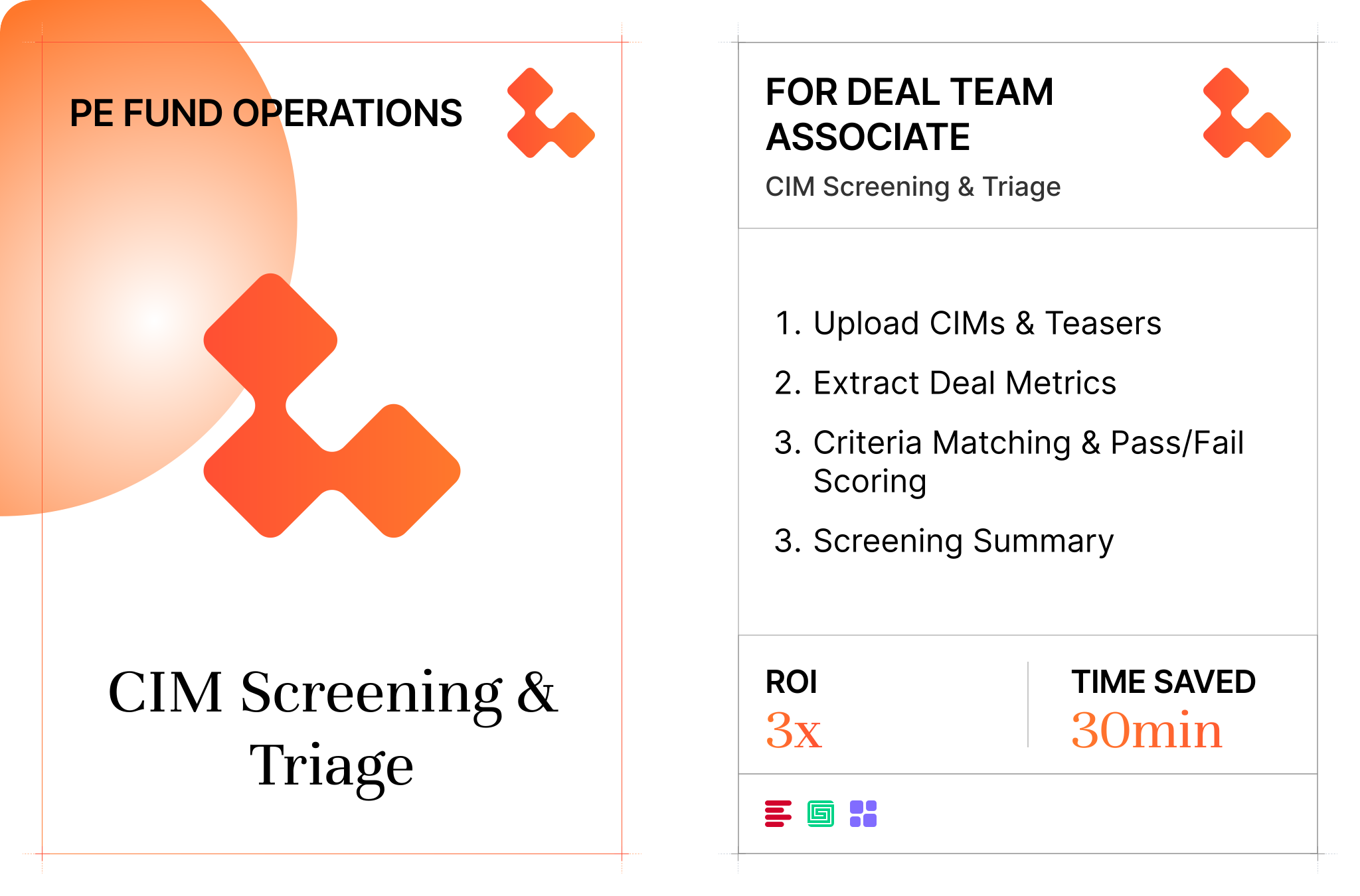
Zest AI builds credit decisioning software that automates the credit decision. AgentFlow automates the full lending pipeline: intake, documents, decisioning, compliance, and reporting. This page covers the scope difference for financial institutions evaluating both platforms.
01
What is Zest AI? A factual overview
300+
lenders worldwide served by Zest AI, powering 650+ active credit models across $5.5T in assets under management
$200M
growth investment from Insight Partners in December 2024, followed by an oversubscribed customer-led strategic round
Zest AI is a California-based AI credit underwriting company founded in 2009 and headquartered in Burbank. The company builds machine learning models that automate credit decisions for banks, credit unions, and lenders.
Core products include AI Underwriting (custom ML models delivering up to 80% auto-decision rates and 60% time savings), Zest Protect (real-time fraud detection integrated within the credit decision engine), and LuLu — a generative AI lending intelligence suite with loan performance monitoring and policy simulation modules.
Zest AI integrates into existing loan origination systems via API through partnerships with MeridianLink (2,000+ financial institution customers) and Temenos. Confirmed credit union clients include SchoolsFirst FCU, Members 1st FCU, ORNL FCU, Truliant FCU, and Commonwealth CU.
What Zest AI covers
Credit Risk Decisioning
Custom ML models for credit scoring, up to 80% auto-decisioning, adversarial debiasing for fair lending, and real-time fraud detection through Zest Protect.
What Zest AI does not cover
Everything Else in the Pipeline
Document intake and extraction. Workflow orchestration. Post-decision compliance reporting. Exception routing and escalation. Manual data validation from external sources.
02
AgentFlow vs Zest AI: full lending lifecycle coverage
Zest AI excels at the credit decision layer. Here is where coverage diverges across the full lending lifecycle — from application intake through post-close servicing.
Lending stage
AgentFlow
Zest AI
Application intake & data collection
✓ Automated intake and routing
✗ Not covered — requires LOS
Document extraction & classification
✓ AI-powered document extraction and classification
✗ Not covered — manual or requires separate tool
Credit risk decisioning
✓ AI decisioning with rules engine and confidence scoring
✓ Core strength — 650+ custom ML models, up to 80% auto-decision rate
Fraud detection
✓ Integrated risk layer
✓ Zest Protect — real-time, integrated with decisioning
Fair lending & bias analysis
✓ Explainability and confidence scoring
✓ Core strength — adversarial debiasing, ECOA/FCRA tooling
Compliance & audit trail
✓ Full pipeline audit trail from intake through post-decision report
◑ Partial — model compliance docs only; intake and reporting trail not covered
Exception handling & routing
✓ Automated exception routing with approval workflows
✗ Not covered — manual routing or LOS-dependent
Post-decision reporting
✓ Auto-generates post-decision documentation
✗ Not covered — adverse action notices require separate tooling
Workflow orchestration
✓ Full pipeline orchestration across all stages
✗ Not covered — integrates into existing LOS; does not orchestrate steps
Deployment model
VPC / on-prem / cloud — deploy on your own infrastructure
Cloud-based, API-native; integrates into existing LOS
Time to production
~12-week structured POC; measurable ROI within 90 days of go-live
Varies — LOS integration and model training dependent
Core banking integrations
Jack Henry, Symitar (in production); Fiserv (architecture built)
MeridianLink (2,000+ customers), Temenos
Zest AI capabilities sourced from zestai.com as of March 2026. AgentFlow capabilities sourced from multimodal.dev. All figures subject to change.
03
The three gaps Zest AI does not cover
Every credit decisioning process relies on steps that happen before and after the credit decision itself. Zest AI's platform handles the decision layer with depth and sophistication. The question for lending operations leaders is: who handles the rest?
Before the decision
The document problem
Zest AI receives structured, validated data from your LOS. What it does not do is extract that data from the raw documents your borrowers submit — pay stubs, tax returns, W-2s, and bank statements. A loan officer must review those documents, pull the relevant figures, check for completeness, and flag inconsistencies before decision models can run. That step takes time, introduces human errors, and does not scale.
After the decision
The compliance tail
The credit decision engine returns approve, deny, or refer. What happens next? Someone must generate the adverse action notice (required by ECOA Reg B within 30 days). Someone must route the referral to the right reviewer. Someone must produce compliance documentation for the audit trail. Zest AI's credit scoring strength stops at the decision. The regulatory compliance burden that follows is unaddressed by decisioning-only solutions.
Around the decision
The orchestration gap
Zest AI integrates into your existing LOS workflow. It does not orchestrate that workflow. If your process has gaps in how applications move between stages, how exceptions escalate, or how incomplete files get flagged, Zest AI inherits every one of those gaps. A credit decision engine improves one node in the process. It does not fix the pipeline.
Industry benchmark
20–60%
Credit analyst productivity gains with full-pipeline AI
Industry benchmark
~30%
Faster credit decision-making with multi-agent AI
Industry benchmark
$1,700
Savings per loan with full automation
04
What Zest AI's LuLu platform does and does not change
Zest AI launched LuLu in February 2024 as a generative AI lending intelligence companion and expanded it into a multi-module platform in 2025. These are meaningful additions. The scope gap remains.
What LuLu adds
Analytics and intelligence
LuLu Pulse provides portfolio benchmarking — comparing credit risk performance against anonymized peer data. LuLu Strategy (May 2025) enables policy simulation and scenario testing so risk management teams can model the impact of decision strategy changes before deploying them to production.
These make Zest AI's technology more strategically useful for credit risk teams that manage models at scale.
What LuLu does not add
Workflow automation
LuLu is analytics and intelligence. It is not workflow automation. LuLu does not add document intake, data extraction from external data sources, exception routing, or post-decision reporting capabilities.
The steps before and after the credit decision that AgentFlow covers remain outside Zest AI's platform scope, even with LuLu in place. The data sources feeding into the decisioning process and the compliance tail following it remain separate operational challenges.
05
100+ Playbooks vs. starting from scratch
The forward-deployed engineering model means Multimodal's team is embedded through go-live — integration, edge-cases, and QA are owned by Multimodal's engineers, not the client's IT team.
A Playbook is not a template. It is a production-tested, compliance-reviewed automation built for a specific lending workflow and refined across real credit union deployments. Each Playbook encodes decision logic, system access patterns, exception routing rules, and compliance documentation requirements for a concrete financial services process.
Building from a decisioning tool
6–12+ months to full pipeline automation
- 1Scope document intake and extraction solution — internal build or separate vendor
- 2Build integration between LOS, document processing platform, and credit decisioning layer
- 3Configure exception routing and escalation logic using business rules
- 4Build compliance documentation and adverse action notice automation for regulatory compliance
- 5QA and validate the full pipeline for NCUA examination readiness
Deploying from an AgentFlow Playbook
~12-week POC, 90-day ROI
- 1Select Playbook(s) from 100+ production-ready options covering your lending operations
- 2Multimodal engineers configure to your institution's systems and data sources
- 3Integration QA is owned by the forward-deployed team through go-live
- 4Compliance review against existing audit requirements and approval workflows
- 5~12-week structured POC; measurable ROI within 90 days of go-live
06
What AgentFlow customers have achieved
Real production results from financial institutions running AgentFlow Playbooks today.
FORUM Credit Union — Fishers, Indiana (~$2.3B assets)
70%
Boost in loan processing volume
99%
Document classification accuracy
60%
Consumer loans auto-decisioned
"Multimodal didn't just deliver technology; they delivered confidence that we can serve our members faster and more reliably. This is the future of lending at FORUM Credit Union." — Chris Ferguson, SVP Consumer Lending, FORUM Credit Union
80%
Reduction in loan processing costs per document
"Nobody is doing what we're doing with Multimodal — not even close." — Jim Beech, CEO, Direct Mortgage Corp.
Full audit readiness included
Every decision stored with full audit rationale. Adverse action notices generated automatically. Examination-ready documentation produced at go-live, not retroactively.
Adverse action notices
HMDA data capture
Exception routing
Full decision audit trail
07
Zest AI, AgentFlow, or both? A decision framework
Choosing between credit decisioning software and full-pipeline automation depends on where your business bottleneck actually sits. Both platforms serve financial institutions, but they solve different problems.
Zest AI is the stronger fit if…
Your gap is decision quality, not pipeline scope
- Your core gap is credit model accuracy and auto-decision rates within a functional, well-automated LOS
- Your intake-to-reporting workflow is already handled, and you need to upgrade the decision quality layer only
- You have dedicated credit risk or data science capacity to manage and retrain machine learning models
- Your compliance reporting and regulatory documentation are covered by existing tooling
AgentFlow is built for…
Full pipeline automation, not just the decision
- The bottleneck spans intake, documents, decisioning, and reporting — not just the credit decision engine
- Your technology team does not have surplus capacity to build and QA a multi-agent system from scratch
- NCUA examination readiness requires private deployment, full audit trails, and documented model transparency
- Leadership needs a vendor that owns go-live outcomes, not just provides access to tooling
When you need both
Complementary, not competing
- Credit unions and banks already using Zest AI do not need to replace it — AgentFlow orchestrates the rest of the pipeline around it
- Zest AI's credit modeling IP and scoring power stay in place. AgentFlow automates document, communication, and servicing workflows outside Zest AI's decisioning engine
- This approach creates greater value from your existing AI investment while extending automation to the complete lending process
For organizations that want timely credit decisions from Zest AI's machine learning and full pipeline automation from AgentFlow, the platforms serve complementary roles in your financial services lending operations strategy.
Compliance and Governance: What NCUA Examiners Now Expect

SOC 2 Type II
Supports DORA Requirements
Customer Data Separated By Account
Complete Audit Trail
Model-Agnostic
Explainable AI
SSO & RBAC
Private Cloud Options
Human-in-the-Loop
Frequently asked questions
Zest AI is an AI-powered credit decisioning and underwriting platform used by banks and credit unions to automate loan approval decisions, detect fraud, and manage credit model performance. Its core products include custom machine learning underwriting models, Zest Protect for fraud detection, and the LuLu lending intelligence platform for portfolio benchmarking and policy simulation. Zest AI integrates into existing loan origination systems via API and serves approximately 300 lenders worldwide.
Zest AI automates the credit decision. AgentFlow automates the full lending pipeline, including the workflow steps before and after the decision: document intake, data extraction, exception routing, compliance documentation, and reporting. AgentFlow operates at a different scope rather than targeting the same layer as Zest AI. FORUM Credit Union deployed AgentFlow and boosted loan processing volume by 70%, achieved 99% document classification accuracy, and automated 60% of consumer loans with full audit readiness.
Zest AI does not automate document intake, data extraction from loan files, workflow orchestration, or post-decision compliance reporting. These steps require separate tooling, manual handling, or a platform like AgentFlow that covers the full pipeline. The decisioning process is one stage in a multi-step workflow, and organizations relying on Zest AI alone must build or buy solutions for the remaining steps to serve borrowers efficiently.
NCUA published a formal AI Compliance Plan (ncua.gov/ai) aligned with the NIST AI Risk Management Framework. Credit unions using AI in lending decisions must document model inputs, outputs, and governance decisions. NCUA examiners now review AI systems as part of safety and soundness and fair lending examinations, and credit unions without explainable, audit-ready AI face growing examination risk. Any platform influencing credit decisions must produce an auditable rationale showing what factors drove each decision.
AgentFlow Playbooks are production-tested, compliance-reviewed automations built for specific credit union and bank lending workflows. Unlike no-code builders that require internal teams to configure, test, and govern agent logic from scratch, Playbooks encode proven decision logic, system access, and compliance requirements from real deployments. Multimodal's forward-deployed engineers own integration through go-live, so the company delivers production outcomes rather than just platform access.
Yes. Credit unions and banks already using Zest AI do not need to replace it. AgentFlow can orchestrate the rest of the pipeline around it — intake, extraction, exception handling, compliance documentation, and reporting. Zest AI's credit modeling IP and credit scoring power stay in place. AgentFlow automates the document, communication, and servicing workflows that sit outside Zest AI's decisioning engine. The two platforms are fully complementary.
See the Full Pipeline, Not Just the Decision
AgentFlow automates the complete lending pipeline for credit unions and banks. From application intake through post-close reporting, your team focuses on complex exceptions while AI handles the rest of the process.
.svg)
.svg)