Best AI Document Processing Platforms for Credit Unions [2026]
A practical comparison of AI document processing platforms for credit unions, covering extraction accuracy, core system integration, and compliance fit.
Extraction accuracy alone doesn't tell you whether a platform fits a credit union's workflow.
Core system integration with Symitar, Corelation, or DNA matters more than raw feature count.
Audit readiness is still catching up to what agentic systems can actually do.
Most platforms on this list solve one part of the document workflow, not all of it.
Deployment model (cloud vs. on-prem) is a hard requirement for some credit unions, not a preference.
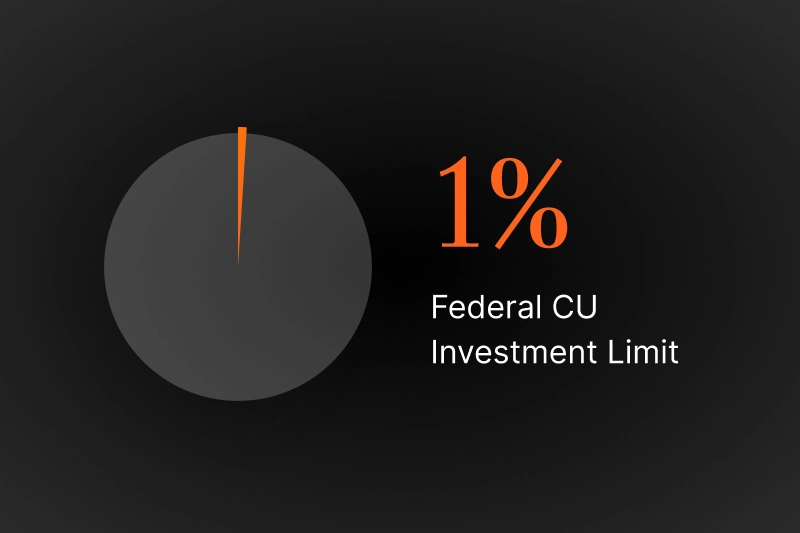
Get 1% smarter about AI in financial services every week.
Receive weekly micro lessons on agentic AI, our company updates, and tips from our team right in your inbox. Unsubscribe anytime.
Thank you! Your submission has been received!
Oops! Something went wrong while submitting the form.
What "AI Document Processing" Actually Means for a Credit Union
Document processing in a credit union touches loan packets, KYC forms, insurance certificates, and compliance filings. Most of it still moves through manual review today, even as agentic AI adoption in credit unions accelerates elsewhere in the institution. A loan officer opens a PDF, checks it against a checklist, and rekeys data into the LOS.
AI document processing replaces that manual step with software that automatically reads, classifies, and extracts data from documents. Some platforms stop there. Others go further and act on what they extract, routing exceptions, flagging inconsistencies, and pushing validated data into downstream systems without a human touching every file.
That second category is closer to what we've called agentic document processing elsewhere: the distinction isn't about how good the extraction is; it's about whether the system operates at the document level or the workflow level. A platform that reads a W-2 accurately but can't reconcile it against a borrower's tax return and bank statement is still solving half the problem.
This matters when evaluating vendors, because two platforms can both claim "99% accuracy" while operating in completely different parts of the workflow.
How We Evaluated These Platforms
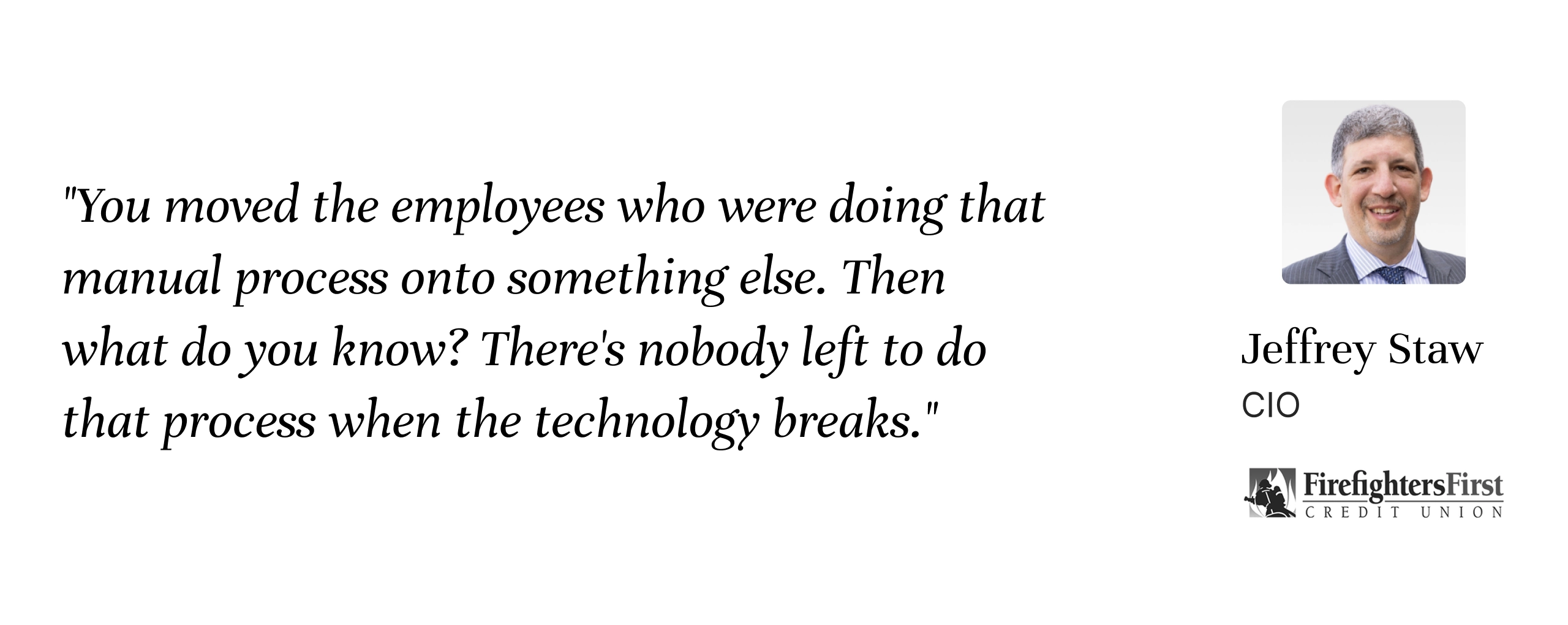
Jeffrey Staw, Chief Information and Innovation Officer at Firefighters First Credit Union, put it plainly when describing how he vets AI vendors: he pushes past the AI branding and asks what the product actually does. "I don't want to talk about AI. I want to talk about the products and features that you bring to me," he said on the Main Street AI podcast. That's the standard we used here.
Each platform was assessed on four criteria:
Extraction accuracy: how reliably the platform reads structured and unstructured financial documents
Core system integration: whether it connects to Symitar, Corelation, DNA, or other core banking platforms without custom middleware
Compliance and audit trail: whether the platform produces documentation an examiner can actually use
Deployment model: cloud, on-premise, or both, since data sovereignty requirements rule out cloud-only tools for some credit unions
Best AI Document Processing Platforms for Credit Unions
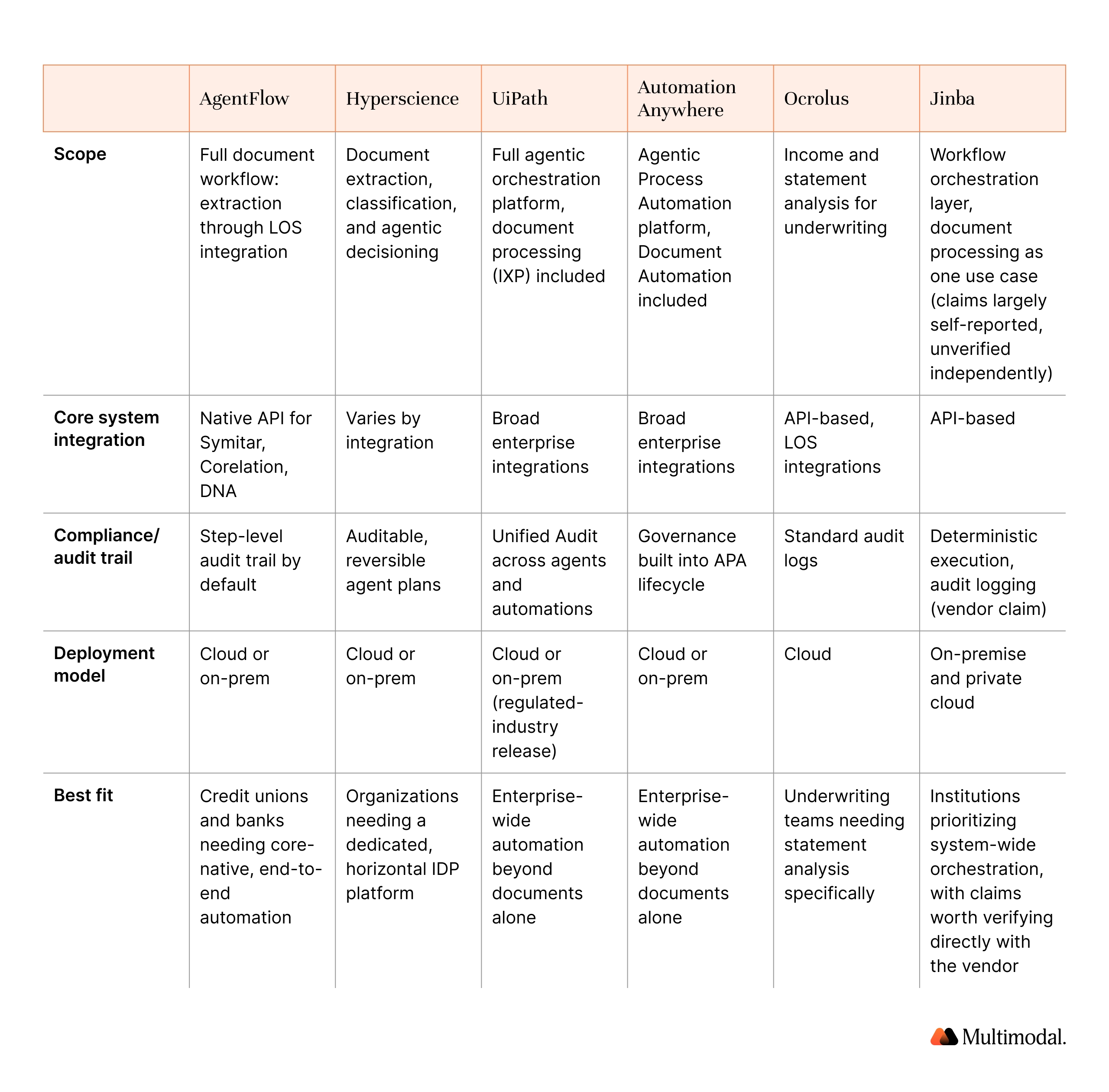
1. AgentFlow
AgentFlow is Multimodal's agentic AI platform built for banks and credit unions. Rather than stopping at extraction, it handles the full document workflow: collection, classification, cross-document validation, exception handling, and integration into the loan origination system.
For a credit union evaluating document-processing tools, the practical difference lies in how exceptions are handled. Instead of flagging every mismatch for manual review, AgentFlow applies validation logic across the full document set and routes only genuine exceptions to a human. FORUM Credit Union used this loan processing workflow to process 62 document packages with 99% accuracy, reducing the manual review load that had previously fallen entirely on loan officers.
AgentFlow also builds a step-level audit trail into every workflow run by default, which matters given where examiner scrutiny is headed. That's covered in more detail below.
2. Hyperscience
Hyperscience was named a Leader and Customer Favorite in the Forrester Wave for document mining and analytics in Q2 2026, and its Spring 2026 release added inference layering that routes workloads across AI models. It uses proprietary machine learning models to extract and classify data across structured, semi-structured, and unstructured documents without a separate template for every format.
Hyperscience has also extended its capabilities into agentic capabilities, with its 2026 platform generating auditable, reversible agent plans for document-driven decisions. The distinction from AgentFlow isn't extraction depth or agentic maturity; both are strong there. Its industry focus: Hyperscience is a horizontal platform serving credit unions, as well as healthcare, insurance, and public-sector customers, rather than a system built specifically around core banking integrations such as Symitar, Corelation, and DNA.
3. UiPath
UiPath built its name in robotic process automation and has since built out a full agentic orchestration layer through Maestro, its enterprise control plane for agentic automation. Document processing (branded IXP) now sits inside that broader platform rather than as an isolated add-on.
By 2026, UiPath had also released an on-prem version of its Automation Suite specifically for regulated industries, including banks, addressing the data sovereignty requirement that had been its main gap. Governance runs through a Unified Audit system that covers agents and automations. The remaining consideration for credit unions is that UiPath's platform is built for enterprise-wide automation, not specifically for core banking workflows, so implementation scope and cost can be larger than with a document-first tool.
4. Automation Anywhere
Automation Anywhere has moved its document-processing capability, previously branded IQ Bot, into Document Automation within its broader Agentic Process Automation platform. IQ Bot itself was deprecated in March 2026. The current platform routes document workflows through a Process Reasoning Engine that adapts to layout variation and escalates low-confidence cases to human review.
Automation Anywhere offers on-premises deployment alongside its cloud option, so data residency isn't automatically disqualifying as it is for some competitors. The considerations for credit unions are the same as for UiPath: it is a broad enterprise automation platform with document processing as one capability, not a tool purpose-built specifically for core banking integration.
5. Ocrolus
Ocrolus specializes narrowly in financial document analysis, particularly bank statements, pay stubs, and tax forms for income verification. Lending teams upload statements, and Ocrolus classifies pages, extracts transaction data, and applies underwriting logic to calculate income across agency guidelines.
Eagle Community Credit Union cut underwriting time by 65% after adopting Ocrolus, replacing a process that previously took 45 minutes of manual annotation per file. The limitation is scope: Ocrolus is built specifically for income and statement analysis, not the full range of document types a credit union processes across lending, compliance, and vendor risk.
Ocrolus has continued to build on the lending side: in late 2025, it launched Encore, a cash-flow data-sharing platform for small-business funding, with broader availability in January 2026. The workflow for the extracted data remains yours to build. For a side-by-side view of extraction-only tooling against full loan file automation, see our AgentFlow vs Ocrolus comparison.
6. Jinba
Jinba positions itself as a workflow automation layer that sits atop existing systems rather than replacing them. Document processing is one of its stated use cases alongside compliance checks and loan review, but its core differentiator is connecting disparate systems (core, CRM, and loan origination) into a single orchestrated flow.
Jinba leans heavily on on-premise deployment and deterministic, rule-based execution as selling points for regulated institutions. Worth noting: its compliance certifications, deployment claims, and case studies are drawn entirely from Jinba's own published materials; we found no independent, third-party confirmation of these claims, so credit unions evaluating Jinba should verify them directly with the vendor rather than taking marketing copy at face value. Setting that aside, its stated design center is workflow orchestration, not document-level extraction depth. For a credit union whose main pain point is specifically document processing rather than broader system integration, that's a meaningfully different starting point than a document-first platform.
7. Uptiq
Uptiq builds AI applications for credit unions and banks on top of its Qore orchestration platform, with a Document AI line covering lending, compliance, and operations workflows. In March 2026, it raised a $25M Series B that included a strategic investment from Curql, a fund backed by more than 160 credit unions, which provides it with a real distribution channel in the industry.
The open question is deployment evidence: the funding announcement names no live credit union deployments, so ask for named references and a working demo on your own documents. We break down deployment timelines, document workflow depth, and proof points in our AgentFlow vs Uptiq comparison.
What to Look for Before You Buy
Extraction accuracy gets the most attention in vendor demos, but it's not where most implementations run into trouble. A few areas deserve more scrutiny than they usually get.
- Ask What Happens When the System Breaks
Staw described watching this play out with RPA and expects the same pattern with agentic systems. Credit unions moved employees away from manual processes once RPA was in place, leaving no one to diagnose the process when automation failed. Before deploying any document-processing platform at scale, confirm that someone on staff (or the vendor) can actually troubleshoot failures, not just build the initial workflow.
- Check What "Compliant" Actually Means Today
Examiner expectations are still evolving. Staw noted that the most an NCUA examiner currently asks for is an AI governance policy document, not yet a walkthrough of how a given AI agent reached a specific decision or how its outputs are validated. That's likely to change. A platform that only produces basic logs today may not hold up once examiners start asking harder questions about data validation and bias testing.
- Confirm Integration Depth, Not Just Integration Existence
A vendor claiming to "integrate with your core" can mean anything from a native API connection to a brittle middleware layer that breaks on every core system update. Ask for specifics on how data actually moves between systems.
- Match Deployment Model to Your Data Sovereignty Requirements
If member PII and KYC documents can't leave a private cloud or on-premise environment, cloud-only platforms are disqualified regardless of how strong their extraction accuracy is.
The IDC MarketScape: Worldwide Intelligent Document Processing Software 2025-2026 Vendor Assessment notes that IDP vendors are rapidly extending extraction capabilities toward full workflow automation as the market moves from pure document capture into the agentic era. Accuracy differences between top-tier platforms are narrowing. Integration depth, audit readiness, and deployment fit are where the real differentiation now lives.
Frequently Asked Questions
What's the Difference Between IDP and Agentic Document Processing for Credit Unions?
IDP extracts data from individual documents. Agentic document processing orchestrates the full workflow, including cross-document validation and exception handling, before pushing data downstream.
Do Small Credit Unions Need Enterprise-Grade IDP Platforms?
Not always. Smaller institutions with narrow, well-defined document types may get more value from a focused tool than a broad enterprise platform built for scale they don't need yet.
Can These Platforms Integrate With Legacy Core Systems?
Most claim integration with Symitar, Corelation, and DNA, but the depth varies widely. Confirm whether it's a native API connection or a middleware layer before committing.
What Compliance Requirements Should a Credit Union Check Before Choosing a Vendor?
Ask for audit-trail documentation, data-validation processes, and confirmation that the platform can produce examiner-ready records at the workflow level, not just the document level.
How Long Does Implementation Typically Take?
This varies by platform and document complexity, and vendors should provide a realistic timeline based on your specific document types rather than a generic estimate.
What is the best AI document processing platform for credit unions?
The best platform depends on workflow scope. AgentFlow automates the full document workflow from intake through core and LOS integration, with FORUM Credit Union processing 62 document packages at 99% accuracy. Ocrolus fits narrow income verification needs, and Hyperscience suits enterprise-wide IDP. Evaluate on workflow coverage, core integration, and audit readiness rather than extraction accuracy alone.
Can AI document processing integrate with Symitar, Corelation KeyStone, or Fiserv DNA?
Yes, but integration depth varies widely. Some platforms offer native, bidirectional API connections to major cores, while others rely on middleware that breaks when core updates occur. Ask each vendor to demonstrate a live write-back to your specific core before signing.
How much does AI document processing cost for a credit union?
Most vendors do not publish pricing. Expect one of three models: fixed annual fee, per-seat licensing, or per-file usage pricing, each carrying different budget risk as volume grows. Our guide on how credit unions should price AI compares all three.
Build AI Your Industry Can Trust
Deploy custom multimodal agents that automate decisions, interpret documents, and reduce operational waste.

.svg)
.svg)

.avif)
.png)


.png)
![Best AI Document Processing Platforms for Credit Unions [2026]](https://cdn.prod.website-files.com/636e9a9a8d334e3450b08cc9/6a6c6eb15ab97a98d92e3808_Cover-Best-AI-Document-Processing-Platforms-for-Credit-Unions-2026.webp)