Aging Boards and the AI Modernization Gap: Why Board Succession Planning Is the Lever
Credit union boards approve every AI dollar, and most have no named AI oversight skill. The NCUA succession rule now gives boards a document to fix that. Here is how.
Federal credit union directors are unpaid volunteers; only one board officer may be compensated.
Since January 1, 2026, every federally insured credit union board must maintain a written succession plan for its directors.
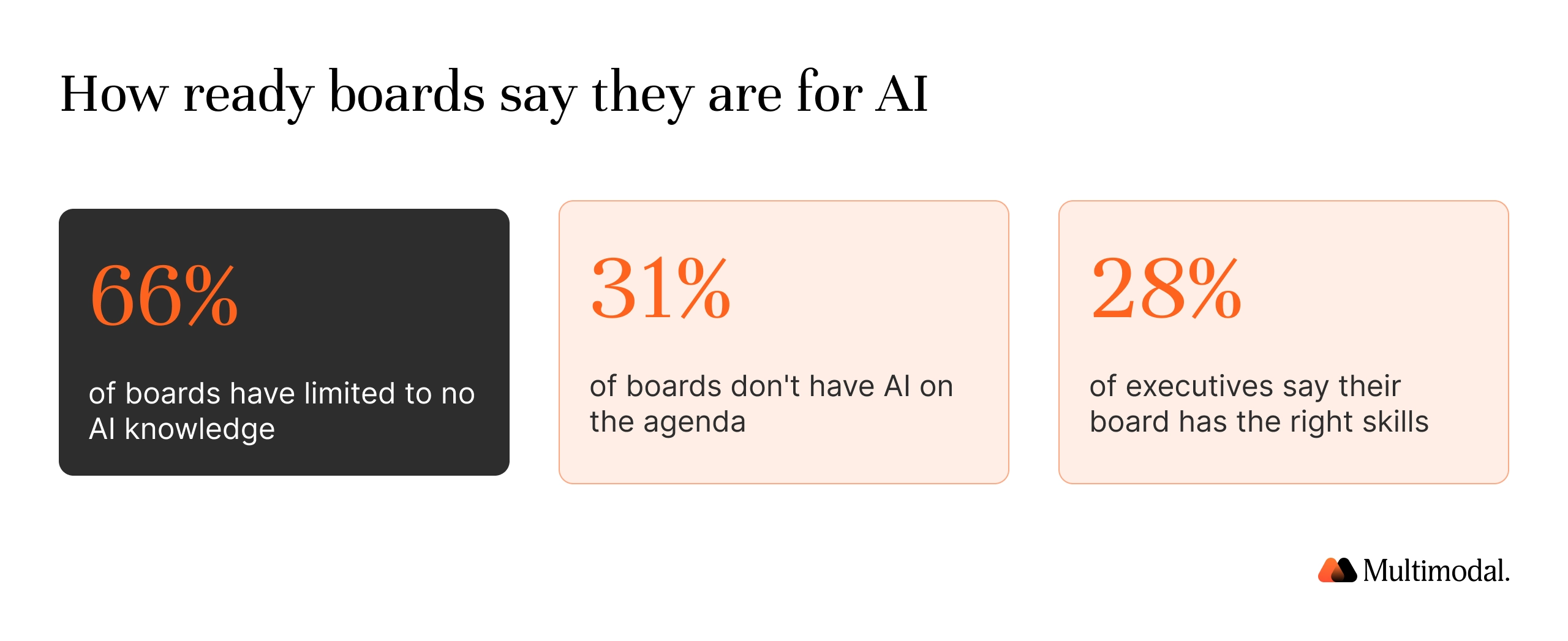
66% of directors worldwide say their boards have limited to no AI knowledge.
NCUA tied poor succession planning to almost a third of credit union consolidations.
The plan's recruiting strategy is where AI oversight becomes a named board skill.
Get 1% smarter about AI in financial services every week.
Receive weekly micro lessons on agentic AI, our company updates, and tips from our team right in your inbox. Unsubscribe anytime.
Thank you! Your submission has been received!
Oops! Something went wrong while submitting the form.
The AI modernization gap at credit unions is a governance gap before it is a technology gap. A volunteer board approves every AI dollar of directors, and most boards have never written down which of their members is responsible for understanding what they approve. Age is the visible symptom. Board succession planning is the fix because it is the one place a board must specify the skills its future directors need.
Adoption has outrun oversight. 59% of credit unions have deployed generative AI, and two-thirds of directors worldwide say their boards have "limited to no knowledge or experience" with AI. Here is what the board data says, what the NCUA succession rule changed on January 1, and five moves board leaders can make before the next election cycle.
Who Actually Approves a Credit Union's AI Budget?
The approver is a volunteer. 12 U.S.C. 1761a reads: "Only one board officer may be compensated as an officer of the board and the bylaws shall specify such position as well as the specific duties of each of the board officers." Everyone else serves the membership for nothing, and the board still holds the power to approve or defer every technology line.
The regulations name one competency a new director must acquire: under 12 CFR 701.4(b)(3), "a working familiarity with … basic finance and accounting practices" within six months. Finance is written into the job. Technology oversight appears nowhere in the rules.
"It's hard to ask a board of directors to say, hey, let's double our investment in software if they don't trust it… Earning that level of trust of the using of the software, I think you're going to see a lot more boards are going to be willing to make those more significant investments because they know that their responsibility is to the future of the credit union, not to just the present." — Jason Stverak, Chief Advocacy Officer, Defense Credit Union Council.
How Old Are Credit Union Boards, and Does It Matter?
The industry has fewer firm numbers than the conversation implies. The 2023 State of Credit Union Governance, co-published by CUES and Quantum Governance, found that 83% of credit union directors, committee members, and executives reported no term limits. Without term limits, board refreshment depends on individual directors deciding it is time to go. Public company boards, the closest measured benchmark, average 63.6 years old among independent directors.
On AI, the surveys agree. Among Deloitte's 695 directors and executives, 66% report limited to no AI knowledge, 31% have AI nowhere on the agenda, and 40% say AI has changed how they think about board makeup. Only 28% of executives believe their boards have the right skills and expertise.
The credit union figure describes refresh mechanics; the AI figures describe exposure. None describe competence by age. A director's birth year predicts nothing about their ability to ask the four questions that matter about any AI system: what data moves, what data is used, how long it is stored, and where the model is hosted. What predicts it is whether anyone was asked to own those questions. Regular board assessments and a skills matrix turn that 40% into a documented gap that a succession plan is built to address.
What Did the NCUA Succession Rule Change on January 1?
NCUA's 2022 proposed rule stated the importance of the topic plainly: "An NCUA analysis found that poor management succession planning was either a primary or secondary reason for almost a third (32 percent) of credit union consolidations." That proposal covered officers of the board, management officials, executive committee members, supervisory committee members and, where the bylaws provide for one, the credit committee.
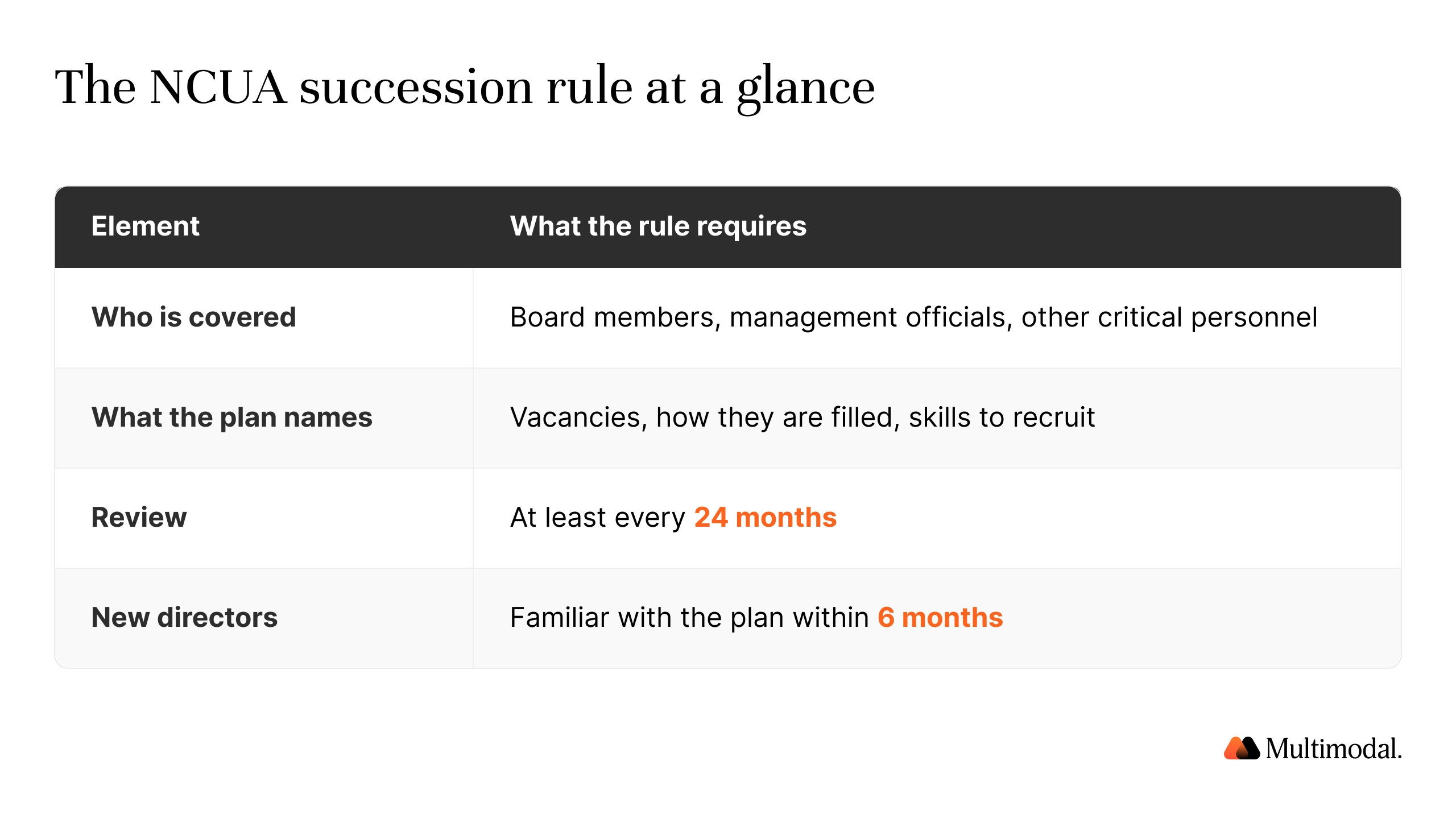
The final rule, effective January 1, 2026, narrowed the key positions to "members of the board of directors," management officials and assistant management officials, and "any other personnel the board of directors deems critical" (12 CFR 701.4(e)(2)), and applies to every federally insured credit union, state charters included.
The plan must cover anticipated vacancies and a recruiting strategy that "must consider how the selection and diversity of skills" promotes safe and sound operation. Boards review it "no less than every 24 months" (the proposal had asked for an annual review), and new directors must know it within six months.
The rule does not mention AI once, and that is the opportunity. A board that writes "technology and AI oversight" into its recruiting strategy must now, for the first time, establish a regulatory document that names the competency on which 2027 budget approval depends.
One correction: vendor blogs claim NCUA's 2026 supervisory priorities letter added AI oversight to the examination program. The January 14, 2026 letter contains no mention of AI, succession planning, or board governance.
Separately, the Credit Union Board Modernization Act, enacted in July 2026, allows eligible federal credit unions to "hold a minimum of six board meetings a year instead of the previously required 12". Fewer meetings mean fewer agenda slots for AI, which raises the priority of putting the skill in the seat.
Where the Gap Shows Up: The Budget Vote
A CEO brings an AI line to a board that meets six to twelve times a year, whose leadership has often been in place for many years, and whose only regulatory competency requirement is finance. Its honest options are three: approve on trust, defer, or ask questions it was never prepared to ask. Deferral is the most common outcome. Sizing the line is covered in our guide to how credit unions price AI; the governance question is whether the people voting can tell a sound case from a hopeful one.
"The board and our CEO, they knew that we had to modernize. They knew that we needed to transform the people because technology doesn't transform until people do. And so they knew that on the one hand that there had to be a ultimate change in how we do things. On the other hand, it's a lot of uncertainty, right? How are those things gonna go?" — Chris Ortega, Chief Information Officer, Lake Michigan Credit Union
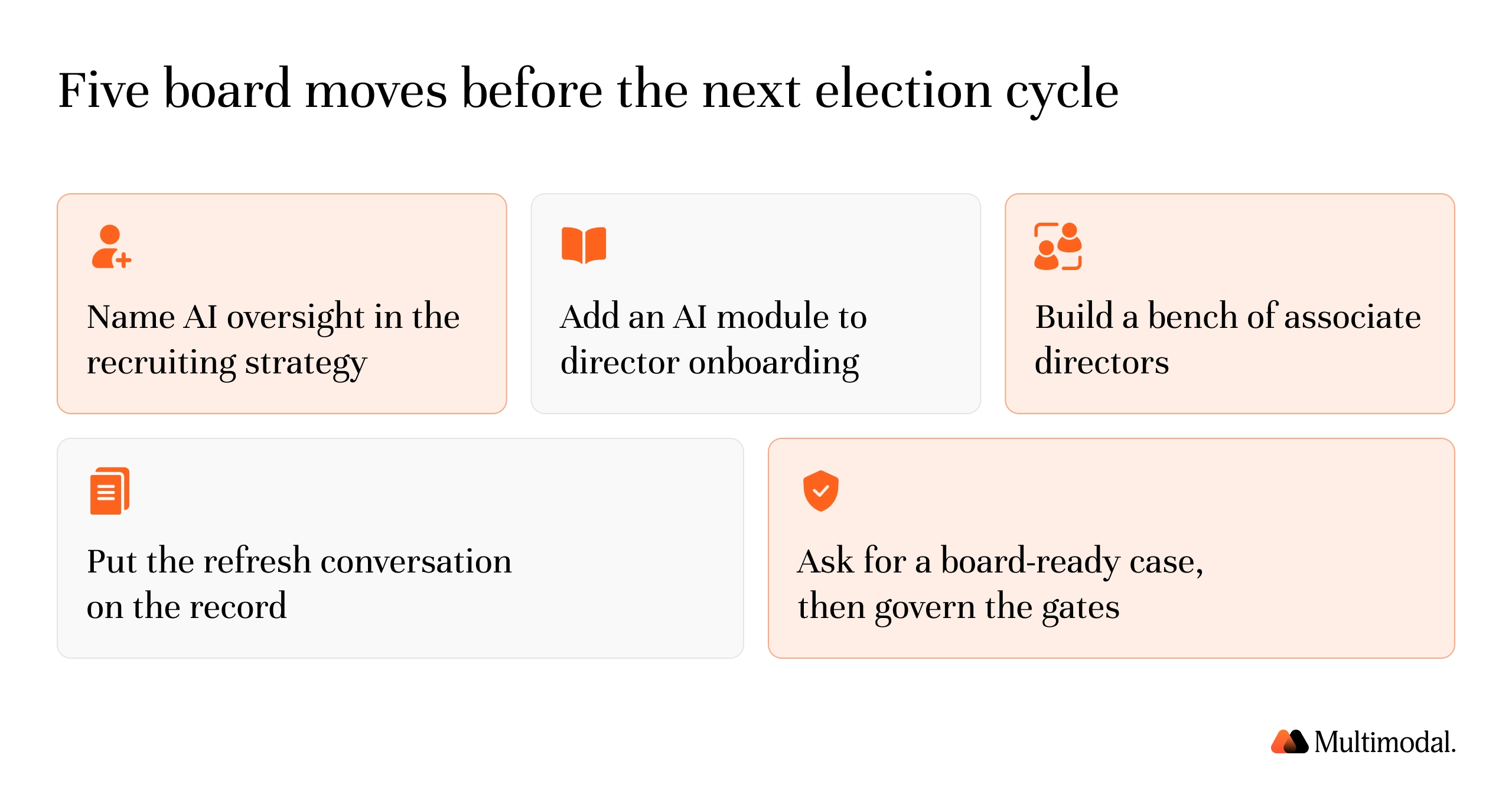
Five Moves a Board Can Make Before the Next Election Cycle
1. Write technology oversight into the recruiting strategy
Name AI and technology oversight as a required skill alongside finance, lending, and risk. Build a board composition matrix listing the skills the strategic plan needs over three to five years, mark which directors hold them, and let the gaps drive recruiting strategies for new members, including external candidates. That keeps board composition aligned with the organization's mission.
2. Give the six-month familiarity window a technology module
New directors already have six months to reach working familiarity with finance and the succession plan. Add a two-hour AI oversight briefing to the same onboarding pack. Structured onboarding is also where institutional knowledge is passed to the directors who assume the vacated seats.
3. Build the bench before the vacancy
The associate director programs allow a nominating committee to take a multiyear view. One Maryland credit union, for example, runs a two-tier volunteer pipeline and drew five applicants to its junior program in two weeks. A plan resting on one candidate is waiting to fail. Start recruiting for a known vacancy six months out and name an interim arrangement for the top role, whether it is titled CEO, president, or executive director.
4. Have the refresh conversation on the record
Filene describes two routes to board refreshment: formal, such as three or four three-year terms or a maximum re-election age, and informal, such as term expectations agreed in the board's principles of engagement. Whichever course the board chooses, minute it. Transparency about how seats turn over builds confidence among members and other stakeholders.
5. Ask management for a board-ready case, then govern the gates
Approve a case the board can read, then hold the gates. Our board-ready business case includes an ROI model, a governance checklist, a 90-day path with board gates and a board resolution template; the 13 questions to answer before implementing AI and our vendor due diligence questionnaire supply the questions for each gate.
What This Looks Like in Practice
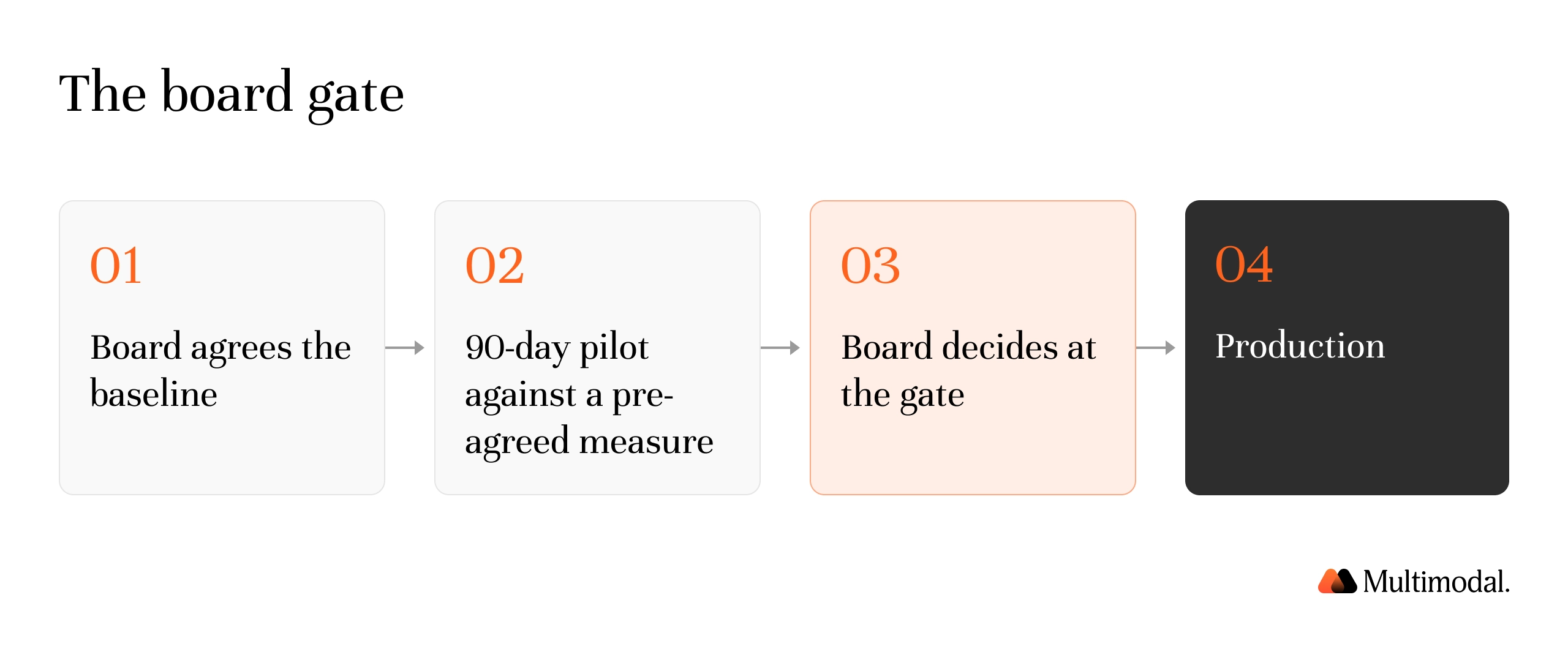
The pattern is a board gate: the board agrees a baseline for one workflow, management develops a 90-day pilot against a measure approved in advance, and the board decides at the gate with the number in front of it.
FORUM Credit Union's numbers show what reaches that gate after automating loan processing with AgentFlow: 99% data-extraction precision and 100% automated decisioning for the covered workflow, each measured on the credit union's own files with an audit trail. Hence, the board approved the results rather than a forecast. The same structure applies to loan file processing or any document-heavy part of operations, and it spends the team's resources on proof rather than pitches.
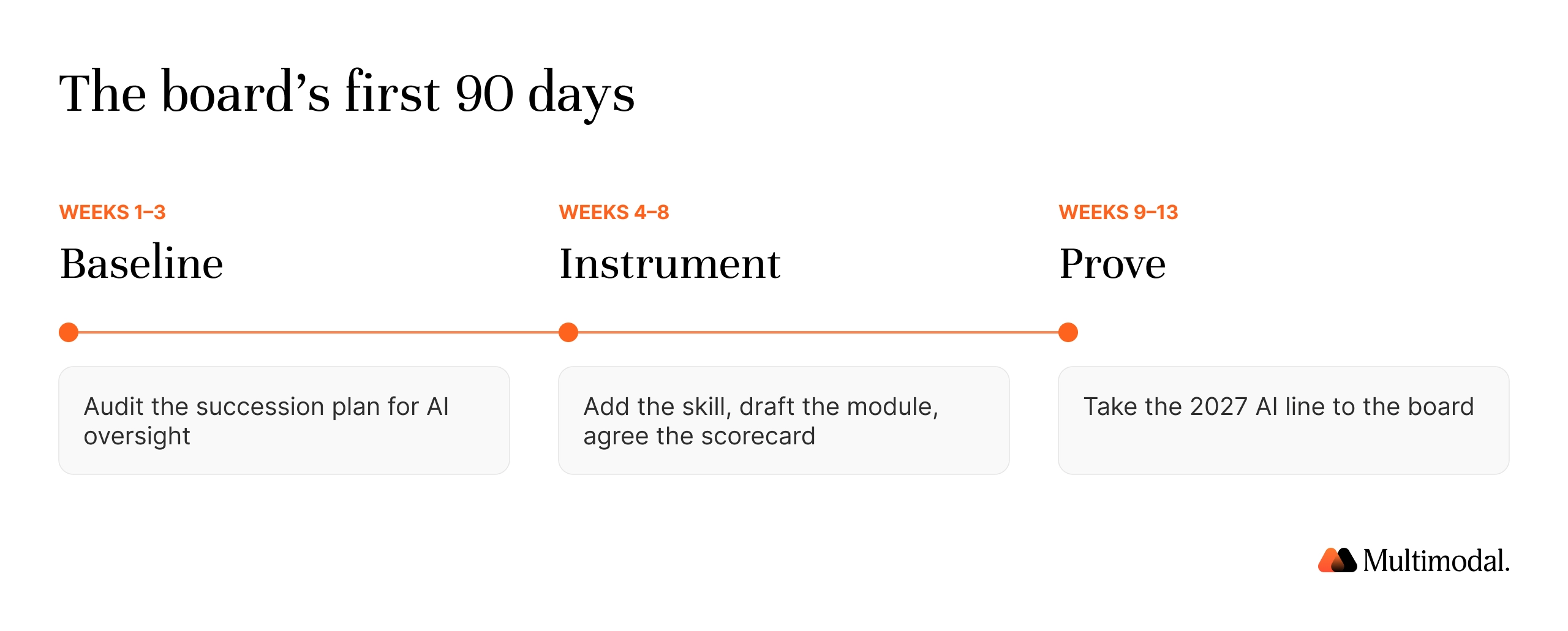
The Board's First 90 Days
Baseline (weeks 1-2). Pull the succession plan. Check whether any board position names AI oversight as a skill. Count the directors who have received an AI briefing.
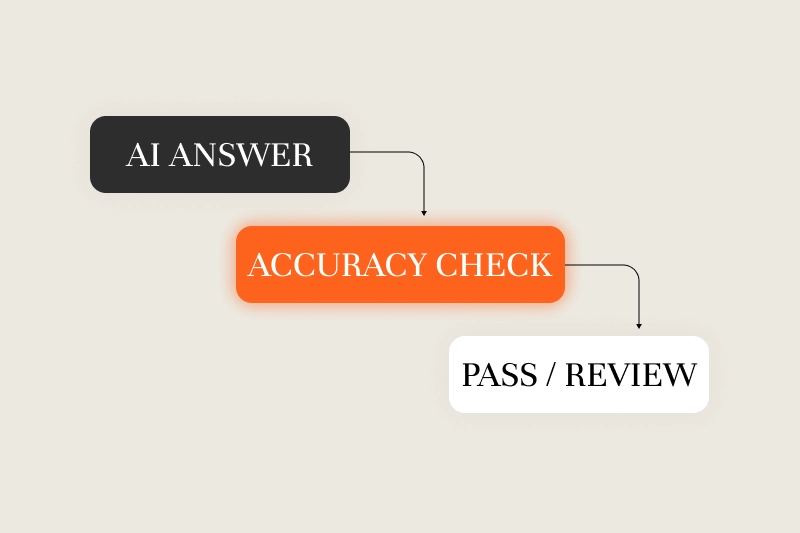
Instrument (weeks 3-8). Add the skill to the recruiting strategy and composition matrix. Draft the six-month module. Agree the quarterly AI scorecard; our guide to monitoring AI accuracy covers what goes on it.
Prove (weeks 9-13). Take the 2027 AI line to the board with the case, gate, and scorecard attached. Minute the refresh conversation. Set the next plan review date.
The Plan Is Due. Write the Skill Into It.
The rule now requires a written plan for every director seat; the plan must specify the skills the next directors need, and the 2027 AI budget will be voted on by whoever holds those seats. Boards that write the skill in will approve with confidence; boards that leave it out will keep deferring, and NCUA's own analysis says where deferral ultimately ends. The ask is one named competency, one honest conversation about refresh, and a case the board can read. That is the value of the plan, and the credit union's future success rides on it.
Bring us one lending or document workflow and your current board packet, and we will hand back the before-and-after numbers in the format a board resolution expects.
Take a Board-Ready AI Number Into the Room
Send one workflow. We return the before-and-after numbers for your board to approve.
Does the NCUA succession planning rule cover board members?
Yes. 12 CFR 701.4(e)(2) lists "members of the board of directors" first among the covered positions. The rule took effect on January 1, 2026; boards review the plan at least every 24 months.
Do credit union board members get paid?
Rarely. Under 12 U.S.C. 1761a, only one board officer of a federal credit union may be compensated, and the bylaws must specify which position. Every other director is a volunteer.
Does NCUA require directors to be trained on AI?
No. 12 CFR 701.4(b)(3) requires working familiarity with basic finance and accounting, and now with the succession plan. Nothing in the regulations names technology, so the board can add an AI module to the onboarding processes it already uses.
Does the 2026 NCUA supervisory priorities letter mention AI?
No. The January 14, 2026 letter does not mention AI, succession planning, or board governance. Examiners will review the written succession plan because the rule requires one.
What does the Credit Union Board Modernization Act change for boards?
Eligible federal credit unions may now hold a minimum of six board meetings a year instead of twelve, with at least one each quarter. New credit unions and those with low soundness ratings still meet monthly.

.svg)
.svg)

.avif)
.png)

.png)