Indirect Auto Lending Stipulations: Why Approved Loans Stall Before Funding
Approvals take seconds, and stips take days. See what indirect auto lending stipulations are, why packets fail, and how credit unions clear them faster.
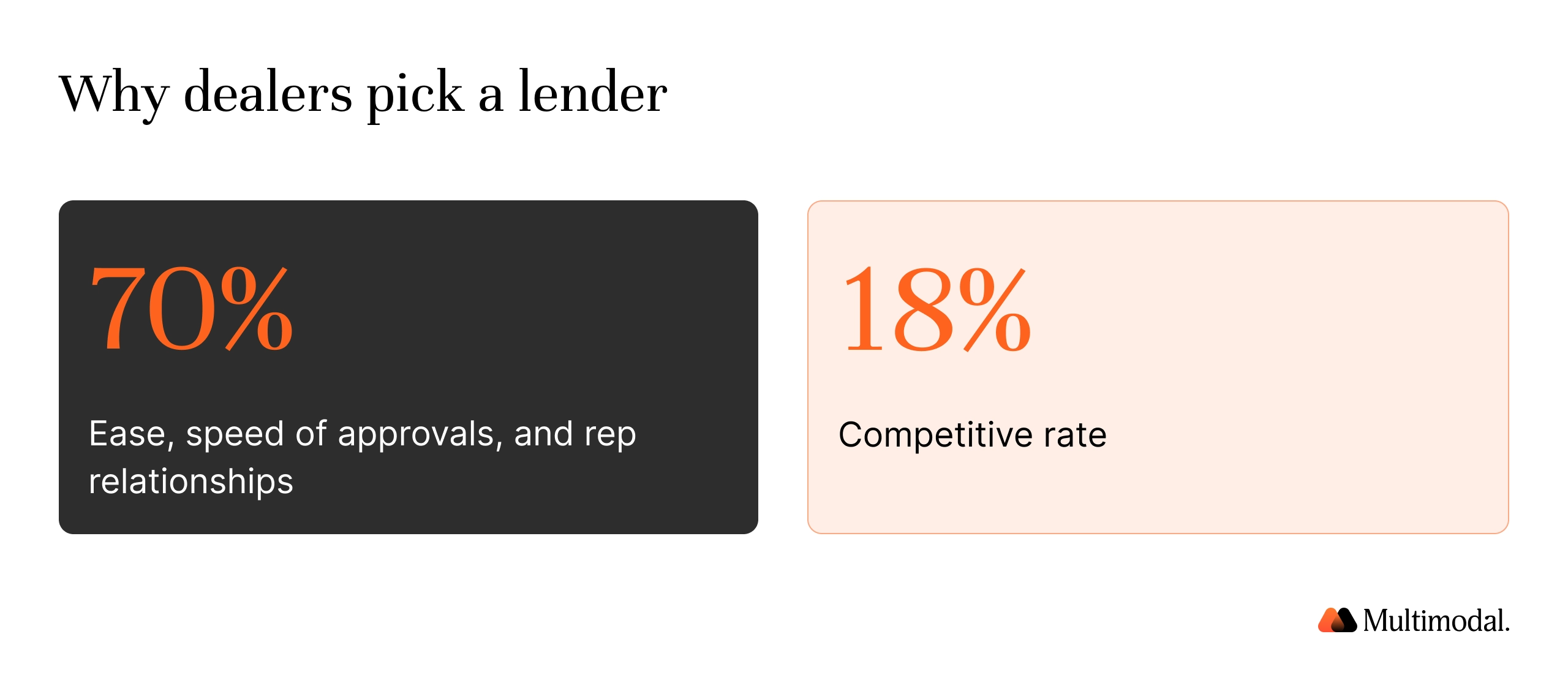
Dealers choose lenders on speed, not rate: 70% versus 18%.
Manual stip reviews delay funding 16 to 30 minutes for 55% of lenders.
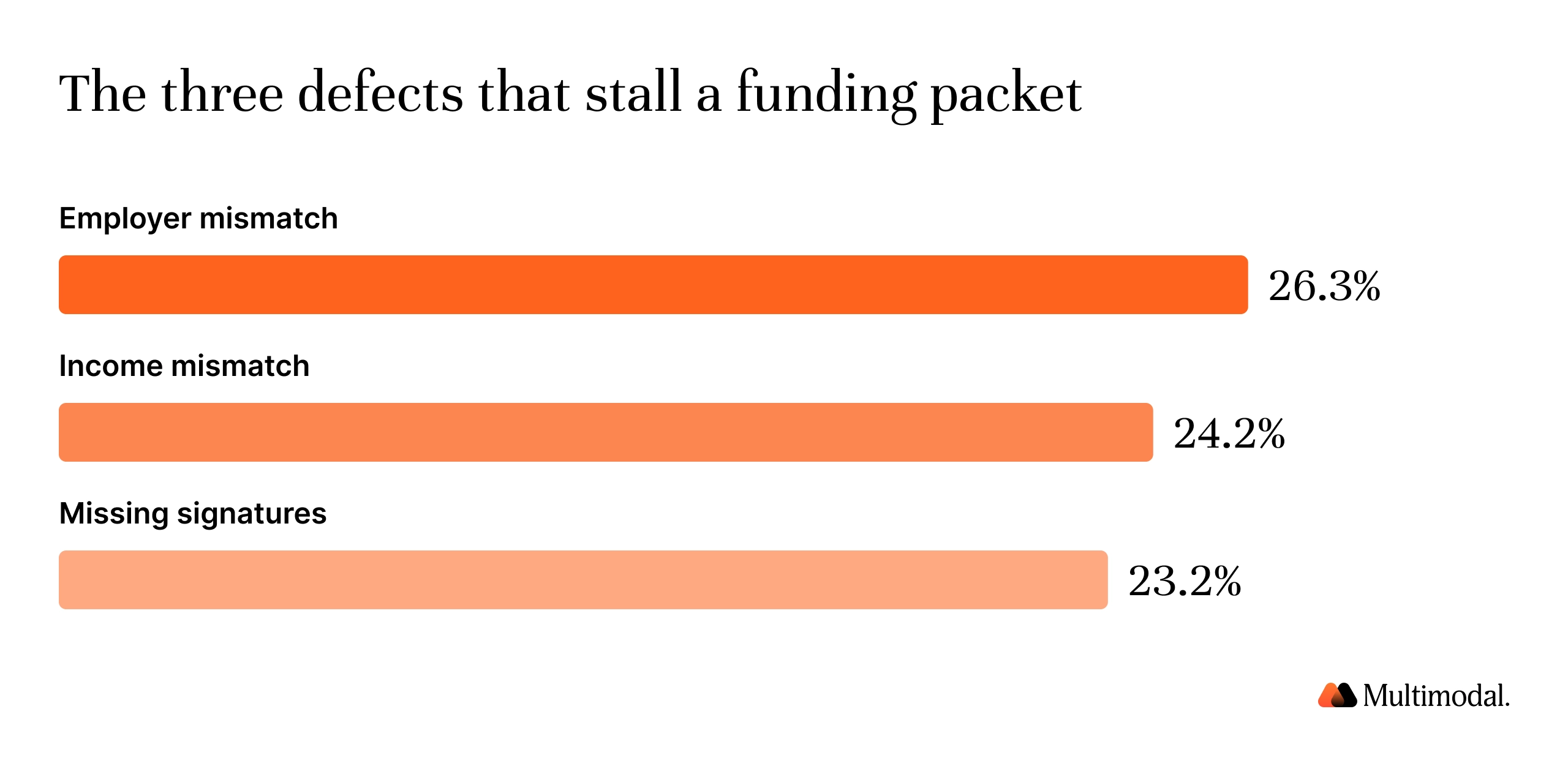
Employer mismatch, income mismatch, and missing signatures are the top three defects.
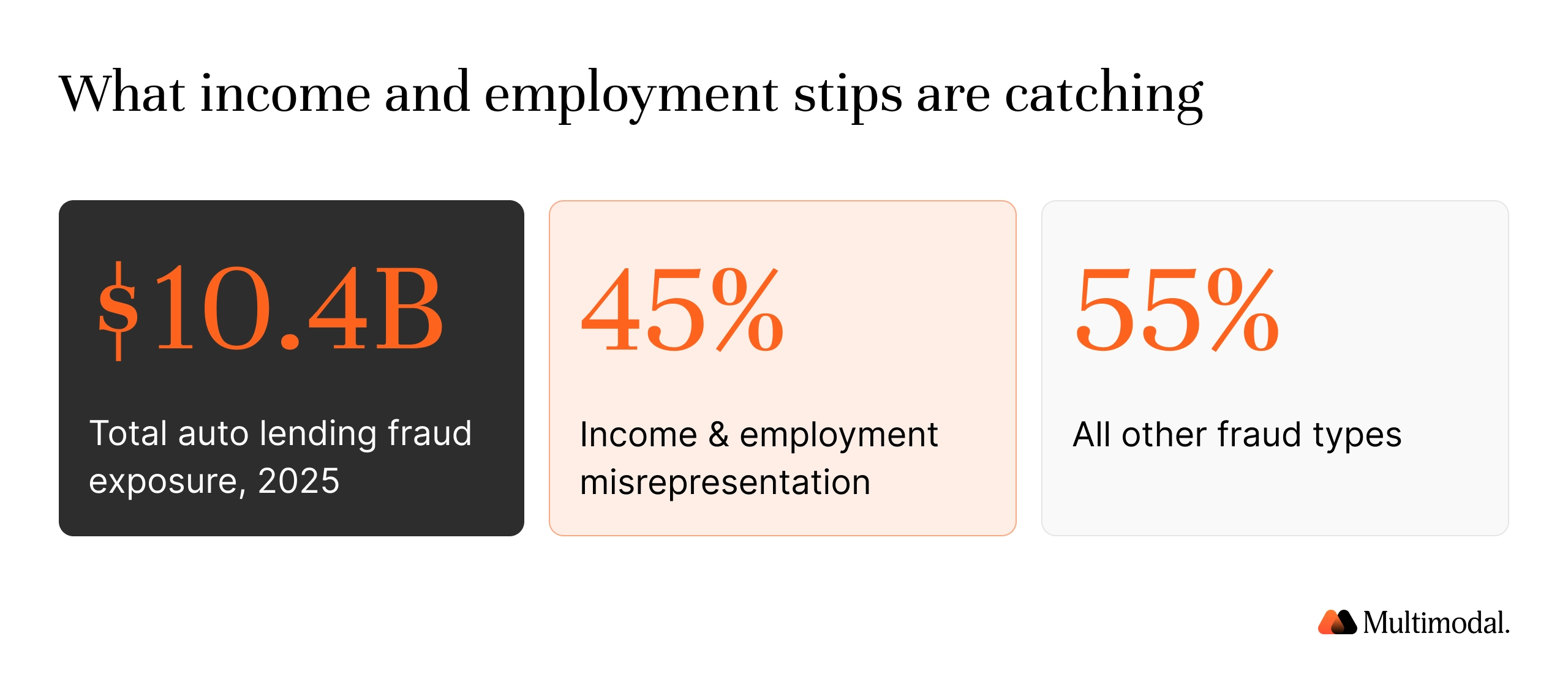
Income and employment fraud accounts for 45% of a record $10.4B in exposure.
NCUA puts completeness and accuracy verification on the credit union, never the dealer.
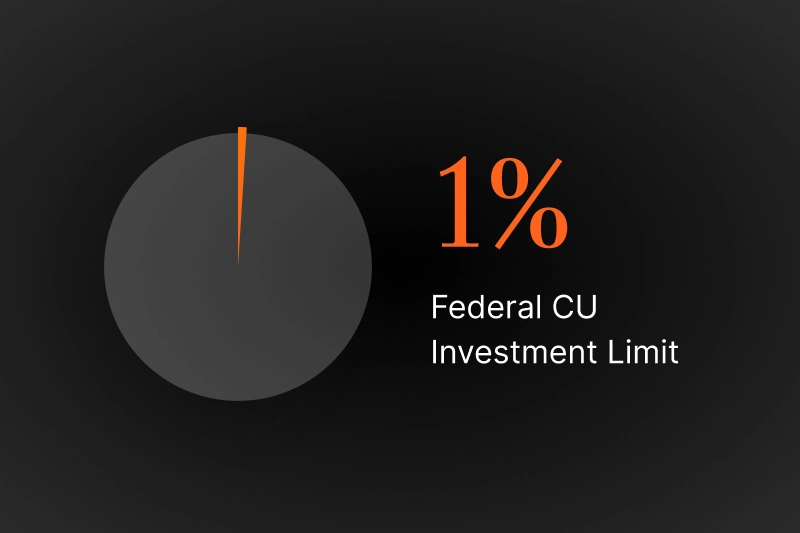
Get 1% smarter about AI in financial services every week.
Receive weekly micro lessons on agentic AI, our company updates, and tips from our team right in your inbox. Unsubscribe anytime.
Thank you! Your submission has been received!
Oops! Something went wrong while submitting the form.
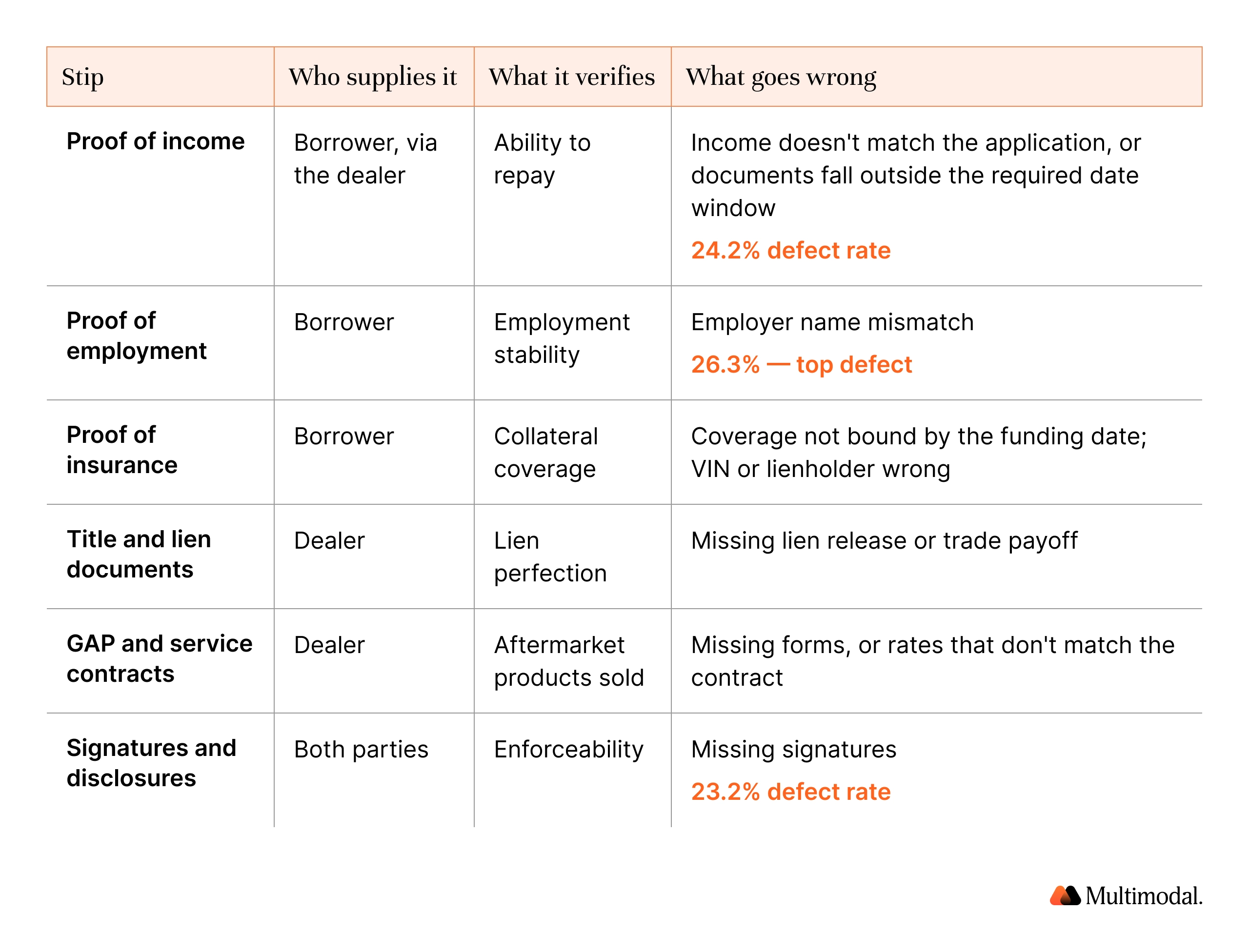
Loan stipulations, or stips, are the requirements a lender sets before a loan can fund: the conditions and documents that must be collected and verified, including proof of income, insurance, title and lien paperwork, GAP and service contracts, and signatures. Lenders impose conditions to verify a borrower's ability to repay before disbursing funds.
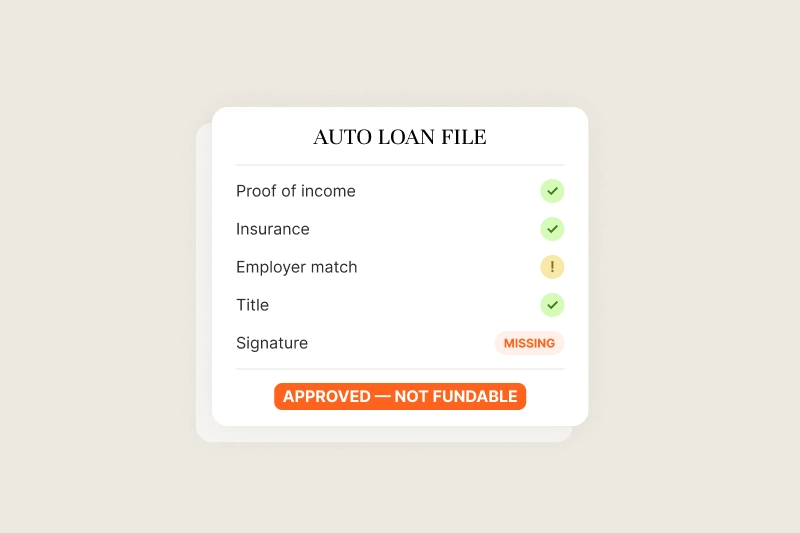
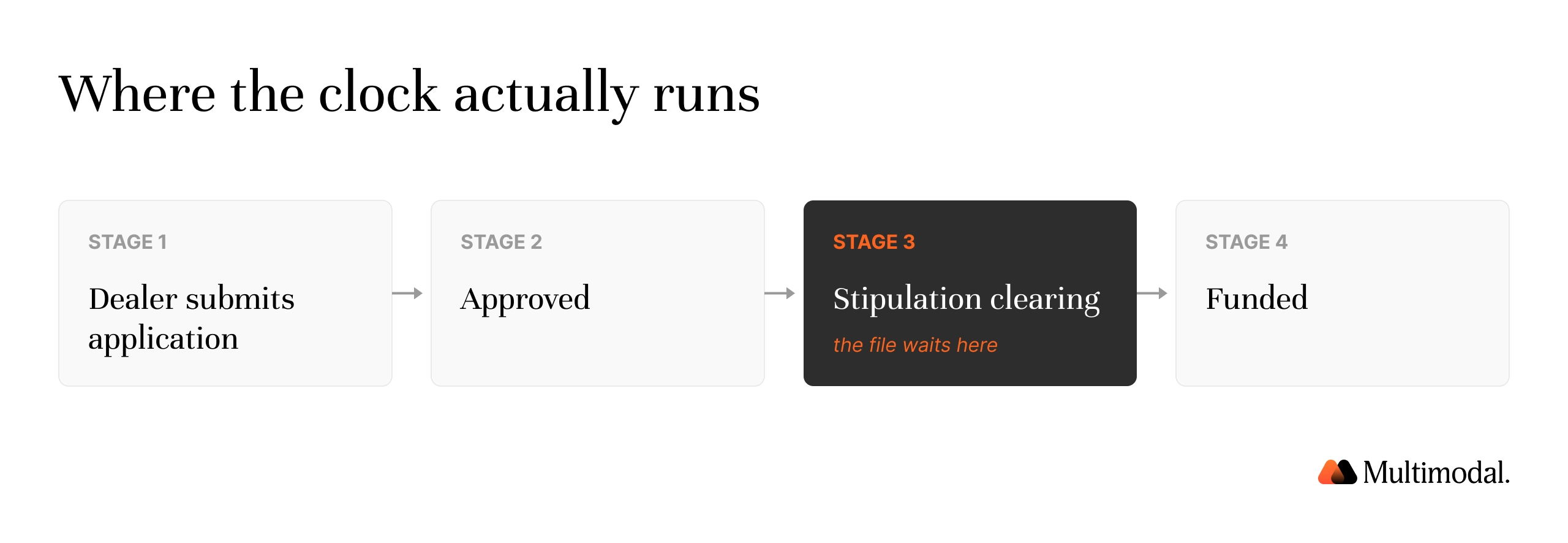
In indirect auto, the approval takes seconds, and the stips take days. That gap is the real subject of AI indirect auto lending at most credit unions today. Artificial intelligence already made the credit decision fast. Indirect auto lending stipulations are where the funding clock actually runs.
What Are Stipulations in Indirect Auto Lending?
A stipulation is a condition attached to an approval. The decision says yes at a price. The stip list specifies what must be in the file before the credit union releases funds to the dealer.
In the indirect channel, the dealer assembles that file and submits it, and the funding team confirms every required document is present, current, and consistent with the application.
Stips fall into three groups. Consumer stips cover identity, residence, income, and insurance. Dealer stips cover the title application, lien release, trade payoff, GAP and service contract forms, and the odometer statement. Collateral and contract stips cover VIN match, signatures, and disclosures.
One clarification, because a growing number of searchers arrive with the other meaning. In litigation, a stipulation is an agreement between parties, signed and submitted to the court, sometimes entered as a court order or consent judgment, with penalties decided by a judge and the paperwork handled by a legal team. In lending, there is no court involvement.
Why Do Stipulations, Not Approvals, Delay Indirect Auto Funding?
Credit unions spent a decade speeding up approvals. Machine learning scores credit risk in seconds, and faster approvals are table stakes in the dealer channel. The bottleneck moved downstream, into funding operations, where a person opens a packet and decides what is missing.
That work is measurable. Manual stipulation reviews cause funding delays of 16 to 30 minutes for 55% of lenders, and 58% estimate the cost of reviewing a single flagged loan file at $50 to $100. Over the course of a month, those operational costs add to the fees and staffing expenses a credit union already incurs for every indirect deal.
The defects are predictable. Employer mismatch (26.3%), income mismatch (24.2%), and missing signatures (23.2%) are the three biggest documentation problems auto finance leaders report. Each is a comparison between two documents, or a data entry slip.
Our own data agrees. In one $4 billion credit union's indirect auto workflow, 97% of incoming loan packets arrived incomplete, and one in five carried a red flag. Manual funding review there ran 40 minutes to 3.5 hours per application.
Who Owns Which Layer: Decision, Origination, or Funding?
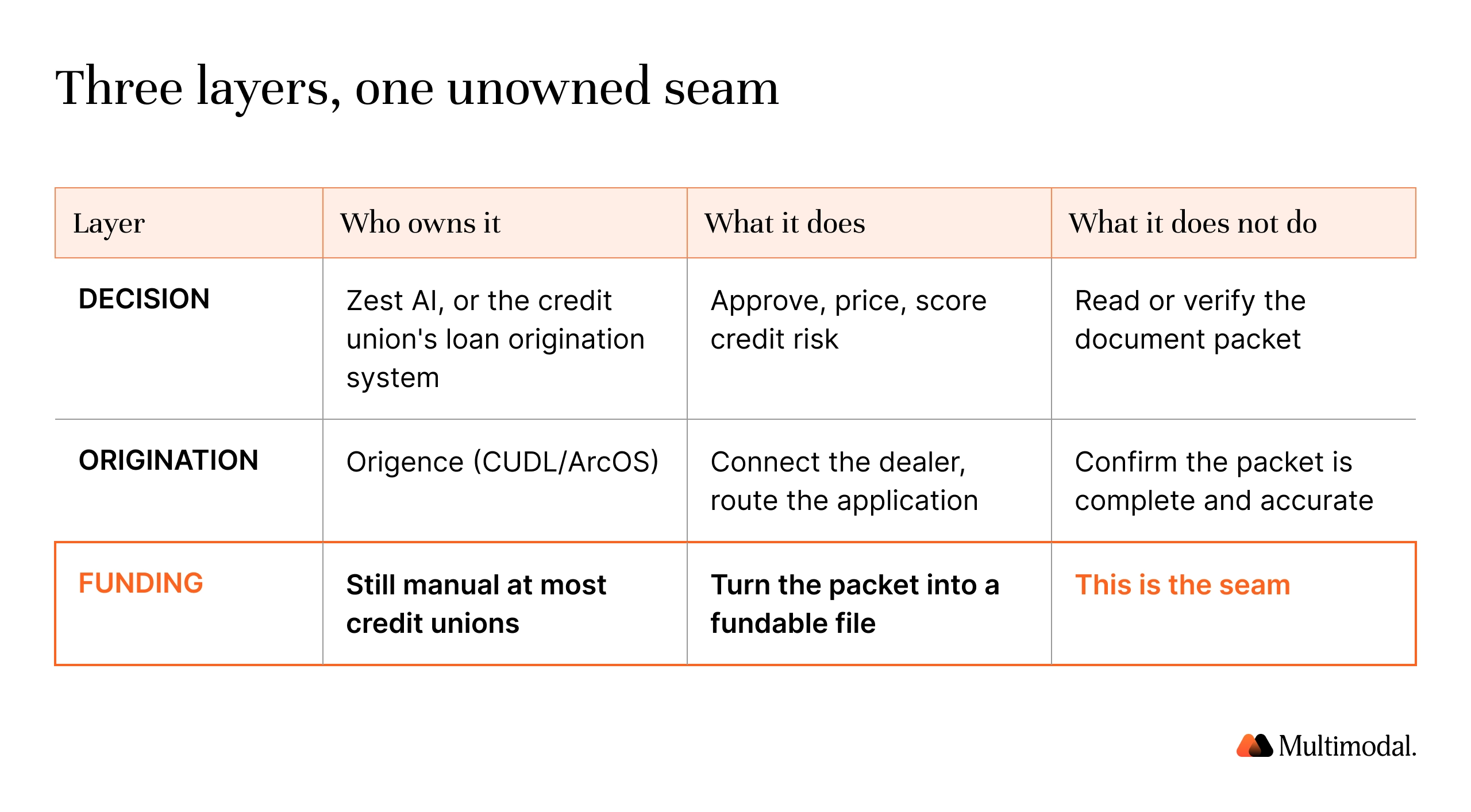
The decision layer approves, prices, and scores risk, using machine learning and alternative data to evaluate borrowers beyond traditional scoring. That is the part of the underwriting process that credit unions already modernized. The origination layer routes the application. The funding layer turns a submitted packet into a fundable file, and it is still a person with a checklist.
Even the most automated lenders stop here. Upstart reported that 91% of loans were fully automated in Q1 2026, and its metric definition includes final funding for personal loans but stops at signing for auto loans. The auto file still needs a human before money moves.
A generative AI chatbot does not close this gap. Conversational tools answer questions from members, handle routine customer inquiries, and improve response times at the front desk. They do not open a deal jacket and compare an employer name across four documents.
We are not a chatbot, nor a decision engine. We process the loan file.
The Dealer Is Your Customer: What Slow Stip Clearing Really Costs
The borrower signs the contract. The dealer decides where the next deal goes.
While a competitive rate is the most common single reason dealer finance professionals send business to a lender at 18%, ease, speed of approvals, and sales representative relationships collectively account for 70% of the reasons dealers choose a lender.
Speed shows up inside the interaction. Satisfaction for lenders delivering first-contact resolution is 841, against 599 when a second contact is needed, a 242-point gap. Every stip that generates a callback is a second contact. Consistency scores higher still, nearly quadrupling to 967 when dealers experience consistent decisions, and 74% want to self-serve, which an exception list with real-time insights delivers and a voicemail does not.
The capacity math compounds. One credit union on our research committee works with roughly 560 dealerships, and a single funding processor caps out at about 150 loans per month. Every incomplete packet is a callback, a day of contract-in-transit aging, and a borrower waiting at the dealership. Dealers score the lender, while their customers score the dealership, so a slow queue results in lower customer satisfaction for people who never see the credit union's name behind the delay.
The stakes are high: indirect loans accounted for 55% of credit union vehicle balances in Q2 2024, and credit unions' auto market share sank to 16.1% by mid-2024.
"The aspirational is same day: turning that money around to them same day. We are generally one, max two days on anything normal. Now, there are always files that come in that have some issues that we have to work through, and we can't fund those right away." Lisa Highley, Chief Lending Officer, University of Kentucky Federal Credit Union
How AI Clears Loan Stipulations, Step by Step
AI indirect auto lending earns most of its remaining value here, after the decision. An AI agent working the funding desk handles the comparison work that consumes a funder's day.
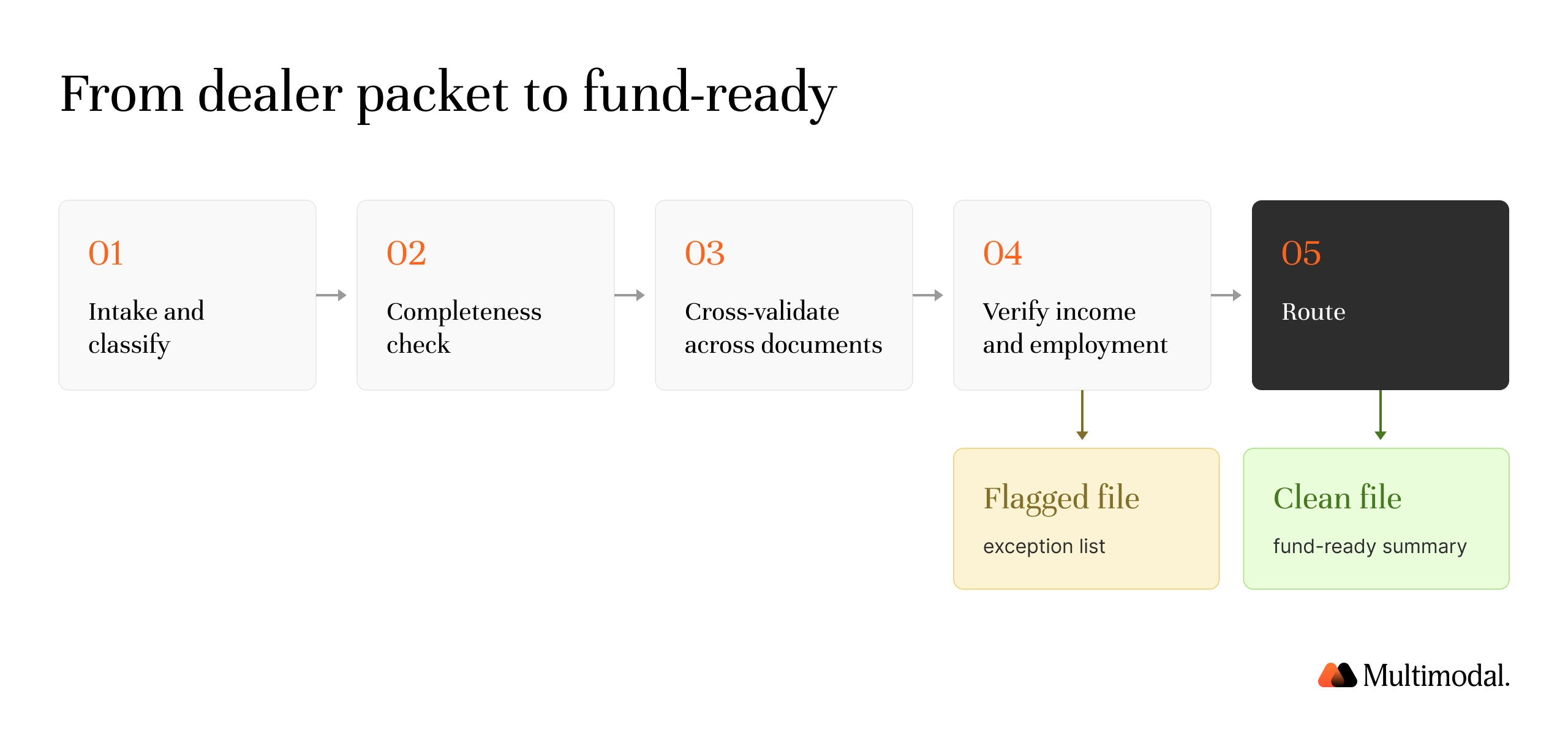
Intake and classify every document. The packet arrives as a mix of scans, photos, and attachments, in no particular order, and the agent classifies each by content rather than filename.
Check completeness against your own stip checklist. Rules vary by program, dealer, and state, so the check reflects your policy rather than a vendor default.
Cross-validate data across documents. Name, address, VIN, lienholder, price, and term get compared across the application, contract, insurance binder, and title paperwork. Real-time document verification catches a mismatch before the file ages.
Verify income and employment. The agent reads pay stubs, W-2s, and bank statements, checks each date against the required window, and calculates income consistently across loan officers.
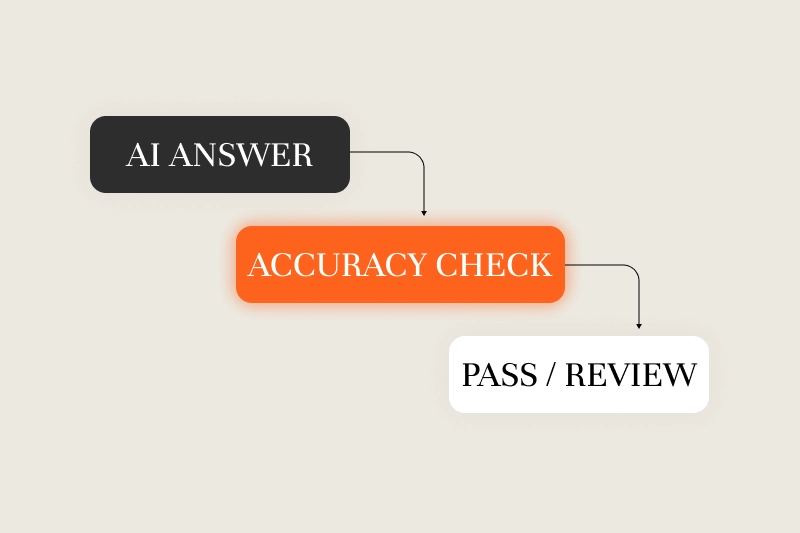
Produce a fund-ready summary or a dealer follow-up. Clean files get a summary. Others get an exception list citing the exact page and field, plus an editable message to submit back to the dealer.
Template-based extraction and robotic process automation break when a document arrives in an unexpected format, which is the normal condition of a dealer packet.
A Worked Example: One Stip Sheet, Cleared
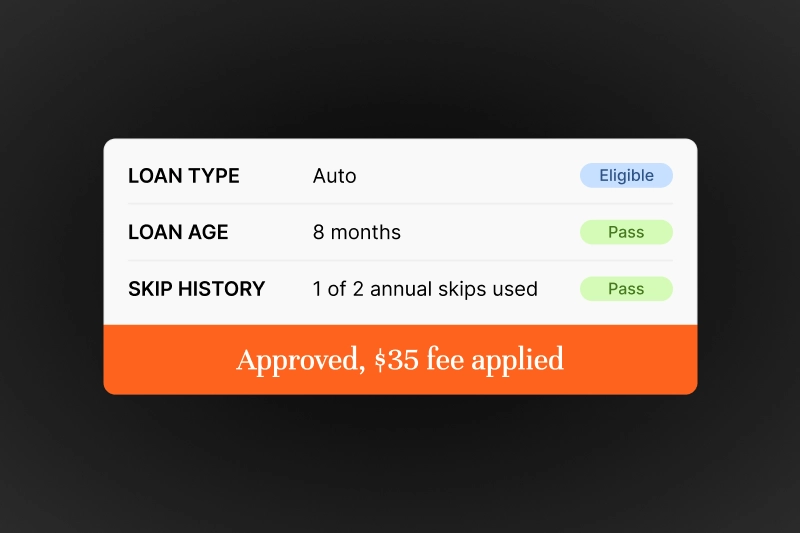
Three items clear with no human involvement. Three route to the funder with the page and field cited, and one consolidated follow-up covers all three rather than three separate calls.
The important information is the shape of the work, and the operational impact follows. The funder's day changes from opening every file to reviewing exceptions. An efficient funding desk funds clean loans faster, and those benefits show up as better customer satisfaction at the dealership and an improved customer experience for the member.
What Does NCUA Guidance Say About Stipulation Verification?
Stipulation discipline is a supervisory expectation, not only an efficiency question.
NCUA Letter 10-CU-15 states that "regardless of the type of indirect lending relationship established, no credit union should delegate loan approval authority to a third party," and requires written contracts to address credit criteria and documentation standards.
The most relevant line sits in the fraud prevention controls, where NCUA lists "quality control processes to ensure the credit union receives perfected liens, proof of insurance, and other necessary documentation, in addition to verifying the completeness, accuracy, and validity of loan deals." That sentence describes stip clearing, written by the regulator in 2010.
The fraud economics explain the teeth. Auto lending fraud exposure reached $10.4 billion in 2025, up from $9.2 billion in 2024, and income and employment misrepresentation accounts for 45% of it. Income and employment stips exist to catch exactly that, so removing them for speed trades a documented control for a few minutes per file. Detection is also becoming harder: 55% of lenders describe themselves as only "slightly confident" in their ability to detect counterfeit documents produced by generative AI.
Consistent automated review affects both problems. Every check is logged in an audit trail throughout the file's life, and borrower and customer data remain within the credit union's controls rather than in a funder's inbox.
What Are the Alternatives to Manual Stipulation Review?
Replacing the core or the loan origination system is not on this list. The funding desk sits downstream of both, so that a document layer can run alongside the technology already in place, and the same layer serves the other lines the back office handles, including mortgages and personal loans.
"On the consumer lending, [AI] definitely did prove that it can help because you can make decisions faster. It can help with consistent decisions as well and learn the pattern and do the underwriting based on criteria from there... You still need humans to be involved in the process, definitely, especially when it comes to exceptions and any adverse actions." Youssi Farag, CFO, WEOKIE Federal Credit Union
The Stip List Is Where Dealer Loyalty Is Won
Credit unions already won the approval race. The funding desk never got the same level of investment, and that is where the packet lands and where the dealer's next decision is made. Dealers score lenders on ease and speed, punish the second phone call by 242 satisfaction points, and reward consistency above everything else.
The credit unions that win the next few years of indirect auto will treat the funding file as a competitive asset. The defects repeat, and the review is exactly the comparison an agent handles well while people keep the exceptions.
Bring your funding checklist and one sample loan packet. In a 30-minute working session, we will run your documents through AgentFlow and show you which stips clear automatically and which route to your team.
Fund the Clean Files Without the Callback
Give us one week of dealer packets. We will show you how many clear with no human touch, how many route to a funder, and how many callbacks disappear.
Stipulations are the documentation conditions a credit union attaches to an approved indirect auto loan before it funds: proof of income, employment, insurance, title and lien paperwork, GAP and service contracts, and signatures. The dealer collects them, and the credit union verifies them.
What does it mean to clear stipulations on a loan?
Clearing stips means confirming every required document is present, current, and consistent with the application, then releasing the loan for funding. Until the last stip clears, the dealer waits for payment.
How long does stipulation clearing take?
Manual reviews add 16 to 30 minutes of funding delay for 55% of lenders. In our own testing, full manual review ran 40 minutes to 3.5 hours per application.
Can a credit union let the dealer clear its own stips?
No. NCUA guidance states that no credit union should delegate loan approval authority to a third party and places quality control on the completeness and accuracy of its documentation.
What is contracts in transit (CIT)?
Contracts in transit is money a dealer has advanced on a sold vehicle that the lender has not yet funded. Every day a packet sits with an open stip is a day of CIT aging, and delayed payments tie up the dealership's working capital.

.svg)
.svg)

.avif)
.png)

.png)