How Community Banks Are Using AI Agents to Compete With Megabanks (Without a Megabank Tech Budget)
AI agents in banking are closing the gap between community banks and megabanks. See the 5 workflows community banks are shipping faster than JPMorgan and BofA.
Leverage now decides which banks ship agentic workflows first, regardless of tech budget.
Research confirms that rules-based AML systems generate over 90% false positives.
Community bank tech architecture is an advantage in integration, not a constraint.
Human-in-the-loop and transparent audit trails neutralize regulatory risk in production.
A focused 90-day deployment beats a multi-year AI strategy review every time.
Get 1% smarter about AI in financial services every week.
Receive weekly micro lessons on agentic AI, our company updates, and tips from our team right in your inbox. Unsubscribe anytime.
Thank you! Your submission has been received!
Oops! Something went wrong while submitting the form.
JPMorgan Chase plans to spend approximately $19.8 billion on technology in 2026, up 10% over its 2025 plan of roughly $18 billion. Bank of America spends roughly $13.5 billion a year on technology, with over $4 billion of that allocated to new initiatives, including AI. Citigroup invested $11.8 billion in technology in 2024, with an additional $2.9 billion in transformation initiatives.
A community bank with $2 billion in assets does not get to spend like that, and it does not need to. The workflows that matter most inside a community charter, deposit operations, BSA/AML triage, SBA and CRE origination, exception handling, and audit prep are not the workflows the megabank tech stack was built to win. They are the workflows that agentic AI is built to win.
This piece argues that the gap between community banks and megabanks has shifted from a budget gap to a leverage gap, and that finance leaders at institutions with $250M to $10B in AUM can now deploy AI agents on the same workflows that JPMorgan uses, often faster, without rebuilding their core systems. The frame is simple: stop comparing tech budgets, start comparing shipped workflows.
Where the Megabank Tech Moat Actually Ends
The headline tech spend at the largest US financial institutions is real and disclosed. JPMorgan Chase guided to approximately $18 billion in 2025 technology spend at its May 2025 Investor Day, and to approximately $19.8 billion for 2026 in subsequent earnings materials. Bank of America runs at roughly $13.5 billion a year on technology, with more than $4 billion allocated to new initiatives, including AI. Citigroup invested $11.8 billion in technology in 2024, with an additional $2.9 billion in transformation initiatives across infrastructure, platforms, applications, and data.
That spend is a moat. It is also misallocated to the workflows on which a $2 billion community bank actually competes. Across financial services institutions of this size, artificial intelligence is seen as a way to reduce operational costs and eliminate human error in financial operations, not as a way to build a Wall Street platform.
A meaningful share of megabank technology spending underwrites capabilities a community bank will never need: low-latency execution infrastructure, multi-asset capital markets platforms, prop trading systems, brand-grade fraud detection across hundreds of millions of accounts, and global regulatory reporting across multiple jurisdictions. That budget protects revenue lines that the community charter does not operate.
The workflows where community banks compete, member and small business relationships, deposit operations, BSA/AML alert review, SBA and commercial loan origination, mortgage servicing, exam prep, are operationally heavy but architecturally narrow. They run on a handful of systems (FIS, Fiserv, Jack Henry, the core banking provider, the loan origination system, and the BSA/AML monitoring vendor). They are workflows with clean, contained data sources, defined audit trails, and well-understood regulatory requirements.
That is exactly the surface where AI agents in banking deployments produce measurable value the fastest.
What Leverage Means in Agentic AI Banking
Leverage, in the context of agentic AI banking, is the ratio of work shipped to dollars and headcount required to ship it. Community banks have a structural leverage advantage across four dimensions, and agentic AI compounds each.
Workflow leverage.
A single agent can absorb routine and repetitive tasks in an operations queue: pulling customer information from multiple systems, comparing transaction patterns against expected behavior, building risk scores from thousands of data points, drafting a disposition memo, and routing exceptions for human review.
In more complex workflows, multiple agents can coordinate: one agent retrieves financial data, another evaluates risk, and others handle drafting and routing, all with minimal human intervention in routine cases. The same agentic workflow that takes 8 to 12 hours of analyst time across a megabank operations floor can be compressed to minutes when data sources are fewer and decision rules are clearer.
2. Vendor leverage.
Agentic AI platforms deploy in weeks. Core banking replacements run 18 to 36 months in typical industry implementations. Community banks that buy an agentic layer on top of their existing core capture meaningful workflow value without taking on a core conversion. Many banks at the $1B to $5B AUM tier are already running this pattern.
3. Data leverage.
Community bank data is cleaner—fewer mergers, fewer legacy core migrations, fewer data domains stitched together by acquisition. A megabank carries decades of M&A scars in its customer data and credit history records. A community bank often has one core, one CRM, one loan origination system, and one set of customer records. Cleaner financial data means agentic AI systems produce more reliable risk and credit assessment outputs from day one, with fewer issues due to biased or incomplete data.
4. Decision leverage.
A community bank CEO can greenlight a 90-day deployment in a single board meeting. The equivalent decision at a global bank passes through model risk, third-party risk, enterprise architecture, data privacy, and regulatory steering review groups. The community bank ships while the megabank schedules its next working session.
Put together, those four leverage points explain why community banks at the $1B AUM tier can deploy autonomous AI agents on a target workflow faster than a megabank can finalize its vendor selection. The institutions that operate efficiently here are those that align their financial services strategy with their integration surface, not the other way around.
5 Agentic AI Workflows Community Banks Should Deploy First
These are five workflows community banks should prioritize for their first agentic AI deployments. Each one has a contained data surface, clear regulatory expectations, and a defined operational baseline that makes the ROI measurable within one quarter.
Where US community banks have already announced public deployments on these workflows, the table notes them directly.
The pattern across all five: community banks can ship these agentic workflows faster than megabanks because the integration surface is smaller, the decision-makers are closer to the work, and the regulatory environment, while strict, is contained within fewer relationships.
3 Community Bank Advantages AI Agents Amplify
Community banks frequently treat their operating model as a constraint. In the agentic AI era, those same characteristics function as leverage multipliers.
Fewer cores, fewer systems. A typical $1B AUM community bank runs three to six material systems. A global bank carries dozens of cores from a generation of acquisitions and divestitures. Agentic AI platforms shorten time-to-value by integrating with fewer systems. The integration surface is the constraint, and community banks own a smaller one.
Closer customer relationships. A community bank knows its small business borrowers by name. That relationship is data in itself. When an agentic AI system has access to that context, it produces better risk assessments and more personalized service than a model trained solely on transaction data. The same agent who drafts a credit memo for a small-business loan at a community bank has access to richer customer information than its counterpart at a megabank, which often has only a structured transaction record.
Single-decision-maker velocity. A community bank CEO can move from problem identification to deployed agentic workflow in 90 days. At a megabank, the same decision passes through multiple committee reviews. Velocity is leverage, and community banks have a velocity edge that agentic AI compounds. Deployment speed becomes part of business strategy, not an IT timeline.
Where Community Banks Still Lose to Megabanks
The leverage argument is real. The disadvantages are also real.
Talent gravity. Megabanks recruit AI and ML PhDs whose compensation no community charter can match. The counter is to buy agentic AI platforms rather than build AI models in-house.
Brand permission. Consumers default to Chase. Community banks counter with a relationship moat and agent-augmented advisors who can offer personalized financial advice at a scale previously reserved for private banks. Generative AI supports the advisor; the relationship still carries trust.
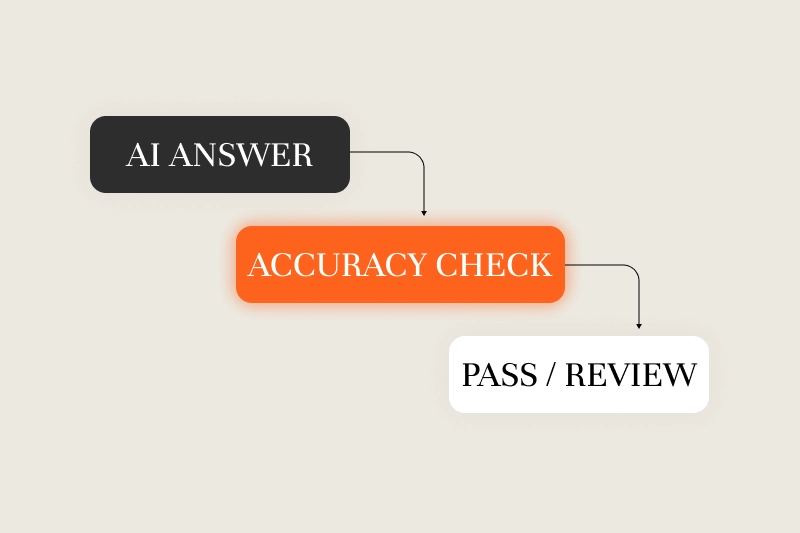
Cost of regulatory error. A compliance failure inside a $2B community bank is a material event. Two principles neutralize this. First, human-in-the-loop on every agent decision that touches credit risk, fraud detection, or regulatory compliance, with the agent producing a draft and a citation trail, and a human approver signing off. Second, transparent audit trails that show every data point the agent considered, every external data input, every policy citation, and every action taken.
That is how community banks demonstrate compliance to examiners while still capturing the operational efficiency upside. Sensitive data handling, including PII in loan files and member records, is subject to the same controls that govern the existing core: encryption at rest and in transit, role-based access, and explicit retention policies.
Community banks do not eliminate these risks; they design around them. Maintaining accountability is the ethical baseline for any agentic AI deployment in the banking industry, and the ethical considerations around model bias, explainability, and fair lending sit on the same governance surface as the regulatory ones. Market volatility adds a second dimension, since model behavior under stress is now part of what examiners expect institutions to demonstrate.
A 90-Day Playbook for the First 3 Workflows
Days 0 to 30: Pick one back-office workflow with measurable ops cost.
The right first workflow is BSA/AML alert triage. It has a clear baseline (current false positive rate, analyst hours per alert), a contained data surface (the BSA/AML monitoring system, the core, the customer record), and clear regulatory expectations. The agent reviews alerts, pulls context, scores risk, and routes for human review. Measure FTE-hours saved per week.
Days 30 to 60: Deploy with the vendor on the existing core.
Do not undertake a core conversion. The agentic AI layer sits above the core banking system, reads from it, and writes back to defined endpoints. Run the workflow in a shadow mode for two weeks: the agent's recommendation runs alongside the human analyst's decision. Track agreement rate, exception cases, and any drift. Move to live disposition only when shadow mode shows stable agreement at the threshold that the compliance officer signs off on.
Days 60 to 90: Expand to a second workflow and brief the board on outcomes.
The right second workflow is either deposit operations exceptions or SBA loan packet review. The board update is not an "AI strategy" memo. It is a one-page operating outcome: FTE-hours saved, exception cases resolved, exam-readiness improvement, and the projected business value as the agent expands across the operations floor. ICBA's 2026 Banking Trust & Technology Outlook reports that 45% of community bank executives expect their technology budgets to rise by at least 40% in 2026; the agentic workflow board update is about directing that budget toward outcomes rather than experiments.
The playbook produces measurable value inside one quarter. That is the unit of trust a community bank board needs to authorize a second and third workflow.
The 3-Year Outlook for the Leverage Gap
The next three years will further compress the leverage gap. Three forces drive that.
First, agentic AI platforms continue to mature. Prebuilt playbooks for community bank workflows, BSA/AML, deposit operations, small business lending, mortgage servicing, mature into reference architectures. The cost of deploying a new workflow drops every quarter. Many banks in the $500M to $5B AUM tier will be running 5 to 10 agentic workflows in production by 2028.
Second, the megabank constraint is institutional, not technical. The same committee structure that produces risk discipline at JPMorgan also slows the deployment of new technology. Community banks do not have that drag.
Third, the customer expectations level. A community bank member who uses ChatGPT for personal finance research expects the same fluency from the bank. Generative AI and autonomous AI agents are how that bank delivers that experience without staffing a megabank-sized digital team.
The constraint shifts from budget to imagination. CSI's 2026 Banking Priorities survey found that 85% of bankers agree institutions adopting AI will gain a significant competitive advantage, and 86%+ remain optimistic about the outlook for community banking (CSI, 2026). Finance leaders who clarify which workflows to ship first, and which to leave to the megabanks, capture business growth that previously required a billion-dollar tech budget. Those still in the early stages of evaluation miss out on 12 to 18 months of compounding.
The Bottom Line for Community Bank CEOs
Three takeaways for the finance leaders reading this.
Start with one workflow within 90 days. BSA/AML alert triage or deposit operations exceptions. Run it in shadow mode, prove the outcome, brief the board on measurable value, then expand.
The constraint over the first three years shifts from tech budget to executive clarity. Community banks that know which workflows to ship first will close the operational gap with megabanks faster than the financial landscape currently assumes.
The right frame is leverage. The leverage advantages community banks already hold (fewer systems, closer customer relationships, faster decisions) translate directly into faster agentic AI deployments and faster business value.
To see what an agent looks like running on your bank's data, book a 30-minute AgentFlow workflow demo on a BSA/AML or deposit operations use case.
See AgentFlow Live
Book a demo to see how AgentFlow streamlines real-world finance workflows in real time.

.svg)
.svg)

.avif)
.png)

.png)